

“Pukamarka” means “red place,” a name given to this palace, which had a rectangular perimeter layout and was located southeast of Waqaypata. It was associated with Túpac Inca Yupanqui and his royal lineage.
According to some historical references, Túpac Inca Yupanqui may have ordered the construction of this palace as a way to reaffirm his authority within the imperial power structure. However, his residence was not located directly on the main square, where palaces associated with earlier rulers already stood, such as Qasana, linked to Pachacútec.
The complex may have had a rectangular layout enclosed by stone walls. Although much of its structure was transformed during the colonial and republican periods, important sections of Inca walls are still preserved and integrated into later constructions.
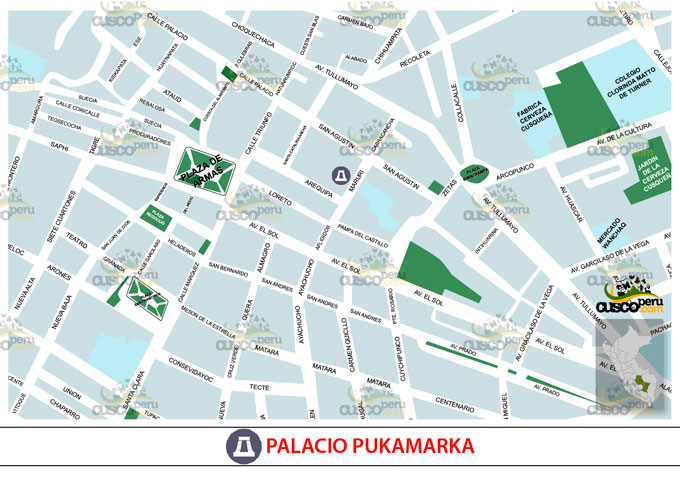
It is located between Maruri, San Agustín, Santa Catalina Ancha, and Arequipa streets.
Today, several sections of Inca walls that formed part of the ancient complex can still be seen. During the colonial period, numerous doors and access points were opened in the original walls, adapting them to the needs of the new inhabitants.
Colonial and republican buildings were later built over these Inca foundations, and today they are used as shops, offices, and residences. This architectural overlay allows visitors to see how the modern city of Cusco still preserves part of the urban structure of the ancient Inca capital, right in the heart of its historic center.
The Pukamarka Palace does not operate as an independent archaeological complex with regular visiting hours. Its exterior walls can be appreciated during a walk through the Historic Center of Cusco. To enter interior spaces or arrange a specialized visit, it is recommended to consult a local travel agency or the establishments that currently occupy the property.

Happy passengers