

The pilgrimage to the Sanctuary of the Lord of Qoyllur Rit’i is one of the most important religious and cultural expressions in Cusco and the Peruvian Andes. Every year, it brings together tens of thousands of pilgrims, musicians, and dancers in the Sinakara basin, a natural depression surrounded by mountains in the district of Ocongate, province of Quispicanchi.
The celebration combines elements of the Catholic faith with Andean practices that honor the apus, or sacred mountains, as well as water, glaciers, and the cycles of nature. In 2011, UNESCO inscribed the Pilgrimage to the Sanctuary of the Lord of Qoyllur Rit’i on the Representative List of the Intangible Cultural Heritage of Humanity.

It is a religious pilgrimage held on changing dates that leads devotees to the sanctuary built in the Sinakara basin. Over several days, Masses, processions, dances, music, vigils, and ceremonies are organized by the Brotherhood of the Lord of Qoyllur Rit’i and the pilgrim nations.
The name is commonly interpreted as “Lord of the Snow Star.” Linguistic studies also associate the term with the idea of white or shining snow, which means there is no single translation that is universally accepted. UNESCO uses the interpretation “Lord of the Snow Star.”
The origin of this devotion can be traced to a religious tradition dating to around 1780. As with many stories passed down orally, there are different versions, so it should be understood as a story of faith rather than a fully verified historical account.
According to the most widely known version, Mariano Mayta was a young shepherd from the Mahuayani area who looked after his family’s livestock in the highlands near the Qulqipunku snow-capped mountain. There, he met Manuel, a boy with whom he formed a close friendship.
Manuel wore a fine fabric that Mariano had never seen before, which aroused the curiosity of people in the area. When Mariano’s family tried to find out where the fabric came from, the matter reached the religious authorities in Cusco, and the parish priest of Ocongate was asked to investigate who the boy was.
A group traveled toward the mountain to find him. Versions of the story differ in some details, but they agree that, according to tradition, Manuel disappeared and an image of Christ appeared on a rock at the site. The story also says that Mariano died shortly afterward, deeply affected by what had happened.
Over time, the rock became a place of worship. Catholic tradition identified the image as the crucified Christ, and devotion to the Lord of Qoyllur Rit’i gradually developed around it.
The main image venerated at the sanctuary is connected to a sacred rock. This element is essential because it expresses the union of two religious dimensions: the Christian veneration of Christ and the Andean belief that mountains and rocks are places with a sacred presence.
There is no single verified account of the date or authorship of the image of Christ painted on the rock. For this reason, it is more accurate to explain that the image was incorporated as part of the process through which the devotion became established, without presenting any specific authorship as fully proven.
The pilgrimage brings together Catholic practices, such as Masses, crosses, and processions, with Andean beliefs related to the apus, water, glaciers, and agricultural cycles.
UNESCO specifically highlights this combination of Catholicism and the pre-Hispanic worship of nature deities. The sanctuary therefore becomes a meeting place for rural and urban pilgrims who express their faith through music, dance, promises, and acts of penance.
Participants are organized into eight nations, which do not represent countries, but rather large territorial and ritual groups:
Each nation brings together dance groups, musicians, traditional authorities, and ukukus. This organization helps maintain order during the ceremonies and coordinates the participation of the different groups.
The ukukus, also known as pablitos in certain contexts, are essential ritual figures in the pilgrimage. They should not be described simply as “bears,” although their clothing and some popular interpretations associate them with the Andean bear.
They serve as guardians of discipline, protection, and mediation between the pilgrims, the Lord, and the mountains. They also ensure that the pilgrimage rules are respected and take part in ceremonies reserved exclusively for them.
During the main days of the pilgrimage, groups of ukukus climb at night toward the higher areas near the glacier. In the past, they descended carrying blocks of ice considered sacred. Today, this practice is restricted to help protect the glaciers.
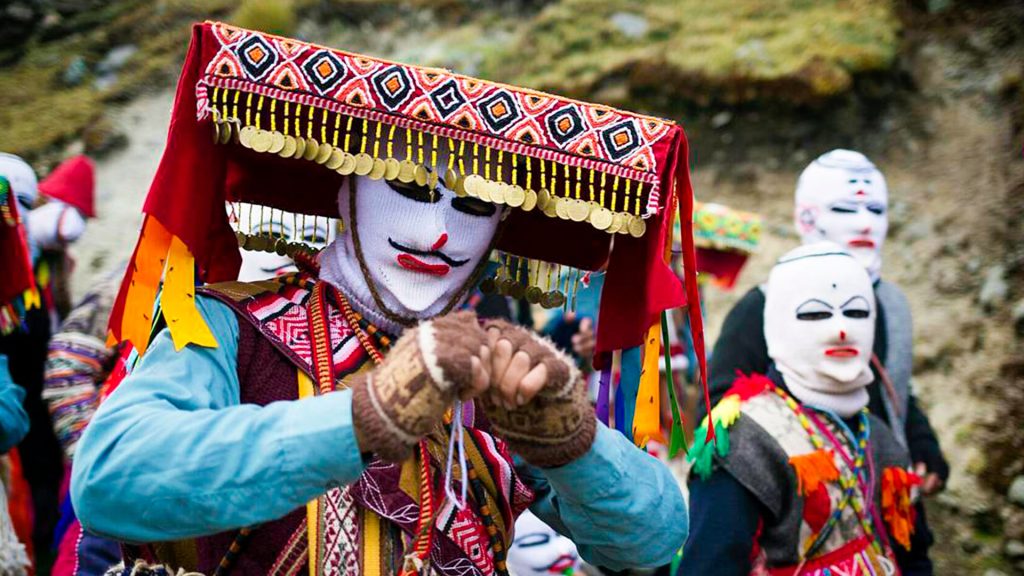
Throughout the celebration, dance troupes continuously move through the sanctuary accompanied by musicians. Each group has its own costumes, melodies, dance steps, and symbolic characters.
The dances are much more than a performance. They are expressions of devotion and form part of the promises made by the pilgrims. Processions, Masses, songs, and dances take place day and night. As a result, the main days of the pilgrimage are marked by large crowds, constant music, and very little rest.
The pilgrimage has a movable date and is usually held during the days leading up to Corpus Christi. Before planning your trip, be sure to check that year’s official calendar.
For this reason, it generally takes place between May and June. The exact dates and official program may change each year, so they should always be confirmed before traveling.
The main activities at the sanctuary take place over several days. However, the complete experience may last longer for dance troupes traveling from their communities or participating in the later procession to Tayankani and Ocongate.
For most visitors, it is advisable to allow at least two days: one to hike from Mahuayani and take part in the activities, and another for the return journey. If you are not fully acclimatized or plan to visit during the busiest days, consider staying an extra night. Attempting to complete the entire route in a single day can be physically demanding due to the altitude, cold weather, and the large number of pilgrims.
The pilgrimage takes place at the Sanctuary of the Lord of Qoyllur Rit’i, located in the Sinakara basin in the highlands of the district of Ocongate, Quispicanchi Province, Cusco Region.
The sanctuary lies in a high mountain area near the Sinakara and Qulqipunku glaciers, within the Ausangate region.
Although sources present slight variations, the sanctuary is located at an elevation of approximately 4,600 to 4,700 meters (15,090 to 15,420 feet) above sea level.
At this altitude, oxygen levels are considerably lower than at sea level. Even people who are used to hiking may experience fatigue, headaches, or shortness of breath.
The journey begins in the city of Cusco and continues by road toward Urcos and Ocongate. From there, travelers continue to Mahuayani, the main access point for the traditional pilgrimage route.
During the festival, public transportation and organized vehicles operate along the route, but traffic congestion, temporary road changes, and checkpoints are common. It is advisable to use official transportation services and confirm both your departure point and return schedule in advance.
From Mahuayani, the pilgrimage continues with an uphill hike of about eight kilometers, although the distance may vary depending on the starting point and the routes authorized during the celebration. Depending on physical condition, acclimatization, weather conditions, and the number of pilgrims, the hike usually takes between three and six hours.
The trail includes steep sections, uneven terrain, and areas exposed to cold weather. During the main days of the pilgrimage, temporary stalls are usually available, but visitors should not assume that all of them will provide drinking water, adequate food, or permanent medical assistance.
The pilgrimage takes place at the beginning of the dry season. During the day, skies are often clear and solar radiation can be intense, although the wind keeps temperatures feeling cold.
After sunset, temperatures drop rapidly and may fall below 0°C (32°F). Frost, fog, snowfall, and sudden weather changes are also possible.
What to expect: During the day, the sun can be very strong, but the wind keeps the air cold. At night and before dawn, subzero temperatures are common. Check the weather forecast before traveling.
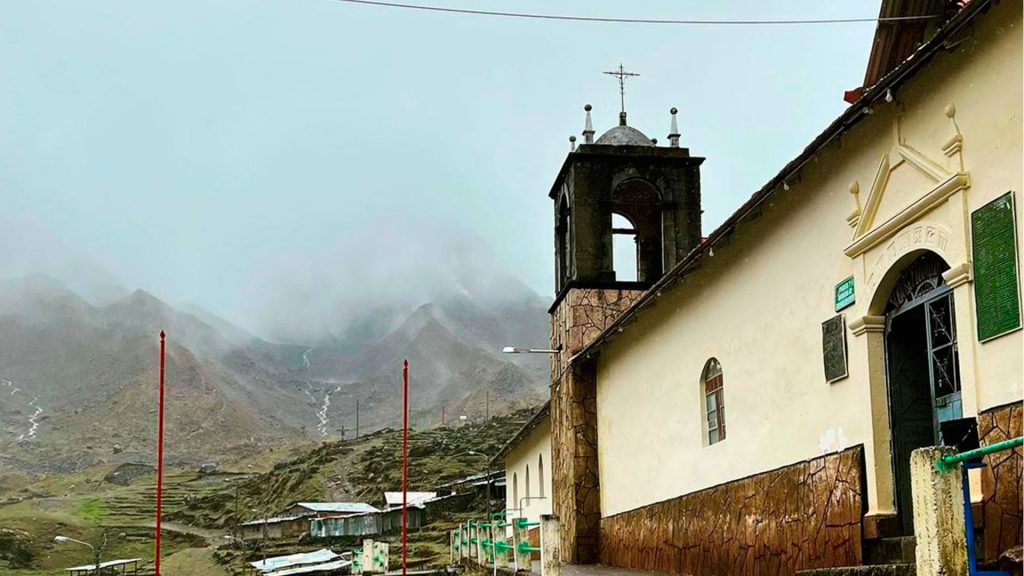
The pilgrimage is primarily an expression of faith. Visitors should behave respectfully, avoid interrupting processions, and ask for permission before taking close-up photographs of pilgrims, ceremonies, or religious images.
Do not attempt to climb toward the glaciers on your own or follow the ukukus during ceremonies reserved exclusively for them. These areas have extreme cold, steep slopes, ice, crevasses, and regulated access.
It is recommended to bring:
Cotton clothing is not the best option as a base layer because it retains moisture and can make the body colder.
Before undertaking the pilgrimage, it is advisable to spend at least two or three days in Cusco or another high-altitude destination to help your body acclimatize.
During the ascent:
Severe headaches, disorientation, difficulty breathing even while resting, loss of coordination, or rapidly worsening symptoms require urgent medical attention. Do not continue the hike or descend without someone accompanying you.
The sanctuary remains in place throughout the year, but this does not mean that access, transportation, and services are the same as they are during the pilgrimage.
Outside the main festival dates, there may be less transportation, no temporary stalls, and difficult weather conditions. Before traveling, check the condition of the route with the local authorities in Ocongate, authorized tour operators, or accommodations in the area. Outside the festival period, avoid undertaking the hike without a guide or companion experienced in mountain environments.

Happy passengers