


Peru’s coast is warm in summer and has clear skies, while in winter it has refreshing winds and drizzle. The climate of the coastal region is influenced by the presence of the Andes to the east, together with the cold Humboldt Current that reaches its beaches, which gives the area its dry character.
Peru’s coast is made up of 11 departments, each with its own characteristic climate. The departments that make up the coast of Peru are: Tumbes, Piura, Lambayeque, La Libertad, Áncash, Callao, Lima, Ica, Arequipa, Moquegua, and Tacna, all with a privileged view of the Sea of Grau, the name given to Peru’s maritime territory.
On the northern coast, we find Tumbes, with its tropical climate and white-sand beaches; Piura, with its sunny days; and Lambayeque, with its pre-Columbian history and temperate climate. La Libertad enjoys sunny weather during most of the year.
On the central coast, Áncash is located, featuring an arid coastal climate along the shoreline and a cold climate in the highlands. Callao has a warm and humid climate. Lima offers a mild and misty climate. Ica is known for its impressive sand dunes and arid climate.
In the south lies Arequipa, the White City, which welcomes visitors with its colonial architecture and temperate climate. Moquegua is the main producer of olive trees and has a temperate, desert climate. Tacna, the heroic city, has a desert climate.
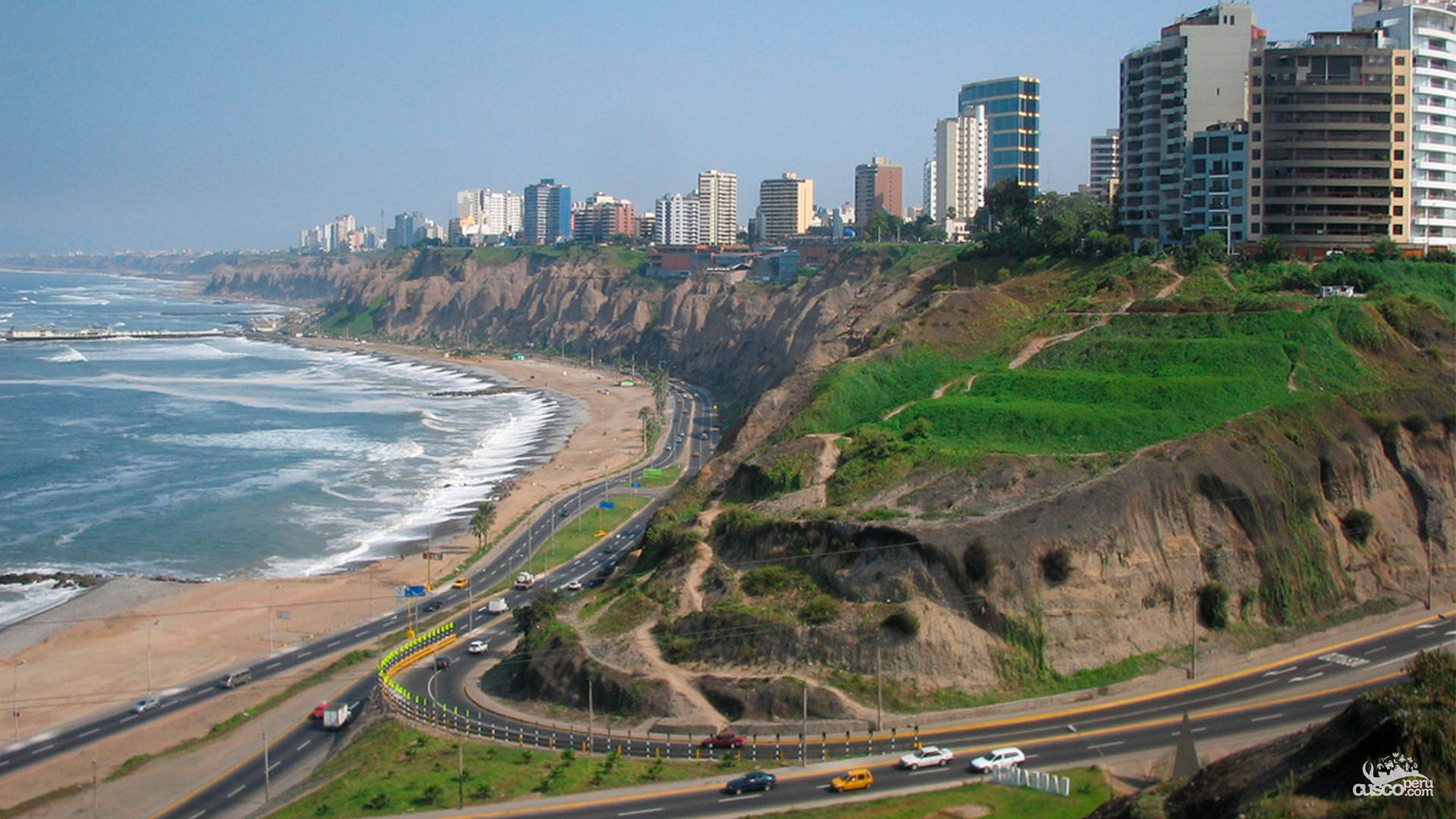
It can be said that Lima has a desert, temperate, and humid climate. Unlike other regions, this city has milder temperature variations throughout the year.
Its average annual temperature is around 19 °C; the high is around 25 °C and the low is approximately 15 °C.
The climate is characterized as warm, dry, and mild throughout the year, with temperatures ranging between 17 °C and 23 °C, and it has desert traits. Trujillo has two seasons: summer, which runs from December to April, with temperatures that can exceed 25 °C, and winter, which runs from June to September, when there is more fog and high humidity, with temperatures that usually range between 17 °C and 21 °C.
Piura has a tropical and dry climate, with an average annual temperature of 24 °C. In summer it exceeds 35 °C, and its maximum temperature can reach up to 40 °C when the El Niño Phenomenon occurs, while the drizzle season lasts from January to March.
Ica is a desert and hot city. Its summer runs from January to March and can exceed 30 °C, while its winter lasts from June to September, with a temperature of around 18 °C; it is mild during the day and cold at night.
Paracas has a sunny climate with strong winds, and its annual temperature ranges between 13 °C and 27 °C.
Tumbes has a warm, tropical, and dry climate, considered the hottest on Peru’s coast due to its proximity to the equator and its seasonal drizzle period from November to April. Its temperature ranges between 21 °C and 33 °C.
On the coast of Peru, the seasons of the year are fairly mild, but each one has features that make it identifiable.
In addition, there are 2 seasons considered transitional:
It is important to keep in mind that, throughout the year, the climate on Peru’s coast is generally stable and offers favorable conditions for tourism at any time.
A cold ocean current that flows northward along the western coast of South America; it cools the coastal air, creates high aridity in deserts such as Atacama, and causes morning fog, creating a beneficial marine ecosystem.
On the coast of Peru, the seasons of the year are fairly mild, but each one has features that can be identified.
In addition, there are 2 seasons considered transitional:
On the coast of Peru, the temperature varies according to the region and the time of year. During summer, temperatures can reach 30 °C, while in winter they can drop to around 15 °C.
These variations offer a wide range of climate experiences for tourists visiting the country. It is important to keep these differences in mind when planning outdoor activities and selecting the right clothing to make the most of your trip.
Humidity on Peru’s coast is usually very high and ranges between 70% and 90% throughout almost the entire year. The period of highest humidity occurs in winter, reaching 100% in Lima and Callao, with the presence of light drizzle (garúas), foggy skies, and colder conditions. Garúas predominate between April and October on the central coast, such as Lima, and in the south.
On the coast of Peru, rainfall is scarce during most of the year. However, in some areas, such as Tumbes, a more marked rainy season is experienced. It is important to keep these patterns in mind when planning your trip.
Although Peru’s coast is generally dry, it is possible to encounter some rain, especially in certain regions and during certain times of the year. It is advisable to carry a light umbrella or a raincoat in case of unexpected rain, especially if you plan to visit areas more prone to precipitation.
On the coast of Peru, winds play an important role in the climate. Southern winds often bring cooler and more humid conditions, especially during winter. These winds can affect outdoor activities and coastal navigation.
On the other hand, during summer, winds are usually milder, creating more pleasant conditions for enjoying the beaches and other outdoor activities, such as paragliding. It is important to keep this in mind when planning your trip to Peru’s coast, especially if you plan to take part in activities such as surfing or sailing.
It is the warming of sea waters off the coast of Peru and the climatic changes it generates at the regional and global level, bringing drizzle, especially in Tumbes, Piura, Lambayeque, La Libertad, and Lima.
We recommend visiting Peru’s coast during the summer, when the weather is hot and sunny, so you can enjoy the beaches, especially in the north (Piura and Tumbes), and do more activities during the day.
Throughout the year, the climate on Peru’s coast is generally stable and offers favorable conditions for tourism at any time.
When visiting the coast of Peru, it is essential to bring appropriate clothing to adapt to the varied climate. Here are some recommendations:

Happy passengers