
 Cultural
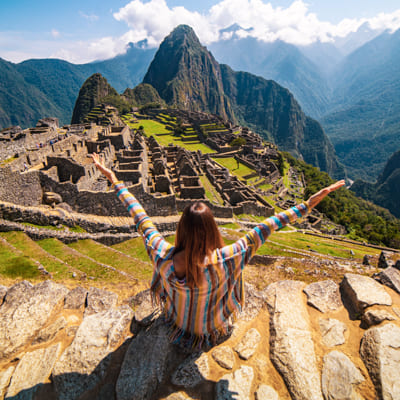
We will travel from Cusco to Machu Picchu one day tour, to learn about the history, architecture and beauty of this Wonder...
View tour
Explore the city with our Cusco Walking Tour and uncover the hidden gems of this magical destination. Our guide will lead you through its most iconic historical sites, monuments, plazas, and charming narrow streets full of original Inca walls, while sharing fascinating insights into the city’s culture and history. Enjoy the beauty of Cusco on this tour and discover the highlights of this unique city.
Explore Cusco on foot and enjoy a truly unforgettable experience.

Cusco is a city rich in history, culture, and local traditions that seem timeless and unique i. A walking tour through Cusco—considered one of the world’s top travel destinations—is a great way to experience and learn about the history and culture of this beautiful city in the Peruvian Andes. This walk gives you the chance to discover the remarkable historical and architectural landmarks that surround the city.
On this Cusco walking tour, we will begin our adventure by picking you up from your hotel. The best part is that we offer different departure times to fit your schedule and preferences. The tour lasts 3 hours, and we recommend starting in the morning. Our transportation will take us on a 20-minute ride to the top of Cristo Blanco, where you will enjoy the best panoramic view of Cusco and its surroundings.
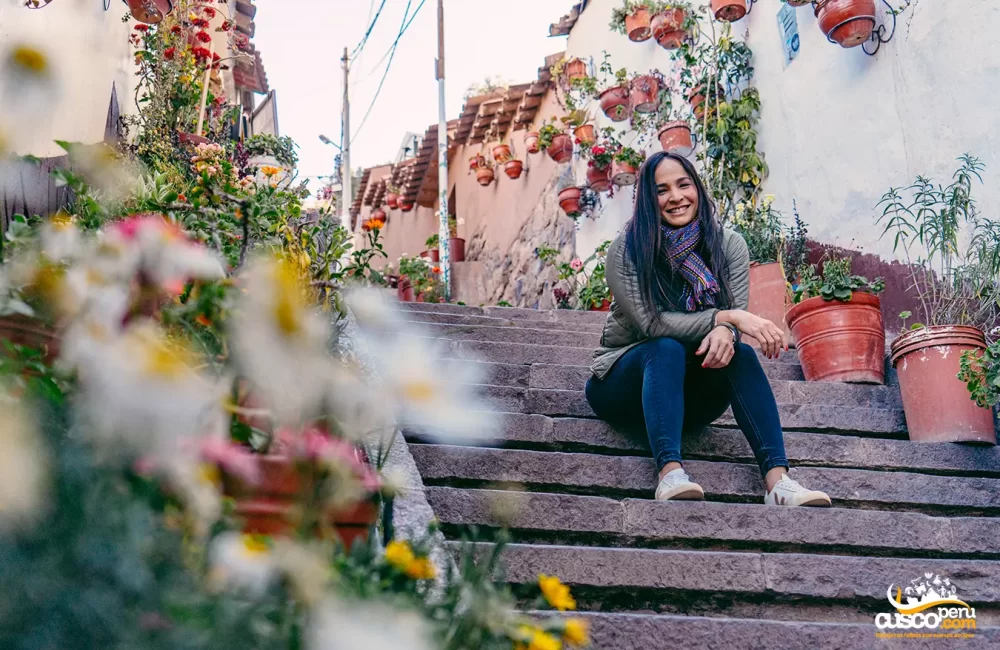
Our next stop is the colonial aqueduct of Sapantiana, a Quechua word that can be interpreted in Spanish as “unique seat” (Sapan meaning unique, and Tiana meaning seat). On the way there, you will pass by the San Cristóbal viewpoint, where you can stop for photos. The colonial aqueduct is a hydraulic structure built with four levels of arches, where you can take pictures and enjoy the views along Siete Borreguitos Street, one of the most picturesque streets of the city.
We will then visit the traditional artisan neighborhood of San Blas. A few minutes later, we will also see the famous Twelve-Angled Stone along the way. From there, we will arrive at Cusco’s Main Square, declared a UNESCO World Heritage Site, where you will learn about the historical events that took place before and after the arrival of the spanish.
Finally, we will discover local traditions at the famous San Pedro Market. This brings our Cusco tour to an end, a journey filled with history, culture, and mysticism in a city recognized as the best destination in South America by Travel + Leisure World’s Best Awards—a place every traveler should visit at least once in a lifetime.
INCLUDES:
NOT INCLUDED:
RECOMMENDATIONS:
The Cusco Walking Tour gives you the chance to explore the City of the Incas in a unique way, with different departure times available to fit your schedule and preferences.
To begin this tour of Cusco, we will pick you up from your hotel and take you on a 20-minute drive to Cristo Blanco, located on El Calvario Hill, also known as Pukamuqu Hill. This statue of Christ was gifted to the people of Cusco by the Palestinian Arab community as a token of gratitude. From this point, you will enjoy a panoramic view of the city and an impressive landscape of Cusco, which is said to be shaped like a puma. We will then start our walk, passing near the archaeological remains of Sacsayhuamán.
As we make our way down, we will reach the San Cristóbal viewpoint, where the qolqas are located. We will walk through the picturesque streets of some of Cusco’s oldest and most traditional neighborhoods and visit the Colonial Aqueduct of Sapantiana. The name is believed to come from the Quechua words Sapan, meaning unique, and Tiana, meaning seat. Located at 3,500 meters above sea level over the P’ujru River, this colonial hydraulic structure was built on four levels of arches, likely incorporating stone elements from the sacred huaca of Sapantiana, located just a few meters away. It was used to channel water from one hillside to another. This is a perfect spot to take plenty of photos, and we will also enjoy the lovely views along Siete Borreguitos Street with its colorful and charming surroundings.
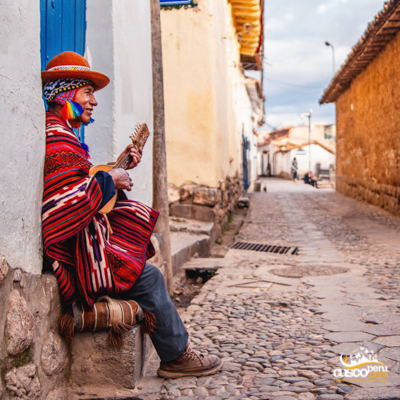
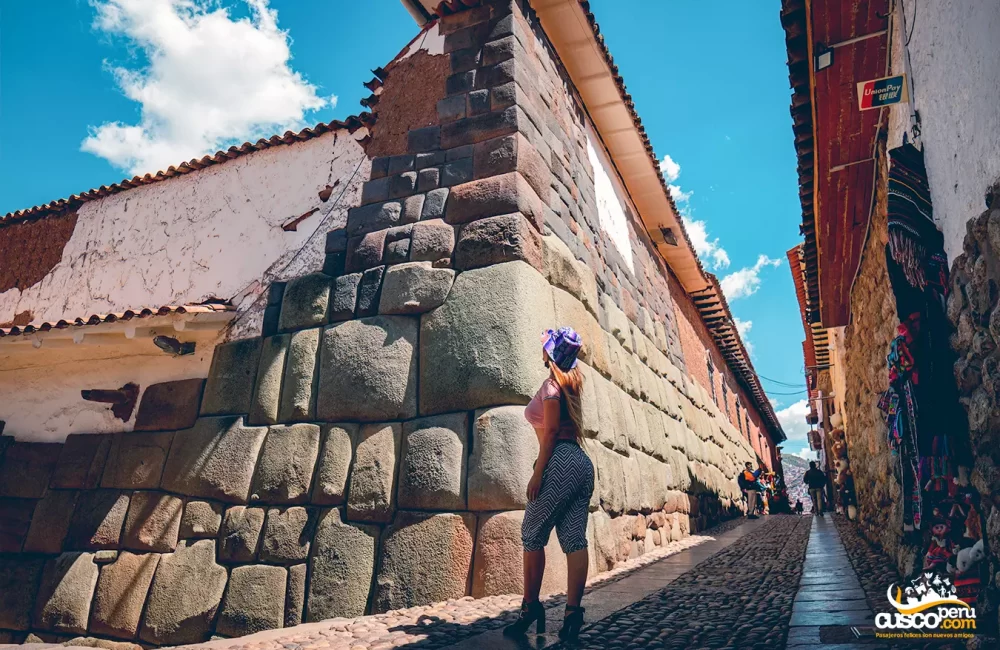
Our next stop will be the artisan neighborhood of San Blas, also known as T’oqokachi, a Quechua name that means “Salt Cave.” This is a traditional and picturesque area where the San Blas Church is located, and where many artisans live and work in their workshops and craft shops. The neighborhood is full of cafés, restaurants, museums, and art galleries. We will walk along its narrow, steep streets lined with old houses built by the Spanish on top of important Inca foundations. We will also stop at the famous Twelve-Angled Stone for photos.
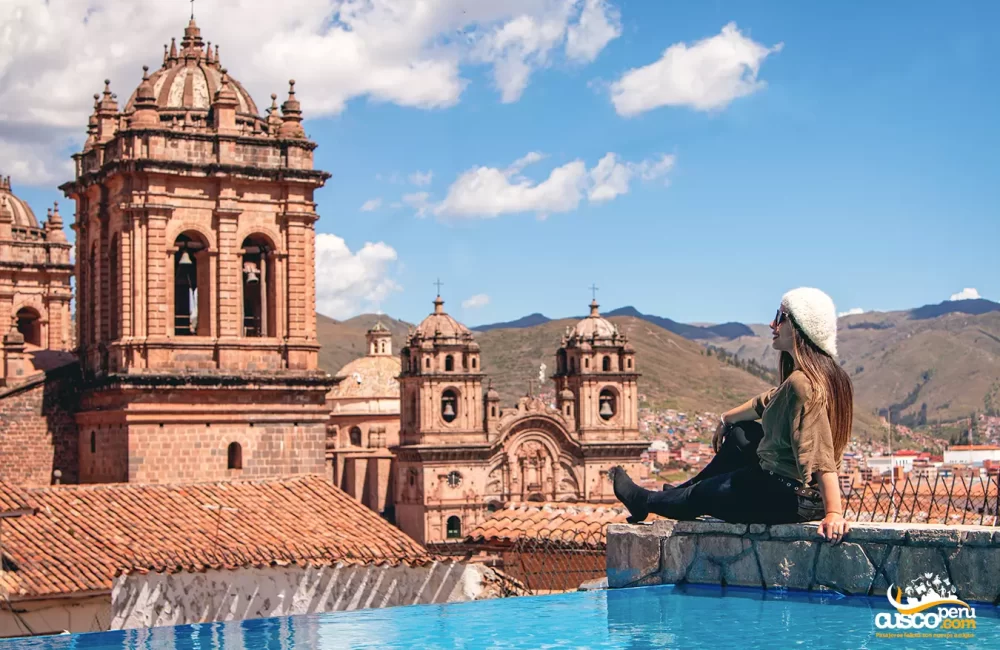
We will continue our walk toward Cusco’s Main Square, which during the Inca period was known as Auccay Pata, meaning “the most important place.” It was once a large square measuring about 250 meters long by 120 meters wide, divided into large open spaces and important Inca enclosures. This site was the origin of Qosqo (Cusco) as a city. It served as a place for the exchange of goods, ideas, concepts, traditions, and customs, becoming the political and economic center before the arrival of the Spanish in 1533.
You will learn the names of the streets and the arcades surrounding the Main Square, along with some of Cusco’s hidden stories. Cusco is considered one of the best destinations in the world, and the square is the perfect place to relax while enjoying a coffee or a meal at one of the many restaurants nearby. We will then continue through Plaza Espinar, where you will notice bullet marks still visible on the façade of La Merced Convent, remnants of a battle between followers of Piérola and Cáceres.
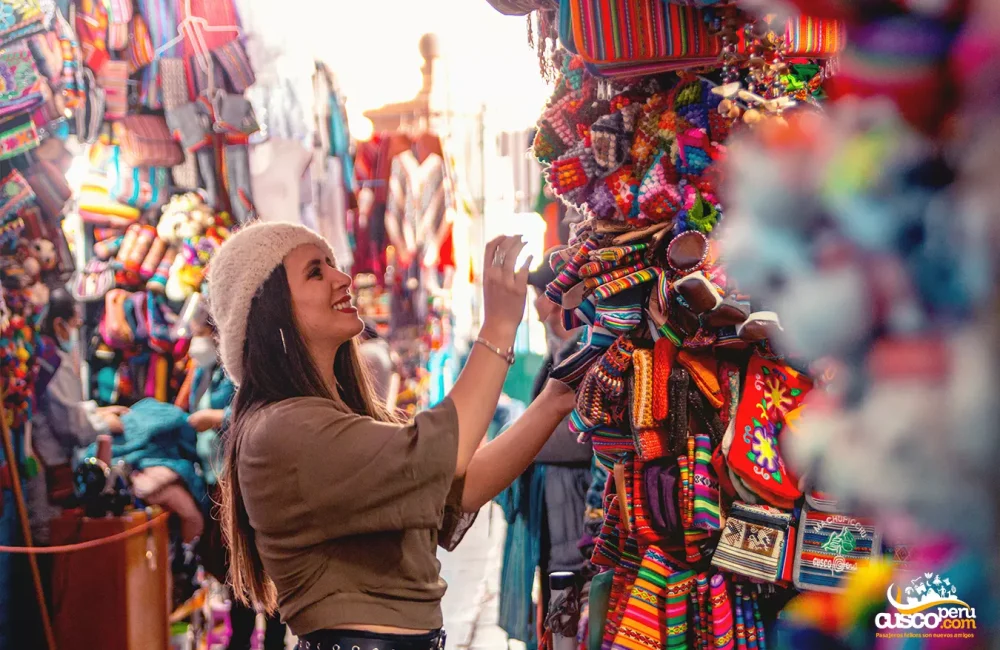
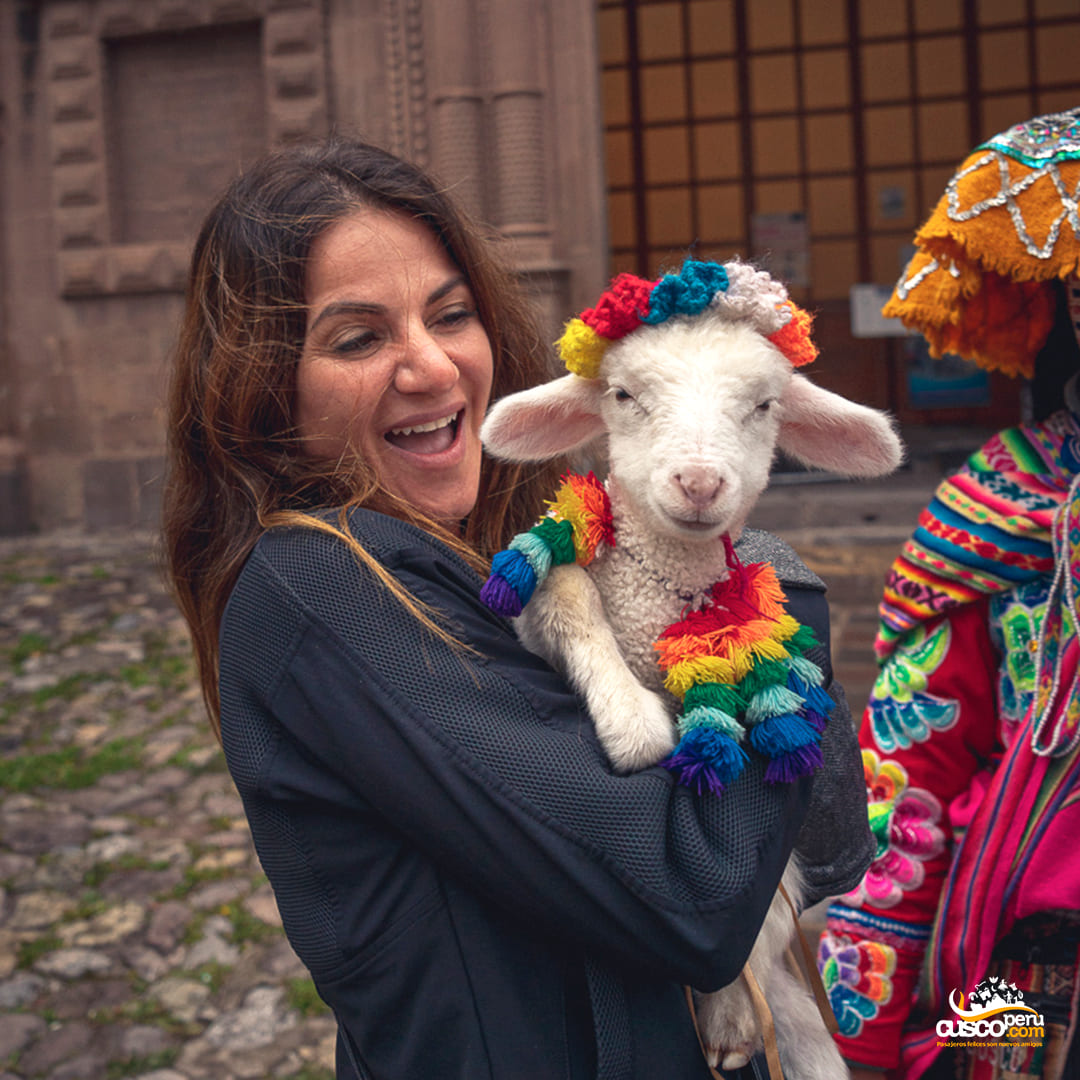
Our final stop will be the local San Pedro Market, where you will experience the living culture of the people of Cusco. This market operates every day of the week and offers a wide variety of products, including local handicrafts, food, fresh juices, delicious cheeses, large loaves of bread, tropical fruits, herbs, spices, coca leaves, and even some unusual and exotic items. The prices are affordable, and the quality of the products is excellent.
You will have time to explore the many small stalls throughout the market and shop for traditional souvenirs, bringing our Cusco Walking Tour to a close.
INCLUDES:
NOT INCLUDED:
RECOMMENDATIONS:
Walking Tour In Cusco - Trekking In Cusco
Private Guide
To start your reservation process please send us the following information:

The oldest part of the market structure was designed by the French architect Gustave Eiffel, the same who built the Eiffel Tower in Paris (France).
Currently, the market has 45 sections.
There are 97 benches.
The treatment of the people in the whole region of Cusco towards visitors is of the best, always with kindness towards visitors.
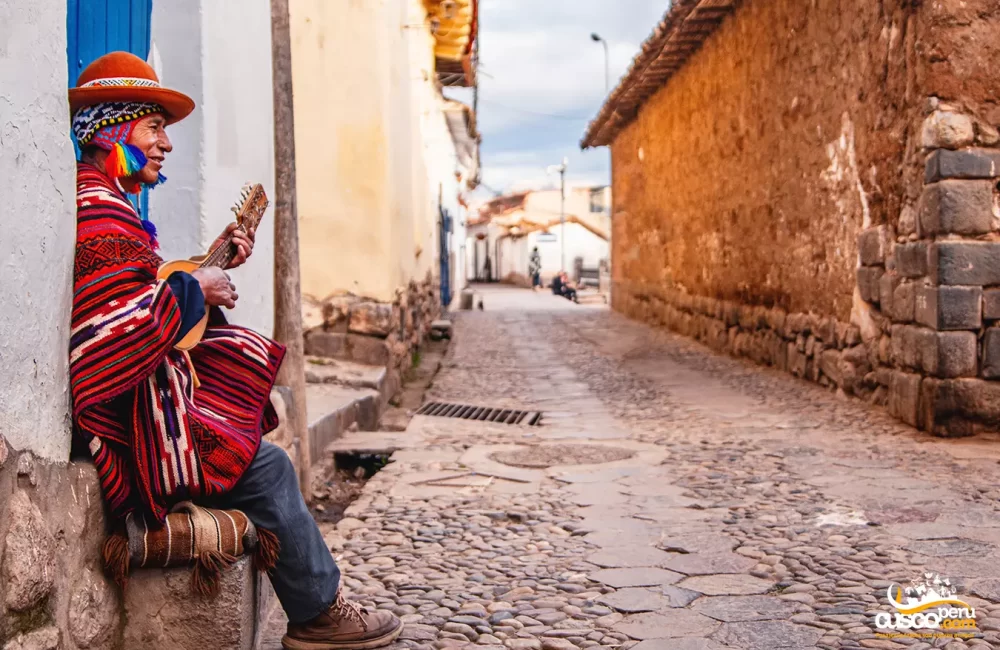
The convents, mansions, hotels, and museums are the most imposing constructions of the Inca and colonial times in the monumental center of the city of Cusco. Its cobblestone streets, facades, balconies, and the frames of its doors and windows, impress the eye and delight the cameras.

Our Tours
Alternative trips you may be interested in
Cultural
We will travel from Cusco to Machu Picchu one day tour, to learn about the history, architecture and beauty of this Wonder...
View tour Historical
Recharge your energy in this tour to Machu Picchu so you can climb to the top of the mountain Huayna Picchu or...
View tour Adventure
In this program you will enjoy the best of Cusco, its world wonder Machu Picchu and the famous mountain of colors, 5...
View tour Cultural
With this touristic package, you will live unforgettable Peru Vacations and will approach the customs of the Peruvian Andes.
View tour Nature
With this Vacations Peru Package, visit the white city of Arequipa, the Colca Valley, Machu Picchu, Cusco, and the Sacred Valley await...
View tour Relaxing
Embark on an exciting 10-day journey through Peru, from Lima to the mysterious Nazca Lines, Machu Picchu and the lush jungle of...
View tour
Happy passengers