
The Virgin of Candelaria in Puno, recognized for its deep religious, cultural, and artistic value, brings together thousands of devotees, dancers, musicians, and visitors every year who come to the highland city to pay tribute to “Mamacha Candelaria.” At CuscoPeru.com, we tell you everything you need to know to experience this celebration full of faith, music, dances, and tradition in the city of Puno.
Below, you will find its history, main dates, most representative dances, and practical tips to better enjoy your visit to Puno during the Candelaria celebration.
The Festival of the Virgin of Candelaria is one of the most important religious and cultural celebrations in Peru. It takes place every year in the city of Puno, in southeastern Peru and near Lake Titicaca. The city is located at more than 3,800 meters above sea level, so it is important to consider the altitude when planning your trip.
Puno is officially recognized as the Capital of Peruvian Folklore by Law No. 24325. Its most representative celebration is the festival in honor of the Virgin of Candelaria, also affectionately known as “Mamacha Candelaria,” the patron saint of the city.
This festival brings together Catholic faith and Andean traditions expressed through dances, music, costumes, offerings, and the participation of local communities. For this reason, it is not only a religious manifestation, but also an expression of cultural identity, music, dance, clothing, community organization, and popular devotion.
In 2014, the Festival of the Virgin of Candelaria of Puno was inscribed by UNESCO on the Representative List of the Intangible Cultural Heritage of Humanity.
The Festival of the Virgin of Candelaria is a religious, festive, and cultural celebration held mainly during the month of February. During the festival, masses, novenas, and processions are held, as well as dance competitions, band performances, parades with traditional costumes, and farewell activities.
UNESCO describes this festival as a celebration that includes religious, festive, and cultural events, with roots in Catholic traditions and symbolic elements of the Andean worldview.
During the festival, groups of native dances and ensembles wearing “trajes de luces” participate, made up of dancers, musicians, and delegations arriving from different parts of the region.
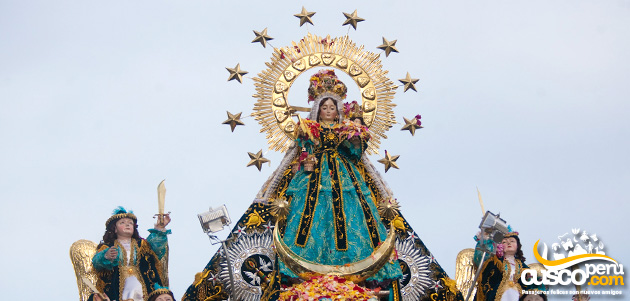
Devotion to the Virgin of Candelaria in Puno dates back to the viceregal period. Over time, this Marian devotion became deeply integrated into the religious and cultural life of the people of Puno.
There are several traditional stories about the origin of this devotion. These versions are part of Puno’s oral tradition and are passed down as stories of faith and popular devotion.
First story: the Virgin’s protection during the siege of Puno
One of the best-known stories says that, in 1781, during the period of Andean rebellions, the city of Puno was threatened by rebel forces. Faced with danger, the residents carried the image of the Virgin of Candelaria in procession and asked her for protection.
According to tradition, after the procession, the attackers withdrew, an event that devotees interpreted as a miracle. Since then, faith in the Virgin grew stronger, and her image became more important as the protector of the city.
Second story: the apparition near Huajsapata Hill
Another tradition says that the Virgin appeared to an Indigenous resident near Huajsapata Hill, on the banks of a small stream. According to the story, the Virgin had the appearance of an elegant woman, with a serene face, and carried a child in her arms.
The woman asked permission to wash her child’s clothes in the stream and offered to look after the place while the resident was away. When the resident returned with his employer, they found an image of the Virgin dressed in white, with the clothes still damp. This story is part of Puno’s devotional tradition and reinforces the symbolic connection between the Virgin, water, protection, and the daily life of the population.
The celebration takes place between the last days of January and the first weeks of February. The main day is February 2, the date dedicated to the Virgin of Candelaria.
Among the most important activities are:
Note: The exact schedule may vary each year, so it is recommended to check the official program of the Provincial Municipality of Puno or the Regional Federation of Folklore and Culture of Puno before traveling.
The festival is celebrated mainly in the city of Puno. Religious events are centered around the Sanctuary of the Virgin of Candelaria and the Church of San Juan Bautista, while processions, parades, and competitions take place in Pino Park, the Main Square, the main streets, and other areas prepared for the festival.
During the festival, Puno fills with music, dance groups, processions, and visitors who walk through its main streets, especially around the historic center. This highland location influences its climate, customs, music, clothing, and ritual expressions.
The Festival of the Virgin of Candelaria brings together two major types of dance expressions:
Native dances
These dances represent the life of Quechua and Aymara communities, their agricultural work, thanksgiving rituals, and highland traditions. They usually feature traditional instruments, local clothing, and choreographies related to community life.
Dances with “trajes de luces”
These are mestizo and urban dances characterized by bright costumes, elaborate embroidery, masks, boots, capes, and music performed by large bands. Among the best known are the diablada, morenada, kullawada, caporales, tuntuna, and other popular expressions of the highlands.
Candle procession
This is a religious activity held on the eve of the celebration. Devotees enter carrying candles as a symbol of faith, light, and offering to the Virgin.
K’apos procession
The k’apos procession consists of the entrance of firewood, branches, and logs traditionally carried by community delegations. This firewood is used in the ritual activities of the eve. This activity is part of the traditions of the eve, on February 1, and usually brings together delegations from local communities.
Octave
The octave takes place after the main day. It includes mass, procession, and new veneration activities. It is one of the most anticipated moments for dancers and visitors.
Cacharpari
The cacharpari is the farewell to the festival. It is a moment of music, dance, and gratitude with which participants close the celebration until the following year.
To better enjoy the Festival of the Virgin of Candelaria, it is recommended to plan your trip in advance. During these dates, Puno receives many national and international visitors, so it is best to book accommodation, tours, and transportation several weeks ahead of time.
It is also important to consider the altitude: Puno is located at more than 3,800 meters above sea level. If you arrive from a city at a lower altitude, rest on the first day, drink water, avoid heavy meals, and walk calmly.
It is recommended to bring warm clothing, sunscreen, a hat, sunglasses, and a waterproof jacket, since February is part of the rainy season in the highlands. In addition, it is advisable to respect the procession routes, avoid interrupting the dancers, and follow the safety instructions of local authorities.

Happy passengers