
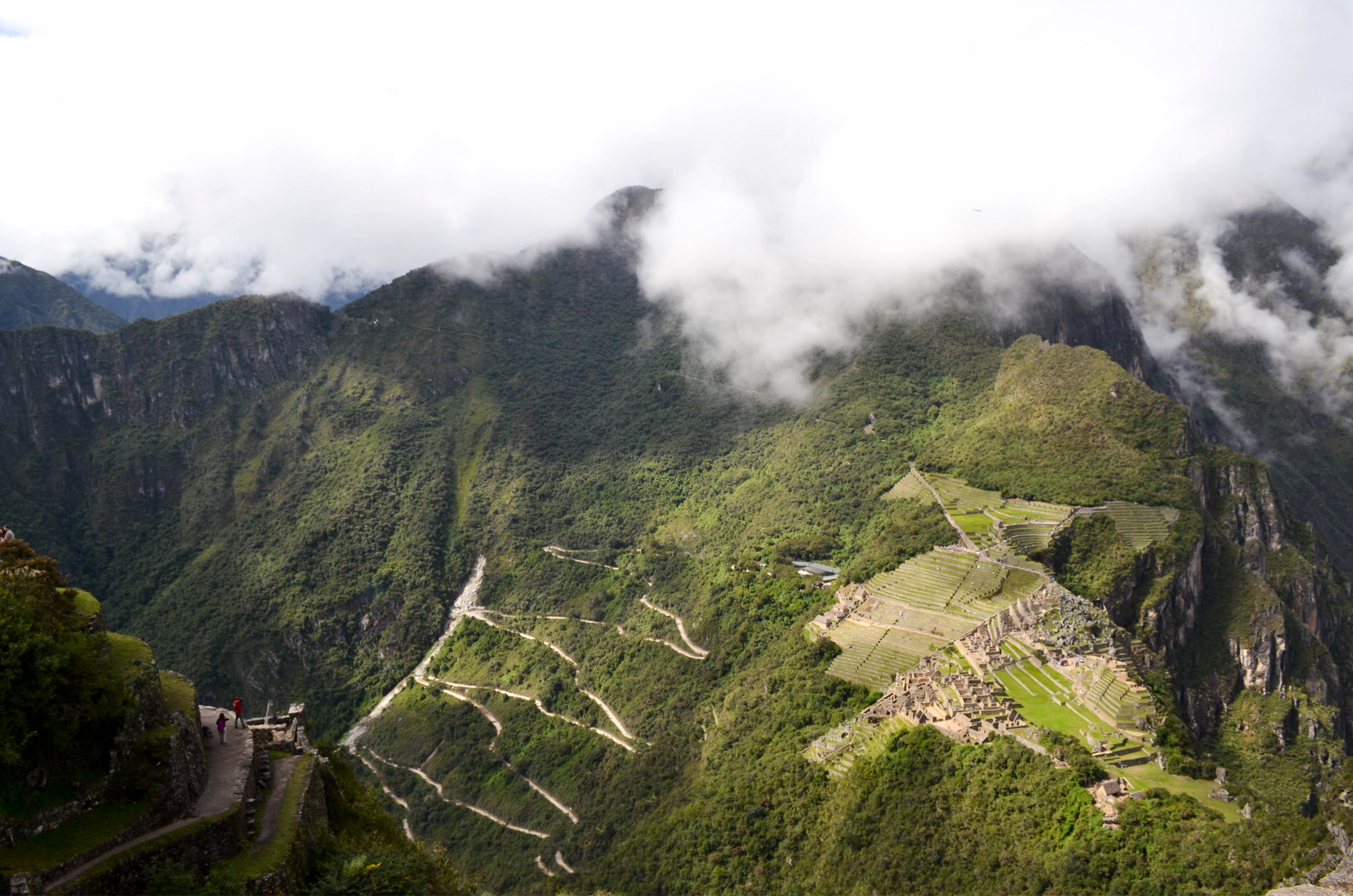
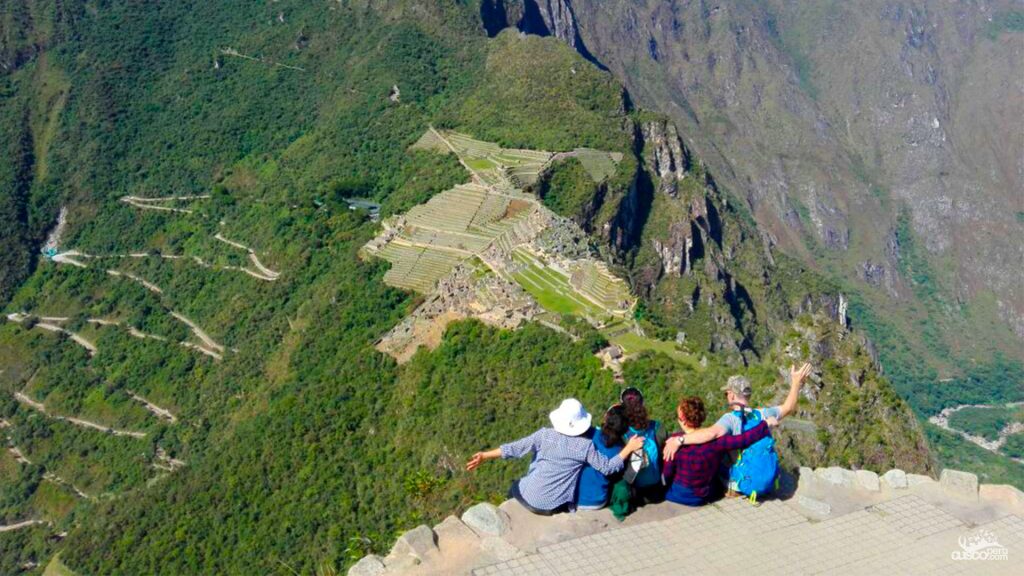
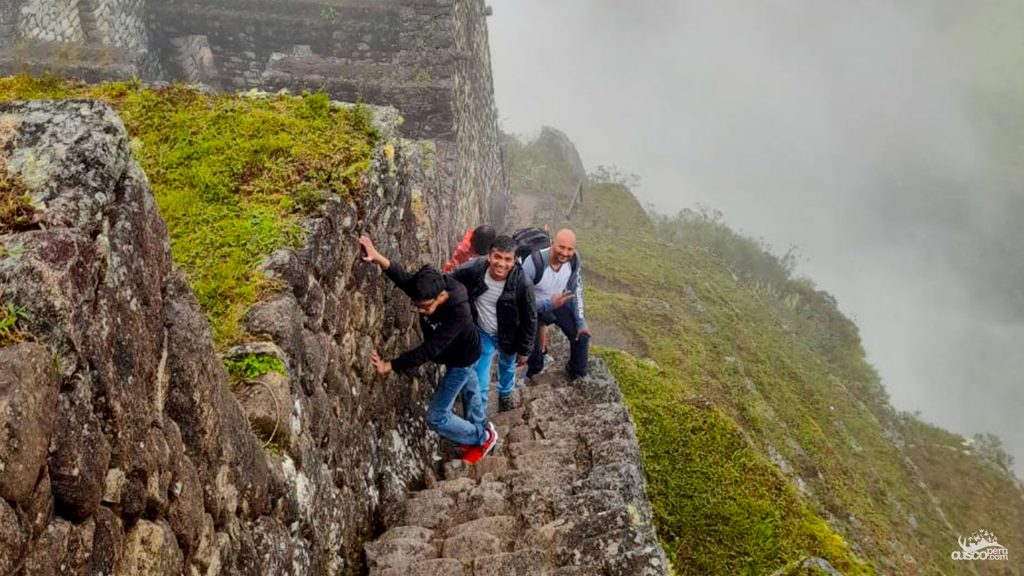
Huayna Picchu or Wayna Picchu Mountain is located at an altitude of 2,693 m above sea level, on the northern side of the Machu Picchu citadel. The trail to the summit is demanding, with stone stairways and narrow, very steep sections.
This route is not recommended for people who suffer from vertigo, children under 12 years old, or elderly people.
Huayna Picchu comes from Quechua: “wayna,” which means young, and “picchu,” which means mountain, so its translation would be “Young Mountain.” It would be the antonym of the also famous Machu Picchu Mountain, which means “Old Mountain.”
This name is used to compare both mountains, with Huayna Picchu being smaller than Machu Picchu Mountain. In most classic photographs, Huayna Picchu can be seen behind the citadel.
On most websites it appears as Huayna Picchu, although in Cusco and on local signs it can also be found as Wayna Picchu, but both refer to the same place.
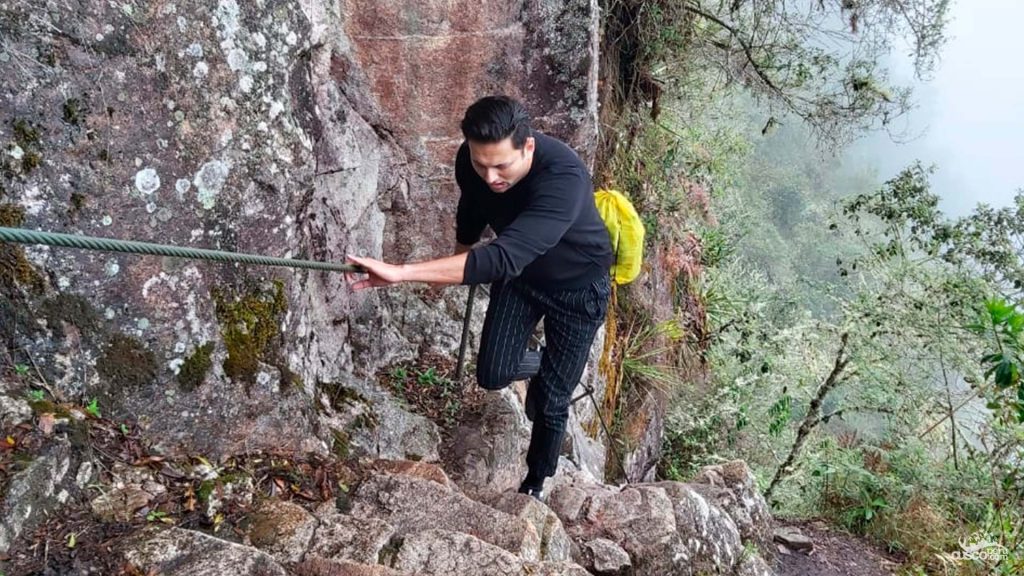
Yes, because Huayna Picchu Mountain offers a short hike above Machu Picchu, combining sections of Inca stone stairways along the edge of the abyss with spectacular views of the citadel.
Entry to Huayna Picchu is limited and organized by time slots. Tickets for the Young Mountain must be purchased in advance on the website tuboleto.cultura.pe. Please note that this ticket also includes entry to the Machu Picchu citadel through Circuit 3, Royalty Route.
These are the available schedules:
First group:
Second group:
Third group:
Fourth group:
The Huayna Picchu ticket includes access to the summit of this famous mountain and the Circuit 3 tour (Royalty Route) of the lower sector of the Inca citadel.
The only official online platform to buy tickets for Huayna Picchu Mountain is through the Peruvian government website tuboleto.cultura.pe.
During the high season, which runs from May to October, you should book 4 to 6 months in advance. During the low season, which runs from November to April, you should book 2 to 3 months in advance.
If there are no more tickets for Huayna Picchu, it is best to choose other mountain routes within the citadel, check whether new spots are released, or try to buy an in-person ticket in Cusco. You can choose other mountains such as Machu Picchu Mountain or Huchuy Picchu Mountain. Both offer incredible views and are purchased through the platform.
Foreigners: S/ 200
Peruvians and Andean Community (CAN-Colombia, Ecuador, Bolivia): S/ 112
University Students: S/ 125 (foreigners) and S/ 80 (Peruvians/CAN)
Minors (8 to 17 years old): S/ 118 (foreigners) and S/ 80 (Peruvians/CAN)
Authorized minors (12 to 17 years old): check the current official rate.
The most recommended time to climb Huayna Picchu is the first slot, between 7:00 a.m. and 8:00 a.m. This will allow you to hike in cooler weather, avoid the extreme afternoon heat, be among the first to enjoy the summit with fewer people, and still have enough time to explore Machu Picchu.
If you arrive late for your Huayna Picchu time slot, Ministry of Culture staff will deny you access without exceptions. The schedules are strict, and there are no reschedulings or refunds for late arrivals.
The hike to Huayna Picchu Mountain is one of the most demanding, risky, and probably the most difficult to undertake. It requires good physical condition, concentration, and confidence while walking in order to reach the summit.
The Huayna Picchu route begins in the lower sector of Machu Picchu (next to the Sacred Rock), following Circuit 3, Royalty Route. The route is approximately 2 kilometers long with a steep ascent. You will find almost 2,000 original stone steps, some of them very narrow and steep.
The mountain offers a privileged view of the entire Machu Picchu citadel and the Urubamba River canyon.
The return is along the same path, so it is recommended to go down slowly and carefully, holding firmly onto the railings.
The ascent takes between 1 hour and 1 hour and 30 minutes, depending on each visitor’s pace. Once at the summit, you can stay for about 30 to 45 minutes to rest, enjoy the panoramic view, and take photographs. The descent takes approximately one hour, following the same trail.
Huayna Picchu has a moderate to high difficulty level. The main challenge is not finding the way, but the physical effort, concentration, and control of fear of heights. It is dangerous for people with vertigo or fear of heights, since the route runs alongside cliffs and leaves several sections exposed with steep views over the citadel. Due to the high level of difficulty, only people over 12 years old are allowed to enter.
During the rainy season, from November to March, the steps can become slippery, so it is best to be extra careful. You should be very cautious and not hesitate to stop the climb if conditions are unfavorable.
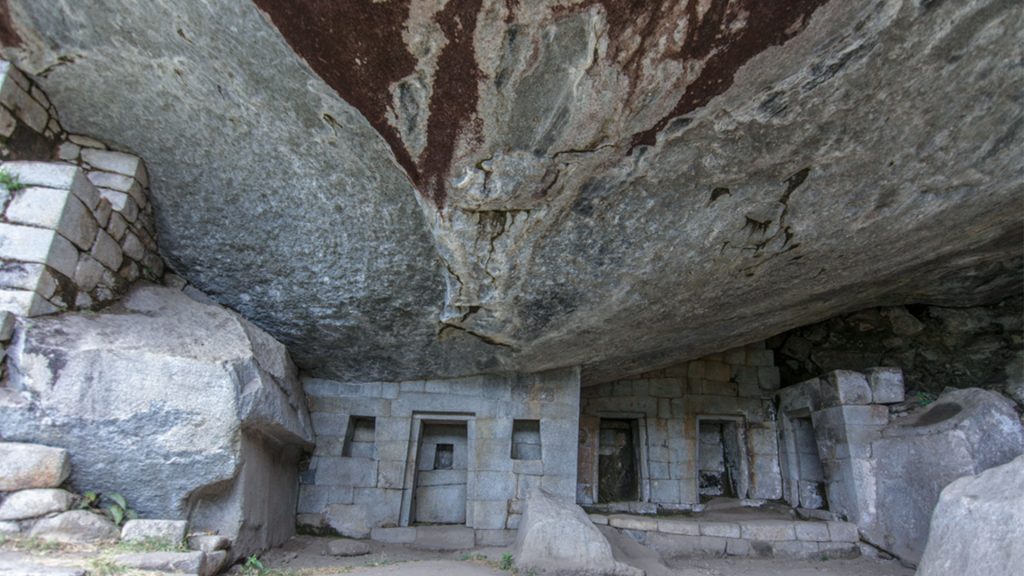
The Temple of the Moon is one of the most incredible structures found within the Machu Picchu citadel. This place is also known as “The hidden jewel of Machu Picchu” because it is located inside a natural cave on Huayna Picchu, nearly 1 km from the summit of the mountain. It is not usually very visited due to its distance and difficult path.
Huayna Picchu Mountain usually offers better visibility conditions during the dry season. In these months, the days tend to be clearer and there is less chance of rain, although the weather in Machu Picchu can change quickly. In the most exposed parts of the mountain, you may feel the wind, especially during the ascent or at the summit.
Daytime temperatures usually range between 19 °C and 21 °C, while minimum temperatures can range between 8 °C and 11 °C, especially in the early morning. During the rainy season, from November to March, it is more common to find mist, low clouds, and light to moderate rain, which can make the steps slippery.
The best time to climb Huayna Picchu is during the dry season, especially between May and September. April and October can also be good transition months. During this period, there is usually less rain, better walking conditions, and a greater chance of getting clear views of the Machu Picchu citadel.
Booking and acclimatization
It is recommended to buy the ticket in advance. Select Circuit 3: Route 3-A Huayna Picchu Mountain Route on the official Ministry of Culture platform. Capacity is limited. It is also recommended to spend at least two days in Cusco or the Sacred Valley to avoid altitude sickness.
Arrival at the mountain
The first thing you should do is take the train from Cusco or Ollantaytambo to the town of Aguas Calientes and then the bus to the Inca citadel. Then head to the Huayna Picchu checkpoint, located in the northern part of the archaeological site, near the Sacred Rock. There, you must present your passport and ticket.
Climbing the mountain
At the checkpoint, follow staff instructions and register your entry and exit if requested. The trail passes through a section of steps known as the “stairs of death” because of their steep incline and proximity to the cliffs. The ascent takes between 1 and 2 hours.
Descending the mountain
The descent takes on average between 40 and 50 minutes. The steps are slippery and steep, so it is recommended to go down carefully. When leaving, it is mandatory to report your return at the same checkpoint where you entered.

| Differences | Huayna Picchu Mountain | Machu Picchu Mountain |
| Location | North of the Machu Picchu citadel | South of the Machu Picchu citadel |
| Altitude | 2,693 m above sea level | 3,082 m above sea level |
| Distance | 2 km, elevation gain 290 m | 2 km, elevation gain 200 m |
| Hiking time | 3 hours, ascent and descent | 4 hours, ascent and descent |
| Access | Huayranas sector | Detour to the Guardhouse. |
| Schedules | Group 1: from 7:00 a.m. to 8 a.m.Group 2: from 8:00 a.m. to 9:00 a.m.Group 3: from 9:00 a.m. to 10:00 a.m.Group 4: from 10:00 a.m. to 11:00 a.m. | Group 1: from 7:00 a.m. to 8:00 a.m.Group 2: from 8:00 a.m. to 9:00 a.m. |
| No. of visitors | 400 people per day | 400 people per day |
| Circuit | Circuit 3: Waynapicchu Mountain Route | Circuit 1: Machu Picchu Mountain Route |
| Re-entry | Does not allow re-entry to the citadel | Check according to current regulations |
| Archaeological attractions | Terraces and Temple of the Moon | Does not have major archaeological attractions on the route |
| Restrictions | Only for people over 12 years old | Suitable for all visitors |
| Difficulty | Medium-high | Medium |
To climb Huayna Picchu, it is best to bring only what you really need. It is not a good idea to carry large or heavy backpacks, because some sections of the climb are steep and you will need to move more freely.
Do not forget to bring your ID and your entry ticket, since they may ask for them before you go in. It is also important to wear comfortable, lightweight clothing, along with proper footwear so you can walk safely along the whole route.
If you are traveling between November and March, we recommend bringing a waterproof jacket or a rain poncho, since the weather can change from one moment to the next.
Bring enough water to stay hydrated, as well as a few light snacks to help you recover energy during the hike.
To protect yourself from the sun and make the hike more comfortable, it is also a good idea to bring sunscreen, insect repellent, sunglasses, and a cap or hat.
Are Huayna Picchu and Wayna Picchu the same?
Yes, both names refer to the same mountain located next to the Inca citadel. In Quechua, its name means “Young Mountain.”
Where is Huayna Picchu Mountain located?
Huayna Picchu Mountain is located north of the Inca citadel. It is the mountain that appears in the famous Machu Picchu photograph.
How much does the Huayna Picchu ticket cost?
The price of the Machu Picchu + Huayna Picchu ticket varies according to nationality and current regulations. It is recommended to check the official rates before making the purchase.
What is the best time to climb?
The best time to climb Huayna Picchu Mountain is the first group, entering between 7:00 a.m. and 8:00 a.m.
How long does the hike take?
The hike to Huayna Picchu Mountain takes an average of 2 to 3 hours in total (round trip).
Can I visit Machu Picchu and Huayna Picchu on the same day?
Yes, you can visit both attractions on the same day by buying the ticket that includes Machu Picchu + Wayna Picchu Mountain.
Is it difficult or dangerous to climb Huayna Picchu?
It is not considered dangerous if you follow staff instructions and walk carefully, but it is a demanding route with steep and exposed sections.
Can I climb Huayna Picchu with children?
No, entry to the mountain is strictly prohibited for children under 12 years old.
Can I climb Huayna Picchu if I have vertigo?
No, it is not recommended to climb Huayna Picchu if you suffer from vertigo or fear of heights.
Do I need a tour guide?
No, hiring a guide is not mandatory to climb Huayna Picchu Mountain. The trail is signposted and easy to follow. However, going with a guide can enrich the experience by sharing historical information about the Inca structures along the route.
Does Huayna Picchu include the classic Machu Picchu photo?
No. The ticket for Huayna Picchu Mountain does not include the classic postcard photo of Machu Picchu.
What happens if it rains or I arrive late?
If it rains, the visit to Huayna Picchu continues as normal. If you arrive late for your entry time, you will lose access without the right to a refund, since the schedules are strict.
Can I find tour guides for Huayna Picchu?
Yes, it is possible to hire a guide for the hike; however, it is optional.

Happy passengers