

Machu Picchu is one of the most visited destinations in Peru. However, it is not only its rich cultural heritage that makes it attractive, but also its impressive biodiversity.
The flora and fauna found in the Historic Sanctuary of Machu Picchu have become another attraction for tourists. Covering 32,592 hectares, this area is where the Andes mountain range and the tropical forest converge. With an approximate altitude of 2,430 meters above sea level, it allows the creation of microclimates, making its biodiversity possible.
The biodiversity present in Machu Picchu is of global importance, as its conservation means protecting diverse habitats, each with a variety of plant and animal species.
The conservation area of the Historic Sanctuary of Machu Picchu holds an immense amount of biodiversity. Within it, there is a remarkable diversity of flora and fauna, with thousands of species recorded in the sanctuary.
This remarkable diversity makes Machu Picchu an ecosystem of vital importance for the study and conservation of Peru’s biodiversity.
The flora diversity of the Historic Sanctuary of Machu Picchu includes thousands of species recorded throughout the national territory, reaffirming the importance of this protected area.
Among the plant species, according to some interdisciplinary research, there are more than 3,000 species, including more than 400 types of orchids, carnations, ferns, puyas, angel’s trumpets, molle trees, cedars, queñua trees, and others.
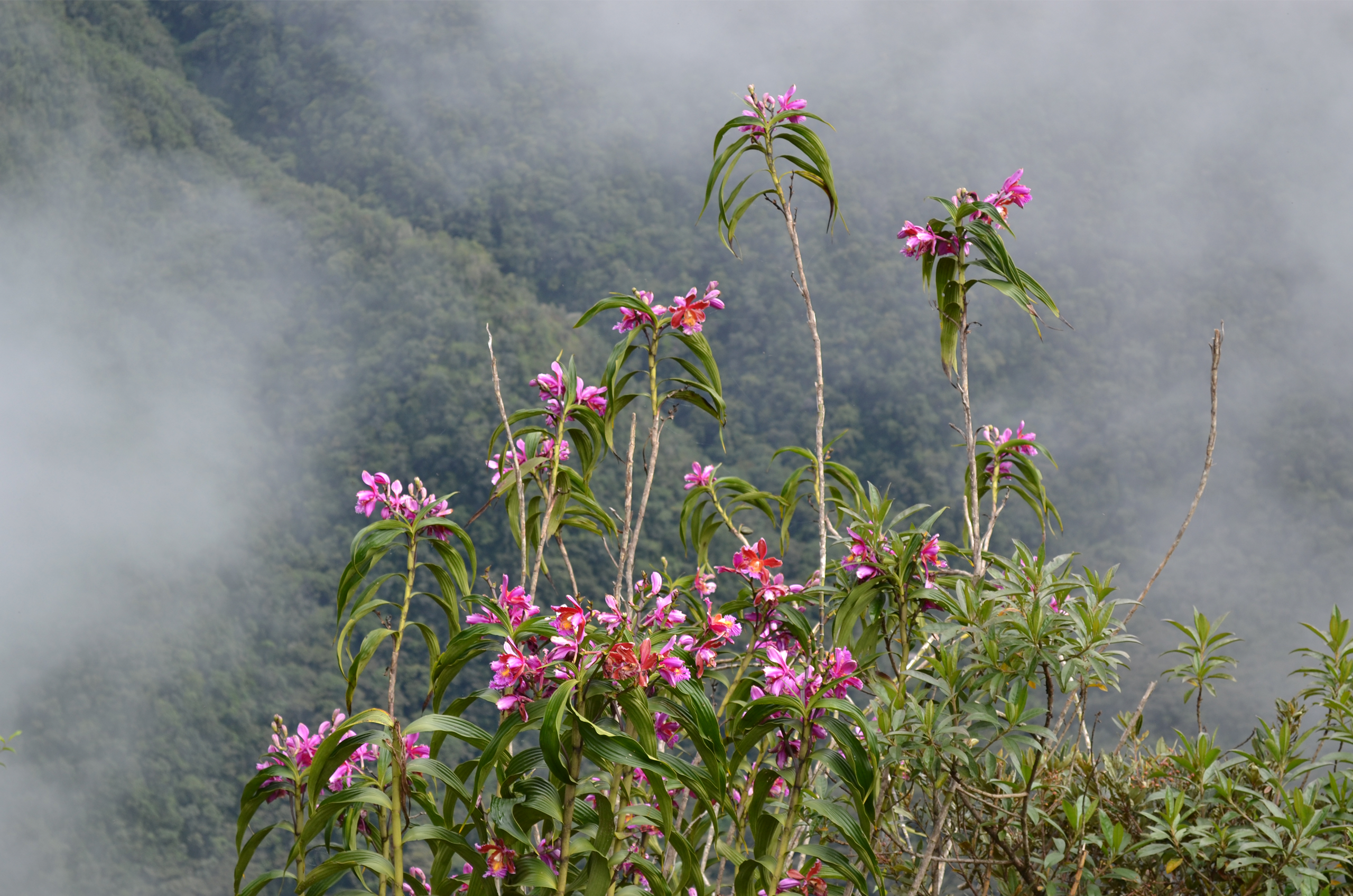
Orchids (Orchidaceae) are plants that stand out for their extraordinary beauty, colors, and aromas, becoming the main attraction in terms of flora.
Around 400 species of orchids have been recorded within the Historic Sanctuary of Machu Picchu, and it is believed that there are still species yet to be discovered.
The destruction of their habitat, caused by forest fires and indiscriminate extraction by illegal traders, has led to a significant decrease in the number of species.
Machu Picchu is home to a great variety of trees and shrubs that contribute to the region’s biodiversity and ecological balance. Among its rich vegetation, the following stand out:

The fauna in the Machu Picchu citadel is impressive, with more than 500 animal species, including several endemic or restricted-range species. Among them, more than 300 butterfly species recorded in the Historic Sanctuary of Machu Picchu stand out.
Among the most emblematic animal species are the spectacled bear, the Andean cock-of-the-rock, various species of hummingbirds, the puma, the Andean fox, the taruca, and a wide variety of reptiles and amphibians.
The spectacled bear (Tremarctos ornatus), or Ukumari, is one of the most representative animals of the area. It has black fur with markings around the eyes that resemble glasses, which gives it its name.
It lives in the mountain forests of the Historic Sanctuary of Machu Picchu. It plays an important role as a seed disperser; its diet is based on fruits and leaves. It can measure up to 1.80 m tall and weigh between 100 and 175 kg.
Rodents play a very important role in Machu Picchu’s biodiversity. Some of the most notable rodents are:
The Andean cock-of-the-rock (Rupicola peruvianus) is Peru’s national bird and is also emblematic of Machu Picchu. Its plumage, with intense red and orange colors in males, contrasts with the lush green of the cloud forests, enhancing its beauty.
This bird feeds on fruits and seeds and is usually seen in humid forest areas. It plays an important role in seed dispersal.
Within the bird diversity found in the Machu Picchu Sanctuary, we can observe a great variety of hummingbirds. During a visit to the citadel, several birds can be seen fluttering among the vegetation, displaying an impressive variety of colors.
These small birds play a vital role as pollinators in maintaining biodiversity. They transport pollen and contribute to the reproduction of many native plants.
There are more than 300 identified species in the Machu Picchu Sanctuary.
Each one contributes to pollination and helps maintain the local flora, which gives them even greater importance.

The Sanctuary is home to a great amount of biodiversity, including several endangered species that require urgent conservation actions. Among them are:
These species are not only vital to Machu Picchu’s ecological balance, but they are also part of Peru’s rich natural heritage. Their protection is essential, not only to preserve Machu Picchu’s biodiversity, but also to maintain the balance of the ecosystem.


Happy passengers