August 1 is celebrated as Pachamama Day in the high Andean communities of Ecuador, Peru, Bolivia, Chile, and Argentina. The Andean region is characterized by a culture rooted in pre-Inca and Inca civilizations, expressed through its festivals, customs, and traditions.
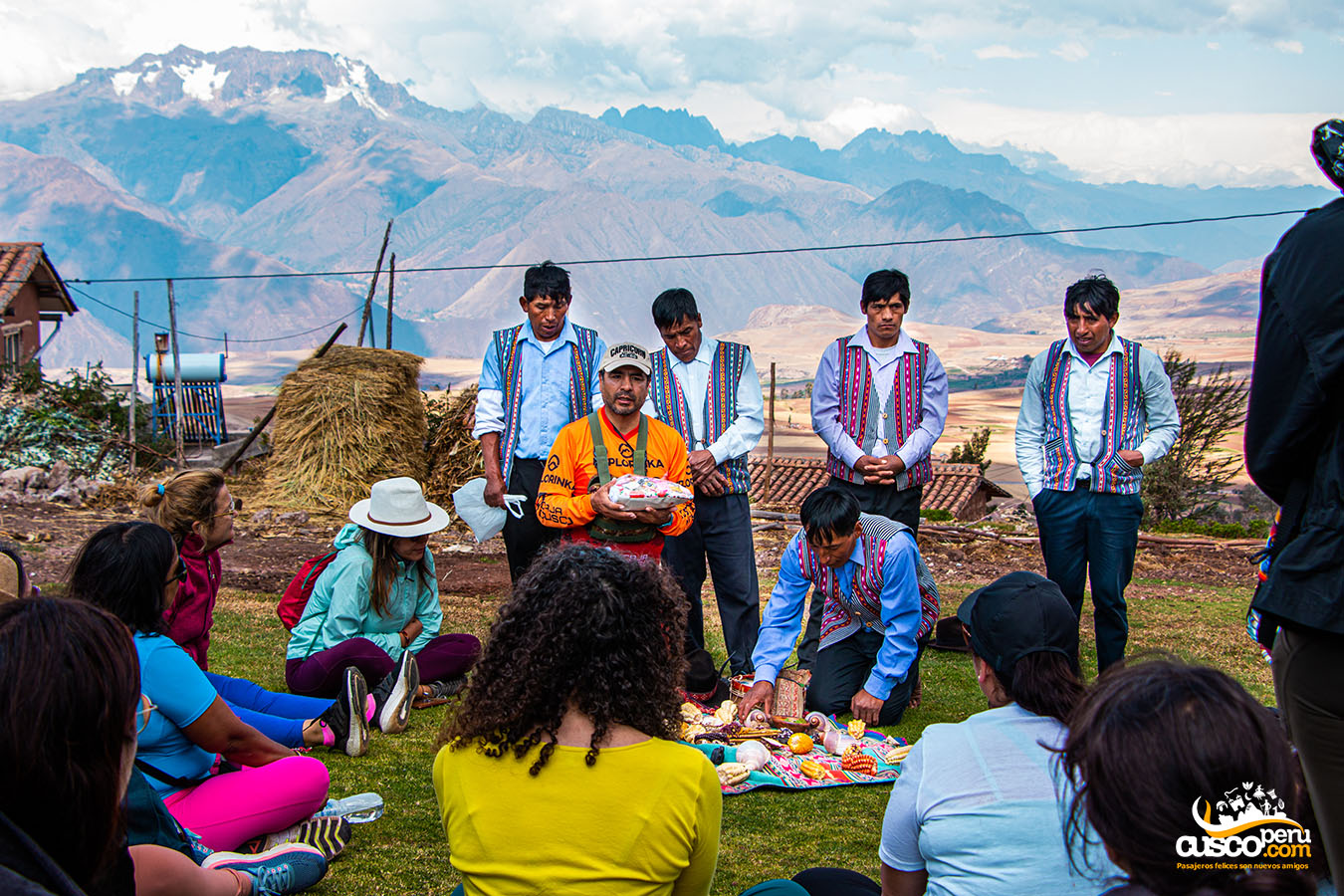
Many people have a close connection with Mother Earth (Pachamama in Quechua). For this reason, every August 1, they perform a ceremony of offering to Pachamama, which represents the earth and all of nature that provides us with the place and resources we need to live.
The Incas held her in the highest regard. She was one of their deities, as was the god Inti, or the Sun. Before certain festivals, they would perform a ceremony of gratitude, a moment when the earth eats, drinks, and smokes. It was a time to give her much of what she has given us.

To understand the meaning of the Quechua word “Pachamama,” we must first break it down into two parts: on the one hand, we have the term “pacha,” which means earth, world, universe, and era, and on the other hand, we have the term “mama,” which means mother. By combining the two terms, we arrive at the meaning “Mother Earth” or “Mother World.”
Everything that exists on our planet, especially in the Andean world, has life. From people to stones, mountains, rivers, plants, and trees, everything has life. Nothing is inert in the Andean world. The stars, the universe, the moon, and especially the sun have life.
Most high Andean communities have had and continue to have a deep dependence on and connection with agriculture. August is the month when they prepare to receive the new harvests. On Pachamama Day, Andean people seek to give back to the earth everything they have received from it, expressing their gratitude and asking for the coming harvests to be abundant and prosperous as well.
Today, many local residents perform this ritual to express gratitude and also to prevent situations that may not be beneficial to them. According to local tradition, offerings may include coca leaves, coins, lliclla (a traditional blanket with Inca motifs), food, among other items.
Farmers, homemakers, workers, agricultural workers, children, authorities, neighborhood associations, and other organizations take part in the Pachamama Day celebrations.

As part of the Pachamama Day celebrations, men and women from high Andean communities gather on August 1 for a ceremony that includes, among other things:
At the end of the ceremony, wood or firewood is placed in the hole. Everything mentioned above is wrapped in the lliclla and, finally, consumed by the fire before being covered with soil. Throughout the ceremony, people drink beer, eat various traditional dishes, and celebrate with dances and music.
Pre-Inca civilizations (Moches, Chimus, Chankas, Tiahuanakus, Amazonian ethnic groups, etc.) shared with the Incas a conception based on a single entity that represented both God and nature. The Incas were familiar with this conception, and it became one of the foundations of their expansion as they spread these beliefs throughout their empire.
According to Inca cosmology, space and time were divided into three realms:
Hanan Pacha: This word means “the upper world.” It was the celestial world, reserved for those who had lived justly and which could be reached through a bridge made of hair. The most important gods, such as Wiracocha, inhabited this upper world, as we will explain further below.
Kay Pacha: This word means “the present world, the here and now.” It is the world where humans, animals, and some gods such as Pachamama, Mama Sara, and Pariacaca live.
Uku Pacha: This word means “the lower world, the world of the dead.” According to Andean mythology, this world is inhabited by unborn children, the dead, and everything beneath the surface of the earth or sea. They believed that caves, springs, and other openings on the earth’s surface were actually portals or lines of connection between Uku Pacha and Kay Pacha.

Inca religion incorporated deities associated with nature, the stars, mountains, water, and fertility; in other words, they believed that the creator god and nature were part of the same entity. Although they developed a textile-based accounting and administrative recording system consisting of a main cord with hanging threads of different colors and knots, known as “Khipus,” they did not develop an alphabetic writing system. Therefore, most of their traditions and myths were passed down orally from generation to generation.
As mentioned above, Inca religion was pantheistic, meaning that it believed in a single entity that represented both creation and nature. However, Wiracocha was one of the most important creator deities within certain Andean and Inca traditions.
Andean culture has traditions, culture, and art that are present in its most important cultural expressions, such as the tribute to Pachamama. We invite you to discover this and much more with our team of professionals at CuscoPeru.com.
Yes, it is possible to find ceremonies open to visitors in certain places and on specific dates. However, not all ceremonies are public, so it is important to respect the community’s guidelines and participate only when permitted.
It is recommended to maintain a respectful attitude, follow the instructions of those conducting the ceremony, and avoid interrupting moments of prayer, offering, or community participation.
It depends on the community and the type of ceremony. Before photographing participants or recording the ritual, it is recommended to ask for permission and respect any instructions from the organizers.
Not necessarily. The elements, forms of participation, and practices may vary depending on the community, region, and local traditions. Therefore, there is no single way of performing this ritual.
The tradition can be found in different communities and rural areas of the Cusco region. The possibility of participating in or witnessing a ceremony will depend on the community, date, and organization of each activity.
It may be appropriate when the community itself invites visitors to participate. In these cases, the most important thing is to follow the instructions of those conducting the ceremony and avoid intervening on your own in the offerings or ritual elements.

Happy passengers