
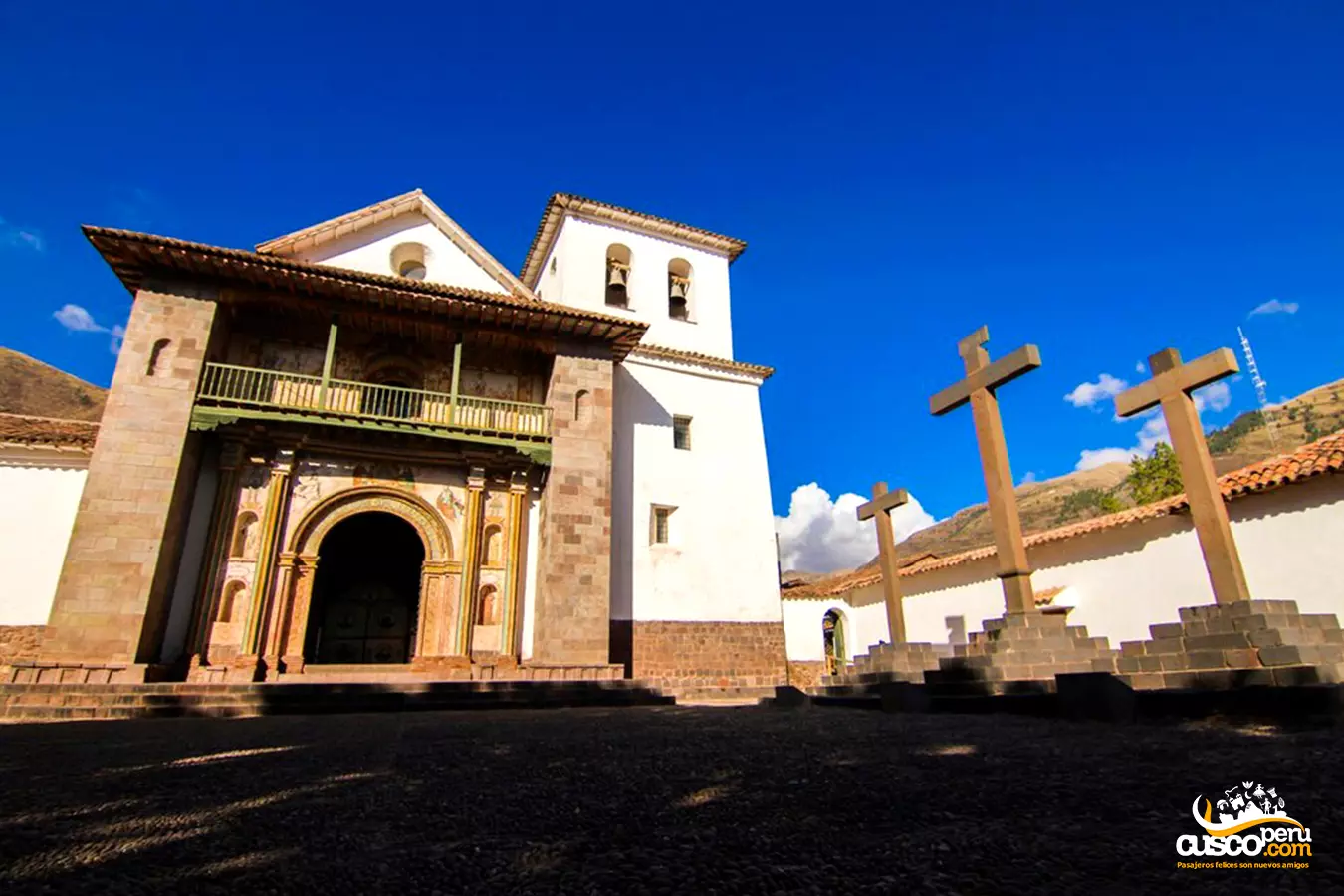
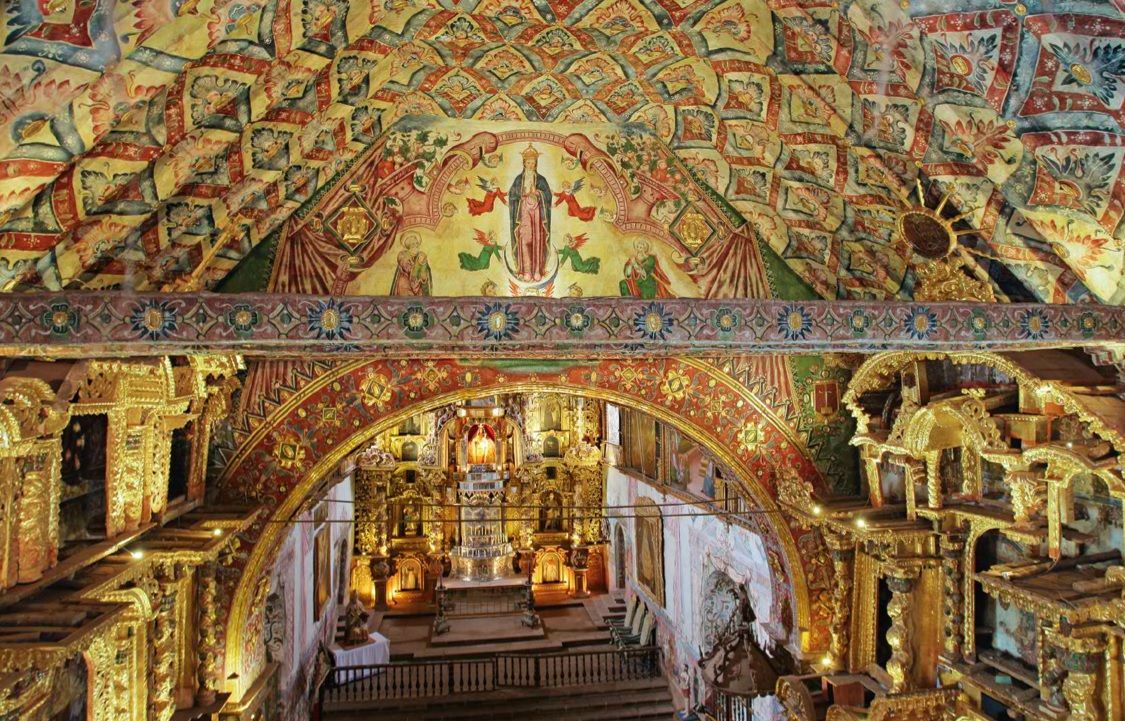
Located in Cusco’s South Valley, the town of Andahuaylillas is home to the Temple of San Pedro Apóstol, known as the “Sistine Chapel of America.” Although it looks like a simple colonial church from the outside, its interior surprises visitors with murals, canvases, gilded altarpieces, and Baroque details of great historical and religious value. Visiting Andahuaylillas allows you to discover one of the most important temples in the South Valley and understand how colonial art, religion, and Andean culture came together.

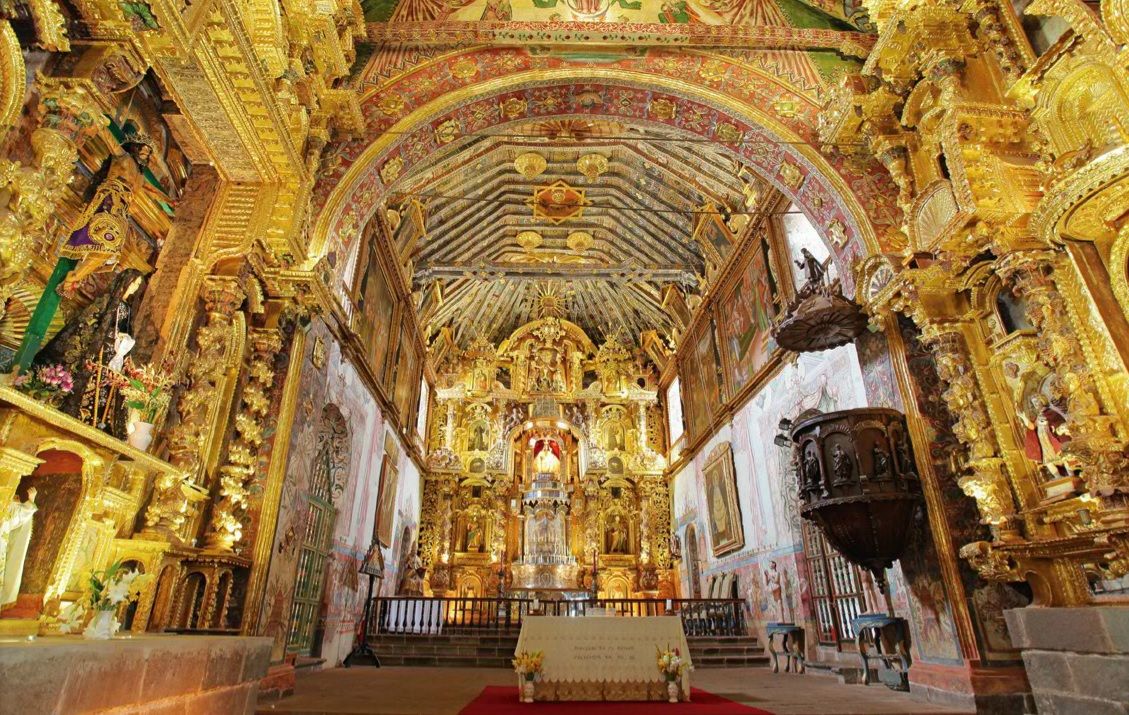
The so-called “Sistine Chapel of America” is the Temple of San Pedro Apóstol of Andahuaylillas, a colonial church located in the district of Andahuaylillas, province of Quispicanchi, in the Cusco region. Inside the chapel, you can see murals, canvases, gilded altarpieces, Baroque decoration with Mudejar influence, and works linked to the Cusco School of Art.
For this reason, it is one of the most important visits in Cusco’s South Valley and forms part of the Andean Baroque Route, together with the Temple of San Juan Bautista in Huaro and the Chapel of the Virgen Purificada of Canincunca. According to PROMPERÚ, this route is part of a circuit of colonial churches located in Cusco’s southern corridor, approximately 40 km from the city.
The Temple of San Pedro Apóstol of Andahuaylillas was built during the colonial period, between the late 16th century and the early 17th century. One of the most important references for understanding the age of its decoration is a mural signed by the painter Luis de Riaño in 1626. This colonial artist was a disciple of the Italian painter Angelino Medoro and is considered an important figure in viceregal art linked to the Cusco School.
The temple also had an educational purpose: its paintings, murals, and symbols helped teach Catholic doctrine to the local population during the viceregal period. In the baptistery, a baptismal formula is preserved in several languages, including Latin, Spanish, Quechua, Aymara, and Puquina, reflecting the multicultural context of evangelization in the Andes.
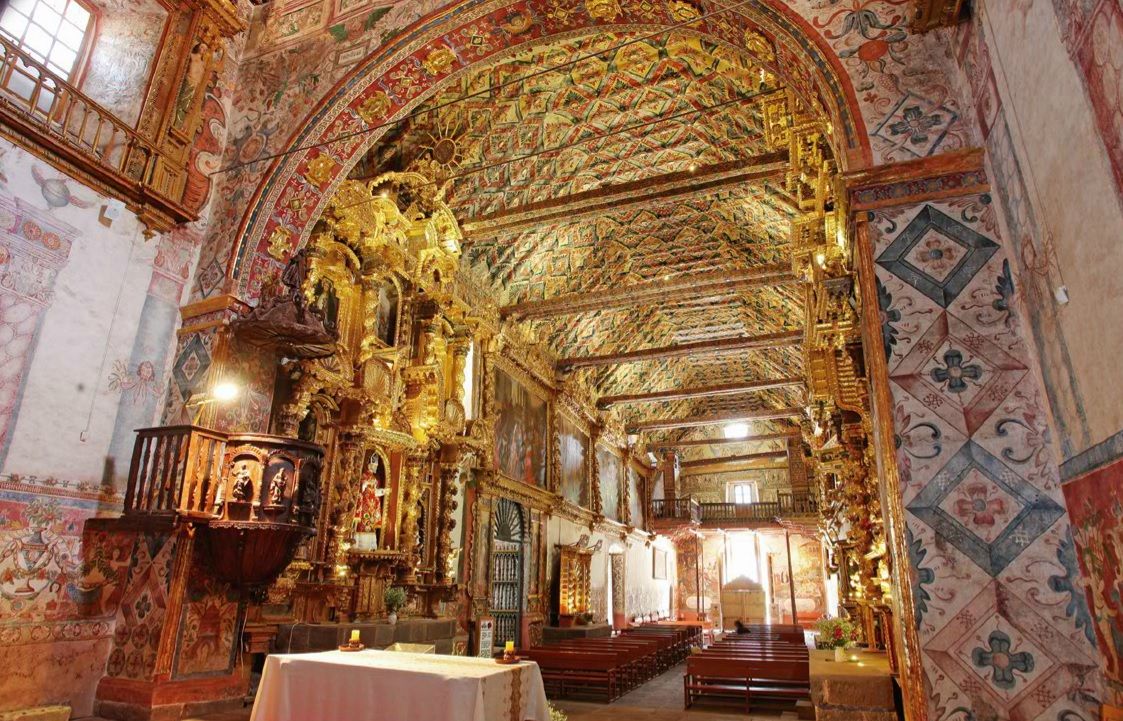
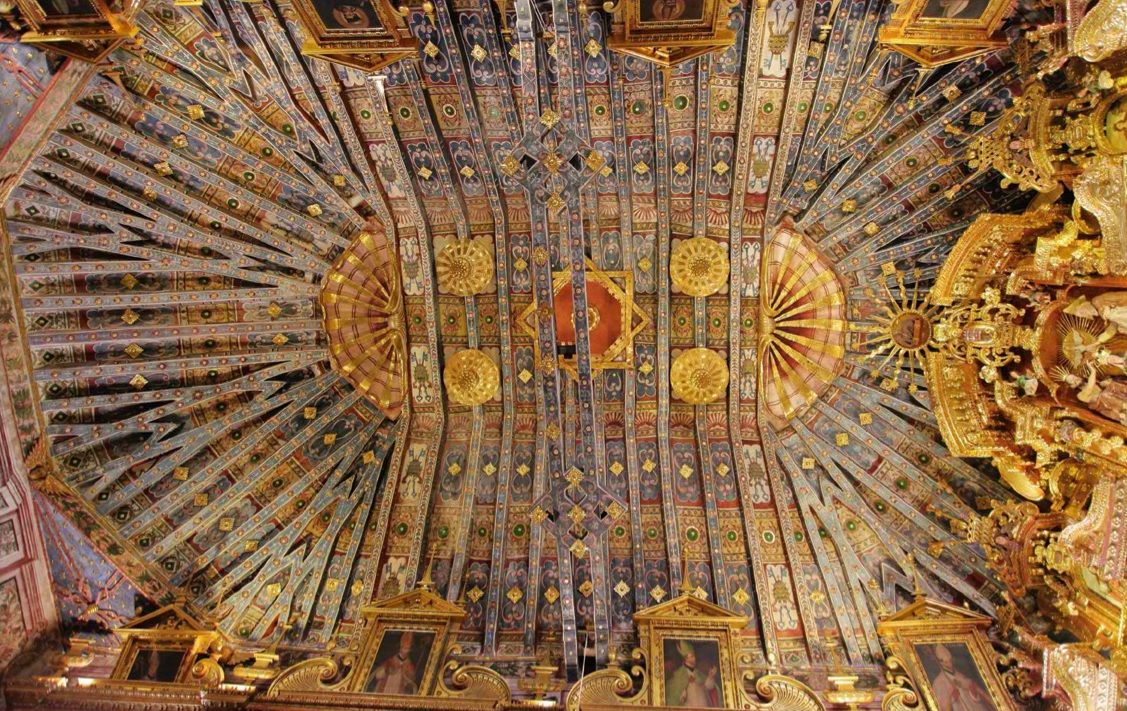
It is known as the “Sistine Chapel of America” because of the extraordinary pictorial decoration on its walls and ceiling. The comparison is not due to the size of the temple, but to the visual richness of its interior, where religious murals, oil paintings, gold leaf, Baroque altarpieces, and elements of colonial Andean art come together.
Among its most outstanding works are the murals attributed to Luis de Riaño, especially the scenes related to the path toward glory and condemnation, which had a didactic purpose within evangelization. The temple also preserves a canvas of the Virgin of the Assumption that some sources attribute to Bartolomé Esteban Murillo, although this information has not been definitively confirmed.
Andahuaylillas is located in the province of Quispicanchi, southeast of the city of Cusco. The trip from downtown Cusco takes approximately one hour by car, depending on traffic and the route chosen.
From Cusco, there are three main ways to get there:
Organized tour: This is the most comfortable option for visitors, as it usually includes tourist transportation, a guide, and visits to other attractions in the South Valley.
Independent transportation: Ideal for those who want to manage their own time and combine the visit with Tipón, Pikillaqta, Huaro, or Canincunca.
Public transportation: You can take a bus or shared van heading toward Urcos or Sicuani and get off in Andahuaylillas. This option is more affordable, but it requires confirming stops and schedules in advance.
Because of its artistic, historical, and religious value, the temple is one of the most important examples of Andean Baroque, a style that combined European elements with local expressions and evangelizing purposes.
The temple preserves canvases from the Cusco School, doctrinal murals, gilded altarpieces, and an interior decoration that surprises visitors because of its contrast with the church’s sober façade. Its old organs and religious pieces also stand out, according to the information available about the site. In addition, it forms part of a heritage route that helps visitors better understand the colonial art of southern Cusco.
This is the town’s main attraction. Inside, you can admire murals, canvases, Baroque altarpieces, gold leaf decoration, a Mudejar-influenced coffered ceiling, and artistic details linked to viceregal religious art.
The main square of Andahuaylillas is also worth a pause during your visit. It is surrounded by pisonay trees, known for their reddish flowers, and preserves a peaceful, traditional atmosphere. It is a good place to rest, take exterior photographs, and observe the town’s daily life.
Andahuaylillas can be visited as part of Cusco’s South Valley route. Nearby attractions include:
Visiting hours
Visiting hours are usually from 7:30 a.m. to 5:30 p.m., although it is recommended to confirm them before traveling, especially on holidays or religious dates.
Entrance fee
The general entrance fee is approximately S/ 15. It is recommended to confirm whether there are different rates for students, national tourists, or local visitors. Entrance to the temple is not included in the Cusco Tourist Ticket.
It is recommended to bring comfortable clothing, sunscreen, a hat, water, and a light jacket, especially if the visit is combined with other attractions in the South Valley. It is also important to respect the temple rules: speak quietly, do not interrupt religious ceremonies, and avoid taking photographs inside if it is prohibited.
For a better experience, it is ideal to visit with a guide, since many details of the temple have historical, artistic, and religious meaning.
The tour to Andahuaylillas is usually part of the route known as Cusco South Valley or the Andean Baroque Route. On this circuit, you can visit colonial temples, traditional towns, and, depending on the itinerary, nearby attractions such as Huaro, Canincunca, Tipón, or Pikillaqta.
The Andean Baroque Route mainly includes the Temple of San Pedro Apóstol of Andahuaylillas, the Temple of San Juan Bautista of Huaro, and the Chapel of the Virgen Purificada of Canincunca. PROMPERÚ presents this circuit as a heritage route of 17th- and 18th-century temples in southern Cusco.
An organized tour may include tourist transportation from Cusco, a professional guide, a visit to the Andahuaylillas temple, and stops in Huaro, Canincunca, Tipón, or Pikillaqta, depending on the itinerary booked. Before reserving, it is advisable to confirm whether the tour includes entrance fees, transportation, a guide, and visits to other places such as Huaro, Canincunca, Tipón, or Pikillaqta. The usual visiting hours may vary, so it is best to confirm the updated schedule and entrance fee before traveling.

Happy passengers