

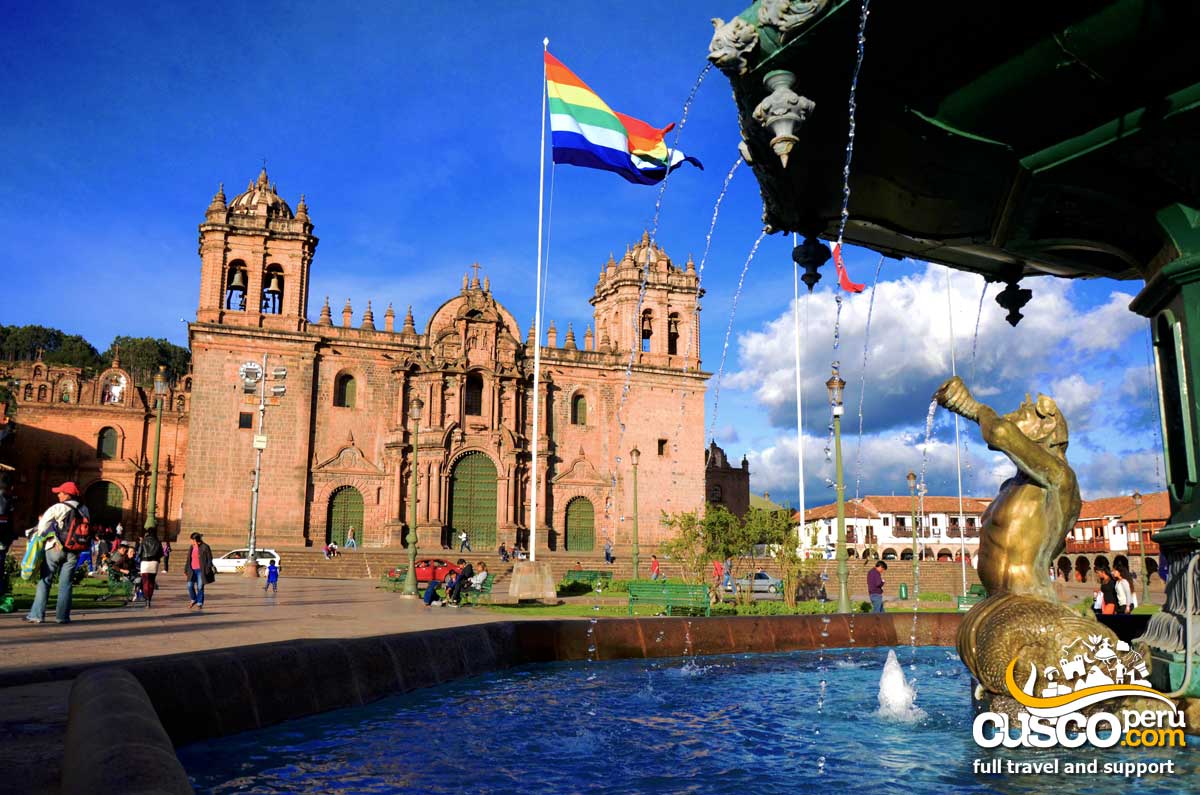
Cusco Cathedral is the city's main Catholic temple and one of the most important religious monuments in the historic center, as well as one of the main references of religious art in Cusco. It combines indigenous traditions with Spanish influences, and its colonial architecture is one of the main attractions of the Plaza de Armas.

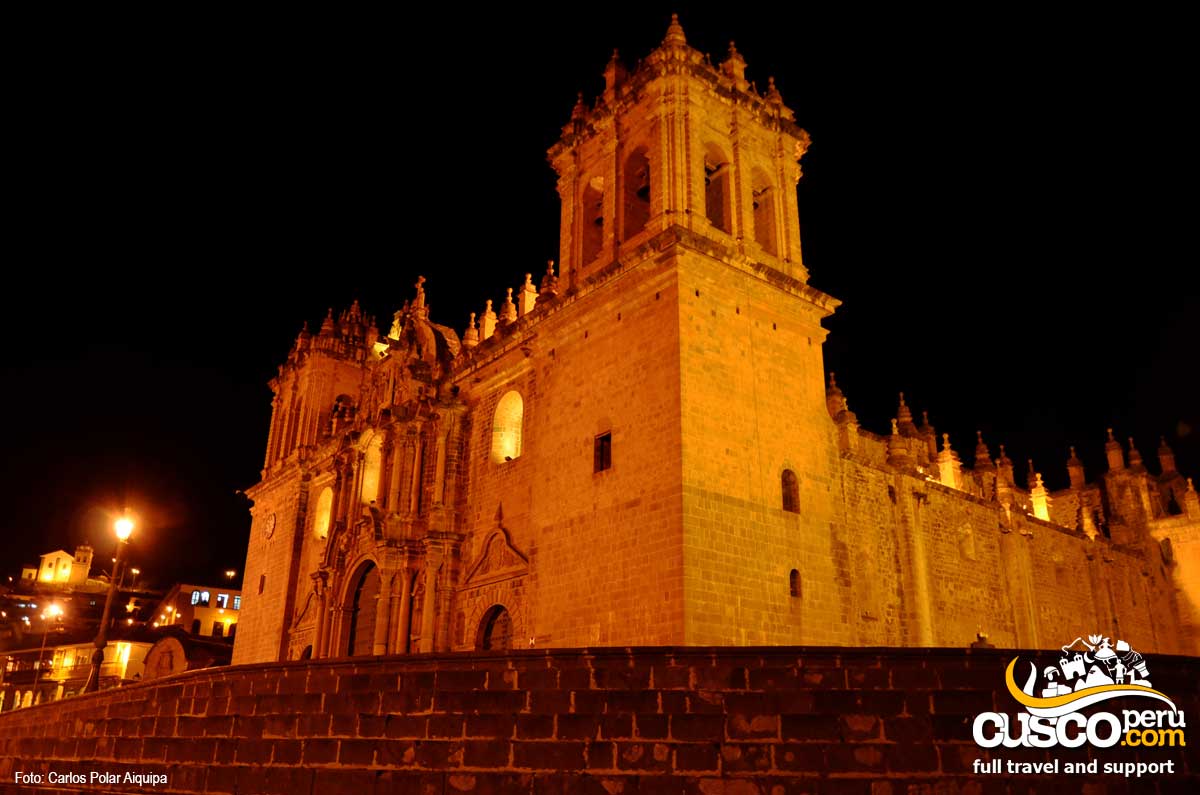
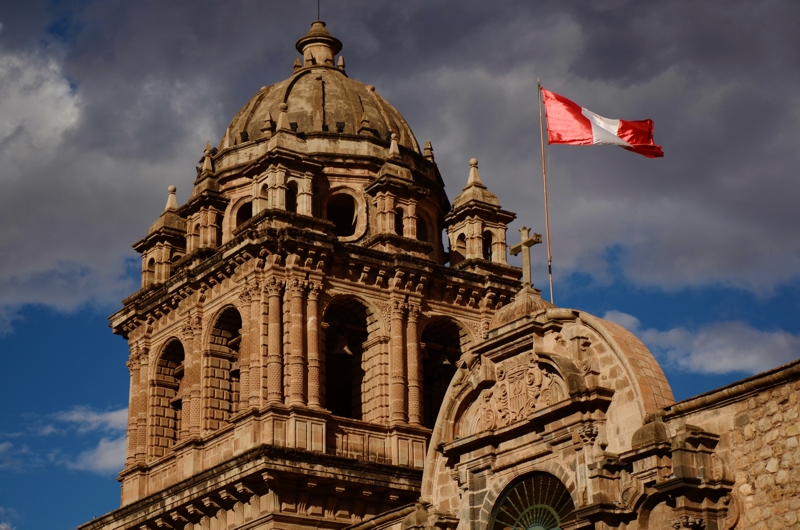
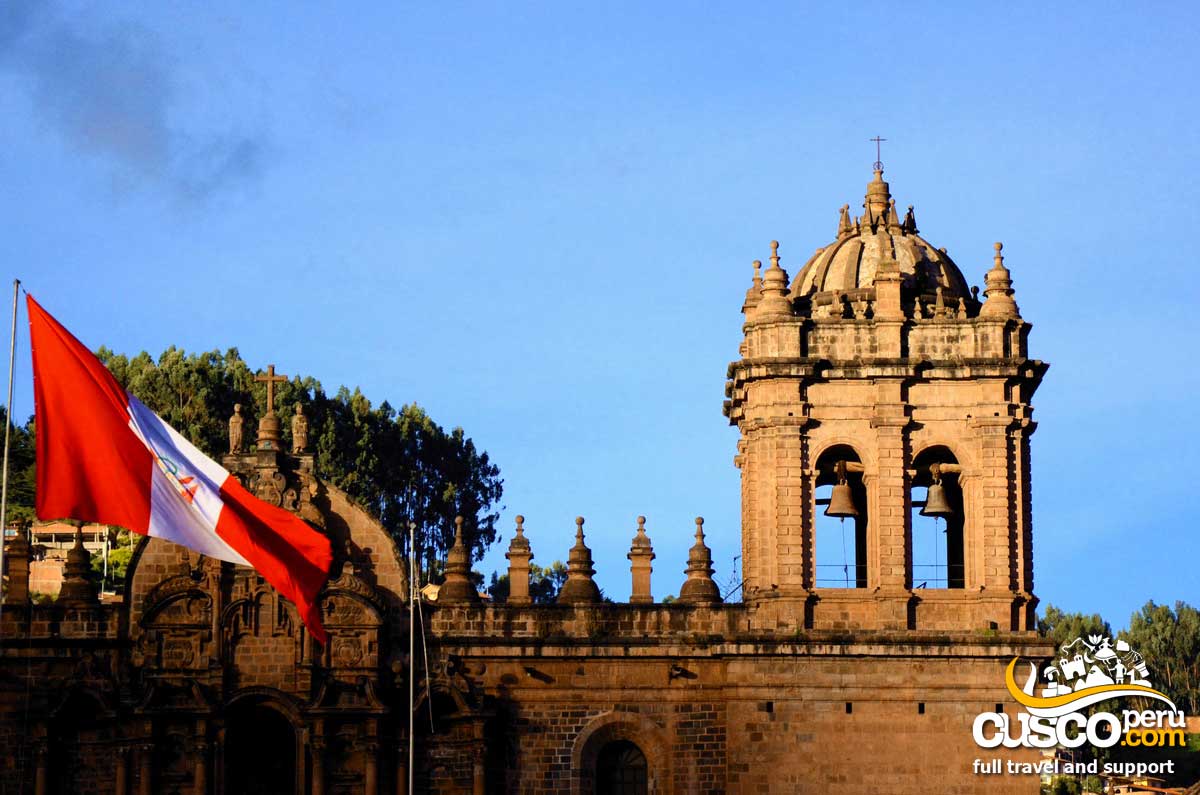
Cusco Cathedral is the city's main Catholic temple and the setting for important religious celebrations. It features Renaissance, Mannerist, and Baroque elements. Flanked by two bell towers, its side entrances are Mannerist in style, while the central entrance has a discreet Baroque design.
Construction of the Cathedral began in 1560 under the initial direction of master builder Juan Miguel de Veramendi. Various architects and master builders participated in its construction. The 1650 earthquake mainly affected structural elements of the temple, although the Cathedral withstood much of the seismic movement. As a result, the third level of the towers was removed to give them a more solid and lower appearance.
The main construction was completed in 1654 under the direction of Miguel Gutiérrez Sencio. The Temple of the Holy Family began construction in 1723 as part of the cathedral complex under the direction of Gabriel de Arregui. Due to the death of the architect in charge, construction resumed ten years later, in 1733, and was finally completed on September 3, 1735. It was recognized as a minor basilica of the Catholic Church on February 8, 1928. Since 1972, it has formed part of the area declared as the Monumental Heritage of Cusco. In 1978, Juan Carlos I of Spain delivered part of the ashes of Inca Garcilaso de la Vega, which were deposited in the Church of El Triunfo.
In 1983, UNESCO declared the city of Cusco a World Cultural Heritage Site, a recognition that includes the Historic Center of Cusco, where the Cathedral is located.
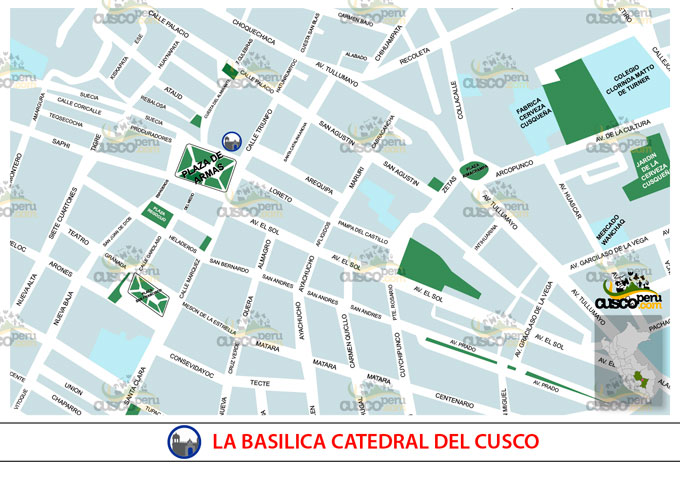
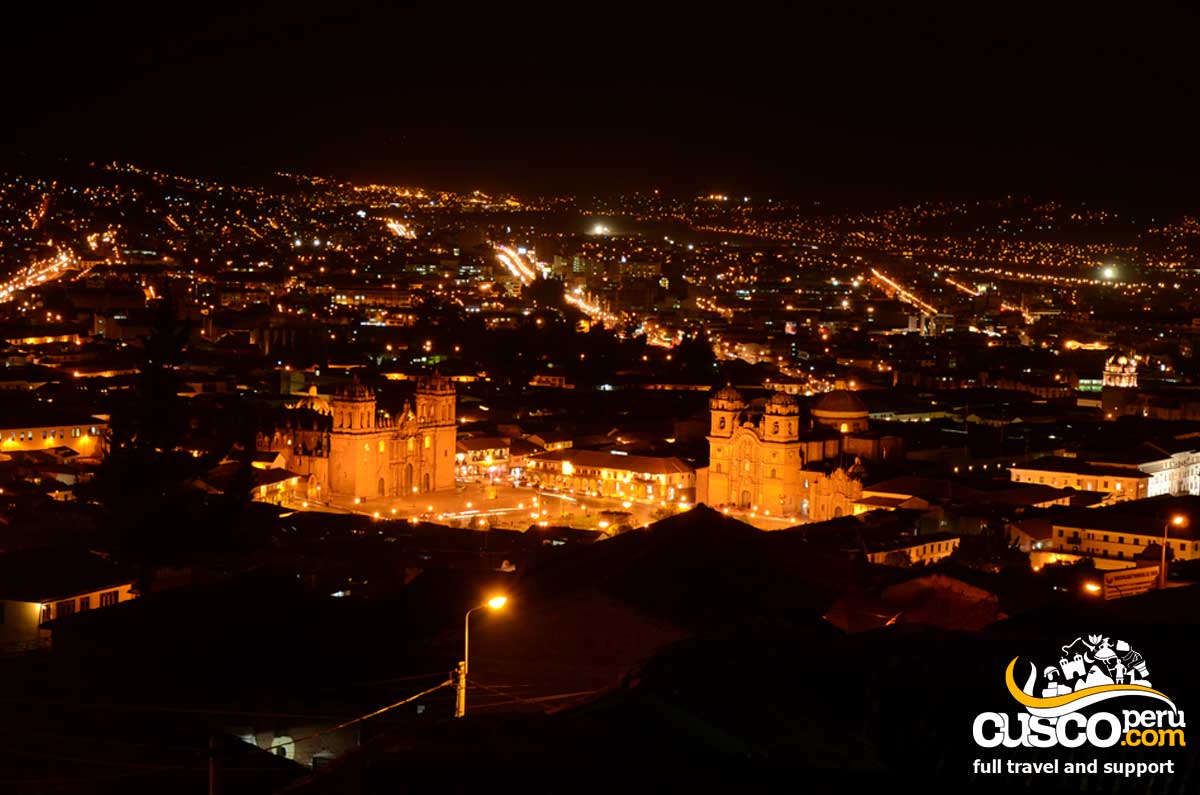
Cusco Cathedral is located in the Plaza de Armas, in the historic center of the city. Due to its central location, most visitors can walk there from hotels in the historic center. If you are staying in a more distant area, you can take a taxi.
Want to visit Cusco Cathedral with a local guide?
Explore our tours in Cusco and discover the Cathedral along with other historic sites in the Historic Center on a Cusco City Tour.
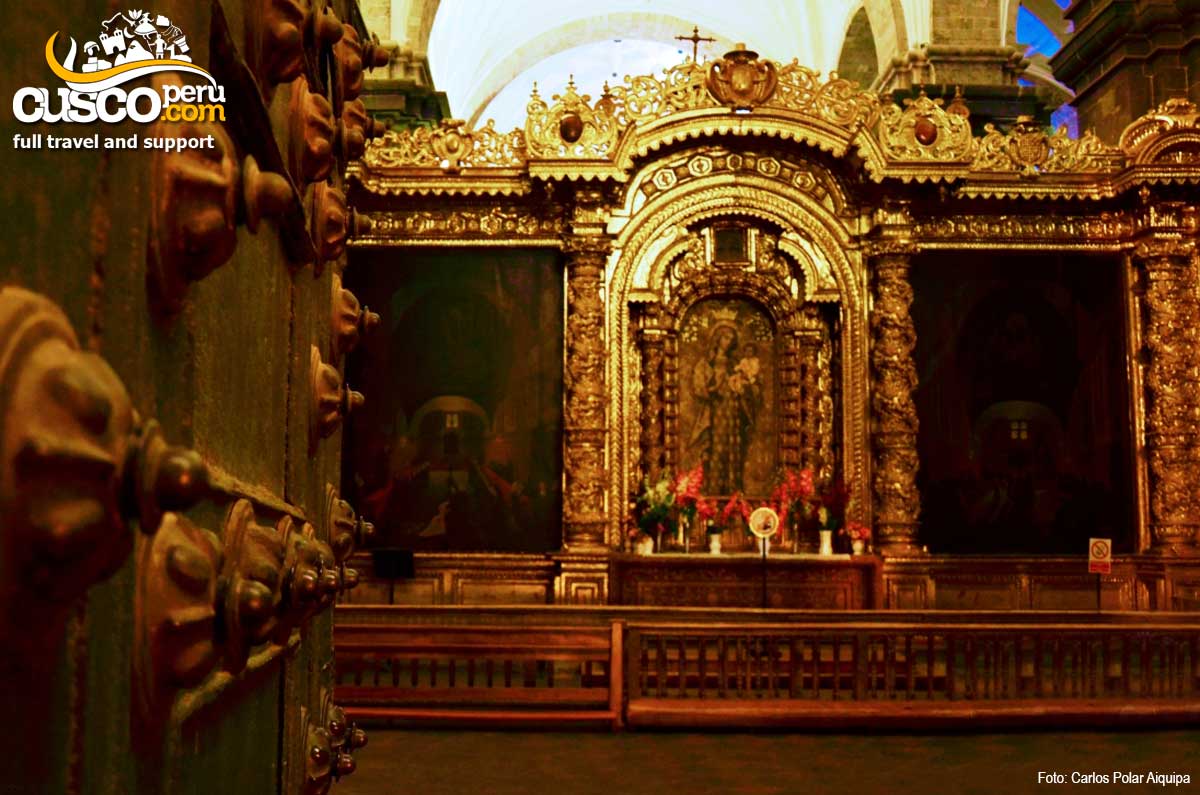
The choir is carved from cedar wood and features ornamental elements of colonial tradition. The main altar stands out for its decoration and ornamental silver elements.
Inside, the Cathedral features naves, chapels, altars, and a valuable collection of religious art. Many of its ornaments feature gilded details, while its walls are decorated with religious paintings and sculptures. Among the images most venerated by the people of Cusco is the Lord of the Earthquakes.
The temple houses an important collection of colonial paintings created by Indigenous, mestizo, and European artists. In the Silver Room, the baldachin stands out. It was made in 1733 and donated by Francisco Guyzueta Maldonado.
The Cathedral also features a collection of paintings from the Cusco School, including works by Diego Quispe Tito, Basilio Santa Cruz Pumacallo, Basilio Pacheco, and Marcos Zapata, the author of a unique representation of “The Last Supper,” in which the main dish is roasted guinea pig. The sacristy is decorated with portraits of the bishops who led the Archdiocese of Cusco.

The most venerated image is that of the Lord of the Earthquakes, the patron saint of Cusco, traditionally associated with protecting the city during the 1650 earthquake. The Chapel of Our Lady of the Assumption also stands out for its painting of the Virgin surrounded by angels.
Visiting hours: Monday to Sunday, from 10:30 a.m. to 5:00 p.m.
Mass schedule: Monday to Sunday, from 7:00 a.m. to 10:00 a.m.
Price:
When visiting Cusco Cathedral, it is important to keep the following recommendations in mind:

A visit can take approximately 45 minutes to 1 hour, depending on how much time you spend observing its chapels, altars, paintings, sculptures, and other religious art elements.
No. Admission to Cusco Cathedral is not included in the Cusco Tourist Ticket. Entrance is purchased separately or through the ticket corresponding to the Cusco Religious Circuit.
No. They are three different churches that form part of the same cathedral complex. The Cathedral Basilica occupies the central section, while the Church of El Triunfo and the Temple of the Holy Family are located on either side.
Photography and video recording are currently not permitted inside during tourist visits. It is recommended to follow the instructions provided by the staff, as conditions may change during ceremonies or special activities.
The Cathedral continues to function as a religious temple. During Mass, you may enter to participate in the celebration, but the religious schedule should not be confused with tourist visiting hours, as access to certain areas may be restricted.
Yes. You can visit the Cathedral accompanied by a guide, and there are also tours of the Historic Center that include the Cathedral. A guided visit allows you to better understand the paintings, chapels, altarpieces, and history of the complex.

Happy passengers