
Chiclayo is the capital of the Lambayeque region and one of the main gateways to the archaeological sites, museums, and landscapes of Peru's northern coast. It is located near the coastline, approximately 770 km from Lima by road.
Popularly known as the City of Friendship, Chiclayo offers accommodation, transportation, restaurants, and tour operators from which visitors can organize excursions to Lambayeque, Túcume, Sipán, Ferreñafe, Pimentel, and Zaña.
Chiclayo was granted town status in 1827 and received the title of Heroic City in 1835. That same year, it became the capital of the Province of Chiclayo.

Chiclayo offers visitors the opportunity to explore different periods of the pre-Hispanic history of northern Peru. Nearby are archaeological sites associated with the Moche, Lambayeque or Sicán, Chimú, and Inca cultures, as well as museums that preserve artifacts recovered through archaeological research.
The destination also combines archaeology with beaches, dry forests, regional cuisine, and urban attractions. However, most of its main tourist sites are located outside the city center.
From Lima by Road
The road distance is approximately 770 km. The journey usually takes around twelve hours, although travel time may vary depending on the bus service, traffic, scheduled stops, and the condition of the Pan-American Highway.
There are both daytime and overnight bus services. Before purchasing your ticket, it is advisable to verify that the company is reputable, that the service is direct, and that the arrival terminal is clearly specified.
From Lima by Air
Chiclayo is served by Captain FAP José Abelardo Quiñones Gonzales International Airport. Direct flights from Lima usually take about one hour and twenty minutes. Flight schedules and frequencies should be confirmed directly with the airlines, as they may change depending on the season.
The airport is located within the urban area, making the transfer to downtown Chiclayo relatively short, depending on traffic conditions.
Within the city, taxis and public transportation are commonly used. To visit Pimentel, Lambayeque, Ferreñafe, or Túcume, travelers can use private vehicles, organized tours, or intercity transportation.
For itineraries with multiple stops, such as Sipán, Túcume, or the Pómac Forest, hiring tourist transportation is generally the most practical option. Before booking, ask whether the price includes entrance fees, a guide, meals, and hotel pickup.
The Royal Tombs of Sipán Museum is located in the city of Lambayeque, not in downtown Chiclayo. Its architecture is inspired by ancient adobe pyramid structures, and its exhibition halls display artifacts recovered from the royal tombs discovered at Huaca Rajada.
In 1987, archaeologist Walter Alva and his team discovered the tomb of the Lord of Sipán at Huaca Rajada, one of Peru's most important archaeological discoveries. The find made it possible to study a Moche elite burial that had not been completely destroyed by looting.
The museum preserves ornaments, ceramics, emblems, metal artifacts, and funerary objects that help explain the political, religious, and artistic organization of the Moche civilization.
Opening hours: Tuesday to Sunday, 9:00 a.m. to 5:00 p.m.
General admission: S/ 10.
Higher education students: S/ 4.
Some minors, senior citizens, and people with disabilities may qualify for discounted or free admission. Please check the current conditions before your visit.
Túcume features numerous adobe pyramids and archaeological structures surrounding its on-site museum.
The museum explains the history of Túcume, from the Lambayeque culture to the arrival of the Chimú, the Incas, and the Spanish. It also includes scale models and exhibits on metallurgy and goldsmithing techniques.
The visit may include walking trails and viewpoints, so it is recommended to bring water, sun protection, a hat, and comfortable footwear. Temperatures can be high during the middle of the day.
Opening hours: Tuesday to Sunday, 9:00 a.m. to 5:00 p.m.
Routes A and B, adults: S/ 8.
Full route, adults: S/ 12.
Reduced rates are available for students and other visitor groups.
Huaca Rajada is located in the district of Zaña. It is the archaeological site where the tombs of the Lord of Sipán and other members of the Moche elite were discovered.
The site allows visitors to understand the archaeological context in which these discoveries were made. This is especially important because the most famous artifacts are displayed at the Royal Tombs of Sipán Museum, while Huaca Rajada provides insight into the original layout of the ancient mausoleum and its relationship with the adobe platforms.
Opening hours: Tuesday to Sunday, 9:00 a.m. to 5:00 p.m.
General admission: S/ 8.
Higher education students: S/ 3.
Children: S/ 1.50, according to the official museum rates.
The Model Market is a traditional marketplace that remains an active part of the city's commercial life. Its stalls sell agricultural products, food, herbs, household items, and everyday goods. If you would like to explore the market from a culinary perspective, consider consulting a local agency or licensed guide, such as CuscoPeru.com, which can help you organize your visit safely and conveniently.
The Model Market is a traditional marketplace where visitors can discover local products, herbs, regional foods, and experience the daily commercial activity of Chiclayo. It is a busy environment with heavy pedestrian traffic and vibrant local commerce.
It is recommended to visit during daylight hours, avoid blocking walkways, ask permission before photographing vendors, and keep personal belongings secure.
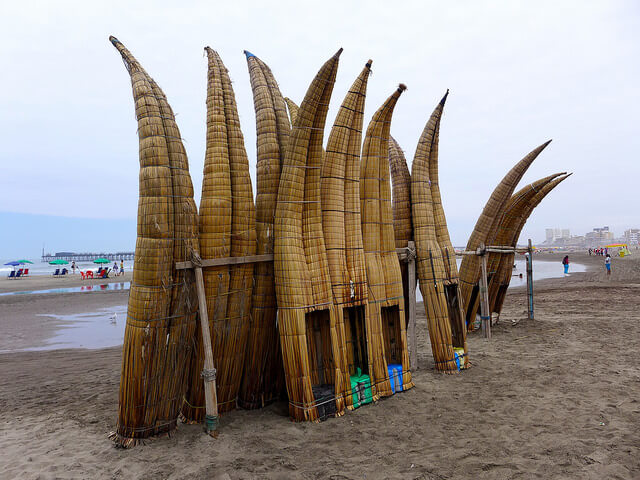
Pimentel is a seaside resort located approximately 15 km from Chiclayo. Its beach is wide and sandy, and its historic pier is one of the area's most recognizable landmarks.
Visitors can observe traditional fishing boats, local fishing activity, and the coastal scenery. The area also offers restaurants specializing in fresh seafood.
Sea conditions vary depending on the season and wave conditions. Before entering the water, always follow beach flags, warning signs, and designated swimming areas. Access to the pier may change due to maintenance work or municipal regulations.
The Yortuque Promenade is a public space in Chiclayo featuring sculptures and murals inspired by the history and cultures of Lambayeque. It was inaugurated in 2015 and functions as an open-air urban museum.
Its route extends for more than 1,600 meters and features murals and sculptural ensembles that chronologically illustrate different stages of the region's history. According to Peru's Ministry of Foreign Trade and Tourism (MINCETUR), the attraction includes nine sculptural groups with around one hundred sculptures.
Admission: Free.
Recommended visiting hours (official registry): 6:00 a.m. to 6:00 p.m.
The sculptures depict historical figures, scenes, and symbols from the region, making this promenade an excellent place to learn about Lambayeque's cultural heritage through visual art.
Paseo de las Musas is a pedestrian promenade located between Garcilaso de la Vega Avenue and Balta Sur Avenue. It is an urban public space commonly used for walking, photography, and public events.
Chiclayo has a generally warm, dry coastal climate with little rainfall throughout most of the year. Mornings can be overcast, especially during the cooler months, while summer usually brings stronger sunshine and higher temperatures.
May to November
Temperatures are generally milder during this period. It is an ideal season for visiting archaeological sites and museums without the intense summer heat. Coastal skies may remain cloudy during part of the morning.
December to April
The weather is usually hotter, making it an attractive season to visit Pimentel Beach. This is also the period when Lambayeque may experience more rainfall, particularly during unusual climatic events. The Pómac Forest identifies December through March as its rainy season.
Chiclayo can be visited throughout the year. The best time depends on whether you prioritize beach activities or archaeological excursions.

Opening hours, admission fees, available routes, and access conditions may change due to maintenance, archaeological research, weather conditions, or administrative regulations. It is advisable to verify the latest information a few days before your trip.
Bring lightweight clothing, comfortable shoes, sunglasses, a hat, water, and sunscreen. Túcume, Sipán, and the Pómac Forest include areas with limited shade.
Plan museum visits from Tuesday to Sunday, leaving Monday for Pimentel Beach, urban attractions, or local gastronomy. Do not touch adobe walls, archaeological remains, or restricted areas.
Book tours with licensed agencies and guides. Before making a payment, request a detailed itinerary specifying transportation, entrance fees, meals, duration, type of service, and cancellation policy.
In markets and crowded areas, carry only the items you need and avoid displaying valuable belongings.
How many days do I need to visit Chiclayo?
Three days are usually enough to visit the Royal Tombs of Sipán Museum, Huaca Rajada, Túcume, and Pimentel by organizing your itinerary with private transportation or guided tours.
Is the Royal Tombs Museum located in Chiclayo?
No. It is located in the city of Lambayeque. Chiclayo serves as the main accommodation and departure point for most excursions.
Are Huaca Rajada and the Royal Tombs Museum the same place?
No. Huaca Rajada is the archaeological site where the tombs were discovered. The Royal Tombs Museum preserves and exhibits many of the artifacts recovered during the excavations.
Can I visit Túcume and Sipán on the same day?
Yes, it is possible with private transportation or an organized tour, but the schedule may feel rushed. If you want enough time to explore the museums and walking trails, it is better to dedicate separate days to each site.
Are the museums open on Mondays?
Most state-run museums in Lambayeque are open from Tuesday to Sunday. Check the latest schedules before your trip, especially if your visit coincides with a public holiday. Some museums may have special opening hours during certain holidays.
What is Chiclayo's most important historical date?
April 18 commemorates the creation of the Province of Chiclayo in 1835. The city had received the title of Heroic City three days earlier, on April 15.

Happy passengers