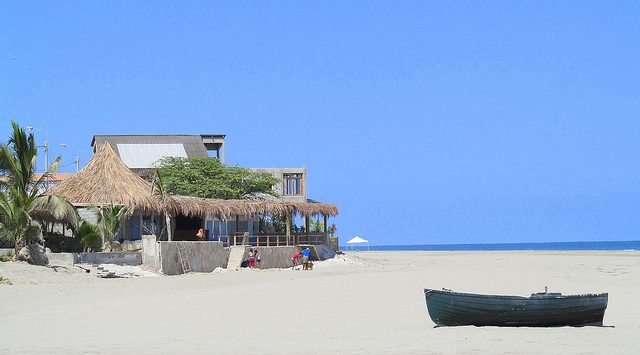
Punta Sal is a seaside resort on Peru’s northern coast, located in the district of Canoas de Punta Sal, Contralmirante Villar Province, Tumbes Region. It is known for its extensive sandy shoreline, generally warm waters and the presence of hotels, beach houses, restaurants and tourist services.
The destination is mainly suitable for beach activities, relaxation, boat trips and marine wildlife watching at certain times of the year. Wave conditions, water clarity and the availability of services may vary depending on the season and the area visited.

Punta Sal is located approximately:
The main access route is the Pan-American Highway North. The journey from the city of Tumbes may take around one hour and twenty minutes by private vehicle, although travel time depends on traffic, stops and the exact destination.
The beach is located approximately 3 meters above sea level.
From the city of Tumbes
Take the Pan-American Highway North southbound, passing through La Cruz, Zorritos and other areas of Contralmirante Villar Province.
The distance from Tumbes’ main square to Punta Sal is approximately 81.4 km. Peru’s Ministry of Foreign Trade and Tourism estimates a travel time of one hour and twenty minutes by private car.
From Zorritos
From Zorritos, continue south along the Pan-American Highway North. The recorded distance is approximately 54 km, and the journey may take around 48 minutes, depending on traffic and the arrival point.
From Máncora
Punta Sal is located approximately 23 km north of Máncora. Transportation is available along the Pan-American Highway North by taxi, prearranged transport or vehicles traveling toward Cancas and Tumbes.
The fare should be agreed upon before the journey, and it is preferable to use identified companies or drivers.
Swimming and walking along the seashore are the most common activities. The waters generally have higher temperatures than the beaches of central and southern Peru due to the influence of warm tropical Pacific currents.
This does not mean that the sea is safe every day. Visitors must respect warning flags, signs, lifeguard warnings and instructions from local authorities.
The official tourism information sheet lists yacht or boat trips and sea kayaking activities. Their availability depends on service providers, the season and maritime conditions.
Before booking a service, it is advisable to verify:
The expression “coral reefs” should not be used. [The following sentence is incomplete in the original text:] The protected offshore ecosystem should be visited with formally registered operators, while respecting protected species, minimum permitted sizes, closed seasons and the regulations established by maritime and fishing authorities.
Punta Sal Reefs and the Mar Tropical de Grau National Reserve
On April 24, 2024, the Mar Tropical de Grau National Reserve was officially established through Supreme Decree No. 003-2024-MINAM. The reserve includes four sectors:
The Punta Sal Reefs sector protects warm-water rocky reefs and habitats used by fish, turtles and other marine species.
The establishment of the reserve does not mean that its entire area is freely open to all tourism activities. Visits and nautical operations must comply with its zoning regulations, conservation rules and the instructions of Peru’s National Service of Natural Areas Protected by the State.
Cancas is a fishing community in the district of Canoas de Punta Sal. Its beach is located north of Máncora and close to several accommodations and restaurants along the coast.
Peru’s Ministry of Foreign Trade and Tourism records activities such as swimming and diving in this area, as well as its connection with the Punta Sal Reefs and the Mar Tropical de Grau National Reserve.
A visit provides an opportunity to experience an area with a stronger presence of local fishing activity than the predominantly hotel-oriented sectors of Punta Sal.
Punta Mero is another coastal area in Contralmirante Villar Province. It features fine sand, rocky areas and coastal formations shaped by the waves. The official tourism information sheet highlights the presence of marine resources such as oysters, scallops, lobsters and crabs.
The availability of restaurants, transportation and activities may be more limited than in Punta Sal. It is advisable to arrange transportation in advance and avoid entering rocky areas during high tide.
Punta Sal can be visited throughout the year. The best period depends on the activities planned.
From December to March
Higher air temperatures are generally recorded during these months. This is also the season with the greatest possibility of rainfall in Tumbes, so visitors should check the weather forecast, the condition of the Pan-American Highway and any warnings about the activation of ravines.
From April to June
Rainfall generally becomes less frequent. This can be a convenient time for beach activities without the highest summer visitor numbers.
From July to October
This is the best-known period for humpback whale-watching excursions. Temperatures may feel slightly cooler, especially at night and on cloudy days.
November
This is a transitional month leading into the warm season. Sea and weather conditions should be checked before scheduling nautical activities.
Use sunscreen, a hat and lightweight clothing. Solar radiation can be intense even when the sky is cloudy.
Bring a light outer layer for the evening, especially between June and October.
Do not enter the sea when warning flags are displayed, waves are strong or lifeguards advise against it.
Book maritime activities only with formally registered operators and verify that they provide life jackets.
Do not remove stones, shells, corals, animals or marine organisms. Part of the sea off Punta Sal belongs to a protected natural area.
Carry some cash in Peruvian soles. Although there are ATMs and establishments that accept cards, not all coastal services have a stable connection.
During the rainy season, check weather warnings and road conditions before traveling.

Happy passengers