

The Society of Jesus is a religious order founded in 1540 by Saint Ignatius of Loyola, whose main purpose was evangelization and education. In Cusco, the Jesuits played an important role in evangelization, education, and cultural life during the colonial period.
The first foundation of the church took place on July 17, 1571, by order of Viceroy Francisco de Toledo and at the initiative of Father Jerónimo Ruiz de Portillo. Construction began that same year, according to plans attributed to the religious architect Francisco Becerra.
In 1651, construction began on the Chapel of Our Lady of Loreto, also known as the Chapel of the Indigenous People, attached to the Church of the Society of Jesus. The work was completed three years later.
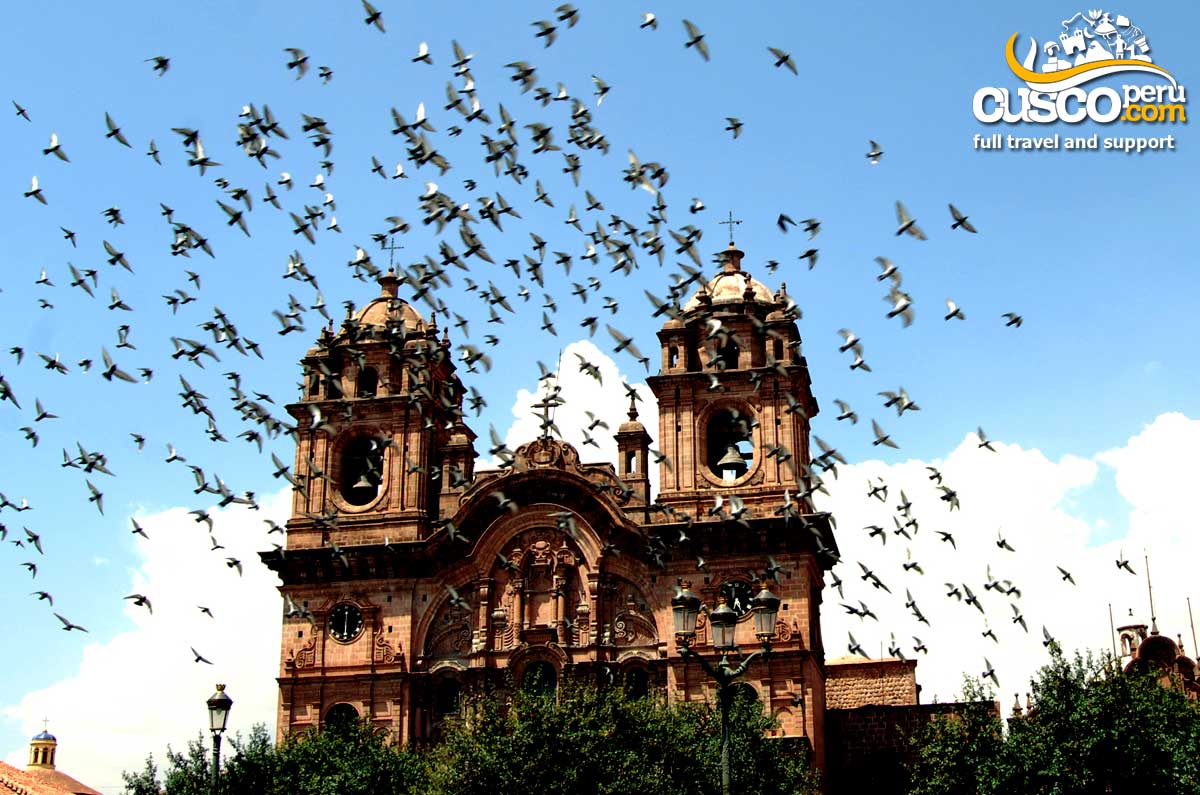
The church began to be built in the 16th century, but the temple that can be seen today mainly corresponds to the reconstruction carried out after the earthquake of 1650 and completed in 1668. Its architecture stands out for the symmetry of its façade, the ornamental richness of colonial Baroque style, and the integration of elements typical of viceregal Cusco.

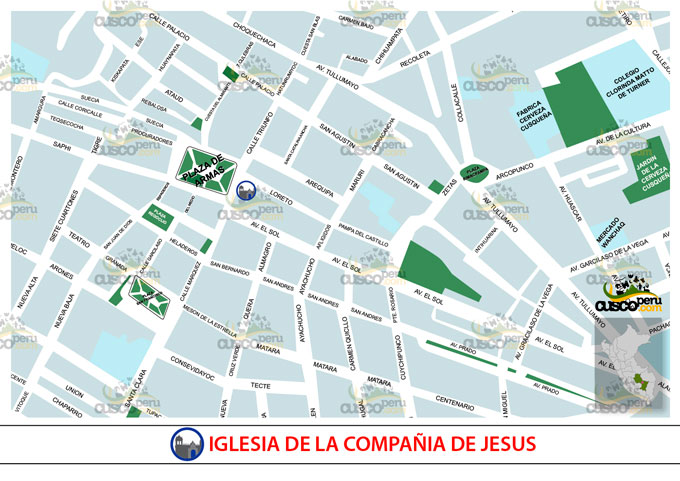
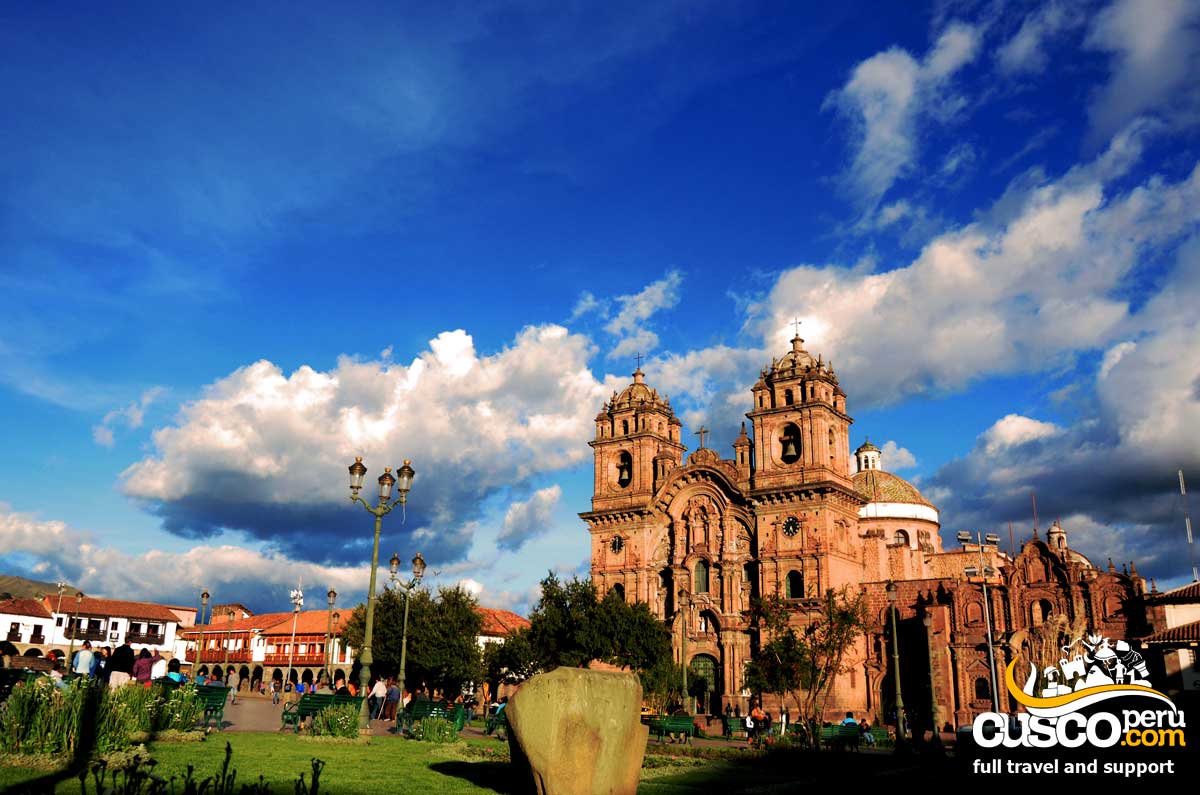
It is located in Cusco’s Main Square. Upon arriving at the square, it stands out next to the Cathedral for its imposing Baroque façade.
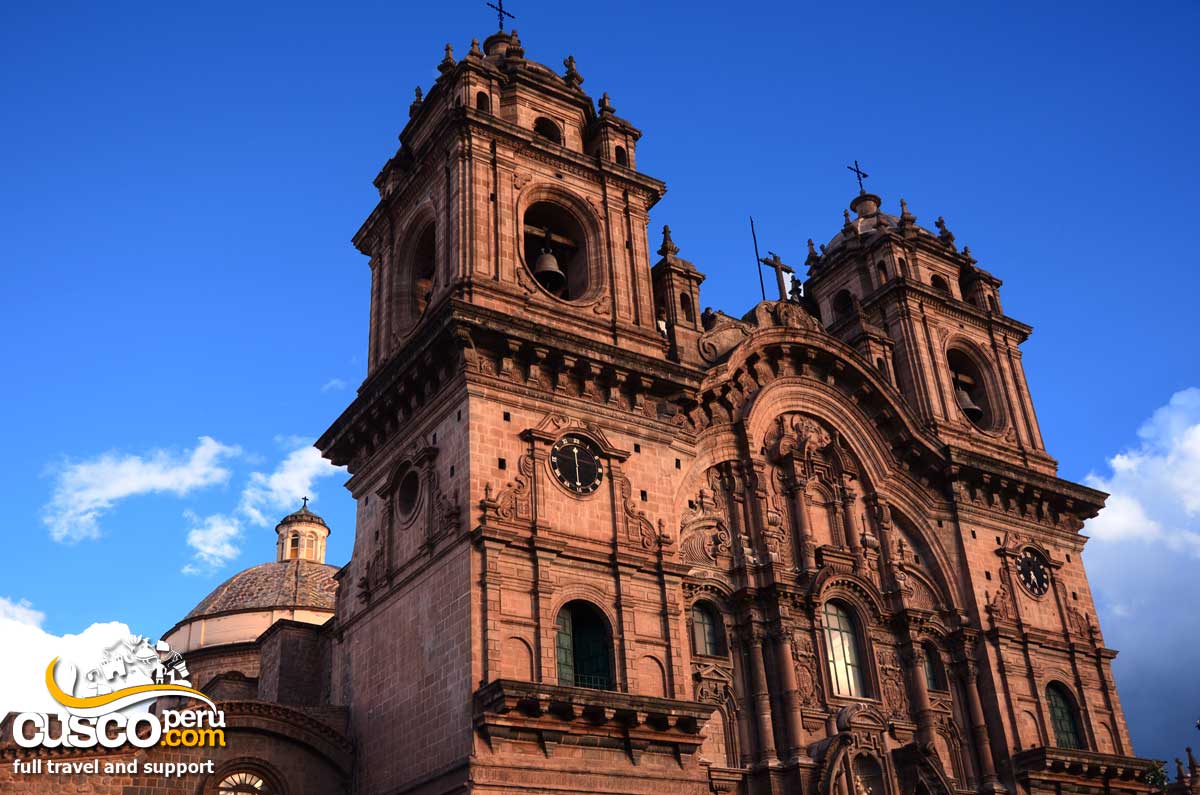
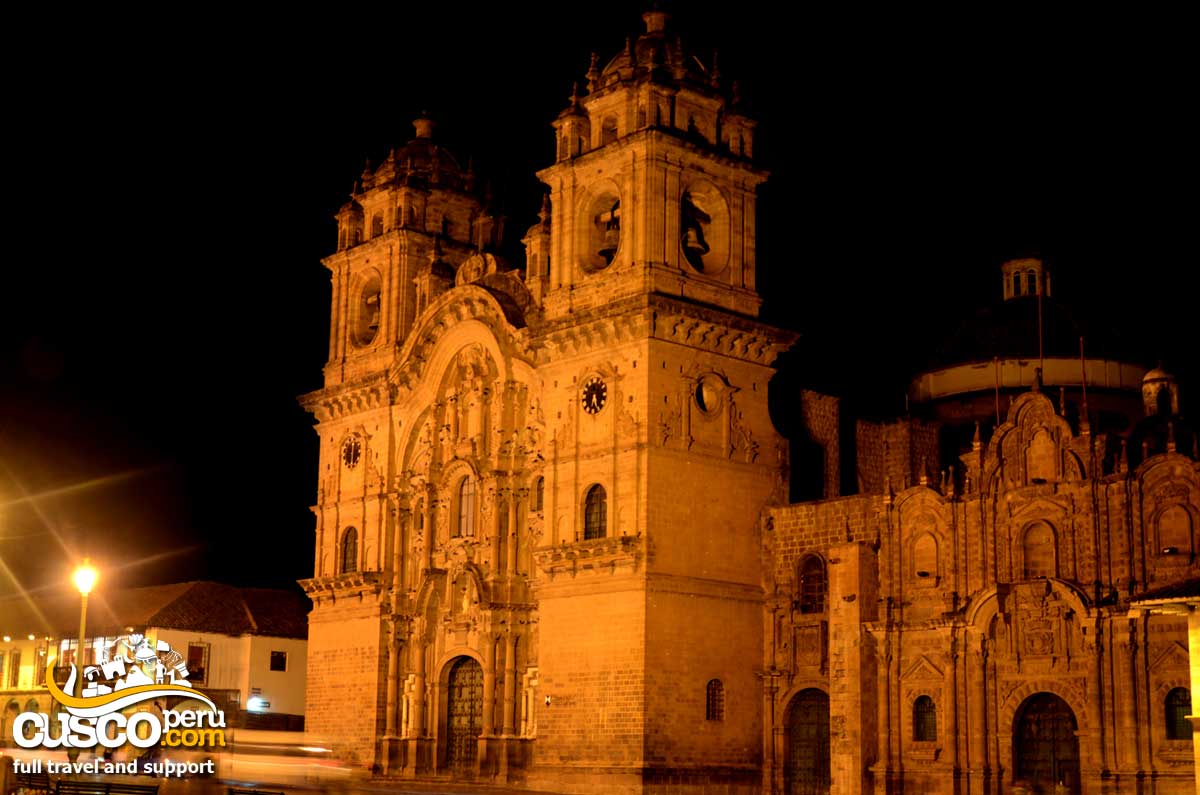
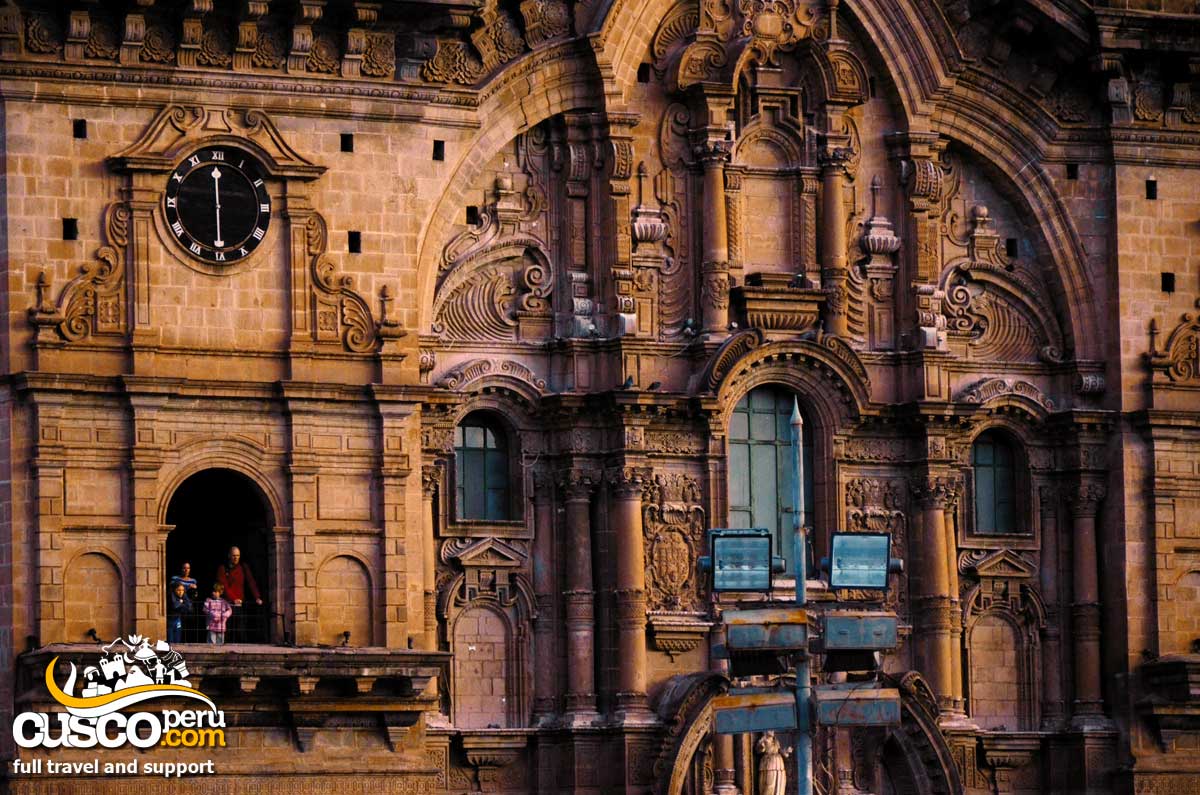
The temple is made up of two side chapels and two bell towers. It has a single nave supported by columns. The entire building is made of andesite stone and pink basalt. The façade, composed of windows, a balcony, openings, and niches, is a fine example of colonial Baroque art. On both sides of the church are two side chapels: the Chapel of the Indigenous People, also known as the Chapel of the Virgin of Loreto, and the Chapel of Saint Ignatius. Its solid yet richly decorated structure has made it one of the most beautiful temples in the city of Cusco.
The façade is considered one of the finest examples of colonial Baroque architecture in Cusco. It consists of two cubic towers that support the bell towers. In the center is a main façade with decoration similar to that found in other churches in the city. The upper section features cornices and central windows above a balcony without a railing. The niches, openings, and pilasters stand out and give the façade visual strength. The side towers have clocks. At the top and center, a cross stands out as a symbol of Christianity.
Painting is represented by canvases created by artists of the famous Cusco School, mainly during the 17th century. The church contains canvases and sculptures by artists such as Cristo de Burgos, Marcos Zapata, and Diego de la Puente. One of the most notable works is the painting of the marriage of Martín de Loyola and Beatriz Ñusta, a piece linked to Inca lineage and the early colonial history of Cusco.
The main altar is made of cedar and covered with fine sheets of gold. It is divided into three sections, where the set of Solomonic columns stands out. Carved in wood and gilded, it corresponds to the interior works completed around 1670, with the participation of artists such as Cristóbal Clemente.
In the upper central section, the sculptural figure of the Immaculate Conception stands out. Several ornaments are also notable, including canvases and decorations with precious stones.
It is also worth mentioning the canvases that depict the life of the founder of the order, Saint Ignatius of Loyola, painted by Marcos Zapata and his assistant Cipriano Gutiérrez.
Monday to Friday: from 8:00 a.m. to 11:00 a.m. and from 1:00 p.m. to 5:00 p.m.
Sundays: from 9:00 a.m. to 10:30 a.m. and from 1:00 p.m. to 5:00 p.m.
Opening hours may vary due to Masses, festivities, or internal regulations. It is recommended to verify the current information before your visit.
Cost: admission is included with the Religious Circuit Ticket, or you may enter only this monument with the following rates:
Partial adult ticket: S/ 10.00 - Partial student ticket: S/ 5.00

Happy passengers