
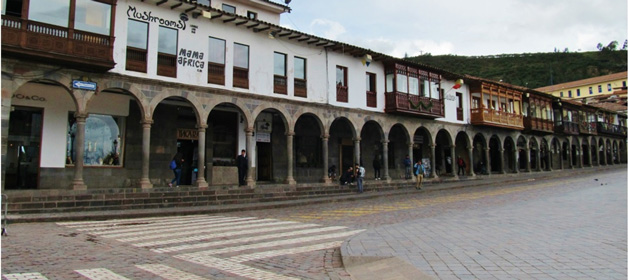
Qasana is a Quechua word that means “frosty place” or “where frost falls.” In Inca times, it extended from the parallel roadways near the Saphy River to the palace of Qoraqora, with its façade facing Waqaypata, while its inner areas opened toward the sector known as the “neighborhood of the schools.”
According to various historical references, Qasana may have been the palace of the Inca Pachacútec and was linked to his royal lineage, known as Iñaca Panaca or Hatun Ayllu. During the colonial period, part of the former estate was transformed and occupied by new constructions, including spaces associated with the presence of Francisco Pizarro in Cusco.
Qasana was located in the area of what is now the Main Square and bordered the streets of Procuradores, Tecsecocha, Amargura, Saphi, and Plateros.
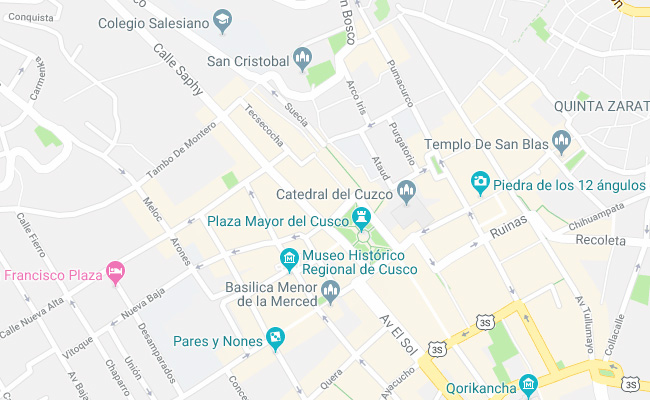
Today, the area is occupied by colonial and republican-era mansions that, for the most part, function as shops, restaurants, lodging establishments, and tourism services. In some sectors, foundations and walls of Inca origin can still be seen integrated into later constructions.
These remains help visitors understand how colonial and modern Cusco was built over ancient ceremonial, residential, and administrative spaces from the Inca period. Qasana holds special importance because of its connection to Pachacútec, one of the most important rulers of the Tahuantinsuyo.
Qasana does not operate as an independent archaeological complex with regular visiting hours. Its visible remains can be appreciated during a walk through the Historic Center of Cusco.

Happy passengers