

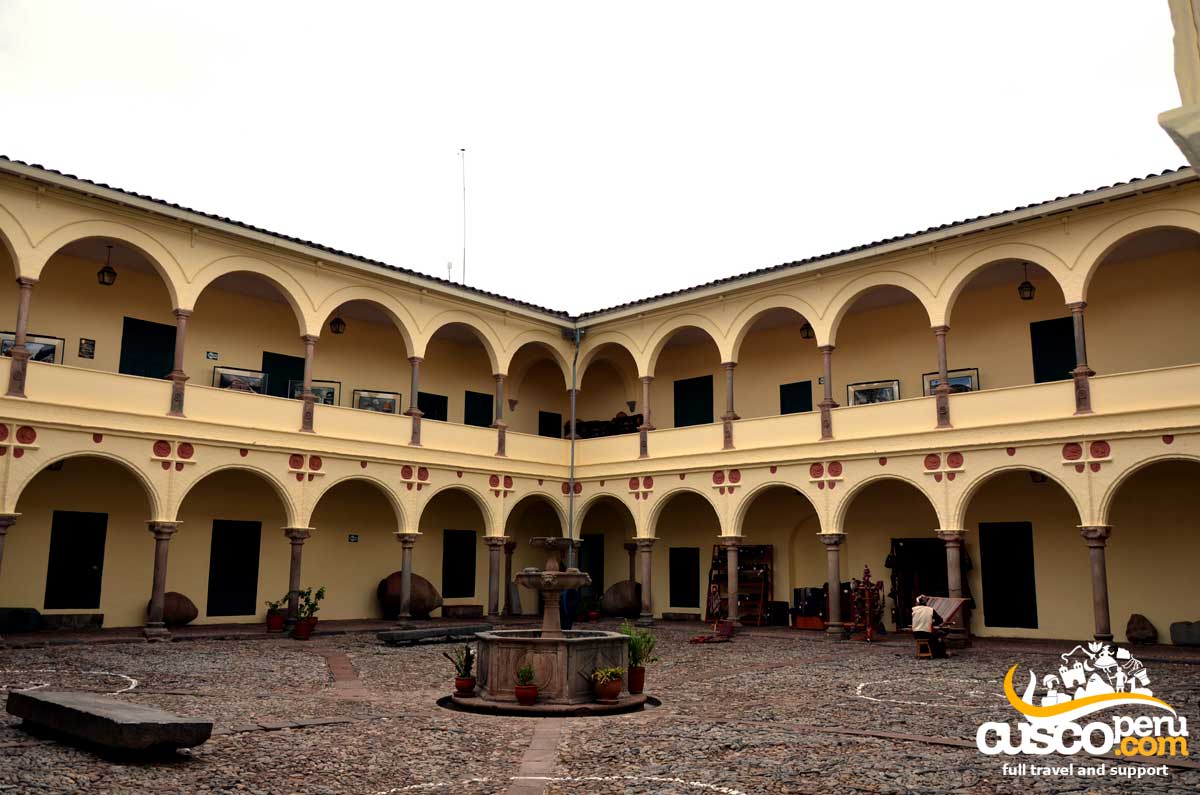
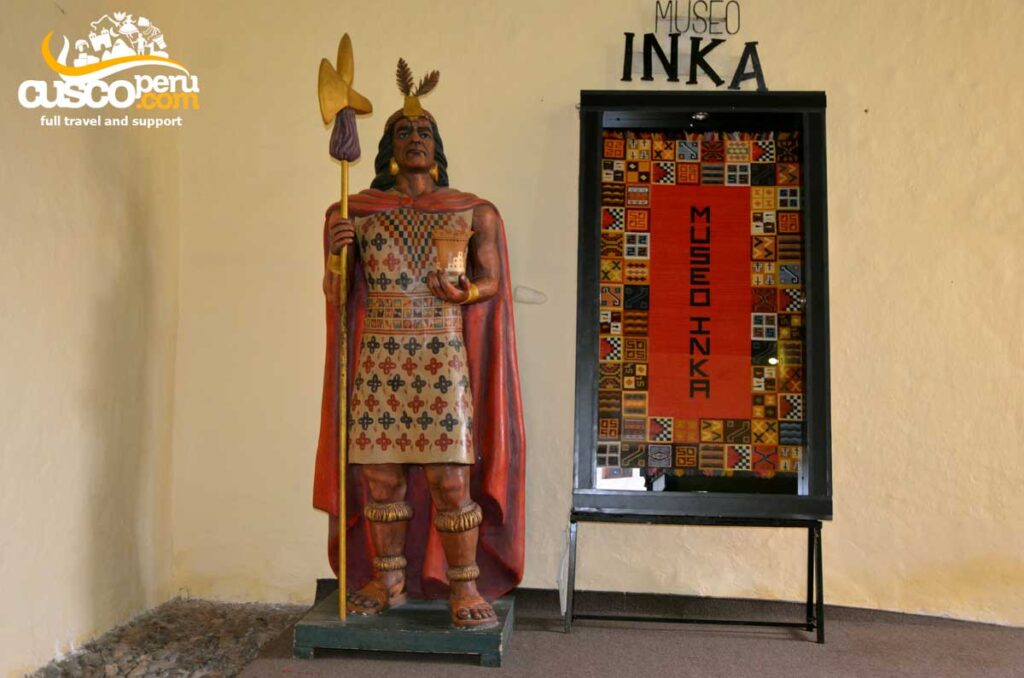
The building is known as the Palace of the Admiral or the Admiral’s House, and it is one of the most notable colonial mansions in Cusco. Built in the early 17th century with Inca stones by lieutenant magistrate Francisco Alderete Maldonado, known as “the Admiral,” he lived there until his death in 1643. It was rebuilt by Pedro Peralta de los Ríos after the earthquake of 1650 and later restored by the National University of San Antonio Abad of Cusco after the earthquake of 1950. Today, it houses the Inka Museum and displays the coat of arms of its reconstructors, who added the attractive Plateresque doorway it still shows today, as well as its large arched courtyard and coffered halls.
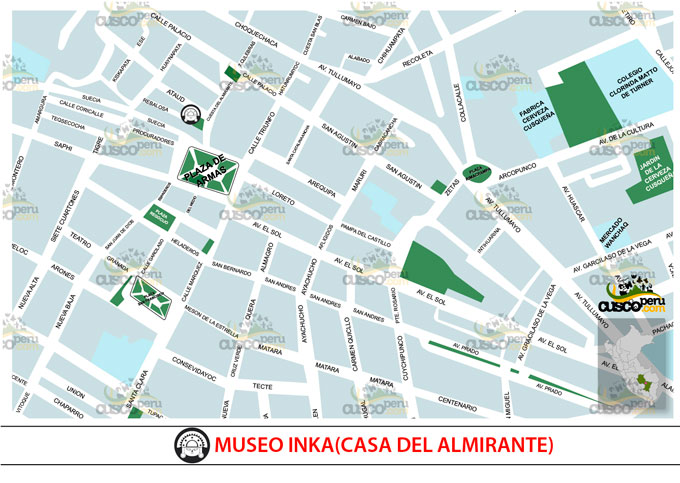
It is located in the Palace of the Admiral, at Cuesta del Almirante 103, just one block from Cusco’s Plaza de Armas.
The museum is located inside the colonial palace known as the “Admiral’s House.” The palace features a courtyard with semicircular arches, an open yard, and several rooms decorated with coffered ceilings and walls. It also includes the following exhibition rooms:
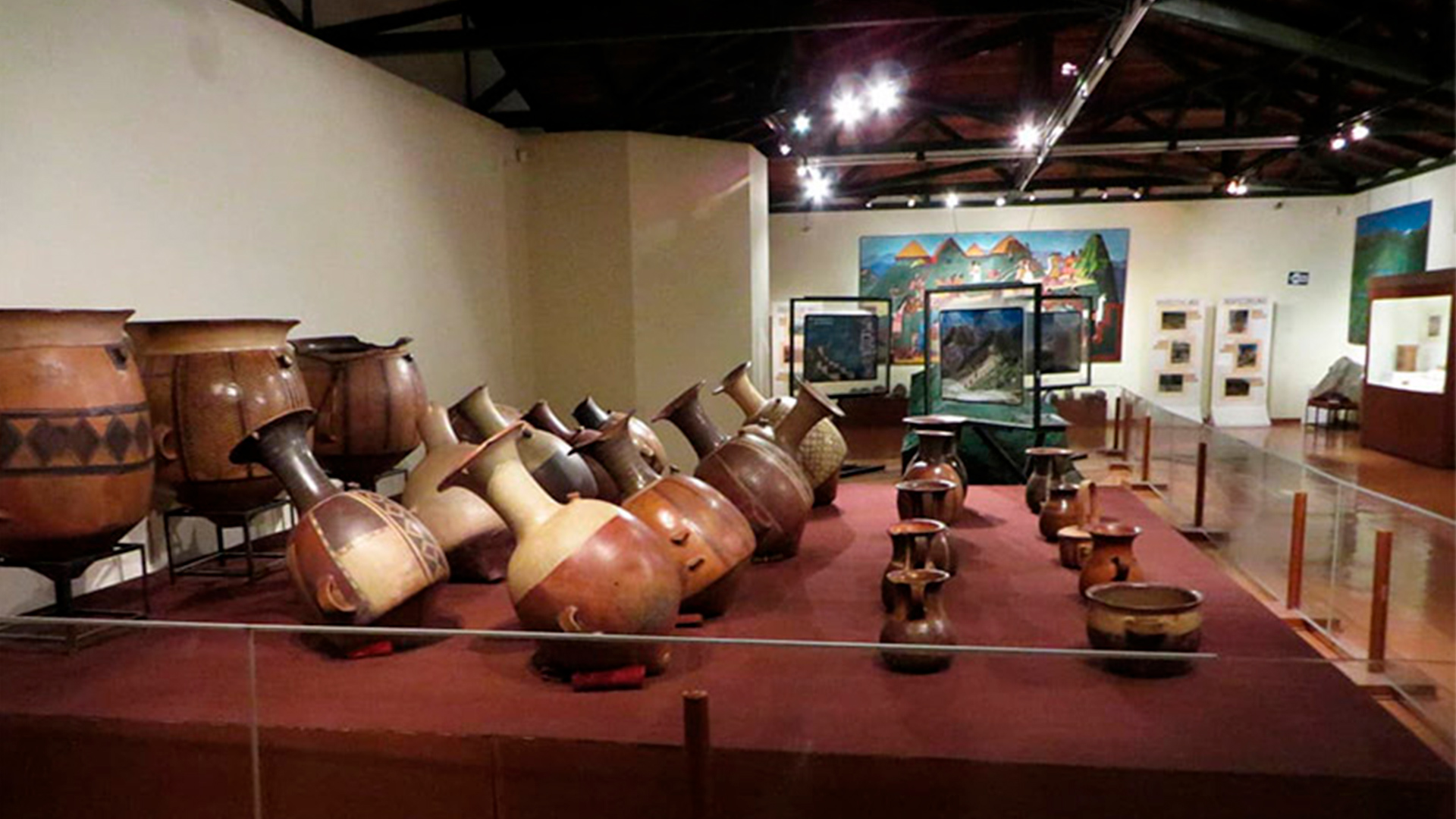
Pre-Inca cultures: this room presents a collection of objects and museum materials belonging to pre-Inca cultures, from the first vicuña hunters to important civilizations such as the Wari, as well as cultures like Chavín, Nazca, Chancay, Moche, Chimú, and Paracas. A sample of Moche ceramics and Paracas textile art is also exhibited.
Pre-Inca human settlements: this room displays ceramics, tools, and utensils belonging to pre-Inca human groups that settled in the Cusco region, such as Marcavalle, Chanapata, Qotakalli, and others. These small human settlements joined the Incas around the 13th century.
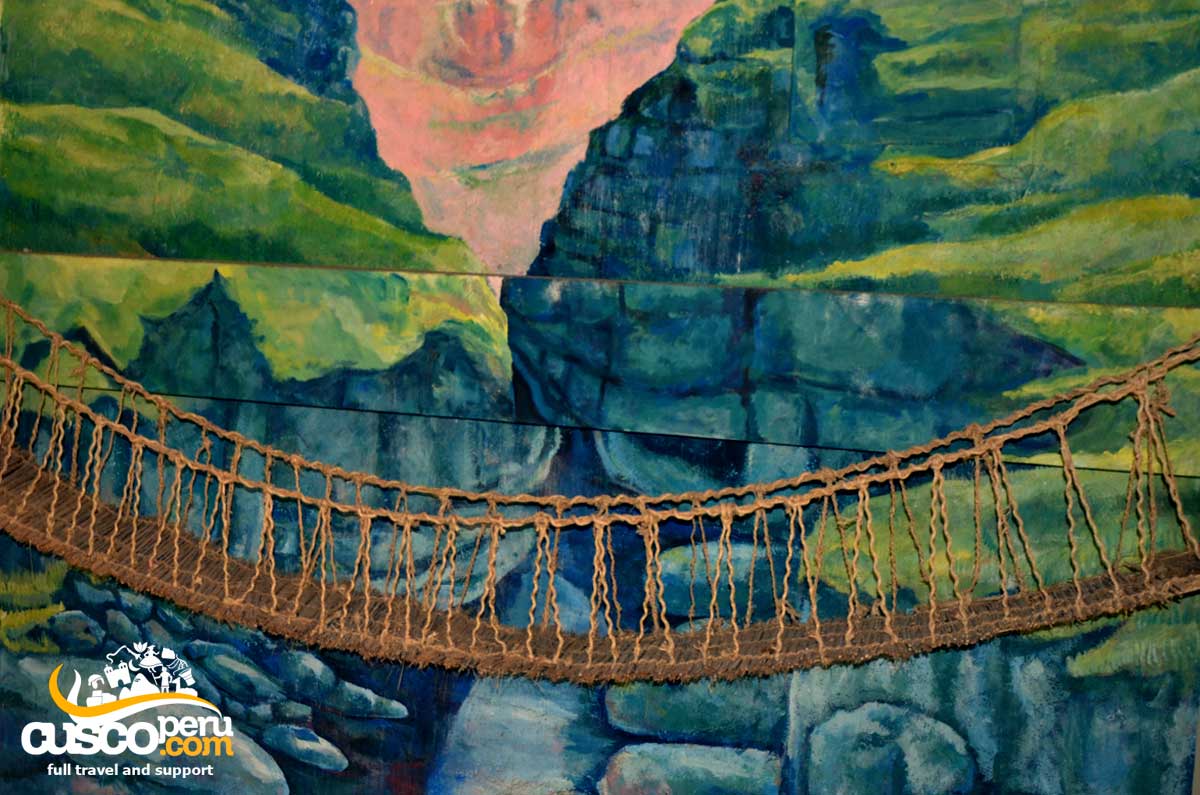
Environment: dioramas show the characteristics of Cusco’s natural regions, such as the yunga, quechua, and puna zones.
Inca origins: this room displays artifacts and interactive panels that explain the origin of the Incas, both from historical and mythological perspectives. It also features a collection of ceramics and utensils from the early years of the Inca chiefdom.
Inca continuity: this room exhibits a collection of ceramics, textiles, tools, and utensils belonging to the Inca Empire, including a collection of queros.
Invasion: here visitors can learn about the process of the Spanish invasion of the Inca Empire during the 16th century. The room highlights a collection of colonial furniture and also includes portraits, miniatures, sculptures, and informative panels.
Mallki Wasi: this room shows a life-size representation of an Inca tomb, where a mummified body is displayed together with personal belongings such as ceramics, textiles, and more. The room helps visitors understand some of the beliefs and religious practices of the Incas.

Reference opening hours:
It is recommended to verify the schedule on site before visiting.
Reference fees:

Happy passengers