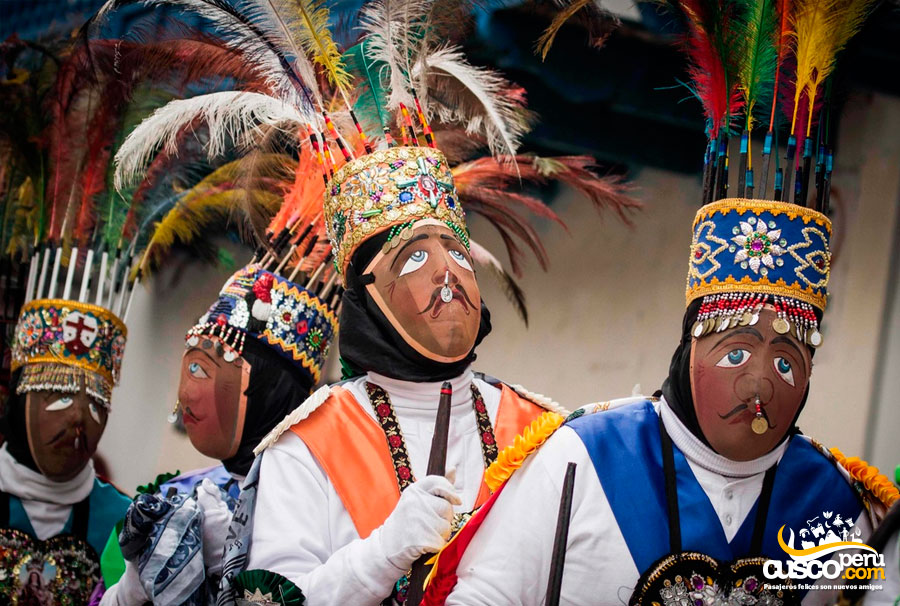

This celebration takes place every year between July 15 and 18 in the province of Paucartambo, located in the department of Cusco. The festivity begins on the afternoon of July 15 with the traditional dance rehearsal or entrance of dances, and continues at night with a fireworks display. July 16 is the main day of the celebration, which starts very early with the “dawn mass,” followed by the “festive mass,” where the traditional chants of dancers such as the Qhapaq Qolla and Qhapaq Negro stand out.
Its origin dates back to the colonial period, when evangelizers brought devotion to the Virgin of Carmen to the region. Over time, local people incorporated elements of their own worldview, which is why the festival combines Mass, procession, music, masks, comparsas, and dances that represent characters from the Andean, colonial, and popular world.
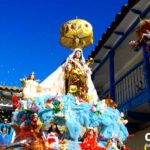
According to tradition, the miraculous image was found by farmers on a bridge in the town, and since then it became the most venerated symbol of the area. Today, the devotion in Paucartambo is practiced as an expression of gratitude and protection toward the Virgin of Carmen, considered in local tradition as the patroness of mestizos and protector of travelers.
Over the years, the festivity has transcended its local setting, becoming one of the most representative religious and folkloric celebrations of the southern Peruvian Andes. In 2006, this festivity was declared Cultural Heritage of the Nation for its religious, festive, and cultural value.
The meaning of “Mamacha” is an Andean expression of affection and respect that in Spanish means “dear little mother.” For this reason, the Virgin of Carmen of Paucartambo is affectionately known as “Mamacha Carmen” and is considered the patroness and lifelong mayor of the province.
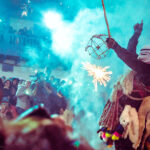
The celebrations begin on the afternoon of July 15 with the traditional dance rehearsal and a fireworks display at night.
July 16 is the main day of the festivity. The celebrations begin very early with the “dawn mass.” Then, around 10:00 a.m., the “festive mass” takes place, accompanied by songs from the Qollas and the Qhapaq Negros. Around midday, and after the dance parade, the traditional “once” is shared among the founders, dancers, and musicians of all the comparsas. The day ends with the procession of the Virgin.
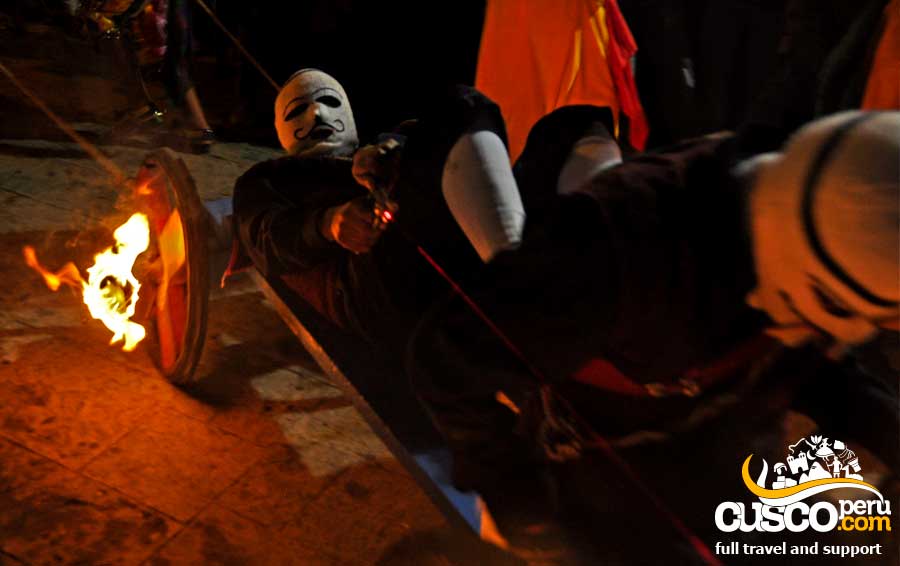
July 17 is known as the day of the “Blessing” and the “Guerrilla.” After Mass, the dancers and representatives of nearby communities go to the town cemetery to visit deceased dancers. In the afternoon, after the procession, the guerrilla between the “Qollas” and the “Antis” takes place, followed finally by the “Qhaswa,” or general celebration.
July 18 is the farewell day, with a celebration known as the “Kacharpari.” A ceremony is also held to change the Virgin’s clothing, and the festivity ends with the priest’s final blessing for everyone present.
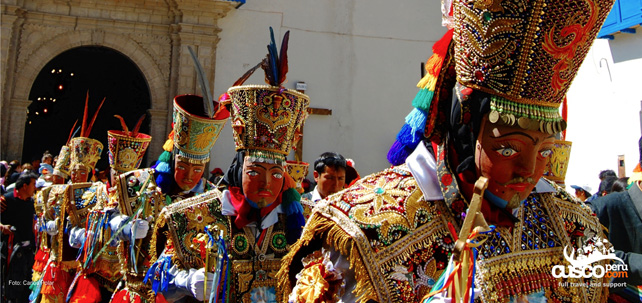
“Danzaq” or “Tusuq” is a dance whose characters are known within the festive representation as seductive, conquering, and mischievous figures. They are one of the best-dressed groups in the festivity because of their colorful costumes and elegant dancing. They cover their heads with chucos, wear short ponchos embroidered with ornaments, and blue pants divided into stripes with the colors of the rainbow. Without a doubt, it is one of the most representative dances of the province of Paucartambo.
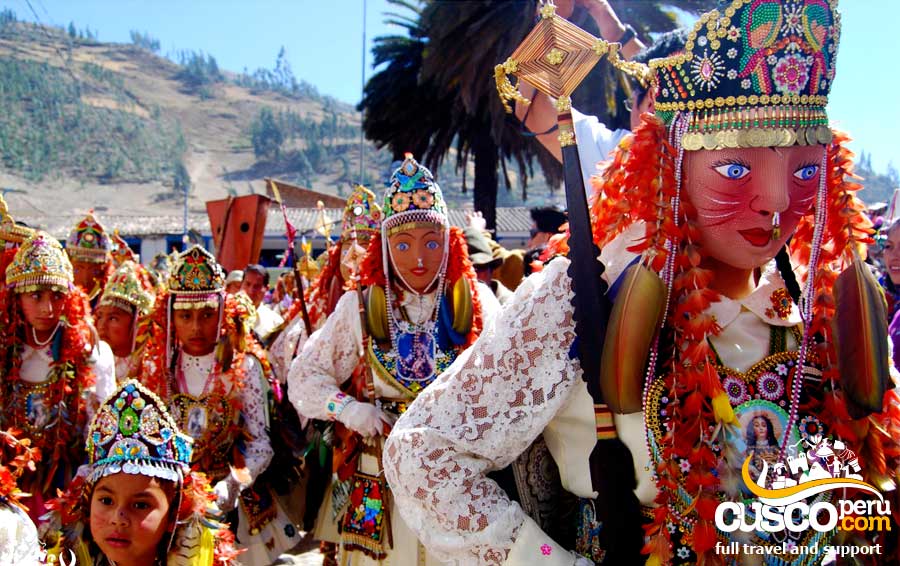
This dance represents the women of the jungle area of Kosñipata, but it has a clear mestizo influence through its clothing and music. Their costume includes an Amazonian-style crown with long hair, a chest ornament representing the Virgin, two “ch’uspas” used to carry wayruros, an appropriate dress, a chonta, and the sinehon.
This dance, whose name in Spanish means “rich Black man,” recalls the period of servitude and slavery of the Black population, which is why the dancers wear chains as a sign of submission. Today, the Black dancers of Paucartambo consider themselves servants of the Virgin of Carmen, to whom they offer their dance and traditional chants.
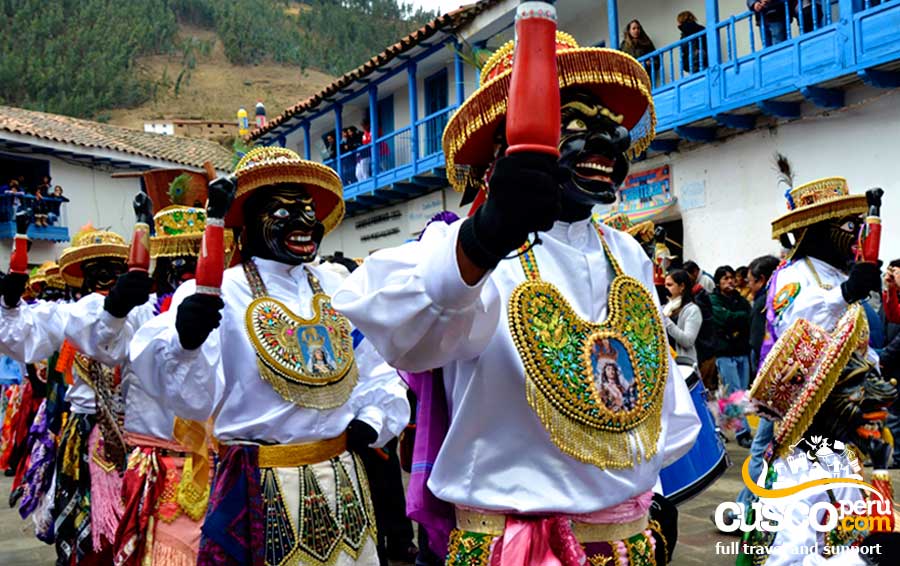
This is a representative dance of the inhabitants of Qollasuyu, the southern region of the ancient Tahuantinsuyo. Its origin dates back to colonial times, when Qollavino merchants, meaning Qolla or highland traders, arrived in Paucartambo. The dance is rooted in faith toward “Mamacha Carmen,” to whom, during the festival, they sing, dance, and accompany in the guerrilla. The dancers wear beautiful, decorated monteras; the waq’ollo and lliclla are made with vicuña wool, and the q’epi usually carries symbolic elements linked to trade and the highland world.
Paucartambo is located at an altitude of 3,017 meters above sea level and at a distance of between 109 and 110 km from Cusco. There are two ways to get to Paucartambo. The first is by bus or shared van departing from the city of Cusco. Under normal conditions, the trip to Paucartambo takes approximately 2 hours and 30 minutes by road; however, during July 15 and 16, the main dates of the Virgin of Carmen festivity, the trip may take between 4 and 5 hours due to the large number of people traveling to the district.
The second option is through a travel agency, with the tour you would like to take. At CuscoPeru.com, we can help you organize your visit to Paucartambo with our travel agents, who will be happy to assist you.

Happy passengers