The Tumbes Mangroves National Sanctuary protects the largest area of mangroves preserved within a national protected natural area in Peru. It is located in the far northwest of the country, in the district and province of Zarumilla, department of Tumbes, next to the border with Ecuador.
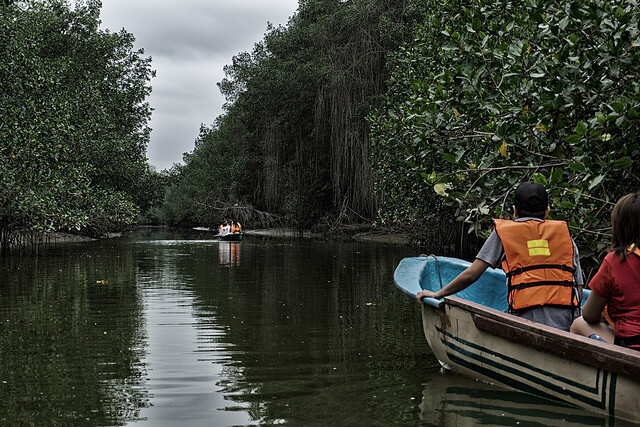
This coastal wetland consists of channels or estuaries, islands, sandbanks, muddy areas, coastal grasslands, areas covered by low vegetation adapted to humidity, and forests adapted to the mixture of fresh and salt water. The influence of the tides transforms the landscape throughout the day and determines the movement of many species and the boats that travel through its channels.

Mangroves grow in tropical coastal areas where the land, rivers, and sea meet. Their trees can tolerate muddy soils, low oxygen concentrations, and different levels of salinity.
These ecosystems provide shelter, food, and breeding grounds for fish, mollusks, crustaceans, birds, and other animals. They also retain sediment, reduce coastal erosion, help lessen the impact of storm surges, and store carbon in their vegetation and soils.
The conservation of the sanctuary is also socially important. Several nearby communities have maintained a historical relationship with resources such as black shellfish and red mangrove crabs, which may only be harvested in accordance with the corresponding regulations, closed seasons, and management plans.
During the 20th century, the expansion of shrimp farming and the transformation of different areas of the ecosystem raised concerns about the conservation of the mangroves of Tumbes. In response, the Peruvian government created the sanctuary in 1988.
Its original objectives were to protect a representative sample of the mangrove forest of northern Peru, conserve its diversity of aquatic invertebrates, and contribute to the protection of threatened wildlife, especially the American crocodile, also known as the Tumbes crocodile.
The sanctuary is located in the district and province of Zarumilla, in the department of Tumbes. It lies north of the city of Tumbes and very close to the Peru–Ecuador border.
It should not be confused with other mangrove ecosystems in the region or with the crocodile breeding center located in Puerto Pizarro. Puerto Pizarro is a different tourist attraction and is not the main entrance to the sanctuary.
The most common route begins in the city of Tumbes:
Distances and travel times may vary depending on road conditions, rainfall, the type of transportation, and the state of the tide.
Boat tours allow visitors to travel deep into the estuaries and observe the roots, canopies, and muddy areas of the forest. The experience changes according to the tide: at high tide, the water covers a larger part of the banks; at low tide, mudflats used by crabs and birds for feeding become exposed.
SERNANP recognizes two main routes:
The traditional route usually departs from Puerto 25 or El Algarrobo and travels along the Zarumilla estuary. Before traveling, confirm which route is currently open with the sanctuary administration.
Specialized route: this route travels from Puerto 25 or El Algarrobo toward Matapalo Island and Punta Capones. It is particularly focused on birdwatching and may include interpretive activities related to the traditional sustainable use of aquatic resources.
Navigation must take place within permitted areas and in accordance with park ranger instructions. Service availability may change, so visitors are advised to coordinate their visit before traveling.

The sanctuary is home to a great diversity of resident and migratory birds. Check with SERNANP to find out which species may be observed during your visit.
Birds characteristic of the ecosystem include the rufescent tiger heron, mangrove black hawk, white ibis, mangrove warbler, rufous-necked wood rail, and various herons, shorebirds, and seabirds. Sightings depend on the time of year, tide, weather, and the natural behavior of each species.
For better birdwatching, it is advisable to bring binoculars, speak quietly, and avoid playing bird calls, chasing birds, or approaching their nests.
The sanctuary is home to a rich variety of fish, crustaceans, mollusks, mammals, and birds, making it one of the most diverse ecosystems on the northern coast of Peru.
One of its most representative species is the American crocodile, also known as the Tumbes crocodile (Crocodylus acutus), which is considered threatened in Peru. However, its presence within the sanctuary does not guarantee that it will be seen during a tourist visit.
The red mangrove crab and black shellfish are also notable species with ecological, cultural, and economic importance for local communities.
One of the sanctuary’s main scenic attractions is its constant transformation. The water level rises and falls throughout the day, changing the navigable channels and exposing feeding areas for birds.
SERNANP indicates that a two-day stay makes it easier to experience the mangrove ecosystem during both high and low tide. However, most tourist visits take place in a single day.
The season recommended by SERNANP runs from April to December. January through March generally have a higher probability of rainfall. The usual temperatures indicated by the agency range approximately between 18 and 30 °C.
This does not mean that every day during the recommended season will be dry. The climate in Tumbes can vary considerably, and events associated with the El Niño phenomenon may increase rainfall, affect roads, and alter ecosystem conditions.
According to information published by SERNANP, visiting hours are Monday through Friday, from 8:00 a.m. to 1:00 p.m. and from 3:00 p.m. to 6:00 p.m. Confirm the schedule before traveling, as it may change.
These hours may be modified and do not guarantee the availability of boats. Navigation also depends on the tides, weather, and decisions made by the sanctuary administration. For this reason, it is important to confirm the visit before traveling.
These are the reference rates published by SERNANP. Before traveling, confirm the current fee and verify whether the general visitor rate applies to foreign tourists.
| Validity | Foreign tourist | Peruvian adult | Peruvian visitor aged 5 to 16 | Local resident |
| One day | S/ 30.00 | S/ 11.00 | S/ 5.00 | Adult: S/ 5.00; minor: S/ 3.00 |
| Two to three days | S/ 60.00 | S/ 30.00 | S/ 15.00 | S/ 15.00 |
| Four to thirty days | S/ 150.00 | S/ 75.00 | S/ 35.00 | S/ 35.00 |
Children under five years old enter free of charge. Local residents must present their national identity document. The ticket price may not include the boat, ground transportation, or other private services.
SERNANP may establish free admission dates on special occasions. Confirm this information directly with the sanctuary before planning your visit.
At least one full day is recommended for the traditional route. A two-day visit allows travelers to better observe the influence of the tides and combine a general route with a specialized birdwatching experience.
The actual duration of the boat trip depends on the authorized itinerary, the tide, and weather conditions. It is not advisable to set an exact duration without first consulting the administration or the service provider.

Before traveling, contact the sanctuary administration to find out how to arrange boat transportation and which services are available to visitors. Advance coordination is especially important.
During your visit:

Happy passengers