
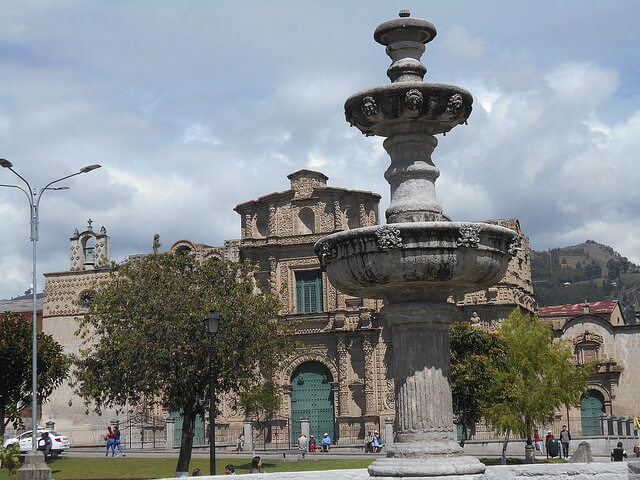
Cajamarca is the capital of the department of the same name and one of the main historical destinations in the northern highlands of Peru. It is located in an inter-Andean valley at an altitude of approximately 2,750 m (9,022 ft) above sea level. The city preserves churches, colonial mansions, and monuments built mainly during the Viceroyalty and Republican periods, as well as significant pre-Hispanic remains.
Its history is marked by the capture of the Inca Atahualpa on November 16, 1532. This event profoundly changed the course of the Inca Empire and made Cajamarca one of the most important settings in the Spanish conquest of the Andes.
In addition to its historical heritage, Cajamarca offers hot springs, rural landscapes, rock formations, pre-Hispanic burial sites, and community-based tourism experiences.

Cajamarca combines history, archaeology, nature, and regional cuisine in a single destination. Its main attractions are located both within the historic center and in nearby districts and rural communities.
Cajamarca is especially famous for its Carnival, one of the most important celebrations in northern Peru. The main festival dates change every year according to the official calendar.
By Air from Lima
There are direct flights between Lima and Cajamarca with an approximate flight time of one hour and twenty minutes. Flight schedules, operating days, and frequencies should be checked before booking, as they may change depending on the airline and the season.
The airport is located close to the urban area, making the transfer to the city center relatively short compared to many other regional destinations.
By Road from Lima
The road distance is approximately 800 km (497 miles), although it may vary depending on your departure point and the selected route. The journey follows the Pan-American Highway North before climbing into the Cajamarca highlands.
It is recommended to travel with reputable bus companies, confirm the exact departure and arrival terminals, and keep valuable belongings in your carry-on luggage.
Although Cajamarca is located at a lower altitude than cities such as Cusco, Puno, or Huaraz, some travelers arriving from the coast may experience mild fatigue during their first few hours.
On your first day, it is advisable to take a leisurely walk through the historic center and leave Cumbemayo, located at approximately 3,500 m (11,483 ft) above sea level, for a later day.
The Plaza de Armas is located at the heart of the city's historic layout and was the site of Atahualpa's capture in 1532. Today, it is surrounded by the Cathedral of Santa Catalina, the Church of San Francisco, historic colonial mansions, and public buildings. At the center of the square stands a colonial-era stone fountain, one of the most recognizable landmarks in Cajamarca's historic center.
A visit to the square can be combined with the Ransom Room, the Belén Monumental Complex, and Santa Apolonia Hill.
The Ransom Room is located on Jirón Amalia Puga, just a few meters from the Plaza de Armas. It is one of Cajamarca's most visited historical landmarks and is closely linked to the imprisonment of the Inca Atahualpa.
It was not the place where Atahualpa was captured. The Inca was seized in the main square and later held prisoner here. According to historical tradition, Atahualpa offered to fill one room with gold and two rooms with silver in exchange for his freedom.
Since the room is relatively small, a guided visit helps visitors better understand its connection with Atahualpa and the events that took place during the Spanish conquest.
The Belén Monumental Complex was built during the 18th century. It includes the Church of Belén and the former men's and women's hospitals, separated by Jirón Junín. Part of its facilities now houses archaeological, artistic, and ethnographic collections.
Its stone façade and interior decoration showcase the remarkable stonework developed in Cajamarca's religious architecture. Due to its proximity to the Plaza de Armas, it is an excellent stop for visitors interested in the city's historical and religious heritage.
Santa Apolonia is a hill located next to the city center at approximately 2,985 m (9,793 ft) above sea level. From its summit, visitors can enjoy panoramic views of Cajamarca and the surrounding valley.
Archaeological research has identified continuous occupation of the site since the Formative Period. At the top are a chapel, walking paths, resting areas, and a carved rock formation traditionally known as the Inca's Chair or Rumi Tiana.
The Baños del Inca thermal complex is located approximately 6 km (3.7 miles) from the city of Cajamarca. Its hot springs reach temperatures above 70°C (158°F) before the water is cooled and directed to facilities prepared for visitors.
The site was historically known as Pultumarca and is associated with Atahualpa's stay before his encounter with the Spanish. Today, it features private thermal baths, swimming pools, and other wellness facilities.
The thermal waters of Baños del Inca are primarily enjoyed for relaxation and recreation. If you have any medical condition, consult a healthcare professional before using the thermal facilities.
Cumbemayo is located about 20 km (12.4 miles) southwest of Cajamarca at an altitude of approximately 3,500 m (11,483 ft) above sea level. The landscape combines impressive rock formations, hiking trails, and archaeological structures.
Its best-known feature is an ancient stone-carved hydraulic canal, with straight sections, sharp turns, and carefully crafted segments. Visitors can also see rock formations popularly known as Los Frailones.
Cumbemayo is an archaeological complex renowned for its ancient stone canal, unique rock formations, and the open landscapes of the Cajamarca highlands.
The visit requires walking over uneven terrain and weather conditions may include cold temperatures, fog, wind, or rain. Sturdy footwear with good traction and waterproof clothing are highly recommended.
The Otuzco Funerary Niches are located approximately 8 km (5 miles) northeast of Cajamarca, within the district of Baños del Inca. They are ancient funerary niches carved into a rock cliff and are associated with the Cajamarca culture.
Most of the niches are rectangular or square in shape. Some contain small interior chambers, allowing visitors to appreciate the complexity of this remarkable ancient burial site.
Granja Porcón is an Andean community located approximately one and a half hours from Cajamarca. It is known for its forestry, farming, and community-based tourism activities. Over several decades, it has developed an extensive reforestation project in the Andean highlands.
Visitors can learn about productive activities, explore cultivated forests, and discover the community's traditional way of life. Before traveling, it is advisable to confirm which areas are open, what activities are available, and whether meals or guided visits are included.
La Colpa Hacienda is located on the outskirts of Cajamarca. Before visiting, it is advisable to confirm the route, travel time, and opening hours. Historically, it has been dedicated to cattle ranching and the production of milk and dairy products.
It is well known for the tradition of calling each cow by name during milking time. The visit can be combined with other attractions in the valley, but schedules and services should be confirmed in advance, as the property is privately managed.
This tour may include the Plaza de Armas, the Cathedral, the Church of San Francisco, the Ransom Room, the Belén Monumental Complex, and Santa Apolonia Hill.
It is the best option for your arrival day because the distances are short and it provides the historical context before visiting attractions outside the city.
This excursion can be done in half a day or as a relaxed full-day trip, depending on transportation and the time dedicated to hiking. Due to its altitude and changing weather conditions, it is not advisable to combine it with too many additional attractions on the same day.
These attractions can be organized as a circuit because they are located near the city. Baños del Inca and the Otuzco Funerary Niches can be visited on the same day. La Colpa is usually best included as an additional stop, depending on the route and available transportation.
Because of the travel distance and the range of activities available, it is best to dedicate a full day or most of the day to this destination.
Before booking any tour, make sure the itinerary clearly specifies transportation, entrance fees, guide services, meals, schedules, group size, and the cancellation policy.
Day 1: Historic Center
Visit the Plaza de Armas, the Ransom Room, the Belén Monumental Complex, the Church of San Francisco, and Santa Apolonia Hill.
Day 2: Cumbemayo
Explore the archaeological complex, walk along the ancient stone canal, and hike among the remarkable rock formations.
Day 3: Around Cajamarca
Visit the Otuzco Funerary Niches and Baños del Inca. Alternatively, you may choose a longer excursion to Granja Porcón.
With four or five days, you can also include La Colpa, culinary experiences, and free time to explore local markets or rural communities. With CuscoPeru.com, you can discover Cajamarca through an itinerary designed for your trip in a safe and convenient way.
Average daytime temperatures in Cajamarca generally remain around 21–22°C (70–72°F) throughout much of the year. Nighttime temperatures can drop to approximately 5°C (41°F) in July and range between 9°C and 10°C (48–50°F) during the rainy season.
The rainy season usually extends from November to April, with the heaviest rainfall occurring in February and March. June, July, and August are generally the driest months, although nights and early mornings can be quite cold.
For this reason, May through September is usually the most practical period for hiking and outdoor excursions. Travelers wishing to experience the Cajamarca Carnival should plan their visit between January and March according to the official annual calendar and be prepared for rain, crowded streets, and higher accommodation demand.
Opening hours and admission fees may change depending on the season, holidays, or maintenance work. Always confirm the latest information directly with each attraction before your visit.
Ransom Room and Belén Monumental Complex: Open Wednesday through Sunday. Confirm admission hours and entrance fees before your visit.
Cumbemayo: Opening hours and admission fees are subject to change. Confirm operating days and ticket prices before planning your excursion.
Otuzco Funerary Niches: Wednesday through Sunday, daytime hours, admission S/ 5.
Baños del Inca: Admission prices vary depending on the selected service, including swimming pools, private baths, family pools, saunas, or hydromassage. Check current prices and available time slots before your visit.
At Baños del Inca, rates depend on the selected service: general admission, swimming pool, private bath, family bath, sauna, or hydromassage. General opening hours are usually from 5:00 a.m. to 8:00 p.m., although schedules may vary depending on the service. Confirm availability before visiting.
Bring layered clothing, a waterproof jacket, sunscreen, drinking water, and comfortable walking shoes. Temperatures in Cumbemayo and Granja Porcón may be considerably lower than in downtown Cajamarca.
Do not enter ancient burial chambers, climb archaeological walls, or touch and mark stone structures. Stay on designated paths and follow all instructions provided by site personnel.
If you plan to visit during Carnival, book transportation and accommodation well in advance. In crowded areas, carry only essential belongings and keep your phone, camera, and travel documents secure.
How many days are needed to visit Cajamarca?
Three days are enough to explore the historic center, Cumbemayo, Baños del Inca, and the Otuzco Funerary Niches. With four or five days, you can also include Granja Porcón, La Colpa, and local culinary experiences.
Was Atahualpa captured in the Ransom Room?
No. He was captured in Cajamarca's Plaza de Armas on November 16, 1532. The Ransom Room is associated with his imprisonment and his famous offer of gold and silver in exchange for his freedom.
Is Cumbemayo a difficult hike?
No. It is not a technical hike, but it takes place at approximately 3,500 m (11,483 ft) above sea level over uneven terrain. Cold weather, rain, and altitude may increase the level of difficulty.
Do the Baños del Inca cure illnesses?
No medical claims should be made. These are mineral-rich hot springs primarily used for bathing, relaxation, and wellness activities. If you have a medical condition, consult a healthcare professional before using the thermal facilities.
What is the best time to visit Cajamarca?
From May to September, rainfall is generally lower and conditions are more favorable for excursions. To experience the Cajamarca Carnival, plan your visit between January and March according to the official calendar for each year.

Happy passengers