
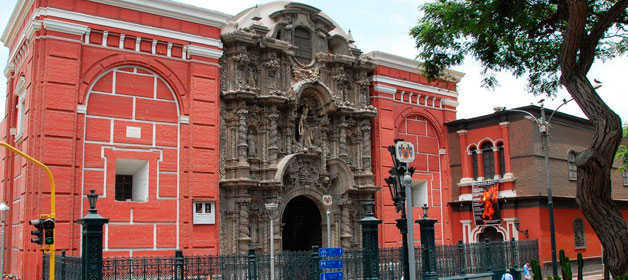
San Agustín Church is one of the historic temples of Lima’s Historic Center. The current building does not fully preserve its original structure from previous centuries, as it has undergone several modifications due to earthquakes, restorations, and later renovations.
Important elements of the original construction still remain, including parts of the side walls and its remarkable Baroque façade. The interior was largely transformed during the 20th century, when part of its ornamentation was renewed.
Among its most notable features are paintings from the Italian school, the decoration of the chapter hall, the historic carved chair, and the sculpture La Muerte (Death), attributed to the artist Baltasar Gavilán and considered one of the most distinctive pieces of Lima’s colonial art.
The presence of the Augustinian Order in Lima dates back to the 16th century. The first church was built during the early years of the colonial period, although the temple suffered damage and underwent several transformations over time due to the earthquakes that affected the city.
The current façade, completed around 1710, is one of the most important examples of Churrigueresque Baroque architecture in Lima. Its rich ornamentation and stonework make it one of the finest surviving examples of colonial religious architecture in the city.
At the beginning of the 20th century, the interior of the church was remodeled, and many of its present-day spaces correspond to these later renovations. Even so, the church continues to preserve artworks of great historical and religious value.
San Agustín Church is located in Lima’s Historic Center, at the intersection of the fourth block of Jirón Camaná and the second block of Jirón Ica.
Thanks to its central location, it can easily be visited as part of a walking tour of downtown Lima, along with other churches, colonial mansions, and nearby historic landmarks.
Baroque Façade
The façade of San Agustín Church is its most distinctive feature. Carved in stone, it displays the abundant ornamentation characteristic of the Churrigueresque Baroque style. It is organized into three vertical sections and three levels, with a central entrance providing access to the church.
Its niches contain various religious images, including that of Saint Augustine in the central position. This façade is considered one of the finest examples of Lima’s Baroque architecture and one of the few surviving Churrigueresque façades in the city.
Church Interior
The interior has been modified several times, particularly during the 20th century. Despite these changes, it preserves valuable features such as the choir stalls, the sacristy cabinetry, the coffered ceiling of the antechamber to the sacristy, religious paintings, and spaces associated with the former convent.
The Sculpture “La Muerte”
One of the most striking pieces associated with the church is the sculpture La Muerte (Death), attributed to Baltasar Gavilán, an 18th-century artist. The work stands out for its expressive power and the dramatic character typical of colonial religious art.
Cloister and Convent Spaces
The complex also preserves spaces related to Augustinian convent life, including the main cloister courtyard and former religious and communal areas. These spaces help visitors better understand the important role played by the Augustinian Order in colonial Lima.
Reference Schedule:
From 10:00 a.m. to 12:00 p.m. and from 4:00 p.m. to 7:00 p.m.
It is recommended to confirm opening hours before your visit, as they may vary due to Masses, religious activities, restoration work, or special events.

Happy passengers