

The museum preserves paintings, liturgical ornaments, religious garments, silverware pieces, and household items that reveal the artistic and cultural complexity of the viceregal period. The visit is complemented by the convent’s Catacombs, a crypt made up of underground passageways where the skeletal remains of former inhabitants of Lima are preserved. As part of its cultural outreach activities, the museum offers lecture series, specialized courses on heritage conservation, concerts, theater and dance performances, audiovisual screenings, and book presentations.
The monumental complex that includes the Convent of San Francisco de Jesús El Grande in Lima began construction in 1546 and was inaugurated in 1672 as the main headquarters of the Franciscan Province of the Twelve Apostles of Peru, which governed the entire Viceroyalty. Since 1968, the museum has exhibited and preserved one of the most representative historical collections of Peruvian viceregal art. The museum collections gathered over more than 400 years by the Franciscan order in the various permanent exhibition rooms adjacent to the convent serve as documentary evidence of its presence and importance.
Plazuela San Francisco, at the corner of Jirón Áncash and Jirón Lampa.
Among the main spaces of the visit, the following stand out:
The Sacristy of the Main Temple is one of the jewels of the Franciscan complex. The works on the sacristy were completed in 1730, with its doorway standing out, created in 1729 by Ensign Lucas de Meléndez.

After crossing the convent doorway, visitors arrive at a spacious room with tile-decorated wainscoting. Its main attraction is a triptych of the Crucified Lord, whose side paintings are works by Angelino Medoro. Valuable paintings from the Lima school can also be found here.
This space preserves a wooden sculpture of the Crucified Jesus; paintings of saints of the Catholic Church from the 17th-century Lima school; as well as paintings from the Cusco school and two medallion-shaped paintings representing passages from the life of Saint Francis Solano, made to celebrate his canonization.
This is a spacious room with a carved wooden ceiling and Sevillian tile wainscoting. Here, visitors can find four paintings by well-known artists, representing Catholic saints.
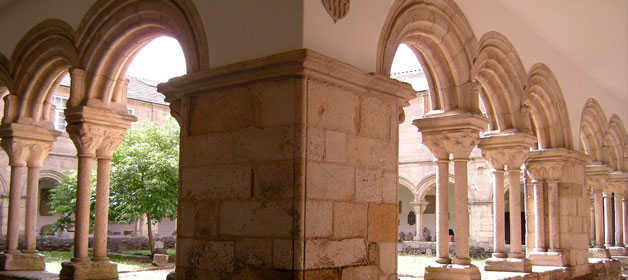
This beautiful quadrilateral courtyard is surrounded by galleries with semicircular arches, eleven on each side, all supported by pilasters. The walls are decorated with Sevillian tiles along the wainscoting, dating from 1620, with Franciscan saints as the decorative theme.
This room was where the Franciscans held their conventual chapters to elect a new superior or discuss matters of major importance. It contains two rows of high-backed seats surrounding the room and, at the center where the two rows meet, the main chair or tribune, crowned by the coat of arms of the Order. In the center, there is a high-relief wood carving depicting Friar John Duns Scotus, as well as the image of the Immaculate Conception, Patroness of the Franciscans, before whom they prayed before holding their meetings. On many occasions, various disputes arose among them, making the presence of the viceroy’s guard necessary.
This room preserves different processional floats used in processions of saints of the Catholic Church. Among them are a repoussé silver float, used every first Sunday of November for the procession of the image of Saint Jude Thaddeus; another carved in wood and covered in gold leaf with fine openwork; and a third intended for canvases with Franciscan themes, also crafted in wood and covered in gold leaf.
This room is used to display a collection of eleven canvases, each approximately three meters high. Each one represents the “Passion of Christ” and belongs to the workshop of the great Flemish master Peter Paul Rubens. All stand out for their fine execution, color harmony, and expressive characters.
This room was formerly used as the dining hall. It houses the famous collection of fifteen canvases representing the Twelve Apostles, Christ the Redeemer, the Virgin Mary, and Saint Paul, impressive paintings attributed to the Spanish master Francisco de Zurbarán.
Here, visitors can admire an immense canvas measuring five by six meters, which represents the genealogical tree of the Franciscan Order, a work dating from 1734.
The catacombs impress many visitors, as they served as a cemetery during colonial times.

Opening hours: Monday to Sunday, from 9:00 a.m. to 8:10 p.m.
Reference fees:
General public: S/ 10.00
Students: S/ 5.00
Children: S/ 1.00

Happy passengers