
The Torontoy archaeological complex comprises 7 archaeological groups and is located across from the Q’ente Complex, separated only by the Urubamba River. These groups may have formed independent units, while still being connected through economic and territorial relationships.
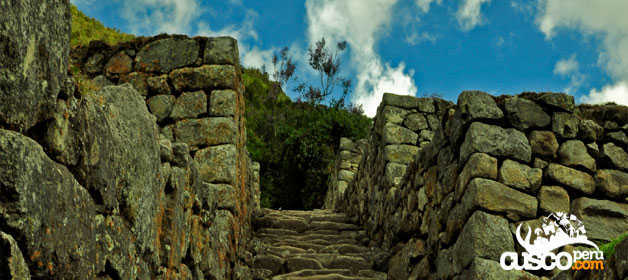
The archaeological groups mentioned are distributed along the first section of the Inca Trail, on the edge of the Historic Sanctuary of Machu Picchu.
There are 7 archaeological groups:
Local farmers call this site Inkaperqa or Incaraqay, in reference to the visible Inca walls in the area. Here, visitors can find a main entrance, several groups of enclosures, courtyards or open areas separating the buildings, remains of a ceremonial bath, and a central enclosure with a stone piece of more than 40 angles joined to twenty-eight other pieces with precise stone fitting at the joints.
Its name means “hall gate,” because its most visible element is a wide doorway located on a terrace that runs like a street in front of the wall. Behind the doorway, there are cyclopean terraces and flat areas with remains of stairways, internal paths, and aqueducts.
Its name means “plain where qhana grass grows.” It is located near km 85 of the railway line. Visitors can find a series of one-story buildings and a two-story building, which is the largest in the group.
Its name means “windy gate,” referring to a windy place. In this group, visitors can find remains of buildings and a partially standing enclosure, along with traces of aqueducts, paths, and piles of cut stones that once formed part of the constructions.
Some of the finest hydraulic works in the area were built here. The clear waters flowing down the slope are channeled through wide stone canals. From the riverbank, visitors can also see a succession of parallel terraces, a path leading to a shrine carved into the rock in situ, ascending houses, and an observation tower.
Its name means “gold winnowing place.” The site features a large stairway more than one meter wide, semicircular walls, terraces used as retaining walls, and a worked vertical slope overlooking the turbulent waters of the river.
Its name means “place that has retama.” In this group, visitors can find long terraces with semi-cyclopean walls, as well as tombs that have been looted at the base of the mountain and others that remain intact at higher elevations.

Happy passengers