
Table of Contents
Location: Plaza de Armas, Cusco
Every January 6, this ceremony is held in the Plaza de Armas of the city of Cusco. The event begins with songs performed by local choirs in honor of Christmas and the Child Jesus.
Likewise, the traditional dismantling of the Cusco nativity scene takes place, a symbolic act led by the city’s main authorities.
The Municipal Festivities Company of Cusco (EMUFEC) organizes the award ceremony and recognition of the winning exhibitors of Santurantikuy 2026, Cusco’s most representative traditional Christmas fair.
The work of the artisans who win the Cusco Nativity Scene Contest is also recognized. They participate every December 24 in this competition that celebrates creativity and cultural identity.
Location: San Sebastián District, Cusco
From January 19 to 25, the traditional district of San Sebastián, one of the oldest in Cusco, celebrates its patron saint, San Sebastián, with devotion, music, and color.
The streets fill with traditional dances and folkloric comparsas that parade to the rhythm of Andean music, creating a festive atmosphere that captivates both locals and visitors.
A cultural experience that blends faith, identity, and joy in the very heart of Cusco.
Location: Cusco
Cusco begins February with fun, color, and playful mischief with the traditional Celebration of the Compadres, a date that strengthens bonds between godparents, close friends, and festive companions, celebrated with humor and popular creativity.
On this day, it is common to see rag dolls placed on balconies, posts, and squares. These figures, usually male, represent public figures, politicians, or neighborhood residents, caricatured with wit and messages that mock everyday situations or social issues.
The city comes alive with music, laughter, foam, and colorful paint, in a festive atmosphere that marks the beginning of Cusco Carnival, one of the most authentic and participatory celebrations in Peru.

Location: Cusco
Then comes the turn of the comadres, women united by a special bond, whether as godmothers, close friends, or festive companions. This celebration honors them with music, foam, streamers, and plenty of color.
As part of the tradition, rag dolls are made and placed on balconies, posts, markets, and squares. These figures represent well-known female characters and become a satirical expression full of humor and social criticism, in true Cusco style.
Location: Plaza de Armas and streets of the Historic Center
Considered one of the most joyful and participatory festivities in Cusco’s calendar, Cusco Carnival transforms the city into a celebration of color, dance, and popular games. Although the celebration lasts several weeks, the main day is lived with special intensity.
From the Thursday of Compadres until February 22, the great farewell to Carnival, the city vibrates with comparsas, parades, traditional dances, live music, and games with water, foam, and paint. The Plaza de Armas becomes the epicenter of collective joy.
Location: Throughout the city of Cusco and its provinces
One week after Carnival Sunday, the Kacharpari takes place, a ceremony that marks the closing of the festivities. In Cusco’s historic center, there are dance performances, music, and a sample of delicious local gastronomy.
This dish, typical of Carnival, becomes the star of Cusco tables. Timpu or puchero is prepared with beef, potatoes, sweet potatoes, rice, chickpeas, corn, and other vegetables. It is a delicious dish to share with family or friends during these dates.
In various neighborhoods of Cusco, the traditional yunza is celebrated, a festivity in which a tree decorated with gifts is planted. As the music plays, participants dance around it and, taking turns, strike the trunk with an axe.
The most exciting moment comes when the tree falls. Whoever brings it down will be responsible for organizing the yunza the following year. It is a joyful custom that brings together symbolism, cooperation, and community.

Location: Plaza Mayor, Lima
In Peru’s capital, the official ceremony is held to mark the beginning of the Festivities of Cusco and the road toward Inti Raymi, evoking the greatness of the Tahuantinsuyo and the continuity of its legacy.
The announcement is made by the provincial mayor before the Peruvian public, national and international media, and the general audience. This event marks the starting point of a season of cultural celebrations that reflect Cusco’s living identity before the world.
Holy Week is one of the most important religious celebrations in Cusco’s calendar. Lived with deep faith and tradition, it brings together thousands of devotees who fill churches, streets, and squares with symbols of reflection, gratitude, and hope.
Everything begins with Palm Sunday, when families go to churches carrying crosses woven from palm leaves, which are blessed during Mass. These crosses are later placed in homes as a sign of protection and spiritual renewal, marking the beginning of a week of reflection and popular devotion.
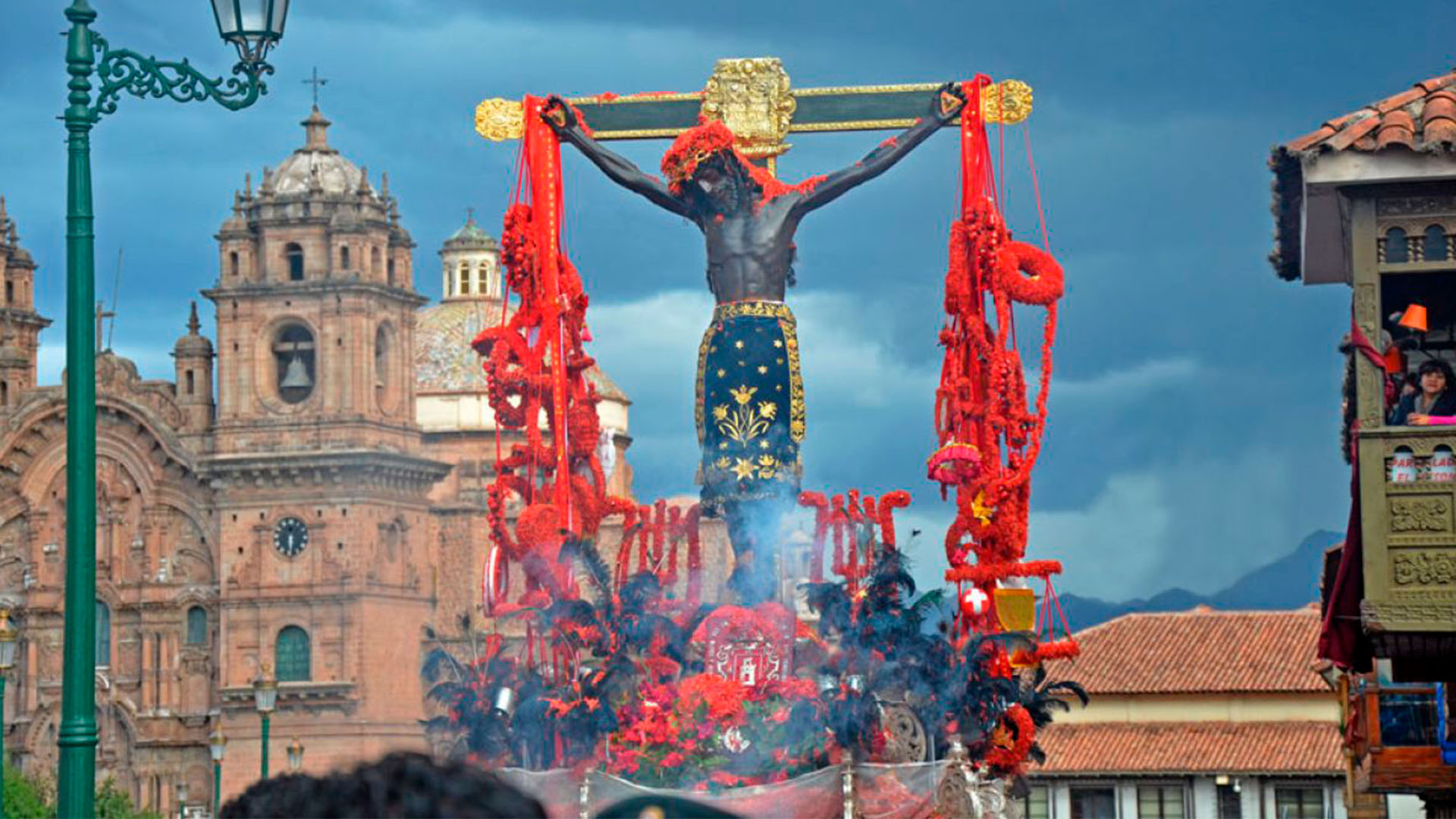
On Holy Monday, one of the most important acts of the week takes place: the Procession of the Lord of the Tremors, Sworn Patron of Cusco.
On Holy Thursday, the Last Supper is remembered, and many Cusco families keep the tradition of preparing twelve different dishes in honor of the twelve apostles. This custom may also take place on Good Friday, depending on each household’s beliefs and practices.
Good Friday is a day of reflection and silence. The crucifixion and death of Jesus are commemorated with special Masses, Stations of the Cross meditations, and moments of deep reflection throughout Cusco.
Holy Saturday marks the transition toward hope, in an atmosphere of reflection while awaiting the resurrection. Finally, the festivity culminates with Easter Sunday, a day of celebration for the triumph of life over death. Bells ring joyfully and Masses are celebrated throughout the city.
During this week, Cusco experiences a unique fusion of Catholic faith and Andean tradition. It is a truly unforgettable spiritual and cultural experience.
Location: Historic Center of Cusco
Holy Monday, the central day of Holy Week in Cusco, is experienced with special intensity. On that day, the image of the Lord of the Tremors, Sworn Patron of the city, solemnly travels through the main streets of the historic center in a procession filled with faith and emotion.
During the route, balconies are decorated with flowers and cloths, while people offer prayers, songs, and bouquets of ñucchu, an intense red Andean flower that symbolizes the blood of the crucified Christ. This flower, traditionally used in the procession, is a distinctive element of this Cusco celebration.
At nightfall, around 7:00 p.m., the Plaza de Armas becomes the spiritual heart of the city. Thousands of people gather to receive the Lord’s blessing, in one of the most moving moments of Cusco’s religious calendar.
Ñucchu (Salvia oppositiflora) is an ancestral flower that grows in the highlands of southern Peru. With its bright red color and delicate shape, it has been adopted by Cusco devotees as a symbol of devotion and sacrifice. Its use in the Procession of the Lord of the Tremors is a living expression of the union between Andean spirituality and Catholic tradition.
Location: Traditional neighborhoods of Cusco
Cruz Velacuy, or Vigil of the Cross, is one of the most heartfelt religious festivities in Cusco’s traditional neighborhoods. This celebration blends Christian devotion with Andean beliefs in a symbolic act of respect and connection with the apus, or sacred mountains.
During this date, crosses, which are often brought down from the heights, are placed in chapels or central neighborhood spaces, where they are watched over throughout the night with prayers, dances, songs, typical food, and a strong sense of community gathering.
Location: Urubamba, Sacred Valley of the Incas
In the spiritual capital of the Sacred Valley, Urubamba, one of the region’s most heartfelt Catholic festivities is celebrated. The Lord of Torrechayoc, represented by a cross decorated with jewels and fine textiles, receives the homage of devotees with Masses, processions, dances, and traditional dishes. The main altar is located in the neighborhood of the same name, just 10 minutes from the town center.
For several days, religious fervor and popular joy fill the streets with fireworks, brass bands, and traditional dances, in a unique communion between faith and living culture.
Location: Streets of Cusco’s historic center
The city fills with energy during the Qosqo 10K Hatun Phaway Grand Race, a sporting event that opens the celebrations for Cusco’s Jubilee Month.
Local, national, and international runners cover 10 kilometers along a route that passes through emblematic places in the imperial city, promoting physical activity, healthy tourism, and cultural integration. This is both a competition and a collective experience that celebrates life, movement, and the Cusco spirit in all its splendor.
Location: Plaza de Armas, Cusco
With an ancestral ceremony in honor of Mother Earth, the Festivities of Cusco officially begin.
This day marks the start of the Jubilee Month with a ritual of gratitude to Pachamama, a sacred symbol of fertility and abundance in the Andean worldview. Organized by EMUFEC (Municipal Festivities Company of Cusco), the event is staged in the heart of the historic center, the Plaza Mayor, and brings together thousands of attendees, both locals and visitors from around the world.
With coca leaves, chicha de jora, and floral offerings, the spirit of Cusco renews its deepest bond with the land that sustains it.
Location: Apu Ausangate, Sinakara Valley
More than a festivity, it is a profound spiritual experience. Every year, around 90,000 pilgrims undertake a sacred journey toward the Ausangate snow-capped mountain, one of Cusco’s most revered apus. The route begins with a vehicle journey, followed by a hike that ends in Sinakara, a natural sanctuary surrounded by mountains.
June 2 is the central day, when devotion reaches its highest point with ritual dances, chants, and ceremonies that intertwine Catholicism with ancient Andean beliefs. Organized by the Council of Pilgrim Nations and the Brotherhood of the Lord of Qoyllurit’i, this event was recognized by UNESCO as Intangible Cultural Heritage of Humanity.
The pilgrimage reaffirms the spiritual bond between human beings, the mountain, and their ancient customs.
Location: Plaza de Armas, Plaza San Francisco, Cusco
The Corpus Christi entrance procession in Cusco is one of the most important and visually striking celebrations in the Andean festive calendar. Every year, on the eve of the main day, 15 images of saints and virgins pass through the streets toward the Cathedral of Cusco, in a parade of music, dance, and devotion that attracts both locals and tourists from around the world. This celebration is a Catholic tradition enriched by Andean beliefs, becoming a unique spectacle.
Location: Plaza de Armas, Cusco
Corpus Christi 2026 keeps alive one of Cusco’s oldest and most emblematic religious traditions. Every year, thousands of faithful devotees and travelers gather to witness the great procession of fifteen images of saints and virgins, carried on shoulders from the city’s main churches to the Cathedral of Cusco. Each brotherhood organizes bands, dances, and offerings that accompany the route, creating an atmosphere of deep devotion and faith.

Location: Plaza San Francisco, Cusco
This festival is a tribute to flavor and memory. Chiriuchu, which in Quechua means “cold chili,” is much more than a traditional dish. It is an ancestral fusion of ingredients that represents the richness of Peru’s ecological zones.
It is traditionally served during this time of year and includes ingredients such as cochayuyo, cooked hen, alpaca jerky, Cusco sausage, fish roe, cheese, cancha (toasted corn), rocoto pepper, seaweed (kori), and corn fritter. A feast of flavors with pre-Hispanic and colonial roots that delights every palate.
Location: Plaza Mayor of Cusco
Eight days after Corpus Christi, the sacred images go out in one final procession to say farewell to the people of Cusco. Tradition says that, during those days, the saints “have been talking” about the behavior of their devotees.
The Octave represents the closing of this festivity before each image returns to its church. It is a solemn farewell that reaffirms the deep connection between Catholic faith and Cusco’s cultural identity.
Location: Plaza Mayor of Cusco
As part of Cusco’s Jubilee Month, the city’s universities pay tribute through an artistic parade full of identity. Each institution presents traditional dances and allegories that reflect its commitment to Andean culture and its bond with the community.
A parade that showcases young talent, regional pride, and the vitality of a culture that remains alive in every generation.
Location: Plaza Mayor of Cusco
Color, rhythm, and tradition take over the Plaza de Armas during this vibrant parade. Dozens of public and private educational institutions in Cusco come together to honor the city through traditional dances. Each group displays native costumes, ancestral choreographies, and cultural expressions that reflect the diversity and richness of Andean peoples.
Location: Plaza Mayor of Cusco
EMUFEC presents the Cusco 2026 Lights and Sound show, a visual and musical experience that lights up the Cathedral of Cusco with light displays, live music, and fireworks.
For approximately four hours or a little longer, thousands of attendees, both locals and tourists, enjoy an unforgettable evening framed by the festive spirit of the Jubilee Month. This is one of the most anticipated events in Cusco, combining technology, art, and emotion. The show begins in the afternoon and ends at around 10:00 p.m., although the schedule may vary.

Location: All of Cusco and Andean regions in general
On June 20, when the sun reaches its lowest point in the sky of the Southern Hemisphere, Andean peoples celebrate the Andean New Year, or Machaq Mara in Aymara, in connection with the Winter Solstice. It is a sacred moment of renewal and hope: the rebirth of the sun, Inti, source of life, after the longest night of the year.
In the Andean worldview, nature and time are deeply connected. For this reason, this day marks the beginning of a new agricultural, spiritual, and communal cycle. At dawn, communities gather in ceremonial spaces, often in high places such as mountains or temples, to receive the first rays of the sun with outstretched arms as a sign of gratitude and a request for blessings for the new year.
This ancient rite, now experienced with renewed pride in places such as Cusco, Puno, Bolivia, and other Andean regions, is also an act of cultural resistance and a tribute to the legacy of the ancient peoples of the Tawantinsuyu. In many cases, it is complemented with dances, offerings to Pachamama, or Mother Earth, and rituals.
Locations: Qoricancha, Plaza de Armas, Sacsayhuaman
Inti Raymi is one of the most important and traditional events in Cusco, celebrated every June 24. It is the central day of Cusco’s Jubilee Month and one of the most significant ceremonies in the Andean calendar.
Inspired by the ancient Inca rite in honor of Inti, the Sun god, this event marks the winter solstice, a key moment in the Andean agricultural cycle. Ancient inhabitants believed that the sun needed to be honored to ensure abundant harvests and the well-being of the empire.
The staging is divided into three main acts, which take place in the most sacred settings of ancient Qosqo.
First act: Qoricancha
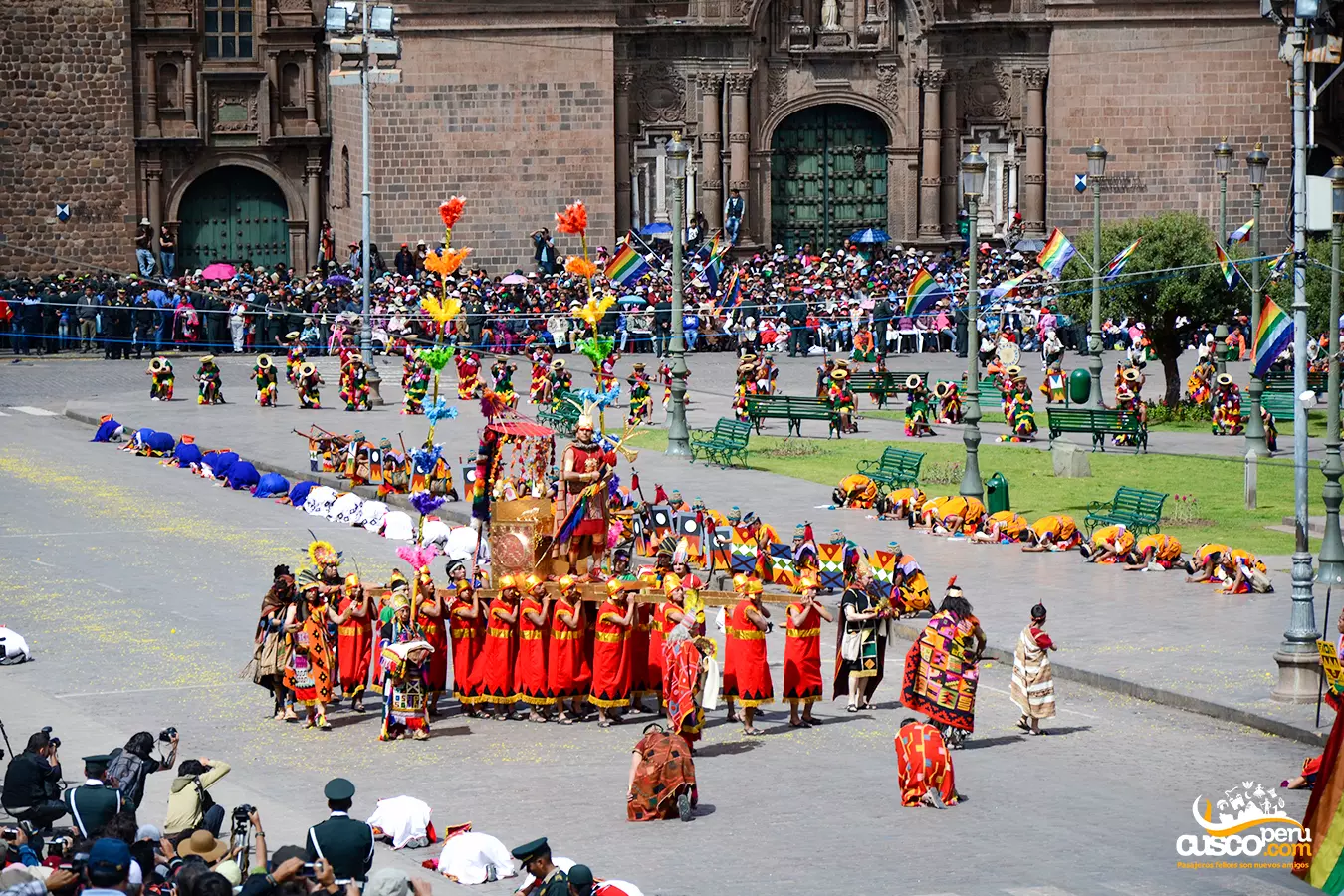
The ceremony begins at the Temple of the Sun, Qoricancha, with the appearance of the Sinchi, the General Commander of the Inca army, and his troops. They are followed by the Acllas, women chosen for their grace and wisdom, considered the most beautiful in the empire.
The Tika Taqaqkunas also participate, scattering flowers along the ceremonial path where the Inca and his wife, the Qoya, advance. All of this is accompanied by the sound of quenas and pututos, traditional instruments that evoke the sacred power of music. This first act lasts approximately 30 minutes.
Second act: Plaza de Armas of Cusco
The royal procession moves to the historic Plaza de Armas, where the Sinchi, the imperial army, and representatives of the four suyos of the Tahuantinsuyo are presented: Chinchaysuyo, Contisuyo, Antisuyo, and Collasuyo.
The Inca and the High Priest of the Sun make a symbolic offering on an altar placed in the middle of the square, with the aim of ensuring good harvests, balance, and prosperity for the empire.
This act lasts approximately 40 minutes and stands out for its solemnity, symbolic strength, and visual majesty.
Final act: Sacsayhuamán
The culminating act takes place at the archaeological complex of Sacsayhuamán, one of the most impressive constructions of the Inca legacy. Here, the largest gathering of musicians, dancers, priests, and representatives of the four regions of the empire takes place, each entering with their own dances.
Various offerings are performed, including the symbolic sacrifice of a llama, considered the main rite of the ceremony. The final scene is crowned by an emotional announcement by the Inca in the Quechua language, wishing good fortune for his people and reaffirming the bond between the earth, the sun, and the spirit of the Andean people.
Location: Paucartambo, Cusco
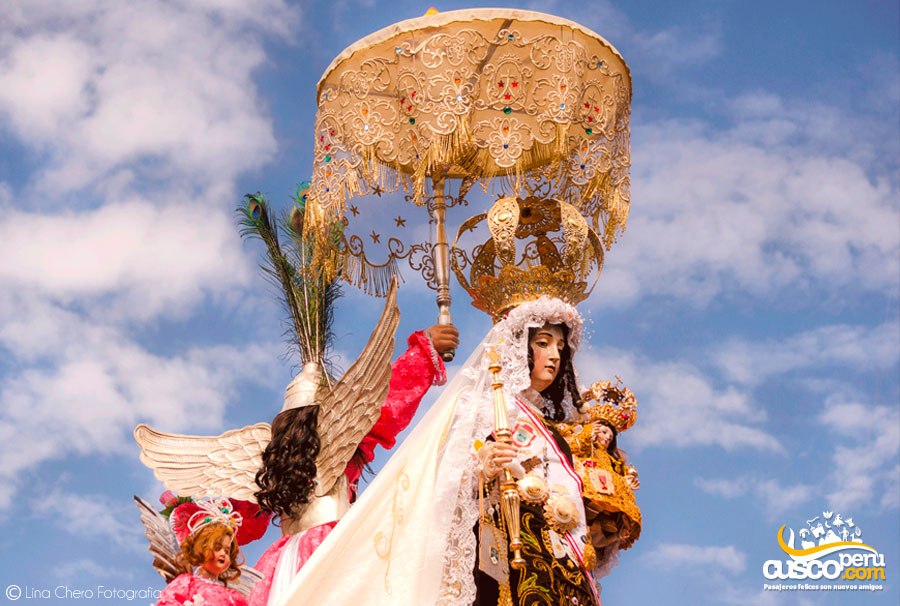
During these days, Paucartambo becomes an epicenter of faith, culture, and color. Every July 16, the festivity of the Virgin of Carmen, affectionately known as “Mamacha Carmen,” is celebrated. It is considered one of the most important folkloric celebrations in Peru, after the Virgin of Candelaria in Puno.
Thousands of devotees and visitors travel from Cusco, on a journey of approximately two hours or a little longer, to pay homage to the town’s spiritual patroness. The streets fill with comparsas, brass band music, and a solemn procession that moves through the heart of the town. More than a dozen dance groups represent characters with their own costumes and choreographies, especially the famous saqras, figures with demonic masks that interact playfully with the public, representing the eternal struggle between good and evil.
In recent years, this festivity has crossed borders thanks to its spirituality, deep Andean-Christian symbolism, and the vibrant spirit felt in every corner of the town. It is a transformative experience that combines devotion, oral tradition, ritual dance, and folk art in a highland setting.
Location: Plaza de Armas of Cusco
Cusco joins the entire country in celebrating the anniversary of Peru’s independence with an impressive civic-military parade. Every July 28, educational institutions, government entities, police forces, and military units parade through the Plaza Mayor in honor of the homeland, under the gaze of local authorities and citizens.
The day begins with a Mass at the Cathedral of Cusco, followed by the solemn raising of the Peruvian flag. Marching bands, dress uniforms, and civic fervor fill the historic center, remembering the legacy of freedom that unites all Peruvians.
Location: Plaza Regocijo, Cusco
Cusco Invita is a gastronomic event organized by EMUFEC and open to the public. It is a tribute to Peruvian flavor in the historic capital of Peru, with the participation of outstanding local chefs and the support of cultural institutions.
During this celebration, Plaza Regocijo becomes a space full of flavors, where visitors can taste emblematic dishes of Cusco and Peruvian cuisine.
The festive atmosphere is completed with live music, traditional dances, and an ambiance that celebrates Peru’s culinary diversity.
Cusco, recognized as one of the country’s most important gastronomic destinations, opens its kitchen to the world in this encounter of tradition, creativity, and flavor.
Location: All of Cusco
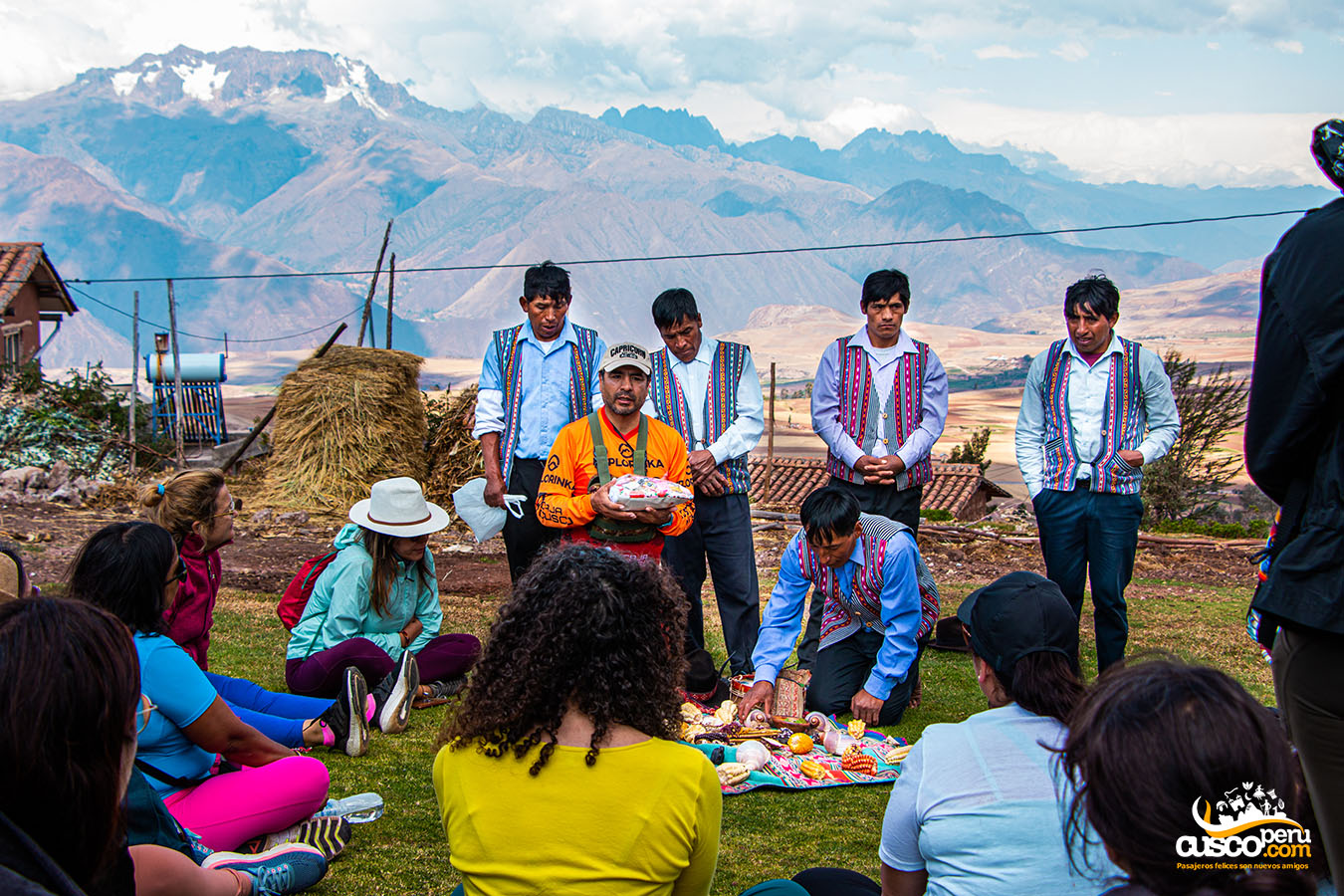
August 1 marks a sacred date in the Andean calendar: the Day of Pachamama. Since ancestral times, the peoples of the Andes have made offerings to Mother Earth, giving thanks for what they have received and asking for abundance for the new agricultural cycle.
In Cusco, this tradition remains alive both in homes and institutions, where symbolic ceremonies are carried out with deep spiritual respect. Offerings include chicha de jora, coca leaves, cigarettes, candies, sometimes port wine, and other ritual elements passed down through generations.
This custom reaffirms the spiritual bond between the earth, human beings, and the universe.
Location: Plaza San Cristóbal, Cusco
Devotion to the patron saint of transport workers is celebrated with joy in Plaza San Cristóbal. On this day, the church courtyard fills with music, dances, and religious expressions. The celebration includes cultural activities, Masses, food fairs, and craft exhibitions, in an atmosphere that brings together tradition and community.
The orchestras, the color of traditional costumes, and popular faith transform this event into a vibrant day honoring the holy protector of the road.
Location: Calca and Pisaq, Sacred Valley
Known as Mamacha Asunta, the Virgin Asunta is the patroness of Calca and one of the most beloved Marian icons of the Sacred Valley. Her festivity is celebrated with joyful dances, lively choreographies, and expressions of popular faith that attract both local visitors and national and international tourists.
The streets fill with comparsas, fireworks, and great devotion, in a setting surrounded by mountains and tradition. It is a celebration that combines the sacred and the festive, leaving an unforgettable experience for those who participate.
Location: Taray, Calca, Pisac, Tinta (Canchis)
The festivity in honor of the patron saint San Bartolomé is celebrated with songs, dances, and traditional music performed with bandurrias and quenas.
This traditional celebration takes place mainly in the district of Tinta, from August 22 to 26, and is also observed in other towns of the Sacred Valley.
It is a festivity that stands out for its rural and community essence, where dances, faith, and a sense of belonging come together in a lively tribute.
Location: Plaza de Armas of Cusco
Patroness of the Americas and the Philippines, Saint Rose of Lima is honored with a civic-religious ceremony in Cusco’s Plaza Mayor. Civil, military, police authorities, and institutions that recognize her as their patroness participate in a parade that combines solemnity and religious pride.
This festivity, celebrated throughout the country as a national holiday, stands out in Cusco for the presence of the Peruvian National Police and other law enforcement bodies, which pay tribute to their holy protector.
Location: Almudena Neighborhood, Cusco
Almudena, one of Cusco’s oldest and most traditional neighborhoods, fervently celebrates the Virgin of the Nativity, one of the city’s most beloved images. The festivity begins on August 29 with the traditional flower entrance, a procession that starts at Plaza San Francisco and reaches the Almudena Temple, filling the streets of the historic center with color and fragrance.
On the main day, September 8, solemn Masses, music, and traditional dances accompany the procession of the Virgin through the Almudena neighborhood. It is an emotional celebration where faith and tradition come together in one of Cusco’s oldest corners.
Location: San Salvador District – Sanctuary of Huanca, Cusco
Every September 14, thousands of devotees travel to the Sanctuary of the Lord of Huanca, in the district of San Salvador, 48 km from the city of Cusco. The image of the martyred Christ is a symbol of healing, faith, and hope, and gathers pilgrims from all over Peru and abroad.
Many faithful complete the walk as an act of penance or gratitude. The route, surrounded by nature and spirituality, becomes an encounter of collective faith. The sanctuary, nestled in the mountains, is one of the most important pilgrimage centers in the country.
Location: Mollepata, province of Anta
The Lord of the Exaltation is venerated with great devotion in Mollepata, where communities from across the province of Anta gather every year. This festivity, deeply rooted in popular feeling, brings together hundreds of pilgrims who arrive from different areas of Cusco to take part in Masses, processions, and celebrations with music and dances.
Location: Plaza of the San Jerónimo District, Cusco
From September 28 to October 2, The festivity in honor of San Jerónimo, patron saint of the district of the same name, is one of the most representative religious celebrations of the month. Not only residents of San Jerónimo take part, but also comparsas and delegations from neighboring districts of Cusco.
The program includes folkloric dance competitions, music festivals, art exhibitions, and food fairs that showcase the best of local culture.
During the celebration, you can also taste emblematic dishes such as the traditional chiriuchu and enjoy ancestral drinks such as chicha de jora.
Location: Historic Center of Cusco and districts such as San Sebastián and San Jerónimo
Although the main festivity of the Lord of Miracles is celebrated on October 28 in Lima, in Cusco the activities begin on October 1 with the opening Mass of the Purple Month and the blessing of habits. The central day in Cusco is October 18, with processions through several streets of the city, including visits to institutions and penitentiary centers. The closing of the Purple Month takes place on October 31 with a special Mass.

Location: Historic Center of Cusco
Although criollo music originated in Lima, specifically in Barrios Altos, the celebration of this musical expression has also taken root in Cusco. Every October 31, the historic center fills with coastal music, traditional dances, and cultural activities that pay tribute to the criollo spirit.
Open-air concerts, marinera performances, and exhibitions of traditional Peruvian food come together with Cusco’s heritage in a day that honors one of the most authentic expressions of national identity.
Location: Oropesa, Cusco
A celebration that brings together Catholic and Andean traditions with deep tenderness and symbolism. During this date, homes and cemeteries in Oropesa fill with altars dedicated to the deceased, decorated with flowers, candles, fruits, sweets, and the emblematic t’anta wawas: breads shaped like children, horses, or other figures that represent the cycle of life.
The atmosphere is festive and family-centered, with tables filled with roast suckling pig, Cusco corn tamales, and other traditional delicacies. In squares and markets such as Plaza Túpac Amaru, food stalls offer these flavors that bring generations together.
Location: Cusco and rural communities
Continuing the celebrations of All Saints’ Day, the Day of the Dead is an intimate day when families honor their deceased loved ones. Altars are built in homes with objects, photographs, and the favorite foods of the departed, as it is believed that they return to share with their loved ones. This tradition is especially meaningful in Cusco’s rural communities.
Location: Plaza de Armas of Cusco
During the days leading up to Christmas, the Plaza de Armas becomes a large Andean market that celebrates faith and folk art. Santurantikuy, commonly translated from Quechua as “buy me a little saint,” is a traditional fair that brings together hundreds of artisans from Cusco and other provinces, who display their finest creations: nativity scenes, religious figures, textiles, ceramics, carved wooden objects, and Christmas ornaments.
Beyond shopping, it is an opportunity to experience Christmas in an Andean way, where spirituality, creativity, and tradition come together in one place.

Location: Plaza de Armas of Cusco
On the night of December 31, the Plaza de Armas becomes a great stage where locals and travelers gather to celebrate with music, dances, rituals, and fireworks.
At midnight, Andean tradition comes alive as people walk in circles around the square to attract good omens and positive energy. It is not only about changing the calendar, but about renewing the spirit in a city that vibrates with history, faith, and hope.
As part of the most popular rituals, many people also perform flowering baths, prepared with herbs, flowers, and essences meant to cleanse negative energy and attract well-being. Others choose to wear yellow underwear, a symbol of good luck and abundance for the year ahead.

Happy passengers