
Pisac, also spelled Pisaq, is one of the most representative towns in the Sacred Valley of the Incas. Located in the province of Calca, in the Cusco region, about 30 km (19 miles) from the city of Cusco, it is considered one of the first stops on the Sacred Valley tourist circuit.
The town lies at approximately 2,950 m (9,678 ft) above sea level, while the Pisac Archaeological Park is located at a higher elevation, around 3,300 m (10,827 ft). Pisac enjoys a milder climate than the city of Cusco and preserves religious traditions, Andean customs, and a vibrant local life reflected in its streets and celebrations.
Pisac Town is a traditional Andean village in the Sacred Valley of the Incas. It is best known for its artisan market, peaceful streets, religious traditions, its proximity to the Vilcanota River, and, above all, the Pisac Archaeological Park, one of the most important Inca sites in the Cusco region.
Pisac is located northeast of the city of Cusco, in the district of Pisac, province of Calca, Cusco region. It is part of the Sacred Valley of the Incas and lies near the Vilcanota River, also known as the Urubamba River.
The journey from Cusco usually takes between 45 minutes and 1 hour by road, depending on traffic, the type of transportation, and any stops along the way.
Pisac was an important Inca settlement due to its strategic location in the Sacred Valley. Its archaeological park preserves agricultural terraces, ceremonial buildings, roads, water channels, urban sectors, and burial areas. These structures demonstrate the advanced agricultural, architectural, and religious planning achieved by the Incas.
The archaeological site is also associated with ceremonial activities and, according to some studies, astronomical observations. Its terraces, built along the mountain slopes, allowed the Incas to take advantage of different ecological levels for cultivation.
After the arrival of the Spanish, the colonial town developed in the lower part of the valley. Since then, Pisac has maintained a close relationship between Andean traditions, Catholic customs, and commercial activities.
The Pisac Artisan Market is one of the most famous in the Sacred Valley. Located around the main square, it offers textiles, ceramics, jewelry, musical instruments, wood carvings, souvenirs, alpaca garments, and decorative items inspired by Andean culture.
Although stalls operate on several days of the week, Sunday is usually the busiest and most attractive day for visitors. It is an excellent place to shop for souvenirs, talk with local artisans, and admire the variety of colors, textiles, and traditional designs from the region.
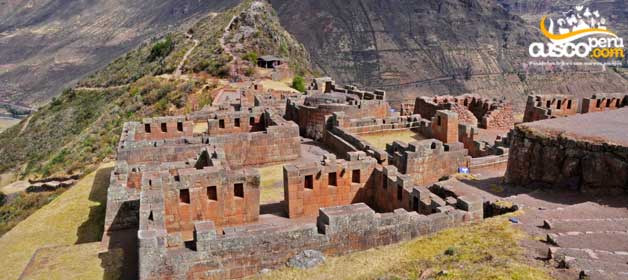
The Pisac Archaeological Park is located on the upper slopes above the town. It is one of the most outstanding Inca sites in the Sacred Valley and is included in the Cusco Tourist Ticket.
Its most important sectors include agricultural terraces, ceremonial buildings, stone-paved paths, water channels, viewpoints, and finely carved stone structures. From the upper section, visitors enjoy panoramic views of the valley, Pisac Town, and the Vilcanota River.
The site can be visited either by hiking up from the town or by taking transportation to the upper entrance. Travelers who are not yet acclimatized are advised to take their time because of the altitude.
Facing the Pisac archaeological site, on the opposite side of the Vilcanota River, stands the hill known as Ñust’ayuq or Chaka Chimpa. On its lower slopes, Inca agricultural terraces can be seen, while the upper section features a natural rock formation that, according to local tradition, resembles an Andean woman wearing a traditional headdress and carrying a bundle on her back.
This site forms part of Pisac’s oral traditions and local legends, so its significance is more closely related to cultural heritage than to confirmed historical evidence. Its main value lies in the landscape, local memory, and the way residents interpret their natural surroundings.
Pisac preserves an important religious tradition. On Sundays, the town church gathers local residents, visitors, and community authorities. During certain celebrations, varayocs—traditional authorities from Andean communities—take part wearing traditional clothing and carrying ceremonial staffs as symbols of authority.
The presence of the Quechua language, pututos (wind instruments made from conch shells), and traditional clothing reflects the blending of Catholic beliefs and Andean customs. For visitors, this provides an opportunity to experience a living expression of the town’s cultural identity.
Visitors are encouraged to be respectful by avoiding interruptions during ceremonies, asking permission before taking photographs, and maintaining a discreet attitude inside the church.

Pisac offers the opportunity to combine an artisan market, an impressive archaeological park, local cuisine, and Andean traditions that remain alive in the town.
Its proximity to Cusco also makes it an ideal destination for either a half-day or full-day trip. It can easily be combined with other Sacred Valley destinations such as Calca, Urubamba, Ollantaytambo, Chinchero, Maras, and Moray.
The best time to visit Pisac is during the dry season, from April to October, when rainfall is less frequent and conditions for exploring the archaeological park are more favorable. However, Pisac can be visited year-round. From November to March, the rainy season offers greener landscapes, although trails may become wet and slippery.
Bring light clothing for the daytime and a jacket for the afternoon, as temperatures can change quickly.
Wear comfortable walking shoes, especially if you plan to hike to the archaeological park or walk along its terraces.
Carry cash in Peruvian soles, as some market stalls do not accept credit cards.
Visit the market in the morning if you want to find a wider variety of products and avoid the busiest hours.
If you are not acclimatized to the altitude, walk slowly, stay hydrated, and avoid strenuous physical activity while visiting the archaeological park.
Respect religious ceremonies, local customs, and archaeological areas. Do not climb on the walls, damage the structures, or leave litter behind.

Happy passengers