Located on the route to the Sacred Valley of the Incas, Chinchero combines Inca history, Andean landscapes, and a textile tradition that remains alive in its communities. Here, you can visit Inca archaeological remains, a colonial church built on pre-Hispanic foundations, ancient agricultural terraces, and textile centers where a tradition passed down through generations is still preserved.

Chinchero belongs to the province of Urubamba, in the Cusco region, and is part of one of the most visited routes to the Sacred Valley. It is located about 30 km from the city of Cusco, which is why it is often visited on a half-day excursion or as part of a Sacred Valley tour. The Chinchero Archaeological Park is part of Peru’s cultural heritage and is one of the district’s most important historical spaces.
This town is known for its archaeological park, colonial church, agricultural terraces, artisan fair, and textile centers, where traditional weaving techniques, natural dyeing, and the use of Andean fibers are demonstrated.
Chinchero was an important place during the Inca period. According to official cultural information, Chinchero is associated with the Inca Túpac Yupanqui, who is credited with the construction of shrines, baths, terraces, and a royal palace in the area.
The archaeological park preserves pre-Hispanic paths, enclosures, terraces, water channels, huacas, and shrines. These elements show that Chinchero was not only an agricultural area, but also a residential, ceremonial, and administrative space linked to the Inca nobility.
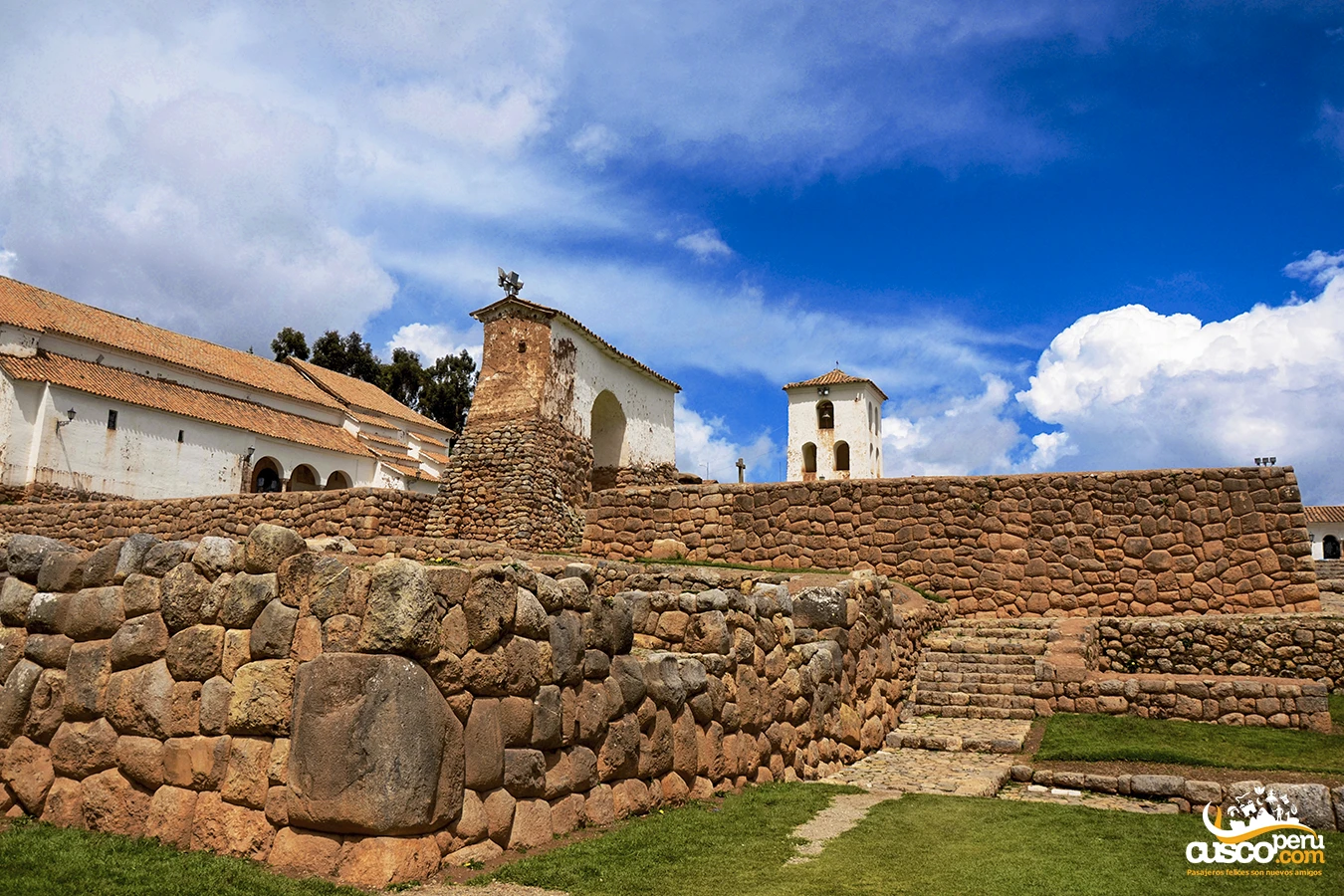
With the arrival of the Spaniards, the place maintained its importance. Colonial constructions were built over ancient Inca structures, including the town’s main church. This blend can be especially seen in the town center, where Inca walls coexist with colonial buildings.
Chinchero is considered one of the towns with the strongest cultural identity in the Sacred Valley. Its importance lies not only in its archaeological remains, but also in its intangible heritage: textiles, the Quechua language, festivities, traditional agriculture, barter, and community practices.
The Decentralized Directorate of Culture of Cusco highlights that Chinchero preserves knowledge, techniques, and practices passed down from generation to generation, especially in textile art, where symbols of Inca culture are maintained and natural dyes are used.
Chinchero is located in the province of Urubamba, Cusco region. From Cusco, you can reach it by the paved road that connects the city with Chinchero and continues toward Urubamba and Ollantaytambo, in the Sacred Valley.
The approximate distance between Cusco and Chinchero is 30 km. Travel time is usually between 40 minutes and 1 hour, depending on traffic, type of transportation, and stops along the way.
There are three main ways to get to Chinchero:
The Chinchero Archaeological Park is one of the district’s main attractions. The park preserves agricultural terraces, paths, water channels, enclosures, huacas, and shrines that help visitors understand the importance of Chinchero during the Inca period.
The site is divided into urban and agricultural sectors. The urban sector was linked to residential and ceremonial spaces, while the agricultural sector corresponds to the terraces used for cultivation and landscape management.
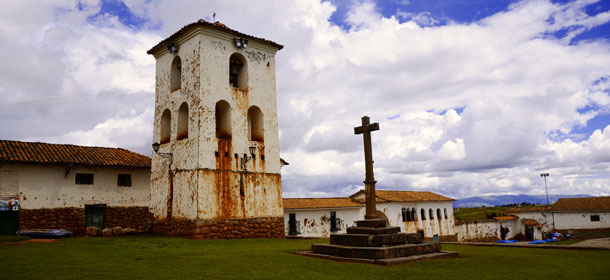
The main church of Chinchero, known as the Temple of Nuestra Señora de la Natividad, was built over Inca structures and preserves religious works of great historical and artistic value. This church contains paintings, sculptures, altarpieces, and altars of historical and artistic importance.
As visitors walk around its surroundings, they can see Inca walls, trapezoidal niches, and spaces associated with the ancient palace complex.
The terraces of Chinchero show the agricultural knowledge developed in the Andes. These platforms made it possible to make better use of the land, control water, and grow crops adapted to high altitudes.
Traditional crops such as potatoes, oca, olluco, broad beans, barley, and other Andean products are grown in the area. Agriculture remains an important part of local life and of the district’s cultural landscape.
The Chinchero fair is one of the town’s most representative spaces. Traditionally, the Sunday fair brings together local residents who offer agricultural products, textiles, and handicrafts. On certain dates or in local contexts, barter can still be observed as a traditional form of product exchange.
At the fair and in textile centers, you can find blankets, llicllas, chullos, belts, bags, and other garments made with traditional techniques. Many artisans explain the process of spinning, dyeing with natural plants, and weaving on a loom.
Chinchero is recognized for its traditional textiles. Weaving techniques are passed down within families and communities, preserving designs inspired by nature, the Andean worldview, and local cultural memory.
During the visit, travelers can observe demonstrations of wool washing, spinning, natural dyeing, and weaving. These demonstrations help visitors understand how Chinchero families keep their textile techniques alive and share them with visitors.
Quechua remains an important language in the daily life of many families in Chinchero, although much of the population also speaks Spanish, especially in commercial and tourist spaces.
When visiting Chinchero, it is common to see how agriculture, textiles, and local trade are part of the town’s daily life. Its high-Andean lands are suitable for traditional crops such as potatoes, oca, olluco, broad beans, and cereals. These products are part of local food traditions and the area’s commercial dynamics.
In addition, Chinchero maintains community practices and religious and Andean festivities that strengthen the town’s identity. Among its cultural expressions are Cruz Velacuy, Corpus Christi, product exchange, and textile activities.
Piuray Lagoon is located near Chinchero and is one of the most visited natural landscapes in the area. It is a good option for taking photographs, walking calmly beside the Andean landscape, or doing outdoor activities with local operators.
Huaypo Lagoon is located in the connection area between Chinchero and Maras, so it can be included in a Sacred Valley route. It is a good spot for those who want to combine culture, landscapes, and outdoor activities.
From Chinchero, you can continue toward Moray, famous for its circular agricultural experimentation terraces, and toward the Maras Salt Mines, known for their salt ponds. Both places are often combined in half-day or full-day excursions.
Poc Poc Waterfall is a good alternative for those who want to hike from the surroundings of Chinchero. Before going, it is advisable to check the condition of the trail and the approximate walking time. The route allows visitors to observe agricultural terraces, rural landscapes, and panoramic views of the Sacred Valley.
Best time to go
Chinchero can be visited throughout the year. The dry season, between May and October, is usually the most recommended time for walking and taking photographs, as there is less rain. During the rainy season, between November and March, the landscape becomes greener, but it is advisable to bring a poncho or waterproof clothing.
What to bring during the visit
It is recommended to bring comfortable clothing, walking shoes, sunscreen, a hat, water, a light jacket, and cash to buy handicrafts or pay entrance fees. Due to the altitude, it is advisable to walk calmly, especially during the first days of your stay in Cusco.
Recommended visit time
To visit the archaeological park, the church, the square, and a textile center, it is recommended to set aside between 2 and 3 hours. If you want to combine Chinchero with Moray, Maras, or the nearby lagoons, it is best to plan a half-day or full-day excursion.

Happy passengers