
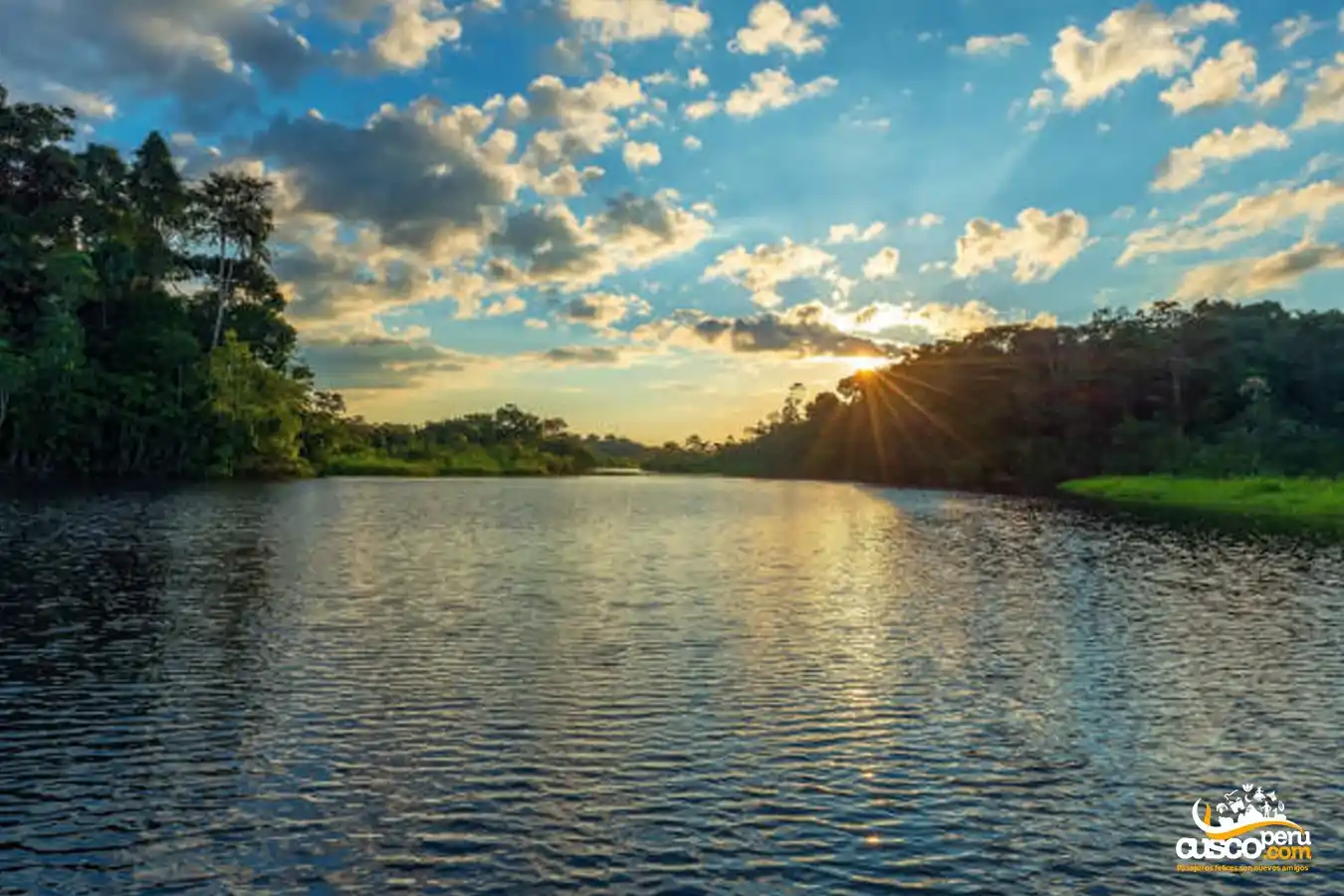
Pacaya Samiria is home to nearly one thousand animal species and more than one thousand recorded plant species. It is one of the most visited reserves in the Peruvian Amazon. Here, we explain how to get there, which places to visit, and what to keep in mind to make the most of your trip.
The reserve is located in northeastern Peru, in the Loreto region. It covers parts of the provinces of Requena, Alto Amazonas, and Ucayali. It lies within the Ucamara Depression, near the confluence of the Ucayali and Marañón Rivers, two of the most important rivers in the Peruvian Amazon.
From Lima, the first step is to take a flight to Iquitos, which takes approximately 1 hour and 45 minutes. From there, continue by road to Nauta and then travel by boat to the reserve. The river journey can take anywhere from 1 to 6 hours, depending on the entry point and the lodge you choose.
The main river access points are:
Entry into the reserve requires authorization from SERNANP, and the trip must be arranged through authorized tour operators. CuscoPeru.com can help you organize the route, permits, and services needed to visit Pacaya Samiria.
Pacaya Samiria National Reserve allows visitors to explore rivers, lagoons, flooded forests, and an incredible variety of Amazonian wildlife in its natural habitat. Among its main attractions is wildlife observation, including pink river dolphins, Amazonian birds, monkeys, and many other jungle species. Some animals, such as jaguars and Amazonian manatees, are much harder to spot and sightings depend greatly on the location and season. Visitors can also enjoy boat excursions along the reserve’s rivers and lagoons, discovering its lush vegetation and remarkable biodiversity. In addition, the reserve offers community-based tourism experiences, where travelers can learn about local traditions, daily activities, and ways of life closely connected to the river and rainforest.
The reserve features several established routes designed to promote responsible tourism and conservation. Each route offers a different way to experience Amazonian ecosystems.
Yanayacu-Pucate Basin
This is the most visited and most accessible area from Nauta. It begins in the community of Veinte de Enero and leads to El Dorado Lake. In the El Dorado sector, it is common to spot river dolphins, especially during boat trips through the lagoons and channels.
Samiria River Basin
This basin is located between the middle and lower sections of the Samiria River, near Yarina and Fortuna Lakes. It is an excellent option for travelers seeking a cultural experience. Here, visitors can interact with local communities, learn about their traditions, and participate in activities such as traditional fishing.
Lower Pacaya Basin
Considered one of the least visited areas of the reserve, it offers a more remote experience, ideal for travelers seeking a deeper connection with the rainforest and routes with fewer visitors.
El Dorado Lake is one of the best places for canoe rides, birdwatching, and observing pink river dolphins. The best times to visit are usually at sunrise and sunset, when the light reflects on the water, creating landscapes painted in golden and orange hues.
According to official data, more than 1,025 vertebrate species have been recorded in Pacaya Samiria National Reserve, representing an important portion of Peru’s and the Amazon’s biodiversity.
A great time to visit Pacaya Samiria is between January and May, during the high-water season, when rivers rise and make it possible to explore larger areas by boat. During these months, the higher water levels provide access to flooded sections of the rainforest, creating a very different experience from the dry season.
The climate is tropical, humid, and warm, with average temperatures ranging from 26°C to 34°C (79°F to 93°F). The rainy season runs from December to May, while the dry season generally lasts from June to November. During the dry season, more trails are available for hiking.
During the rainy season, water covers vast areas of the rainforest, creating unique aquatic landscapes known as “mirror forests,” where the sky is perfectly reflected on the water’s surface.
SERNANP’s administrative office hours are Monday through Friday, from 7:30 a.m. to 4:00 p.m. For tourism visits, schedules may vary depending on the operator, entry point, season, and river conditions.

Happy passengers