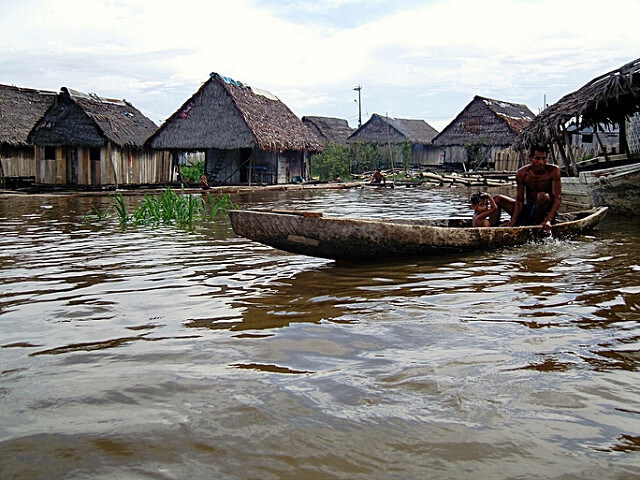
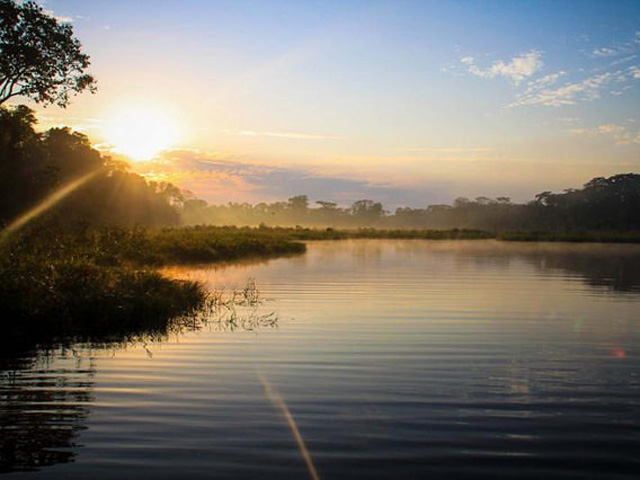
The Amazon River, considered the most voluminous river on the planet, has one of its origins in the Peruvian Andes. The Amazon rainforest, with its vast biodiversity of flora and fauna, allows you to explore landscapes surrounded by the diverse indigenous communities that inhabit the region.
What to see and do in the Peruvian rainforest: tourist attractions
The Peruvian jungle is divided into two subregions: the high jungle and the low jungle, differentiated by altitude and climate conditions. Its climate is warm and humid, with abundant rainfall that supports dense vegetation and biodiversity. It is estimated that more than 16,000 plant species can be found in this region, along with a wide variety of mammals, birds, reptiles, amphibians, and insects.
Archaeological sites and museums in the Peruvian Amazon
Archaeological sites
- Kuélap: An archaeological site of the Chachapoyas culture located at over 3,000 meters above sea level in the cloud forest of the Tingo district, south of the town of the same name, in Luya province.
- Gran Pajatén: An archaeological complex with ceremonial buildings and high-relief friezes, located in Río Abiseo National Park between the departments of San Martín and La Libertad, at an altitude of 2,850 meters above sea level.
- Karajía Sarcophagi: Funerary tombs up to 2.5 meters high with human shapes, located on cliffs. Found on Cerro Karajía, in the district of Trita–Luya Colina, Luya province, Amazonas region, at an altitude between 2,600 and 2,800 meters above sea level.
- Revash Mausoleums: House-shaped funerary structures belonging to the Chachapoyas culture. Located in the district of Santo Tomás, Luya province, Amazonas region, at over 2,800 meters above sea level.
Notable museums
- Leymebamba Museum (Amazonas): Houses more than 200 mummies and hundreds of offerings discovered at Laguna de los Cóndores, along with an exhibition about the Chachapoyas culture.
- Qhapaq Ñan Andean-Amazonian Museum (Quillabamba): Showcases the interaction between Andean and Amazonian cultures, local biodiversity, and Inca resistance.
- Kuélap Museum-site: Provides information about the construction and life of the inhabitants of the citadel.
- Gilberto Tenório Cruz Museum Collection (Amazonas): Focused on regional history and culture.
Most important Amazonian cities to visit
The most important cities to visit in the Peruvian Amazon include:
- Iquitos (Loreto): One of the largest cities in the world without road access. Visitors can navigate the Amazon River, visit the Yanayacu River, and explore Pacaya Samiria National Reserve.
- Puerto Maldonado (Madre de Dios): Gateway to Tambopata National Reserve and Lake Sandoval, ideal for wildlife observation such as monkeys and macaws.
- Pucallpa (Ucayali): Located along the Ucayali River, known for Yarinacocha Lagoon and proximity to El Sira Communal Reserve.
- Tingo María (Huánuco): Known for Tingo María National Park and the “Sleeping Beauty” mountain formation.
- La Merced (Junín): In Chanchamayo, you can visit waterfalls such as Tirol, Bayoz, and Velo de la Novia, ideal for trekking and nature experiences.
Best national parks and reserves in the Amazon
- Manu National Park (Madre de Dios): One of the most biodiverse places on Earth, offering sightings of the Andean cock-of-the-rock and countless species from the Andes to the low jungle.
- Tambopata National Reserve (Madre de Dios): A biodiversity hotspot near Puerto Maldonado, ideal for wildlife observation and macaw clay licks.
- Bahuaja Sonene National Park (Madre de Dios/Puno): Protects unique tropical savanna ecosystems along with Amazon forests.
- Yaguas National Park (Loreto): Known for its exceptional fish diversity and peatland ecosystems.
- Río Abiseo National Park (San Martín): Protects vast areas of cloud forest with high biodiversity and archaeological sites.
Location: Where is the Peruvian Amazon and how to get there?
The Peruvian Amazon is located in the eastern region of Peru and forms part of the Amazon Basin in South America. It borders the Andes to the west and extends toward Brazil, Colombia, and Bolivia to the north, east, and south.
Important information: climate, vaccines, and best time to travel
Climate
The average temperature ranges between 25 °C and 30 °C, with peaks that can reach 40 °C during the dry season in some areas. Rainfall is intense and frequent, exceeding 2,000 mm annually. The rainy season runs from December to May, with higher river levels. The dry season, from June to November, has less rain, making it ideal for hiking and wildlife observation along riverbanks.
Vaccinations
Recommended vaccines for traveling to the Peruvian Amazon (Loreto, Madre de Dios, Ucayali, etc.) include:
- Yellow fever: The main vaccine, which must be taken at least 10 days before travel. Recommended for people aged 15 months to 59 years.
- Hepatitis A and B: Recommended due to possible contamination of water and food.
- Typhoid fever: Advisable for travelers visiting rural or remote areas.
- Basic boosters: Tetanus, diphtheria, measles, and rubella should be up to date.
- Rabies: Consider if engaging in activities with animals or staying in rural areas.
Best time to travel
We recommend visiting the Peruvian Amazon during the dry season, from June to September, when you can go hiking, observe macaws, and experience fewer mosquitoes. However, the rainy season (December to May) is ideal for river navigation and exploring by boat.