

Pachacámac is one of the most important archaeological sites on the Peruvian coast. Covering more than 465 hectares, its occupation began in the first centuries of our era, and the sanctuary maintained its religious importance for more than a thousand years, until the arrival of the Spanish in 1533. Here, you can find evidence of four cultures: Lima, Wari, Ychma, and Inca. This site has an excellent site museum and a large number of ancient structures, including temples, palaces, pyramids, aqueducts, cemeteries, plazas, streets, and more.
Pachacámac, whose name means “soul of the earth, the one who animates the world,” is one of the most important archaeological sites in Peru. Located about 40 kilometers southeast of Lima, this ceremonial and religious sanctuary covers 465 hectares and preserves more than a thousand years of history linked to different cultures of Peru’s central coast. It was inhabited by several pre-Inca cultures before becoming part of the powerful Inca Empire around the 15th century.
The sanctuary was dedicated to Pachacámac or Pacha Kamaq, a deity associated with creation, the movements of the earth, and the oracle. His worship was highly important on the central coast and was reinterpreted by different societies, including the Ychma and Inca cultures. The Ychma were a pre-Inca society that developed in Peru around 1100 AD and lasted until 1440 AD. After the fall of Wari power, two societies stood out in the region: the Ychma, south of Lima, and the Chancay, to the north.
There are at least 16 pyramids built by the Ychma in Pachacámac, along with other structures within the Lima area. Over many years, different groups arrived at the temple of Pachacámac and added more constructions to the site. However, many structures have been affected by weather conditions, earthquakes, erosion, and the passage of time.
Pachacámac is important because it was the most important sanctuary and oracle on the central Andean coast for more than a thousand years. Its influence was so great that even the Incas traveled there to consult its oracle.
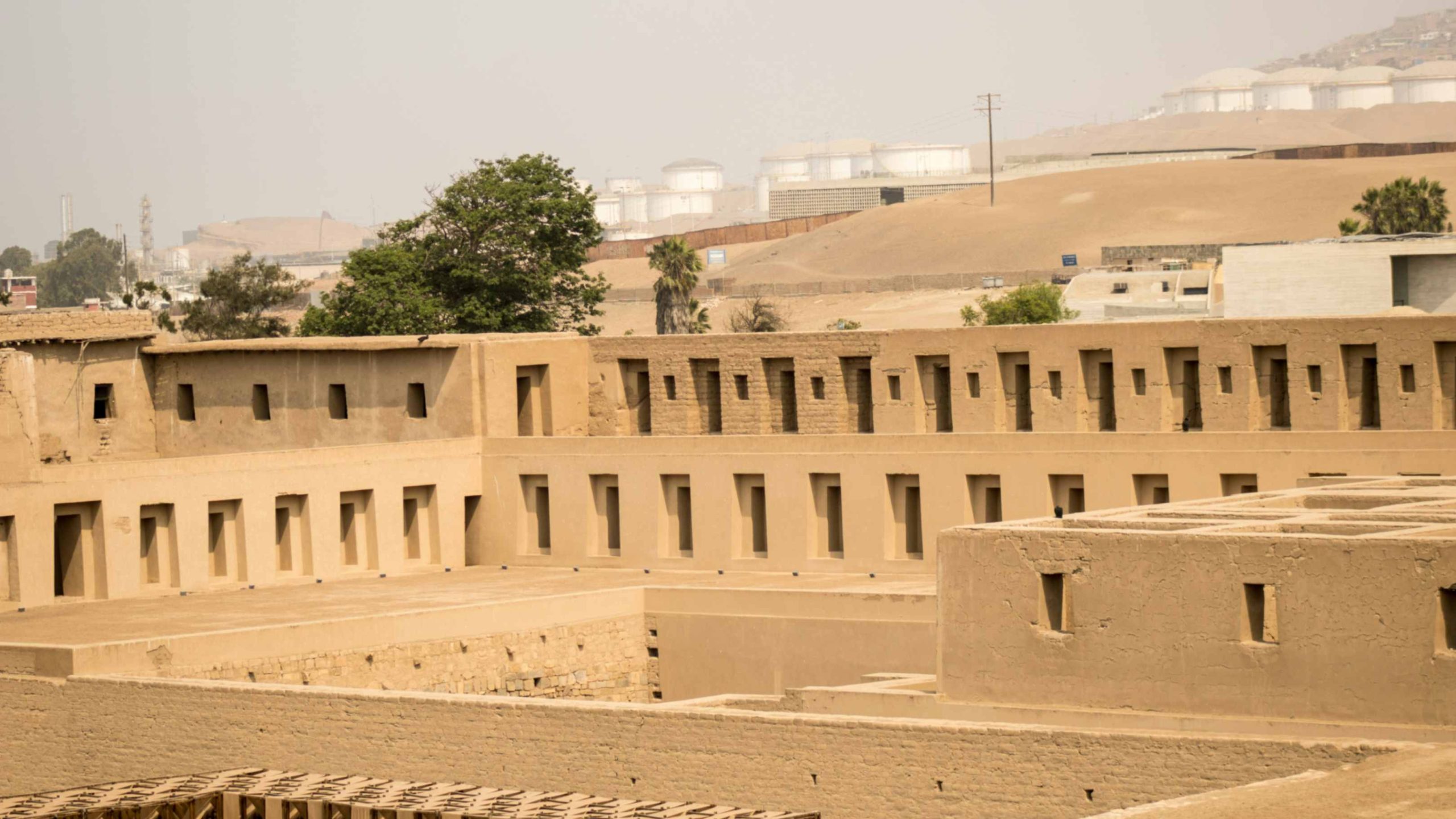
The Pachacámac Archaeological Sanctuary is located in the Lurín Valley, south of Lima, next to the Old Pan-American Highway South, km 31.5, in the district of Lurín.
Most travelers visit Pachacámac on a tour that includes transportation and a guide. If you would like to visit this way, you can contact CuscoPeru.com to arrange a tour with transportation from Lima, a specialized guide, and enough time to explore both the museum and the archaeological area.
If you would like to visit the site on your own, you can take public transportation from Lima to an area near the entrance. If traveling by bus, it is best to check updated routes to Lurín or Pachacámac and confirm the closest stop to your departure point. The trip takes around 1 hour and 30 minutes, depending on where you start and traffic conditions.
The Pachacámac Site Museum was inaugurated in 2016 and displays pieces from research carried out in the sanctuary, including objects from the Lima, Wari, Ychma, and Inca cultures.
The Temple of the Sun occupies the highest part of the sanctuary. It has six platforms and a trapezoidal layout, with a front facing the sea and the islands. Chronicles indicate that the idol of Pachacámac was kept there, along with offerings of gold and silver. After the arrival of the Spanish, the idol was burned and the treasures were looted.
The Acllahuasi housed chosen women dedicated to the worship of the sun god. It consists of several enclosures with stairways, colcas, water reservoirs, and temples with niches. The complex preserves stone and adobe enclosures, as well as ceremonial spaces that help explain the importance of the site during the Inca period.
One of the oldest constructions in Pachacámac, it probably belongs to the Lima culture, which inhabited the area between the 3rd and 7th centuries AD. It was a temple built with small adobe blocks on a rocky promontory.
Its name comes from the fact that its walls were decorated with zoomorphic, geometric, and human figures in green, blue, and yellow tones. This temple is associated with the Wari period, between 650 and 900 AD, although it is advisable to verify the exact dating before publication. It is a stepped pyramid reached by long ramps. Due to the passage of time, the figures and colors of the enclosure are no longer clearly visible.
Taurichumpi was the curaca, or Inca governor, in Pachacámac at the time of the Spanish arrival in 1533. It is an enclosure with several rooms, built of stone and adobe, and is now partially deteriorated due to the passage of time. According to chronicles, Hernando Pizarro came to this place to ask the curaca for permission to enter the Sun Enclosure, where the idol of Pachacámac and offerings of gold and silver were located.
The Pilgrims’ Plaza is a rectangular space more than 300 meters long that may have served as a gathering place for those who came to the sanctuary before entering the ceremonial sectors.
Pachacámac was part of the Qhapaq Ñan, the great Inca road network. Some sources indicate that pilgrims made long journeys and performed ritual practices before entering the sanctuary.
The weather in Pachacámac is warmer and drier than in the city of Lima. During summer, the sun can be intense from mid-morning, so it is recommended to visit the complex between 9:00 a.m. and 11:00 a.m. for a more comfortable experience.
In winter, the sky is usually cloudy and the environment remains dry. It is a good season for those who prefer cooler temperatures while walking among the huacas.
Reference schedule:
Reference fees:
A 50% discount on the general fee applies to adults over 60, people in voluntary military service, teachers, and people with disabilities, with a valid document.
Museum admission is free for Peruvian citizens and foreign residents, with a valid DNI or foreign resident card, on the first Sunday of each month according to Law N°30599.
Services
Most of the visit takes place outdoors, so it is best to prepare according to the season. In summer, bring water, a hat, sunglasses, and sunscreen. In winter, consider bringing a light jacket, as it can be windy.
Wear comfortable, preferably closed-toe shoes, as several areas of the route have dirt or gravel paths.
Always follow the marked trails and the instructions given by the site staff. This helps protect the area and also makes the visit safer.
Avoid climbing on walls, touching ancient structures, painting surfaces, or moving stones from the archaeological site. Pachacámac is a heritage site and must be preserved.
Do not collect fragments, stones, or any material from the site, even if it seems small or unimportant.
Due to the size of the site, some areas can be visited by light vehicle, although part of the visit can also be done on foot.
If you arrive by taxi or private transport, it is advisable to arrange your return trip in advance, as it may be more difficult to find transportation when leaving. There is a bus stop in front of the entrance.
For school visits or large groups, it is best to coordinate in advance to better organize the route.
Is Pachacámac near Lima?
Yes. The district and the Pachacámac Archaeological Sanctuary are near Lima, about 40 km southeast of the city center. Travel time can vary between 50 minutes and 1 hour and a half, depending on the departure point and traffic.
Can Pachacámac be visited with children?
Yes. It is possible to visit Pachacámac with children, as long as they are accompanied by an adult, wear comfortable shoes, and follow the instructions of the museum and security staff.
Is Pachacámac worth visiting?
Yes. Pachacámac is worth visiting because it is one of the most important archaeological complexes on the Peruvian coast. Its history spans more than a thousand years and allows visitors to learn about the Lima culture, the Wari period, the Ychma period, and the Inca reorganization.
What is the best way to get there?
The best way to get there will depend on your budget, comfort, and available time. You can go on an organized tour, by taxi, or by public transportation.
Is it better to go with a guide?
Yes. It is recommended to go with a guide, since the Pachacámac Archaeological Sanctuary is a vast complex of more than 465 hectares. Without a guide, the adobe constructions may look like simple mounds of earth; with a guide, you will better understand its history, its function as an oracle, and the life of the pre-Inca and Inca cultures.
How long does a visit to Pachacámac take?
A visit to Pachacámac takes approximately 2 to 4 hours if you visit both the archaeological area and the museum.
Are there educational activities?
Workshops for children and school guided visits are frequently organized.
Can I get there by public transportation?
Yes. From Lima, you can take buses toward Lurín or Pachacámac, for example from the Plaza Lima Sur area, but it is recommended to confirm the updated route and the closest stop to the sanctuary before traveling.

Happy passengers