

Amaru Kancha is a Quechua expression that can be translated as “enclosure of the serpent.” According to some sources, it was commissioned by Huayna Cápac and may have functioned as a residence linked to the Tumipampa Ayllu.
This ancient Inca palace was located in front of the current Main Square of Cusco, formerly known as Waqaypata. It was separated from the Acllawasi, or House of the Chosen Women, by the Inti K’ijllu, an ancient Inca passage that corresponds to today’s Loreto Street. Toward the southwest, the complex extended in the direction of the Saphy River.
After the Spanish conquest, during the distribution of urban plots, different parts of the ancient palace were granted to Hernando Pizarro, Mancio Sierra de Leguizamo, Antonio Altamirano, and Alonso Mazuela. Later, an important part of the area was occupied by the Jesuits, who built the Church of the Society of Jesus there.
The ancient Amaru Kancha was located in front of the current Main Square of Cusco, in the area between Loreto Street, El Sol Avenue, and the surroundings of the Church of the Society of Jesus.
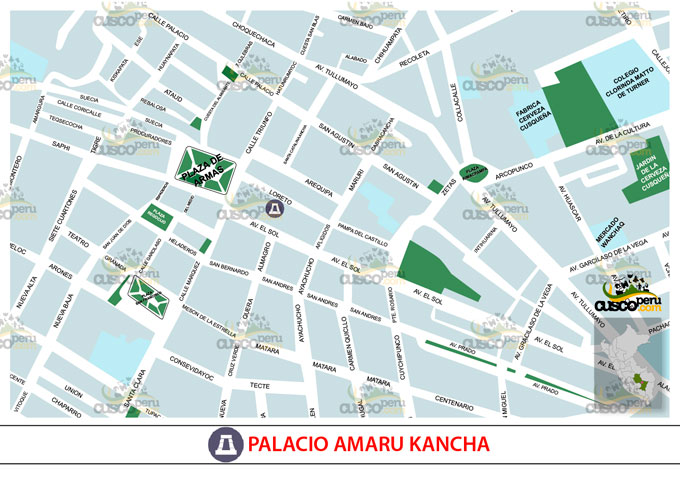
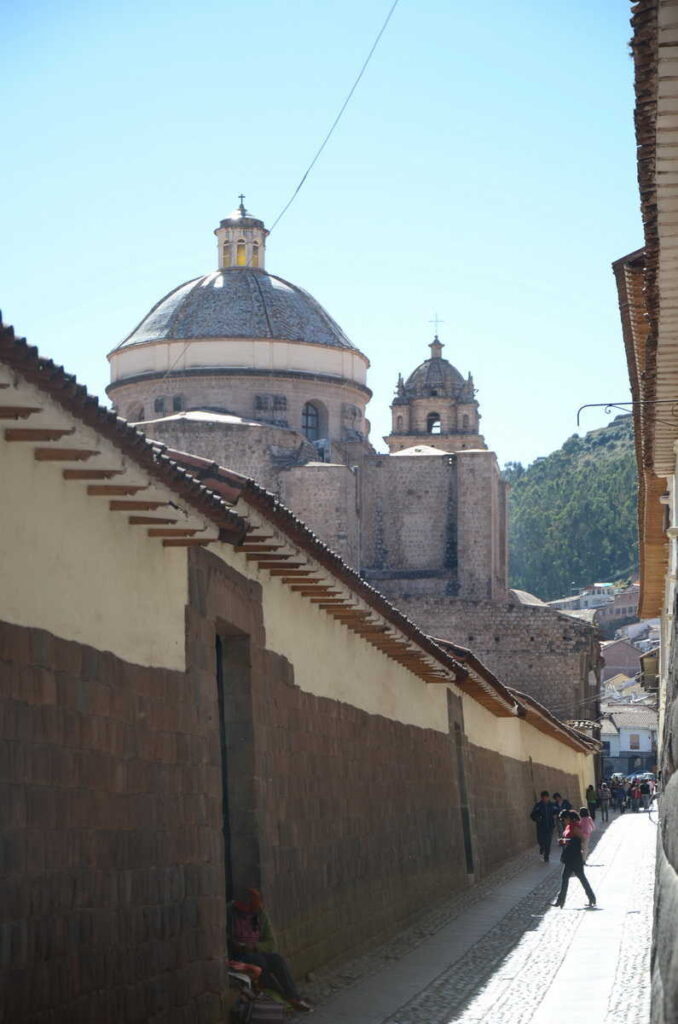
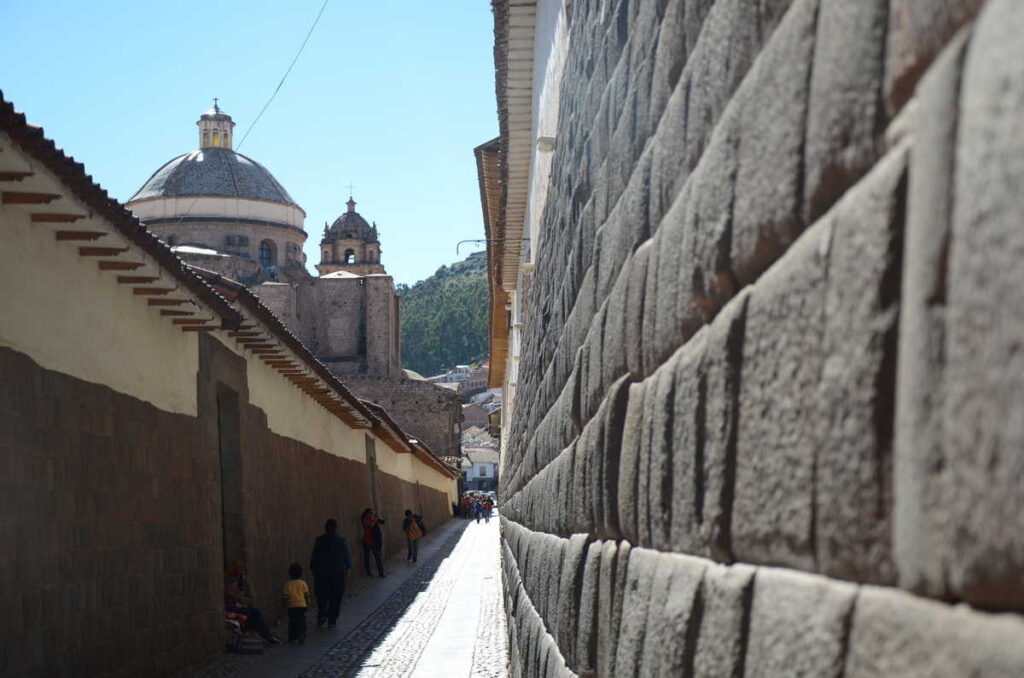
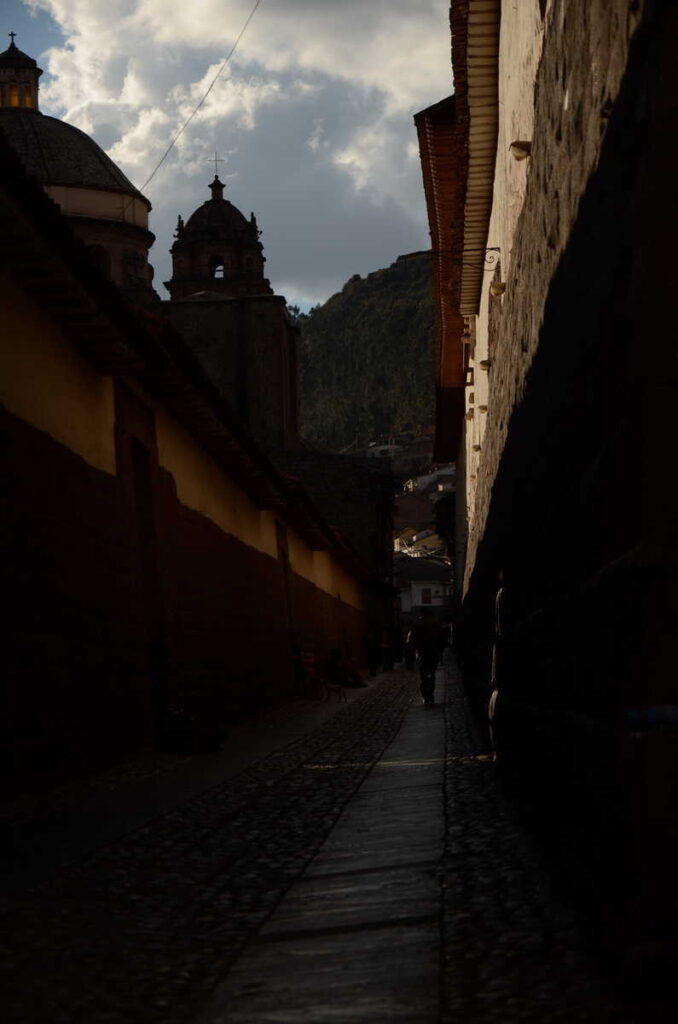
Few visible remains of the ancient palace are still preserved. On Loreto Street, visitors can still appreciate Inca walls that formed part of the original complex.
Today, the area once occupied by the ancient Amaru Kancha includes the Church of the Society of Jesus, the Palace of Justice, and spaces linked to the National University of San Antonio Abad of Cusco.
The visible walls of the ancient Amaru Kancha can be observed from the public street, especially on Loreto Street. To enter current sites, such as the Church of the Society of Jesus, it is recommended to check their current opening hours before visiting.

Happy passengers