
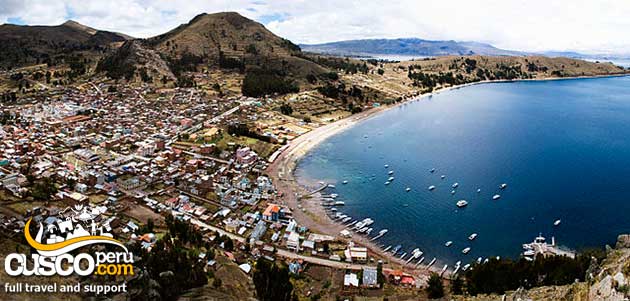
The region of Puno, known as the folkloric capital of Peru, is located in southeastern Peru and is a city that captures travelers’ attention with its beautiful traditional garments and colorful costumes.
In the month of February, as every year, the people of Puno experience with intensity and joy a celebration with religious overtones that inspire and uplift the hearts of thousands of devotees and visitors from all over the world. With great anticipation, numerous dance groups prepare themselves, made up of men and women dressed in colorful costumes of light, parading through the long streets of the city and dancing joyfully to the rhythm and sound of the harmonious marching bands. Each year, the Festival of the Virgen de la Candelaria is expected to welcome no fewer than 85,000 visitors, both domestic and international.
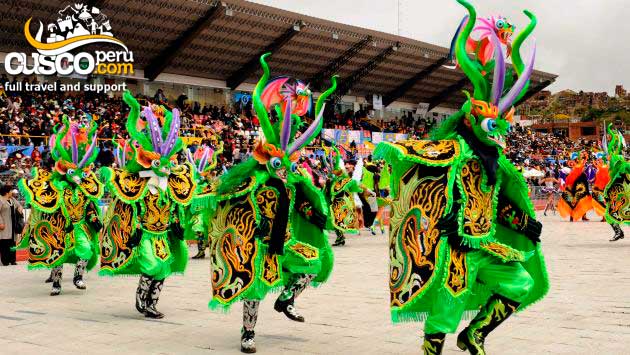
Dozens of groups of dancers gather from seven in the morning at the stadium or sports field called Enrique Torres Belón, in Puno, to take part in this huge and popular celebration through the well-known competition of traditional dances from across the region.
This traditional festival was recognized in November 2014 as an “Intangible Cultural Heritage of Humanity,” a recognition granted by the United Nations Educational, Scientific and Cultural Organization (UNESCO). It is a celebration that Peru honors with pride.
Puno is immensely rich in dances, music, customs, and legends. It is celebrated for its varied and colorful folklore; it is possibly the richest region in Peru in customs, where its highest expression is manifested in the Festival of the Virgen de la Candelaria.
During the first days of February, the streets of Puno fill with devotees, dancers in colorful costumes, tourists, and visitors who pay tribute and homage to the patron saint of the city, the “Virgen de la Candelaria,” also known as “La Mamacha Candelaria.” Puno is filled with faith and lives its “carnivals” intensely, becoming one of the largest religious celebrations in the country from colonial times to the present day.
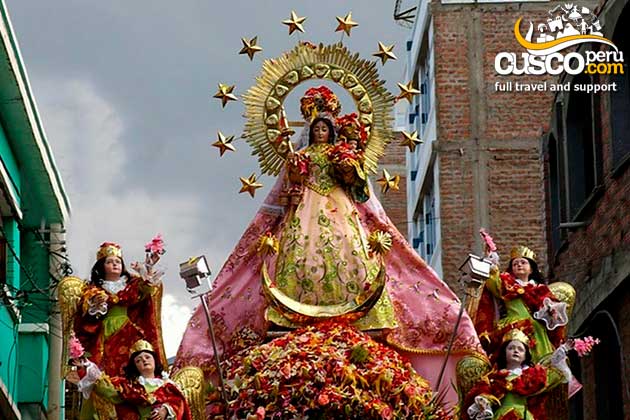
“Mamacha Candelaria” is accompanied by a crowd that prays, gives thanks, and asks for miracles. She is honored with prayers and altars prepared in her honor.
The Festival of Candelaria lasts sixteen days and begins on February 2 with a Eucharistic celebration at the temple in the central square of Manuel Pino Park, along with the gathering of dance groups and musicians, amid people arriving from all over the world to witness this spectacular religious celebration.
Once the Eucharistic celebrations have concluded, the joy of experiencing a religious event that keeps the people spiritually alive and very close to their “Mother” becomes evident with the beginning of the dances, accompanied by the marching bands that begin to parade through the streets of the city, while the image of the Virgin, patron saint of the people, is carried on a litter in procession through the streets of Puno by her faithful devotees. In the days following the beginning of the festivities, fairs and celebrations are held in the most popular neighborhoods, where people drink and dance to the rhythm of Puno’s music and dances during both day and night. The climax of the celebration takes place on February 9 and 10, when hundreds of groups show respect and veneration to the image of the “Virgen de la Candelaria” with their joyful dances throughout the procession.
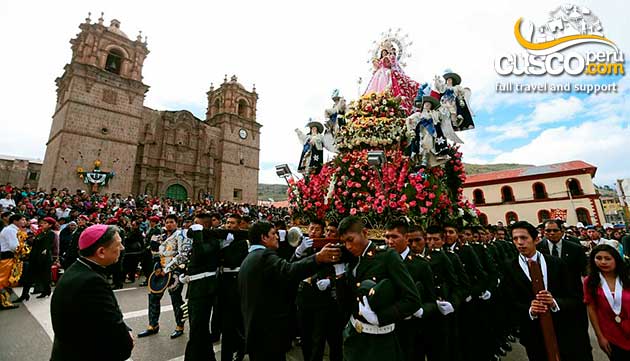
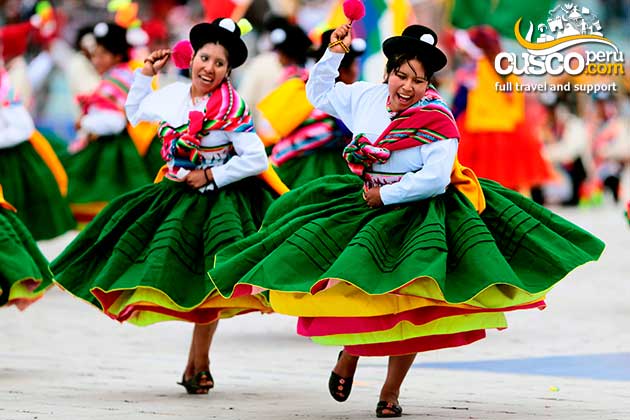
As night falls on February 2, the city streets remain blocked because the Virgen de la Candelaria begins her route alongside the women dancers who wave their colorful garments, while the faithful devotees pay tribute to the “Mother” of the people by throwing flower petals.
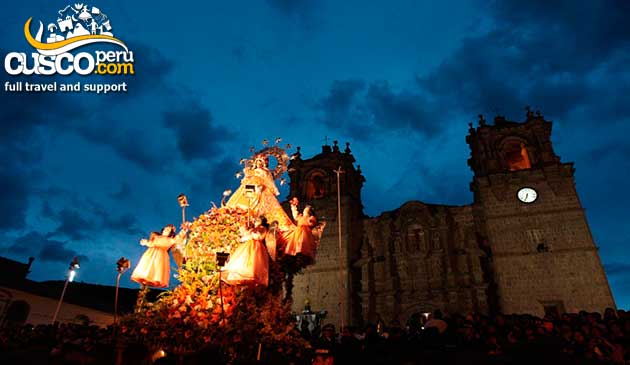
The faces of the faithful are gradually being moistened with holy water that the priest pours over the pilgrims. During the procession, hundreds of white candles are lit, illuminating the streets of Puno, and the beloved Virgin is carried toward the Cathedral of Puno. At times, a gentle rain accompanies the steps of the faithful and the visitors, but it does not prevent the climactic act from continuing on its course.
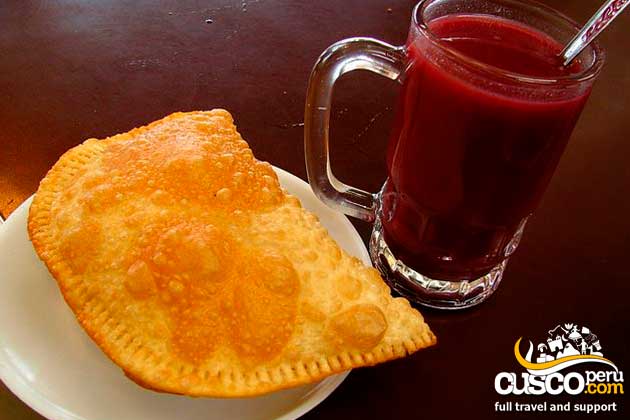
Meanwhile, street vendors offer the well-known “anticuchos de corazón” and other delicious snacks such as meat and cheese empanadas. On the other hand, it is very common to see street stalls and some establishments selling the traditional purple “Api,” a drink made mainly from purple corn, water, sugar, and cinnamon. However, each seller gives their “Api” a personal touch, with aromas of anise or fruits such as pineapple or orange. “Api” is a hot drink of Bolivian origin that is commonly consumed to combat the harsh cold climate of the highlands. The closeness between Peru and Bolivia has allowed for a strong influence of customs and traditions between the two countries, visible in the expressions that strongly shape their identities through music, dance, and gastronomy. Delicious hot “Api” is commonly accompanied by a large and delightful cheese empanada.
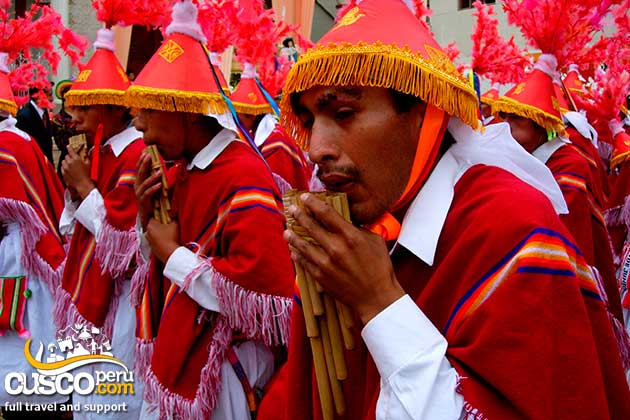
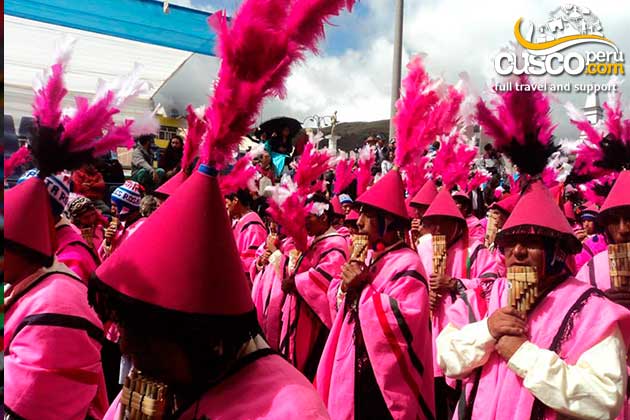
By midnight, panpipes and other percussion instruments are sounding throughout the streets in the midst of a fusion of beautiful sounds typical of the celebration. Groups of dancers leap about while waving handkerchiefs.
“Did you know that the Virgen de la Candelaria wears more than 50 beautiful and striking dresses?” Every year, her outfit is changed, and she is dressed in a new and beautiful one. On the other hand, nearly half of the musical bands are brought from Bolivia. We are pleased to see how this neighboring country, with its music and traditions, also joins this extraordinary celebration in an effort to express its love and faith for Puno’s patron saint and to share its dances and music with its sister country.
There is no shortage of colored lights illuminating the city of Puno, and they are part of an unforgettable experience that fills the place and its visitors with joy.
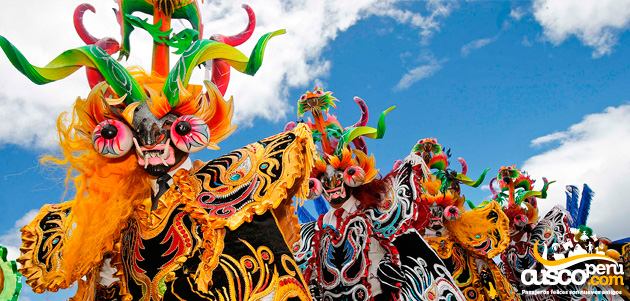
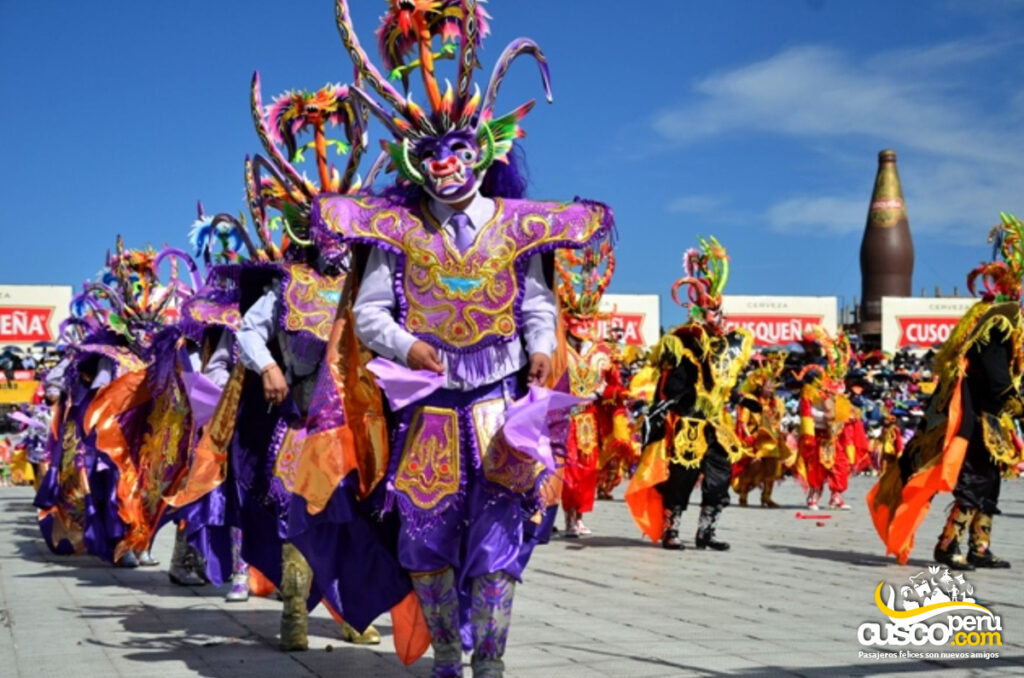
The following day, sometimes the sun shines and at other times the rain appears; the procession continues until part of the day has passed. In the afternoon, before night falls, the dance groups and troupes once again begin to parade through the streets of the city, and people gather along the surrounding areas and sidewalks to watch the dancers pass by, applauding them and shouting with joy. The Aymara women, wearing enormous hats covered with feathers and natural flowers, dressed in a distinctive way with fifteen heavy colorful skirts, perform the “waka waka” dance amid striking choreographies, followed by groups of older men dressed in illuminated costumes and cheerfully carrying wooden rattles in their hands, sounding in time with the bands. At the same time, groups of dancers disguised as gorillas, birds, and women wearing sequined bodices in bright colors and short skirts with very high heels continue dancing. Between one dance and another, the Sikuris appear, represented by groups of approximately 50 to 60 musicians who advance while energetically playing the panpipes to the rhythm of the dances and the sound of bass drums and drums. Mamacha Candelaria continues to be carried on a litter by her faithful devotees in the middle of a celebration that surrounds the population with great joy and the feelings inspired by their Patron Saint.
The dance competition takes place at Enrique Torres Belón Stadium, where it was held on Sunday, January 31 and February 1, 2026, while the competition in traje de luces took place on February 8, and the parade and veneration of dances on February 9 and 10.
In this way, it will be essential for your eyes to see, for your ears to listen, and for your senses to awaken as you plan your trip and pack your bags to visit Puno in the month of February every year. The music, the dances, the colorful and illuminated costumes, the regional gastronomy, and other customs, mixed with the feelings of faith, devotion, and the immense love that the faithful feel for the Virgen de la Candelaria, are experienced through an unforgettable journey in the folkloric capital of the Americas, Puno, a destination you cannot miss or leave out of your travel itinerary through Peru.

Happy passengers