

Juli is a historic city located in the Puno region of southern Peru. It lies on the shores of Lake Titicaca and is the capital of Chucuito Province. Because of the architectural richness of its colonial churches and its religious importance during the viceregal period, it is known as the “Little Rome of the Americas” or the “Rome of the Americas.”
This destination brings together colonial churches, Aymara traditions, highland landscapes, and views of Lake Titicaca, considered the highest navigable lake in the world. Juli was one of the most important centers of evangelization in the highlands and preserves a valuable cultural legacy linked to the Dominican and Jesuit orders.
Juli is a historic city in the Puno highlands, recognized for its colonial churches, its location beside Lake Titicaca, and its past as a religious, cultural, and linguistic center during the colonial period.
During the 16th and 17th centuries, Juli played an important role in the evangelization of the Indigenous population of the highlands. Religious scholars working in the city studied and promoted native languages such as Aymara and Quechua. Juli is also associated with the production and printing of religious and linguistic texts during the Jesuit period, although this information should be verified against specialized local historical sources.
Today, Juli is a good option for travelers interested in history, colonial churches, Andean culture, photography, and peaceful landscapes overlooking Lake Titicaca.
Juli is located in the Puno region, in Chucuito Province, in southern Peru. It lies on the western shore of Lake Titicaca, approximately 79 km from the city of Puno, along the route toward Desaguadero and the Bolivian border.
Juli’s urban landscape is surrounded by hills such as Pucará, San Bartolomé, Sapaccollo, and Caraccollo, which frame the city and offer typical views of the highlands. These hills form part of the natural setting surrounding Juli and reinforce its high-Andean character.
Juli has ancient origins linked to Aymara populations of the highlands. During the colonial period, the city gained great importance because of the presence of Dominican and Jesuit religious orders.
According to local historical sources, the hermitage of Santa Bárbara already existed in Juli by 1555, and on April 2, 1565, authorization was granted for the foundation of the Convent of San Pedro Mártir under the Dominican order. The Jesuits later strengthened the city’s religious and cultural importance.
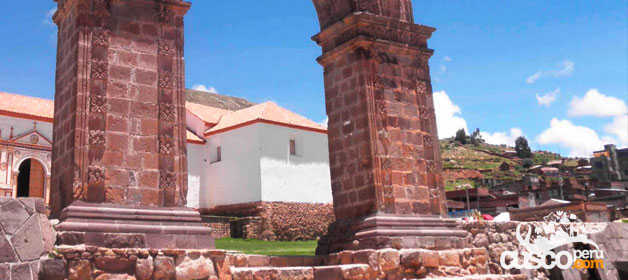
Juli became a center for the study of Indigenous languages, the preparation of religious texts, and evangelization. Its most visible legacy can be found in its colonial churches, which stand out for their architecture, carved façades, mural paintings, altarpieces, and elements of Andean Baroque art.
Juli is known as the “Little Rome of the Americas” because of its four main colonial churches: San Pedro Mártir, San Juan de Letrán, Santa Cruz de Jerusalén, and Nuestra Señora de la Asunción.
These churches were built between the 16th and 17th centuries and reflect Juli’s importance as a religious center in the highlands. The comparison with Rome comes from the concentration of churches, the city’s evangelizing role, and its influence on the religious life of the region.
The colonial churches are Juli’s main attraction and one of the best reasons to include the city in a trip through southern Puno. Each one has its own architectural and historical characteristics. Although some churches are better preserved than others, all of them form part of one of Puno’s most valuable religious heritage collections.

The Temple of San Pedro Mártir is one of Juli’s most representative monuments. Its origins are linked to the Dominican presence during the 16th century and to later Jesuit involvement.
It is located near the main square and stands out for its stone architecture, Latin-cross floor plan, and the historic atmosphere preserved inside. Its interior contains artistic elements associated with the colonial tradition, including paintings, altarpieces, and religious decoration.
This church remains one of the city’s most important symbols and forms part of Juli’s cultural identity.
The San Juan de Letrán Temple Museum is one of Juli’s most important heritage spaces. It was recognized as a historic monument in December 1959 and is currently linked to cultural spaces managed by Peru’s Ministry of Culture. It is advisable to confirm its current official name before publication.
It stands out for its large nave, interior arches, carved entrance, and value as an example of viceregal religious architecture in the highlands. It is one of the most recommended places for visitors who wish to understand Juli’s artistic and historical importance.
The Temple of Santa Cruz de Jerusalén is another of Juli’s major colonial monuments. It is known for its carved façade, ornamental details, and connection with the Jesuit presence in the city.
Although it has deteriorated over time, it remains an important example of the architectural splendor Juli achieved during the viceregal period. Visiting it allows travelers to understand the importance of Juli’s religious heritage and appreciate one of its most representative monuments.
The Temple of Nuestra Señora de la Asunción forms part of the group of churches that earned Juli the name “Little Rome of the Americas.” Although it is partially deteriorated, it preserves architectural elements that reveal its historical value.
Its presence recalls the importance the city once had as a religious and cultural center in the highlands. It is also included in official tourist circuits in Puno linked to Lake Titicaca.
One of Juli’s greatest attractions is its proximity to Lake Titicaca, with viewpoints and open landscapes that are ideal for photography. From different points in the city and its surroundings, visitors can enjoy wide views of the lake, especially at sunrise or sunset.
Juli’s natural surroundings offer excellent opportunities for photography, gentle walks, and contemplation of the highland landscape. Lake Titicaca is not only a natural attraction but also a sacred and culturally significant place for Andean communities.
Juli is a recommended destination for travelers who want to explore a quieter and less crowded part of the Puno highlands. Its charm lies in visiting colonial churches, discovering Aymara traditions, and enjoying peaceful landscapes overlooking Lake Titicaca.
Visiting Juli helps travelers understand the importance the city had during the viceregal period and appreciate a unique religious heritage in southern Peru. In addition, its location on the Puno–Desaguadero route makes it an interesting stop for those exploring the southern area of Lake Titicaca.
Juli can be visited throughout the year, but the dry season, from May to October, usually offers better conditions for exploring its churches, walking around the city, and enjoying views of Lake Titicaca.
There is more rainfall between November and March. The landscape is usually greener during these months, but it is advisable to wear suitable footwear because some paths may be wet.
Bring warm clothing, sunscreen, sunglasses, and a hat, as the highland climate can be cold and dry, with intense solar radiation.
Walk calmly if you are not accustomed to the altitude, as Juli is located more than 3,800 m above sea level.
Check the opening hours of churches and museums before your visit, as they may vary according to the season, religious activities, or maintenance work.
Respect religious spaces and avoid taking photographs during ceremonies without permission.
Carry cash in Peruvian soles for small payments, local transportation, or purchases in traditional shops.

Happy passengers