

The Church of San Antonio de Padua in Puno was recognized as a sanctuary in 1731, a fact that reflects its historical importance. In its early years, the church had Our Lady of the Conception as its patroness. Later, on August 22, 1736, the devotion to San Antonio de Padua was incorporated into the temple.
The temple’s altar is made of plaster with some ornamental details. In the central section is the Virgin of the Immaculate Conception. It also has two wooden side altars with remarkable carvings, similar to those found in its altarpieces.
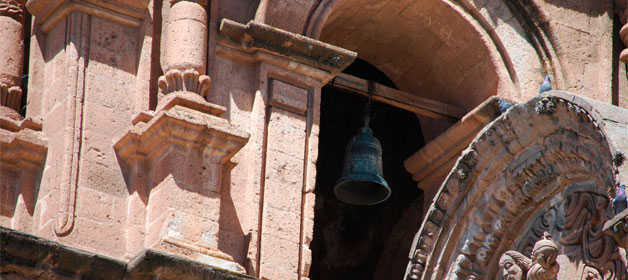
It is located two blocks from the Plaza de Armas, on Jr. Ayacucho No. 540, in the San Antonio neighborhood of Puno. The temple is dedicated to San Antonio de Padua.
Every year, from June 19 to 21, the festivity of San Antonio de Padua de Putina is celebrated in honor of the patron saint of the province of San Antonio de Putina. This celebration brings together the 13 provinces of Puno and includes religious, social, and artistic activities.
Inside the temple, visitors can also find a replica of the Lord of Miracles, as well as the image of the Christ of Pachacamilla. Among its altars are the Peruvian saints San Martín de Porres and Santa Rosa de Lima.
Sunday Masses: 6:30 a.m., 8:00 a.m., and 5:00 p.m.
Is there an entrance fee for the Church of San Antonio de Padua?
There is no formal entrance fee. Like many churches in Peru, it depends on the generosity of its visitors.
What is the best time to visit?
We recommend visiting in the morning, around 9:00 a.m. It is usually quiet, and you may observe local people attending their daily prayers.
Is the church safe?
Yes. Puno is generally safe for tourists, and the Church of San Antonio de Padua is located in a community-oriented area where travelers are usually treated with respect.
What language is spoken in Puno?
Although Spanish is the main language, Aymara and Quechua are also spoken in Puno and in nearby traditional areas.

Happy passengers