Peru’s Independence Day celebrations are among the country’s most important civic events. Every year on July 28, Peru commemorates the proclamation of independence made by José de San Martín in Lima in 1821, while July 29 is traditionally dedicated to the Great Civic-Military Parade.
During these dates, cities and communities throughout the country are decorated with Peruvian flags. Official ceremonies, school and civic-military parades, concerts, food fairs, dance performances, and cultural activities are also organized.
Because 2026 coincides with a change of government, special security measures and access restrictions may be implemented in areas of the Historic Center and around Congress. It is recommended to check official information before traveling.
The main celebrations take place on July 28 and 29.
On July 28, Peru commemorates the public proclamation of its independence. The Act of Independence had been signed in Lima on July 15, 1821, while the ceremony led by José de San Martín was held on July 28 in the Main Square and at other locations in the capital.
On July 29, the Great Civic-Military Parade is traditionally held, with the participation of the Armed Forces, the National Police, and other invited institutions. The schedule, route, and access arrangements may be modified for protocol or security reasons.
Peru’s Independence Day celebrations commemorate the process that led to the country’s formation as an independent state. The proclamation of 1821 was a fundamental event, although the war for independence continued during the following years.
July 28 commemorates the proclamation of Peru’s independence, a key event within a process that continued in the years that followed.

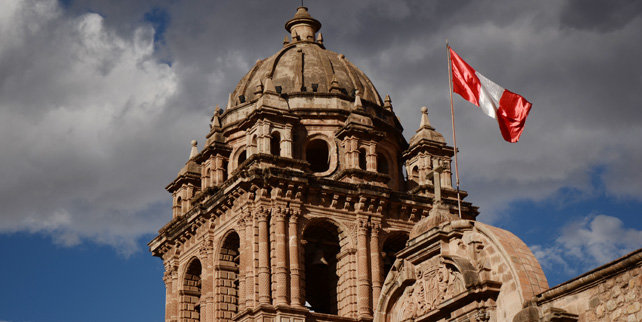
During July, homes, businesses, hotels, institutions, and public buildings commonly display the national flag. Main squares, avenues, and streets are also often decorated in red and white.
The flag should be clean, in good condition, and displayed respectfully. Throughout July, you will see Peruvian flags on homes, hotels, businesses, and public spaces in many cities across the country.
Many districts and provinces organize parades featuring educational institutions, the Armed Forces, the National Police, firefighters, social organizations, and local authorities.
These events do not necessarily take place on July 28 and 29. Some municipalities schedule them during the preceding weeks to avoid overlapping with the national ceremonies.
Food fairs and family gatherings often feature representative dishes from different regions. Some of the best-known preparations include ceviche, causa limeña, anticuchos, ají de gallina, lomo saltado, pachamanca, guinea pig, tamales, and a variety of traditional desserts.
The culinary offerings vary by city. In Lima, coastal, Creole, and seafood cuisine are especially common, with dishes such as ceviche, anticuchos, and causa limeña. In Cusco, Andean dishes prepared with native potatoes, corn, meat, and local products are widely available.

The celebrations may include Creole music, huaynos, marineras, festejos, carnival performances, Amazonian dances, and cultural expressions from each region. Municipal programs often feature street parades, free performances, and cultural competitions.
Before attending an activity, check the date, time, and location through the official channels of the municipality or organizing institution.

As the capital, Lima hosts the country’s main state ceremonies. Most protocol events take place in the Historic Center, especially around the Main Square, Lima Cathedral, the Government Palace, and the Congress of the Republic.
The day usually begins with Mass and the Te Deum at Lima Cathedral, attended by the president of the Republic, ministers, authorities, and representatives of different institutions.
This is followed by a formal session of Congress. In ordinary years, the president delivers a message on the state of the country. In years when there is a change of government, the ceremony usually includes the transfer of presidential power, the swearing-in of the new president, and their first address before Congress.
The areas surrounding the Main Square and Congress may remain closed or subject to special controls. Public access to certain areas depends on the measures established by the National Police, Congress, and the Metropolitan Municipality of Lima.
The most representative event on July 29 is the Great Civic-Military Parade. It traditionally includes groups from the Armed Forces, the National Police, historic military units, marching bands, and invited delegations.
Brasil Avenue has been one of the parade’s traditional venues, but the location, route, and access arrangements for 2026 should be confirmed in the official program before planning your visit.
Visitors who wish to watch the parade should arrive early, use public transportation, and respect the designated security areas. Some stations, bus stops, and avenues may be temporarily closed.
During Independence Day week, Lima may host concerts, serenades, food and craft fairs, dance performances, historical exhibitions, children’s activities, guided tours, and flag-raising ceremonies.
Celebrations are often held in different districts on the evening of July 27, but there is no single national serenade with a permanent time and location. The program should be checked through the official channels of the Metropolitan Municipality of Lima and the district municipalities.
In Cusco, the national civic ceremonies are combined with cultural expressions from the Andean region. Homes, businesses, and institutions commonly display flags, while schools, organizations, and authorities may participate in parades, cultural processions, and commemorative ceremonies.
Unlike Lima, Cusco does not host the central government’s main official events. Its program depends mainly on the Provincial Municipality of Cusco, the Regional Government, the Armed Forces, the National Police, educational institutions, and cultural organizations.
Activities may take place in the Main Square, Avenida de la Cultura, and other streets or squares throughout the city. They often include flag-raising ceremonies, civic events, school parades, marching bands, and dance performances.
Many activities are held before or after July 28 and 29, so it is advisable to check Cusco’s official calendar before organizing your itinerary. In many cases, events are scheduled in advance, and their routes may change because of traffic, conservation measures in the Historic Center, or security arrangements.
Cusco receives many travelers in July because the month coincides with the high season for Andean tourism. The increase in visitors is not due only to Independence Day, but also to the drier weather, national holidays, and international demand for travel to Machu Picchu.
The Historic Center includes the Main Square, Cusco Cathedral, the Church of the Society of Jesus, Qorikancha, the San Blas neighborhood, San Pedro Market, and several streets with Inca walls and colonial architecture.
Nearby attractions include Saqsaywamán, Qenqo, Puka Pukara, and Tambomachay. Cusco is a UNESCO World Heritage Site because of the combination of Inca structures and colonial architecture visible throughout its streets, squares, and historic buildings.

July is part of the high season in Cusco and Machu Picchu. It is advisable to book flights, hotels, trains, entrance tickets, transfers, and excursions well in advance.
Before booking, check the modification and cancellation policies, baggage allowances, schedules, and possible operational changes for each service.
In Lima, July falls during the coastal winter. Cloudy skies, high humidity, fog, and light drizzle are common. It is advisable to bring a jacket and suitable clothing for damp conditions, although heavy rain is unusual.
In Cusco, July is part of the dry season. Days may be sunny, but temperatures fall significantly at night and around dawn. It is recommended to wear layers, bring warm clothing, use sun protection, and wear comfortable shoes.
Cusco is located at approximately 3,400 m above sea level. It is advisable to plan a relaxed first day, avoid overly demanding itineraries immediately after arrival, and allow time to adjust before taking long hikes.
If you have heart or respiratory problems, or another health condition, consult a medical professional before traveling to Cusco or taking part in activities at high altitude.
In Lima, road closures may affect the Historic Center and avenues connected with the parade. Transfers to the airport and transportation terminals should be scheduled with additional time.
Temporary closures may also occur in Cusco because of parades and ceremonies. If you are traveling to Machu Picchu by train, arrive early and confirm your departure station. Some services leave from Ollantaytambo and require a road transfer from Cusco.
A three-day program may include the Historic Center, Miraflores, Barranco, a culinary experience, and free time to attend confirmed cultural activities.
Tours through the Historic Center should be adapted to the July 28 road closures and the restrictions related to the presidential transfer of power.
A five- or six-day program allows you to dedicate one day to acclimatization, explore the city of Cusco, visit the Sacred Valley, and see Machu Picchu without concentrating too many activities into a short period.
A combined seven- to nine-day itinerary may include two nights in Lima, two or three nights in Cusco, one night in the Sacred Valley, and an organized visit to Machu Picchu.
Before booking, confirm what the itinerary includes: domestic flights, entrance tickets, trains, transfers, meals, guides, and tourist tickets.
On what dates are Peru’s Independence Day celebrations held?
The main dates are July 28 and 29. In 2026, they will fall on Tuesday and Wednesday, respectively.
What is celebrated on July 28?
It commemorates the proclamation of independence made by José de San Martín in Lima on July 28, 1821. The Act of Independence had been signed on July 15.
What is celebrated on July 29?
The Great Civic-Military Parade is traditionally held in honor of the Armed Forces and the National Police.
Where will the 2026 Great Military Parade take place?
Brasil Avenue has been its traditional location for many years, but the venue, schedule, and access arrangements for 2026 must be confirmed in the official program.
Will there be concerts and serenades?
Different municipalities and organizations are likely to announce events, but locations and schedules change every year. Check the official channels of the municipalities and organizers to confirm the venues and times of concerts, serenades, and other activities.
Is Machu Picchu open during Peru’s Independence Day celebrations?
Machu Picchu usually remains open during the holiday period, but visitors should book in advance and confirm ticket availability, schedules, and circuits.
Is July a good time to travel to Cusco?
Yes. July is part of the dry season, but it is also one of the busiest months. Reservations should be made in advance, and travelers should prepare for low nighttime temperatures.
What documents should travelers bring?
Passengers must carry the identity document or passport used to make their reservations. The information must match the details registered on Machu Picchu tickets, train tickets, and flights.
As part of this year’s celebrations, Marca Perú released a video titled “Blanquirrocola,” which you can watch here.

Happy passengers