It is the capital of the district of the same name, which belongs to the province of Urubamba. It is one of the most representative towns of Cusco in general. Known for its archeology and handicrafts.
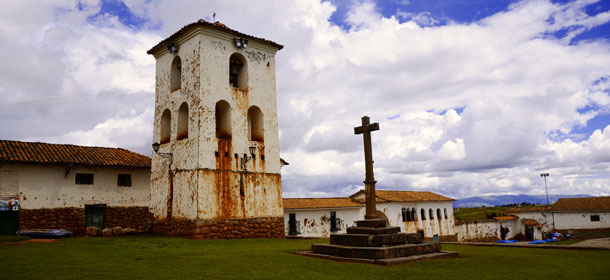
It is located 30 km northeast of the city of Cusco.
The Chinchero fair is one of the most important in the region due to the high quality of the handicraft products sold there, internationally recognized for their excellent work and beauty. In these fairs we can see that the barter (ancient form of exchange of products) is still in force; in Chinchero, the granddaughters of the Inca princesses, continue weaving wool and making garments, as the ajllas did for the children of the Sun, in imperial Cusco.
Chinchero is one of the few places where it seems that time does not pass, since the traditions and Inca culture still persists. The people who live there are of Inca blood and the predominant language is Quechua, although almost all the inhabitants of this area speak Spanish as a second language.
Their fertile lands make them excellent producers of potatoes, ollucos, ocas, broad beans, barley and wheat, traditional products whose cultivation dates back to Inca times and even tod
The Sacred Valley is located 15 km north of Cusco. Its altitude is from 2,800 to 3,000 meters above sea level, which gives it a milder climate. Pisac is the starting point of the tourist circuit "Sacred Valley of the Incas", in addition, this traditional town is known for its archaeological park, its craft fairs and its Sunday masses.
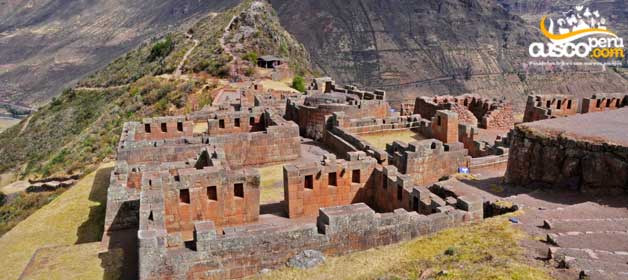
It is located 30 km northeast of the city of Cusco.
In its main square, under centennial trees, on Tuesdays, Thursdays and Sundays there are craft fairs that are very popular for the diverse and colorful textiles and decorative ceramics offered there.
In the lower third of this hill there are about twenty Inca terraces, the paved road enters through there in the ravine; this group of terraces is called Chaka Chimpa which means "on the other side of the bridge"; in the upper third of the hill there is a natural formation with a human figure that looks like a peasant woman with a montera and a bundle on her back. In front of the hill where the Inca city of Pisac is located, to the southwest and on the other side of the Vilcanota River rises this hill that is part of the Pacha Tuan chain.
The inhabitants of this town and the nearby rural communities are eminently Catholic, so they are no strangers to the celebrations of the Eucharist. In the temple of Pisac, a Sunday mass is held in Quechua with the attendance of the mayors or varayoc wearing native costumes and accompanied by the sound of pututos (a kind of drum).
The town was divided into rectangular blocks with a well-planned geometric scheme that gives the impression of being a town designed by modern architects. Its thin streets open up towards the Urubamba River. Each block or court is composed of a group of houses that share the same door to the central courtyard. In the town there is a distribution of rectilinear and narrow streets, which have been inhabited uninterruptedly since the time of the Incas.
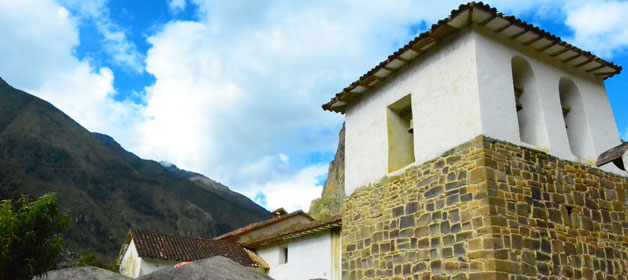
At the opposite end of Písaq and 80 km from the city of Cusco we find the town of Ollantaytambo.
The current town of Ollantaytambo stands on what was once an Inca city. This town is divided in two by the Patacancha stream. Qosqo Ayllu: It is the eastern portion, comprising the central square and four streets parallel to the creek.PatakanchaAraqama Ayllu: Comprises the western area of Ollantaytambo which is dominated by various archaeological units.
In the sector of Qosqo ayllu, there are 4 streets parallel to the Patakancha stream, which are: Patakalli, Chaupikalli, Hornokalli and Lariskalli. In addition, we can mention the following transversal streets: Qowekalli, Phuyukalli, Umakalli, Rosaskalli and K'ijtukalli. All these streets form 15 blocks which form this part of Ollantaytambo.
It is located at the mouth of the Patakancha stream at the Vilcanota river (Urubamba). It is the station used to start the trip to Machu Picchu and is a mandatory stop for the Cusco - Machu Picchu trains.
It is located where the road makes the last curve to enter the town of Ollantaytambo, is a huge door, built with lithic polyhedrons with clay mortar. The name translates as
Maras was occupied when the citizens of Cusco withdrew from the Inca palaces in Cusco and had to migrate to other small towns, such as Maras and San Sebastian.
This population center was an obligatory stop for muleteers and their mule trains that transported tropical products and especially coca leaves from the high Cusco jungle to satisfy the needs of the city of Cusco and the country.
It is located 30 km northeast of the city of Cusco.
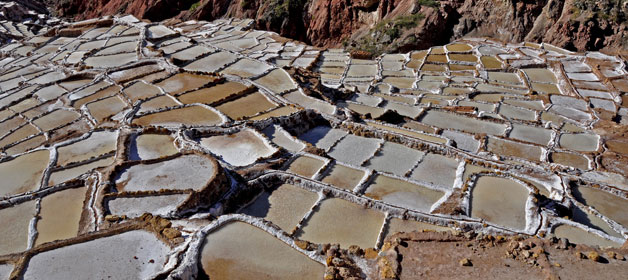
It is an impressive salt mining complex, which were already exploited since the Inca period as a means of economic exchange and values. From Maras you can visit the salt mines by a bridle path, where it is common to find mules carrying the sacks of salt extracted from the natural salt mines.
It is an outstanding colonial church made of adobe with typical religious architecture where you can find Cuzco paintings depicting the Last Supper, Jesus and the apostles. It also shows beautiful mansions with coats of arms of noble Indians, reflecting a time of prosperity during the colony.
They are beautiful portals carved in stone in high relief and with geometric and zoomorphic figures.
Visits to the temple during mass hours.
To visit the salt mineral complex you can do it from 7am to 5pm.
Can you imagine walking among thousands of salt pools in the heart of the Andes? Join one of the tours designed to enjoy Maras, where you can explore the impressive salt mines, used since pre-Inca times. Enjoy spectacular scenery, surrounded by history, culture, and nature, all in one place. A unique experience you won't want to miss! [Learn more here]

Happy passengers