
Also known as the "Philosophical Balcony of the Altiplano" because of its strategic location, similar to feudal castles. Pomata is located in the southern part of the Puno region, in the middle of the Collao Plateau, 105 kilometers from the city, is one of the most picturesque villages on the shores of Lake Titicaca.
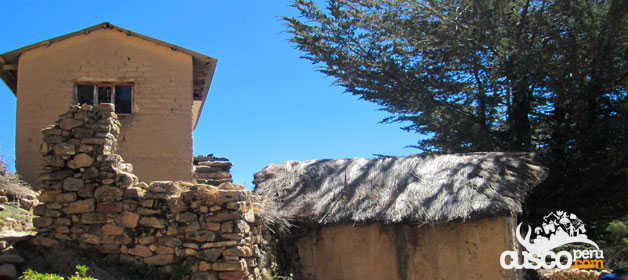
It is located in the southern part of the Puno region, 105 kilometers from the city, in the middle of the Collao plateau, on the Peru-Bolivia binational highway, at 3863 meters above sea level.
It has a colonial style, made with reddish stones, inside the temple there are catacombs or subway cemeteries, where the remains of the bishops and archbishops of the Altiplano are found, in addition, by references of some researchers, in these catacombs there are roads or subway passages that are said to lead to Cusco, the Temple of the Sun and the citadel of Machu Picchu.
They are located 10 kilometers from Pomata, are of fine white sand and from there you can see the Chatuma caves, in Pomata is "La Casa del Puma", which was the center of the Religious Congregation of Santo Domingo de Guzman in 1540.
Consult with your travel agency.
It is located next to Lake Titicaca, has a pier, is one of the cities that has the honor of being part of the first American cities, where the printing press was installed.
Cattle and sheep raising are the mainstay of the economy of the province, which also has its own conditions for the cultivation of potatoes, quinoa and barley.
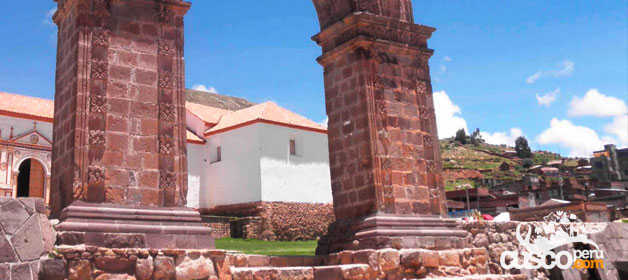
It is located on the slopes of the hills of Pucará, San Bartolomé, Sapaccollo and Caraccollo, in the highlands region and on the shores of the sacred Lake Titicaca.
This town has four temples that compete in beauty and have earned it the nickname of "the Rome of America". The best known temple is that of San Pedro, of Renaissance style. The church of San Juan de Letran has a nave of great proportions and stands out for the front of the sacristy, carved in dark stone. The Jesuit church of Santa Cruz is notable for its three-part façade, crowned by the monogram of the order, and supported by Corinthian columns, although it is in a poor state of preservation. Finally there is the church of the Assumption, which is in ruins, although it preserves part of its lateral façade and a tower.
Visiting this wonderful town is totally free.

Happy passengers