
Hatun Rumiyoc is a Quechua expression commonly associated with the idea of “large stone” or “place of the large stone.” According to historical tradition, this area was home to the palace of the Inca Inca Roca, residence of his lineage or panaca.
After the Spanish conquest, part of the ancient palace was reused to build a colonial mansion linked to the Valverde Contreras y Xáraba family, Marquises of Rocafuerte. Today, the building forms part of the Archbishop’s Palace and houses the Museum of Religious Art of Cusco.
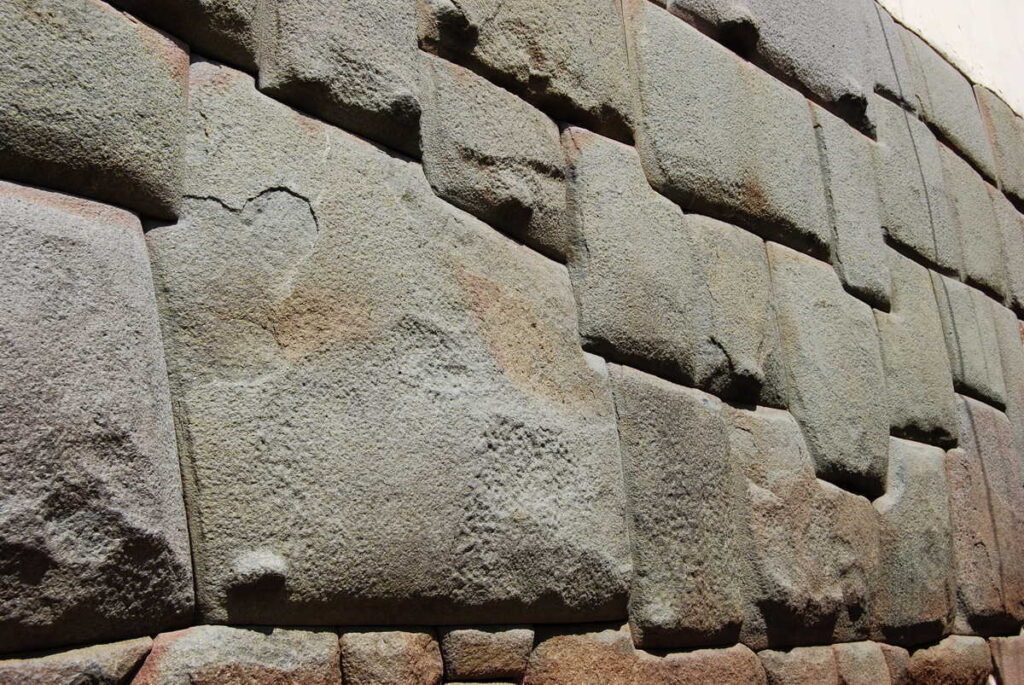
It is located on Hatun Rumiyoc Street, just a few minutes on foot from Cusco’s Main Square. Taking the Main Square as a reference point, walk along the side of the Church of the Triumph and continue along the pedestrian street of Hatun Rumiyoc, where the ancient Inca wall is located.
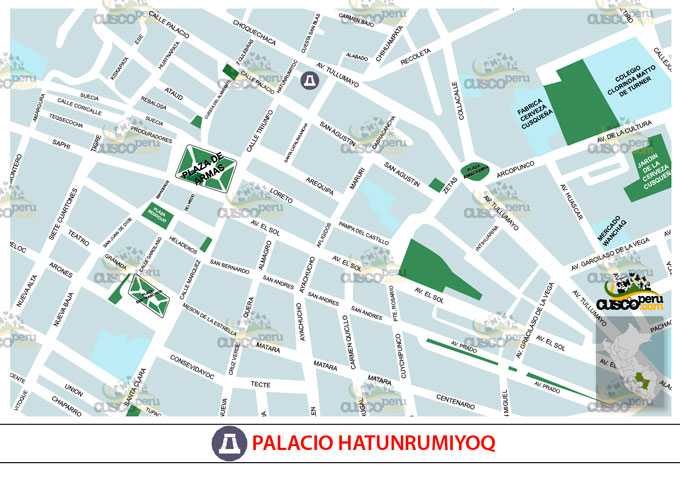
On this street, visitors can admire the Twelve-Angled Stone, one of the most representative pieces of Inca architecture due to the precision of its carving and fitting. The stone forms part of the wall of the ancient palace of Inca Roca, now integrated into the Archbishop’s Palace.
You can also visit the Museum of Religious Art, located inside the Archbishop’s Palace. In the surrounding area, there are handicraft shops, galleries, and restaurants, so the visit can be complemented with a walk through the historic center.
Hatun Rumiyoc Street and the Twelve-Angled Stone can be seen from the public street. To enter the Museum of Religious Art, it is recommended to check the current opening hours and rates before your visit. Touching or damaging the Inca walls is not allowed.
Qoraqora is a Quechua term commonly interpreted as “place with abundant grass” or “grassland.” During the Inca period, this ancient site was located next to Qasana and formed part of the urban area linked to Waqaypata, the current Main Square of Cusco.
Unlike the modern city, both spaces were not separated by a street as they are today by Procuradores Street. Its eastern side probably faced an ancient public road, close to the route of the current Suecia Street.
According to historical references, this palace is attributed to Inca Roca and may have been linked to the Ayllu Raurau, his royal lineage or panaca. After the arrival of the Spaniards, part of the former estate was assigned to Gonzalo Pizarro and later transformed by colonial constructions.
It was located next to Qasana, and its façade possibly faced Waqaypata, in what is now Portal Harinas, north of the Main Square.
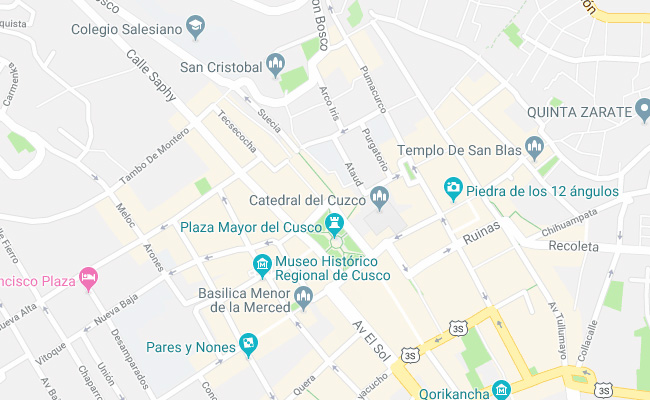
During the colonial period, residences and buildings were constructed over the foundations of the ancient Inca palace. As happened with other spaces in Cusco, part of its stone foundations became integrated into later mansions, arcades, and constructions.
Today, visitors can recognize this ancient sector through the urban layout, the arcades, and the colonial mansions surrounding the Main Square. Many of these buildings now function as shops, restaurants, and tourism services, showing how Cusco preserves its Inca and colonial past.
Qoraqora does not operate as an independent archaeological complex with regular visiting hours. Its remains and urban references can be appreciated during a walk through the Historic Center of Cusco, especially around the Main Square, Portal Harinas, Procuradores Street, and Suecia Street. With CuscoPeru.com, you can organize a more detailed visit or historical interpretation of the site, helping you plan your visit in a simple and safe way.
Qollqanpata, also known as Colcampata, was one of the oldest and most important sectors of Inca Cusco. Its Quechua name is usually interpreted as “place of deposits” or “site of storage houses,” referring to the ancient warehouses that may have existed in this area during the Inca period.
According to historical tradition, this place was linked to Manco Cápac, considered the first Inca and the mythical founder of Cusco. Several important constructions may have existed in this sector, including the ancient palace of Qollqanpata and ceremonial spaces associated with the surroundings of Sapantiana.
During the colonial period, the area was transformed and occupied by new buildings. After the arrival of the Spaniards, part of this sector was linked to Diego de Almagro and, later, to the urban development of the San Cristóbal neighborhood.
It is located on the slopes of Sacsayhuamán hill, in the current neighborhood of Qollqanpata.
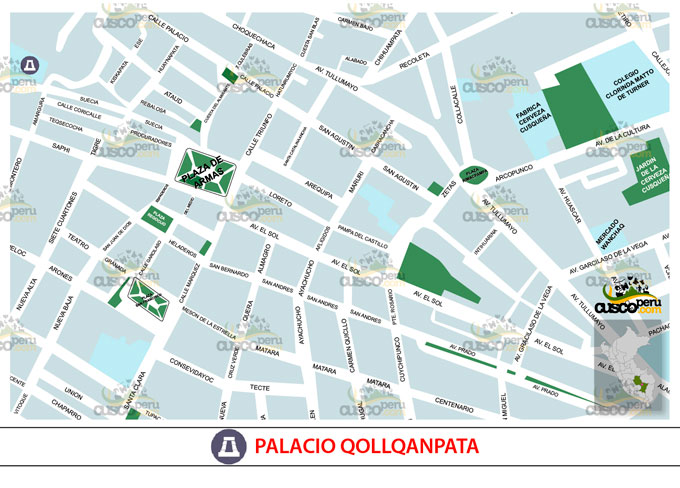
Today, remains of Inca walls and fragments of stone architecture are preserved in the area, allowing visitors to recognize the importance of the ancient complex. One of its most visible elements is an Inca wall integrated into the current urban setting, near the small square of San Cristóbal.
The lower façade of the ancient complex faced a rectangular plaza, now reduced in size and known as the small square of San Cristóbal. From this point, visitors can also enjoy one of the best-known views of the city of Cusco.
Behind one of the preserved walls, there is mention of a lithic representation interpreted as a human figure that appears to be carrying a load on its back. This type of element requires specialized explanation to better understand its possible symbolic or ceremonial function.

Qollqanpata does not operate as an independent archaeological complex with regular visiting hours. Its visible remains can be appreciated during a walk through the San Cristóbal neighborhood and the Historic Center of Cusco. With CuscoPeru.com, you can enjoy a more detailed visit or historical interpretation of the site, helping you organize your visit in a simple and safe way.
Qasana is a Quechua word that means “frosty place” or “where frost falls.” In Inca times, it extended from the parallel roadways near the Saphy River to the palace of Qoraqora, with its façade facing Waqaypata, while its inner areas opened toward the sector known as the “neighborhood of the schools.”
According to various historical references, Qasana may have been the palace of the Inca Pachacútec and was linked to his royal lineage, known as Iñaca Panaca or Hatun Ayllu. During the colonial period, part of the former estate was transformed and occupied by new constructions, including spaces associated with the presence of Francisco Pizarro in Cusco.
Qasana was located in the area of what is now the Main Square and bordered the streets of Procuradores, Tecsecocha, Amargura, Saphi, and Plateros.
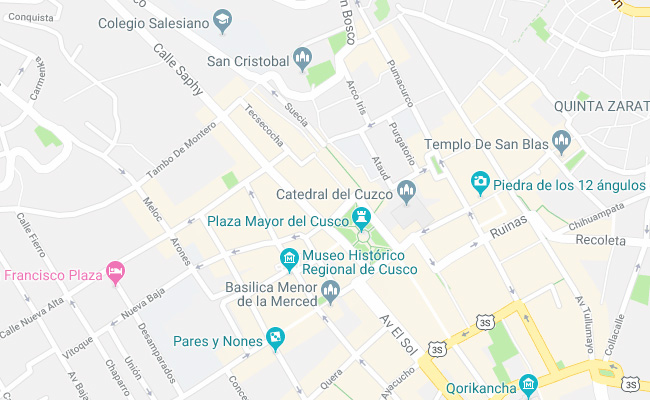
Today, the area is occupied by colonial and republican-era mansions that, for the most part, function as shops, restaurants, lodging establishments, and tourism services. In some sectors, foundations and walls of Inca origin can still be seen integrated into later constructions.
These remains help visitors understand how colonial and modern Cusco was built over ancient ceremonial, residential, and administrative spaces from the Inca period. Qasana holds special importance because of its connection to Pachacútec, one of the most important rulers of the Tahuantinsuyo.
Qasana does not operate as an independent archaeological complex with regular visiting hours. Its visible remains can be appreciated during a walk through the Historic Center of Cusco.
“Pukamarka” means “red place,” a name given to this palace, which had a rectangular perimeter layout and was located southeast of Waqaypata. It was associated with Túpac Inca Yupanqui and his royal lineage.
According to some historical references, Túpac Inca Yupanqui may have ordered the construction of this palace as a way to reaffirm his authority within the imperial power structure. However, his residence was not located directly on the main square, where palaces associated with earlier rulers already stood, such as Qasana, linked to Pachacútec.
The complex may have had a rectangular layout enclosed by stone walls. Although much of its structure was transformed during the colonial and republican periods, important sections of Inca walls are still preserved and integrated into later constructions.
It is located between Maruri, San Agustín, Santa Catalina Ancha, and Arequipa streets.
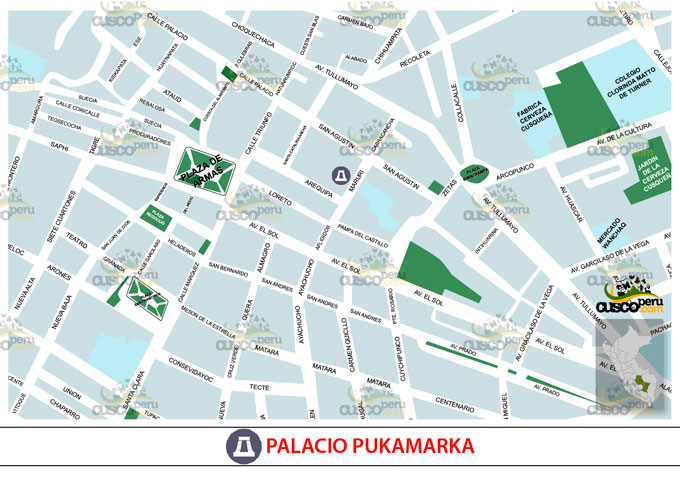
Today, several sections of Inca walls that formed part of the ancient complex can still be seen. During the colonial period, numerous doors and access points were opened in the original walls, adapting them to the needs of the new inhabitants.
Colonial and republican buildings were later built over these Inca foundations, and today they are used as shops, offices, and residences. This architectural overlay allows visitors to see how the modern city of Cusco still preserves part of the urban structure of the ancient Inca capital, right in the heart of its historic center.
The Pukamarka Palace does not operate as an independent archaeological complex with regular visiting hours. Its exterior walls can be appreciated during a walk through the Historic Center of Cusco. To enter interior spaces or arrange a specialized visit, it is recommended to consult a local travel agency or the establishments that currently occupy the property.
Kiswar Kancha is a Quechua expression that can be translated as “place of the kiswares,” referring to the kiswar, a native shrub of the Andes. According to some historical sources, this ancient Inca palace may have belonged to the Inca Wiracocha and may have served as the residence of his panaca or lineage.
It is believed that the palace had a quadrangular layout and was composed of buildings, courtyards, and interior spaces. After the Spanish conquest, the ancient complex was granted to Alonso de Meza and, later, part of the area was occupied by colonial religious buildings.
On the southern side of the ancient complex, the Suntur Wasi may have been located, a structure associated with ceremonial functions and the safeguarding of emblems or weapons.
The ancient Kiswar Kancha was located on the northeastern side of the current Main Square of Cusco, in the area where the Cathedral of Cusco and the Church of the Holy Family, also known as the Church of Jesus, Mary, and Joseph, stand today.
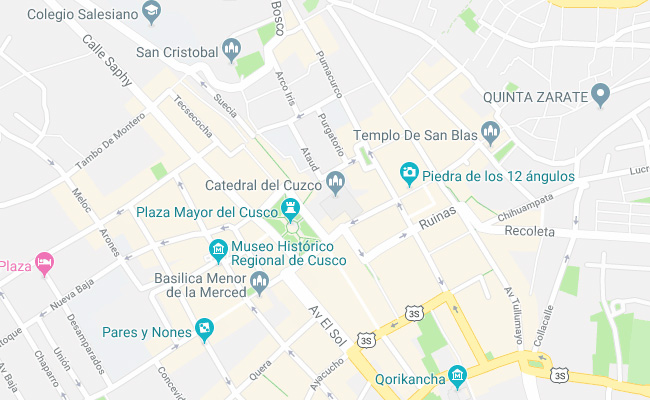
Today, on the site once occupied by the ancient Kiswar Kancha, visitors can see the Basilica Cathedral of Cusco and the Church of the Holy Family, two of the main religious monuments in the historic center.
No visible remains of the ancient palace are preserved today as an independent attraction; however, its history helps visitors understand the transformation of ancient Inca Cusco into a colonial city.
The ancient Kiswar Kancha does not have its own opening hours, as there are no visible remains open to the public as an independent attraction. To visit the Cathedral of Cusco or the Church of the Holy Family, it is recommended to check the current opening hours and rates of the cathedral complex before your visit.
Hatun Kancha is a Quechua expression that means “the great enclosure” According to some sources, this ancient Inca palace may have belonged to Amaru Inca Yupanqui, and his lineage or panaca may have lived there.
Some versions suggest that Amaru Inca Yupanqui, because of his position within the Inca elite, may have been considered a possible heir to the Tawantinsuyo. However, when Túpac Inca Yupanqui assumed power, Amaru would have retained the right to his palace and his panaca.
The ancient Hatun Kancha was located east of the current Main Square of Cusco, formerly known as Waqaypata. It was bordered by the current streets of Triunfo, Santa Catalina Angosta, and Herrajes.
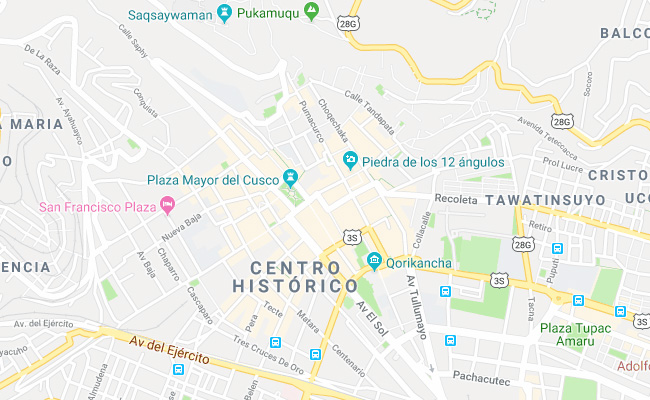
Today, the area once occupied by the ancient Hatun Kancha is occupied by colonial mansions and buildings erected over ancient Inca foundations. Many of these buildings house businesses linked to the tourism sector.
The visible remains of the ancient Hatun Kancha can be observed from the public street. Access to the current buildings or businesses depends on the conditions of each establishment.
Amaru Kancha is a Quechua expression that can be translated as “enclosure of the serpent.” According to some sources, it was commissioned by Huayna Cápac and may have functioned as a residence linked to the Tumipampa Ayllu.
This ancient Inca palace was located in front of the current Main Square of Cusco, formerly known as Waqaypata. It was separated from the Acllawasi, or House of the Chosen Women, by the Inti K’ijllu, an ancient Inca passage that corresponds to today’s Loreto Street. Toward the southwest, the complex extended in the direction of the Saphy River.
After the Spanish conquest, during the distribution of urban plots, different parts of the ancient palace were granted to Hernando Pizarro, Mancio Sierra de Leguizamo, Antonio Altamirano, and Alonso Mazuela. Later, an important part of the area was occupied by the Jesuits, who built the Church of the Society of Jesus there.
The ancient Amaru Kancha was located in front of the current Main Square of Cusco, in the area between Loreto Street, El Sol Avenue, and the surroundings of the Church of the Society of Jesus.
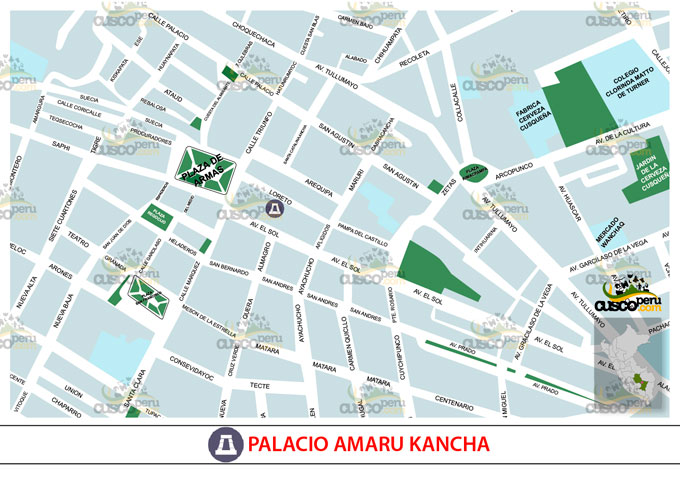
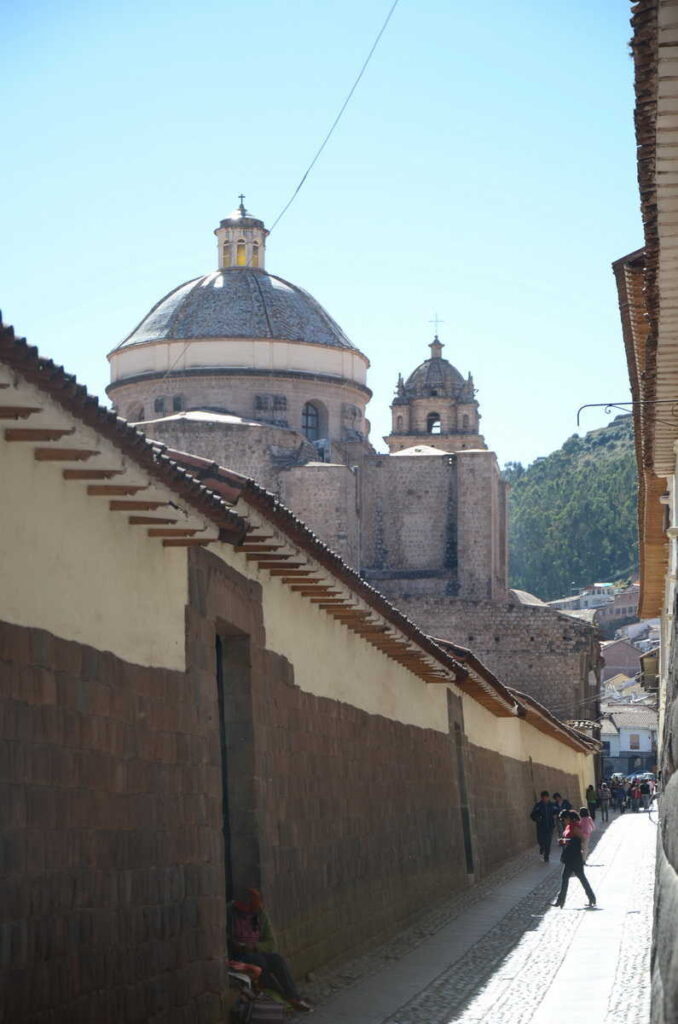
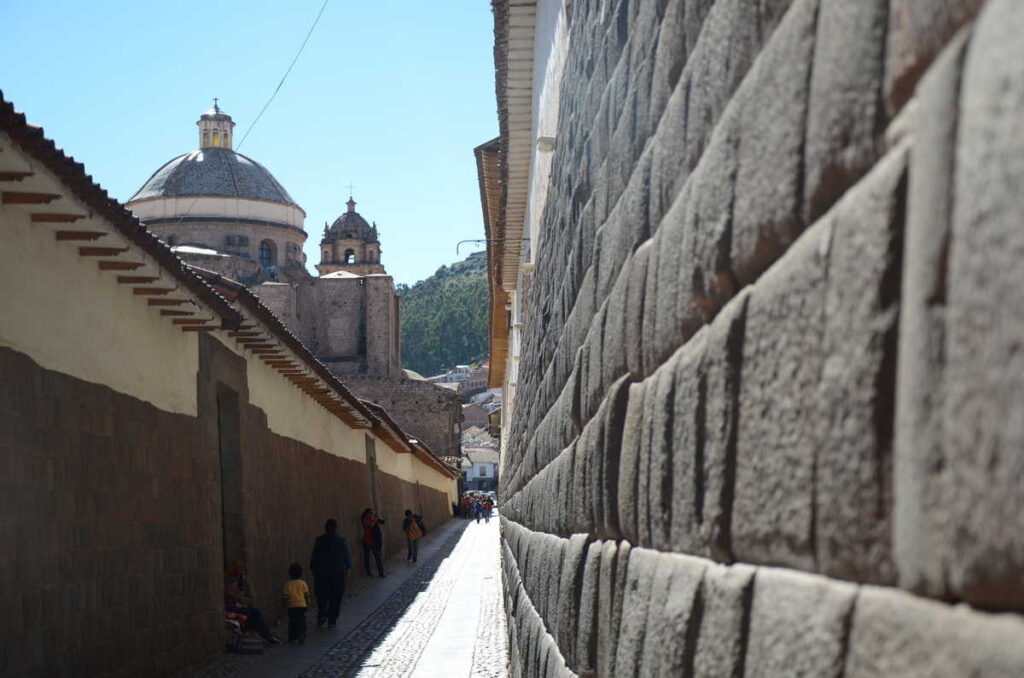
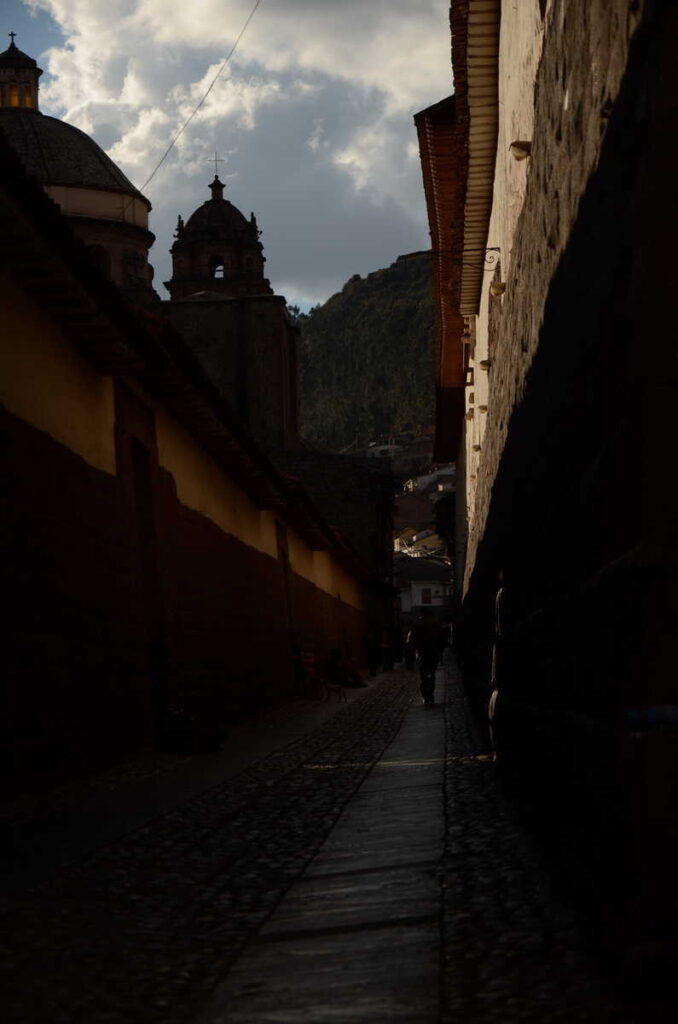
Few visible remains of the ancient palace are still preserved. On Loreto Street, visitors can still appreciate Inca walls that formed part of the original complex.
Today, the area once occupied by the ancient Amaru Kancha includes the Church of the Society of Jesus, the Palace of Justice, and spaces linked to the National University of San Antonio Abad of Cusco.
The visible walls of the ancient Amaru Kancha can be observed from the public street, especially on Loreto Street. To enter current sites, such as the Church of the Society of Jesus, it is recommended to check their current opening hours before visiting.

Happy passengers