
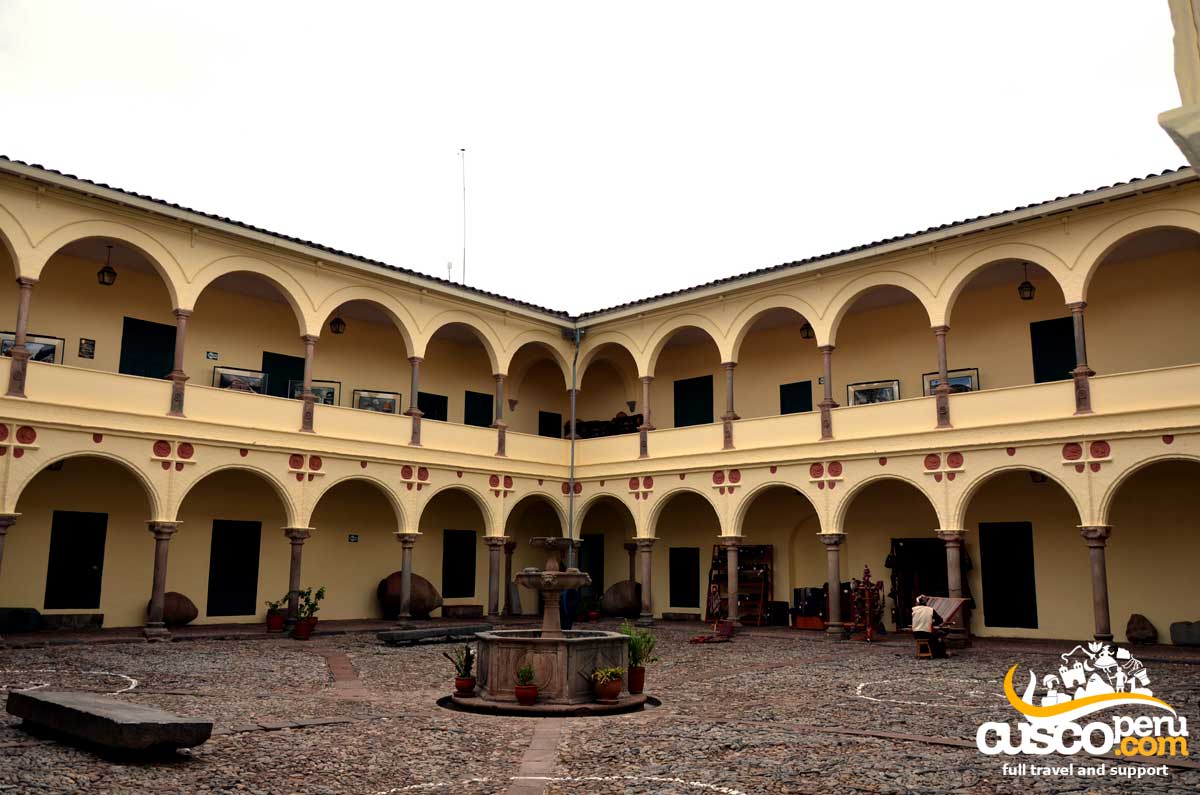
It is one of the most remarkable colonial mansions of Cusco. Built in the early seventeenth century, with Inca stones, by the lieutenant corregidor Francisco Aldrete Maldonado, called the Admiral this inhabited it until his death in 1643. It was rebuilt by Pedro Peralta de los Rios after the earthquake of 1650 and was again restored by the San Antonio Abad University of Cusco after the earthquake of 1950. Nowadays it shows the coat of arms of its reconstructors, who added the attractive plateresque façade that it has today, as well as its great patio of arches and the coffered halls.
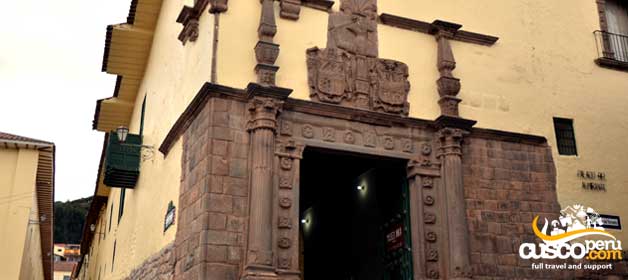
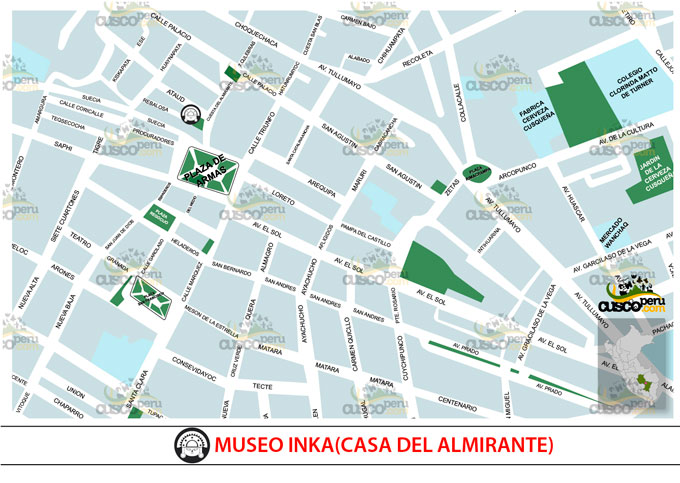
It has a vast collection of keros (carved wooden ceremonial vessels), textiles, mummies, and solid gold and silver idols, as well as Inca weapons, tools and ceramics. Its architecture shows the magnificence of the colony, such as the exterior balcony whose central column is in the shape of a caryatid. It belongs to the National University San Antonio Abad of Cusco and has an enviable collection of archaeological pieces of the Inca culture.
Opening hours: Monday to Friday: 08:00 to 18:00 hrs.
Saturdays and holidays: 09:00 to 16:00 hrs.
Fees: Adults S/ 10.00
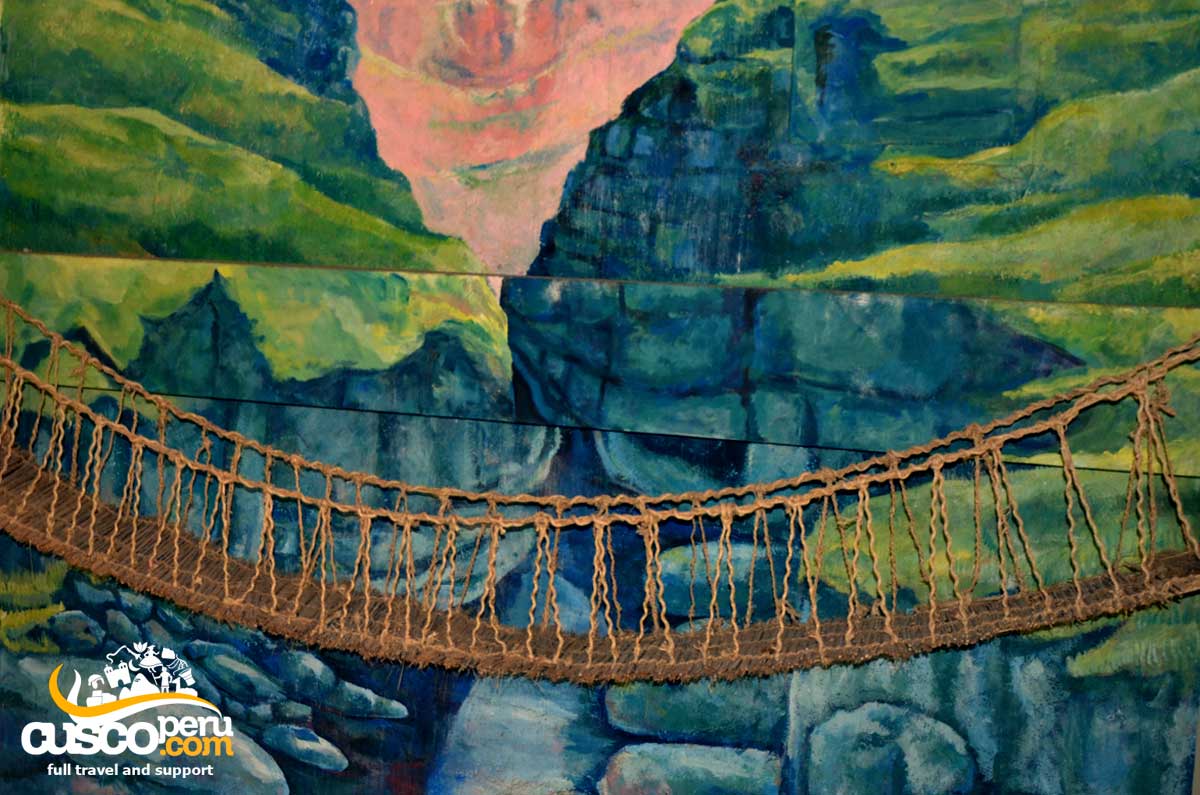
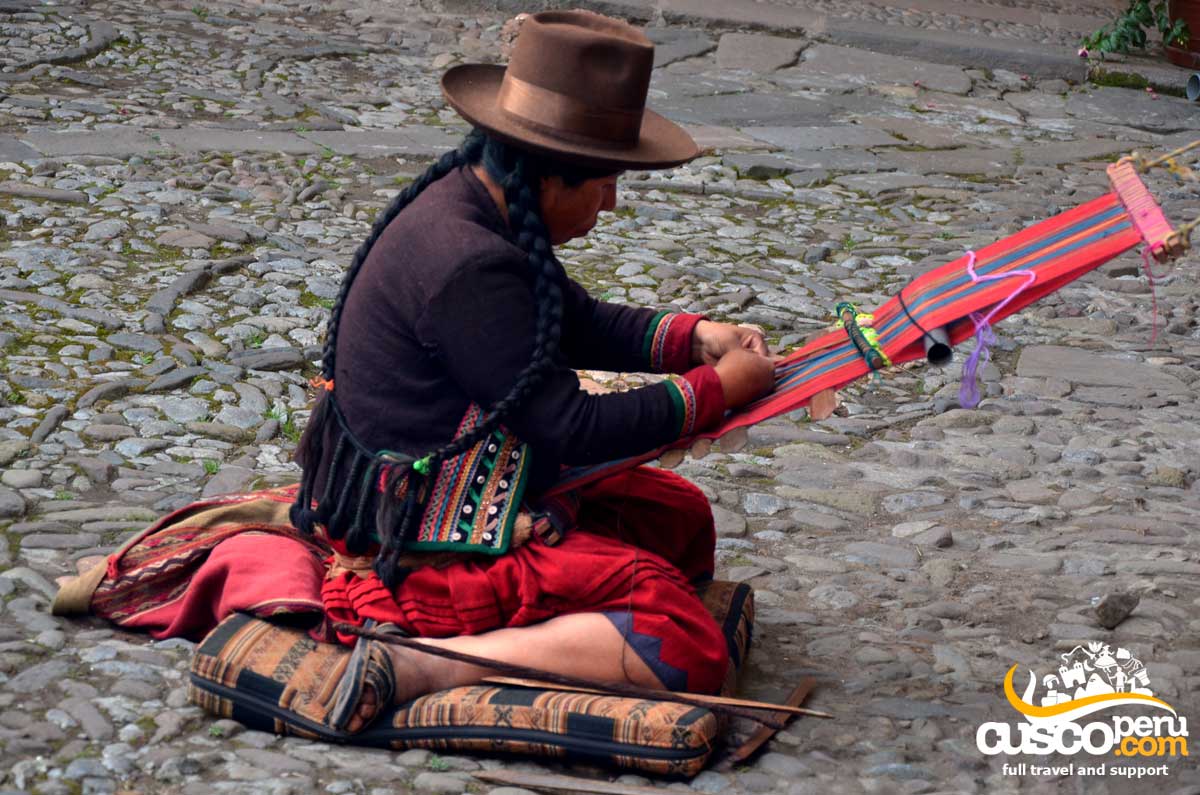
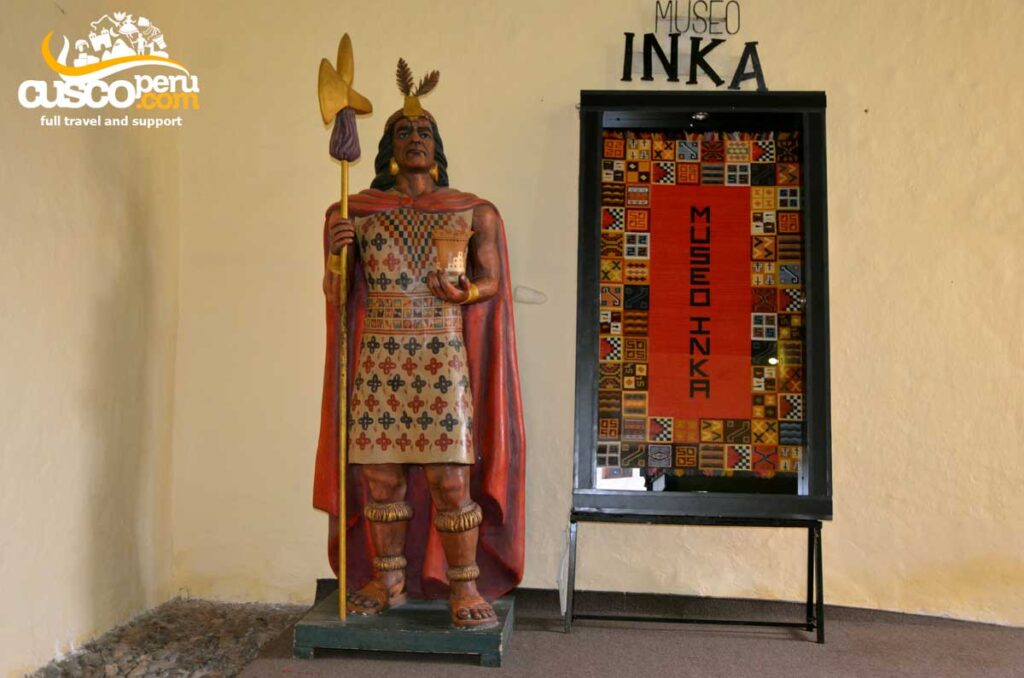
It is a small museum that has five rooms where the history of the ancestors who lived in these lands is explained didactically, with pre-Inca, Inca and colonial pieces, mostly from the excavations carried out in the Koricancha (in Quechua Qorikancha, "golden patio"), during the period 1992-1995.
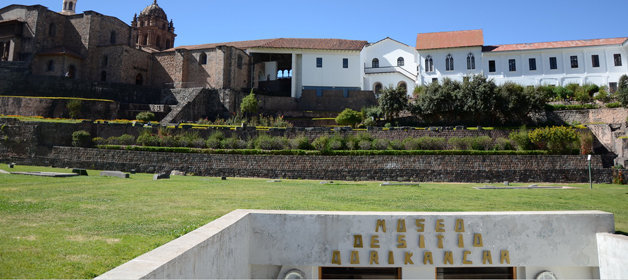
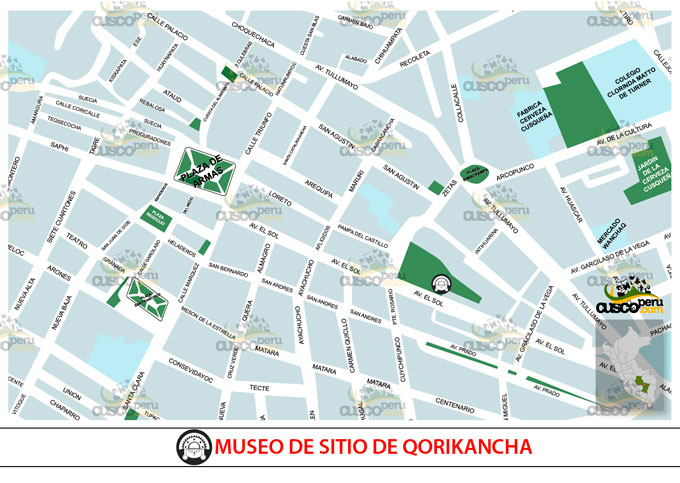
It shows the chronological evolution of civilization in Cusco. It exhibits fragments and ceramics from the Inca period as well as samples of metallurgy, textiles, paintings, sculpture, musical instruments, etc. It also presents a model of what could have been the Qoricancha. There are also replicas of the objects found in the excavations carried out in the place, samples of ceramics, lithic pieces, of the pre-Inca and Inca periods. It has five rooms where the history of our ancestors is explained didactically.
Hours: Monday to Saturday from 8.00 to 17.00 hrs. - Sundays from 14.00 to 16.00 hrs.
Entrance fee: Included in the Tourist Ticket.
The enclosure that currently occupies this museum, was called in Inca times the Acllawasi or House of the Chosen Women. In it, the most beautiful women of the empire were confined, who had to dedicate themselves to the cult of the sun and others to the service of the Inca, as well as to textile work and culinary art.
The Monastery of Santa Catalina was founded in 1601 in the city of Arequipa, but was soon moved to Cusco because of a series of devastating natural disasters that happened in that city in the early seventeenth century. The initiative of the foundation belonged to the widow Lucía Rivera de Padilla, owner of a great fortune. In February 1605, the first 25 professed nuns arrived in Cusco.
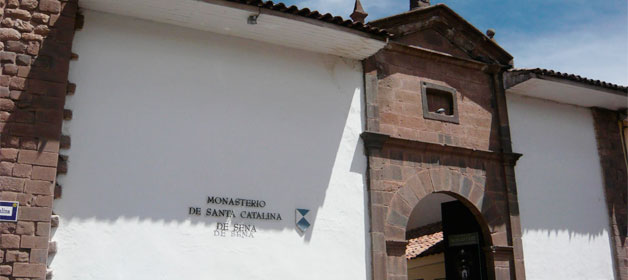
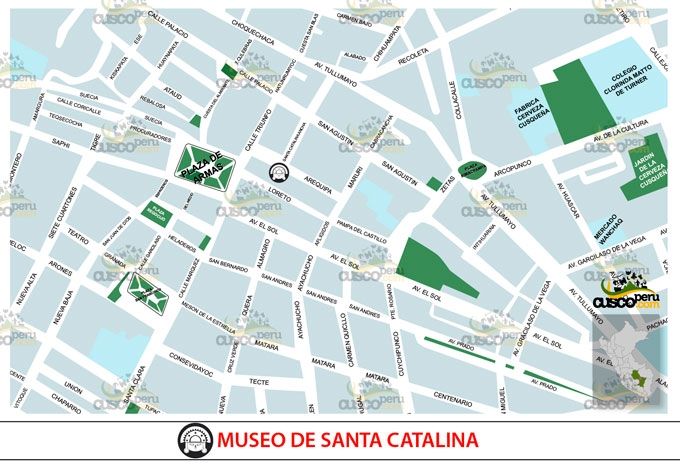
The museum offers an exquisite colonial architecture that corresponds to the last stages of the Renaissance, with the presence of Roman style arches. It has paintings of the Cusco school of the XVII and XVIII centuries, huge tapestries of the colonial era and, highlighting all, the chapter house where you can admire the colorful colonial paintings.
Opening hours: Monday to Saturday: 08:30 to 17:30 hrs.- Sunday: 14:00 to 17:00 hrs.
Cost: Adult S/ 8.00 – Students S/ 4.
It has a stone perimeter wall and inside is a large Renaissance courtyard with stone arches and tiles on the walls and adorns the middle of the stately pool located in a preferential place. It is well known because within its walls is the "Stone of the 12 Angles".
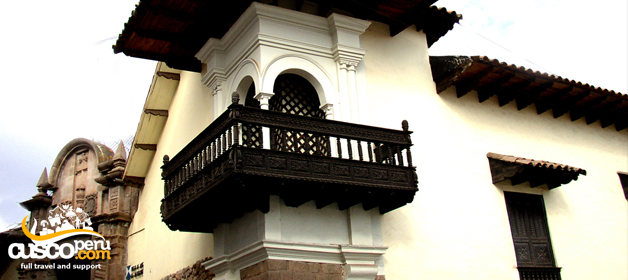
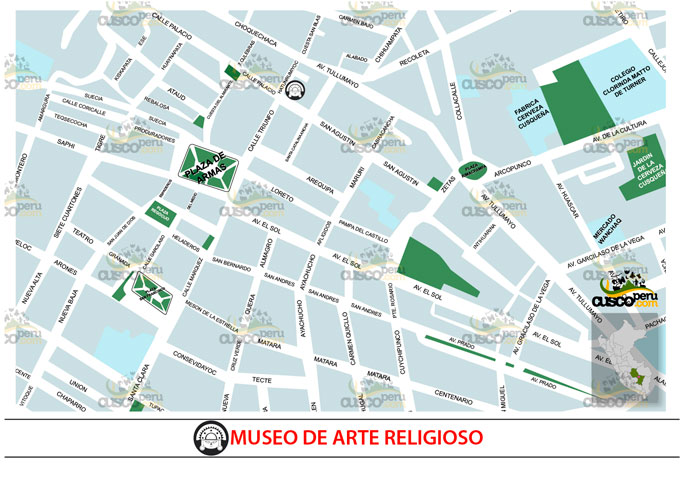
Besides having one of the most emblematic stones of the city of Cusco "stone of the 12 angles". The Museum of Religious Art houses a collection of religious colonial paintings. You can also admire the Moorish style doors, carved cedar ceilings and spectacular stained glass windows.
Monday to Saturday 8.00 am to 6.00 pm.
Tickets included in the religious ticket.
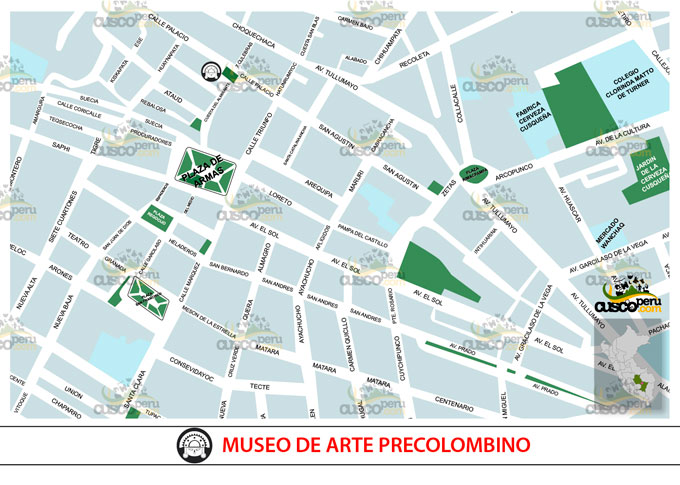
Casa Cabrera, the current home of the Museum of Pre-Columbian Art of Cusco, MAP Cusco, is a historic mansion located in Plazoleta de las Nazarenas, very close to the Main Square. During the Inca period, the site where the building now stands may have functioned as a yachaywasi, a school dedicated to the education of the children of the nobility.
After the arrival of the Spaniards, the space was transformed and, during the early years of the Viceroyalty, functioned as the convent of Santa Clara. In the 17th century, the mansion was acquired by Don Jerónimo Luis de Cabrera y la Cerda, from whom the property takes the name by which it is known today.
In 1981, the former Banco Continental acquired the property to restore it and turn it into a cultural venue. In 2003, the BBVA Perú Foundation, in alliance with the Museo Larco in Lima, transformed it into the current Museum of Pre-Columbian Art of Cusco. The collection is distributed across ten rooms on the two floors of Casa Cabrera, where visitors can see objects made of stone, clay, wood, seashells, and metals.

The Museum of Pre-Columbian Art of Cusco is located at Plazoleta de las Nazarenas 231, in the Historic Center of Cusco, just a few minutes on foot from the Main Square.
The museum’s collection allows visitors to explore different artistic expressions of Ancient Peru, from the 9th century B.C. to the 16th century. Its rooms display pieces linked to Pre-Columbian and Inca cultures, with special attention to the aesthetic, symbolic, and ritual value of the objects.
Among its spaces are rooms dedicated to the origins of Andean art, wood, seashells, silver, gold, the cultures of the south, north, and center, as well as rooms dedicated to the period before the Incas and the Inca world.
The lighting at MAP Cusco allows visitors to appreciate the artistic quality of each piece in detail. In addition, the visit offers a different perspective on Peruvian heritage, not only through archaeology, but also through art.

The museum is open every day, including holidays, from 8:00 a.m. to 10:00 p.m. Last admission is at 9:30 p.m.
General admission for Peruvians: S/ 10
General admission for foreigners: S/ 20
Peruvian students: S/ 5
Foreign students: S/ 10
Cusco residents: free admission from 9:00 a.m. to 4:00 p.m.
The Museum of Popular Art of Cusco belongs to the American Institute of Art, an ancient and traditional cultural organization of the city, which founded the Jubilee Week of Cusco and rescued the Santurantikuy fair from disappearance.
It has some of the best pieces of Cusco's popular art since the 1940s, most of them systematically acquired at the Santurantikuy Christmas fair. In the collection are pieces of the outstanding masters: Hilario Mendívil and family, Edilberto Mérida, Nemesio Villasante, Santiago Rojas, Luis Acosta, Jesús Latorre, Antonio Olave, among others.
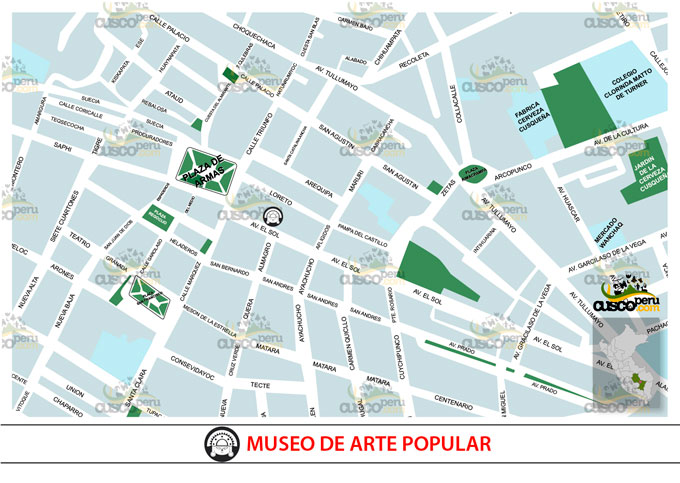
It shows works such as sculptures, ceramic works, photographs and other works of the most renowned artisans of Cusco as: Edilberto Mérida, with his sculptures of grotesque art made in clay, Hilario Mendívil, his made in rice dough, religious style; its most important feature are the images of elongated necks with drawings of flowers, the most characteristic are the Virgin of Bethlehem and the Holy Family. There are also works of Santiago Rojas with representations of the daily life of the inhabitants of Cusco (typical for the feast of Santuranticuy December 24), with typical dances; another important artisan is Follana with his children Manuelitos, made in maguey and glass palate being representative of the Child of the Thorn. Antonio Olave, is also a recognized artisan with his art of gold leaf in the confection of children for Christmas nativity scenes.
Hours of operation: Monday to Saturday 8:30 to 6:00 hrs. - Sundays and holidays 8:00 - 1:00 hrs.
Admission: Included in the Tourist Ticket.
The Municipal Museum of Contemporary Art of Cusco was founded in 1995, during the administration of Mayor Daniel Estrada Pérez. Its creation was made possible thanks to the support of the Provincial Municipality of Cusco and the initial donation of around one hundred works by collector Luis Rivera Dávalos.
Since its opening, the museum has become an important space dedicated to promoting contemporary art in the city. Its collection brings together works by local, national, and international artists, allowing visitors to appreciate different artistic expressions developed between the 20th and 21st centuries.
Over the years, the museum has expanded its collection to more than 280 works. Among its most notable pieces is the oil painting “Río Vilcanota” by Cusco artist Remigia Mendoza, dated 1897.
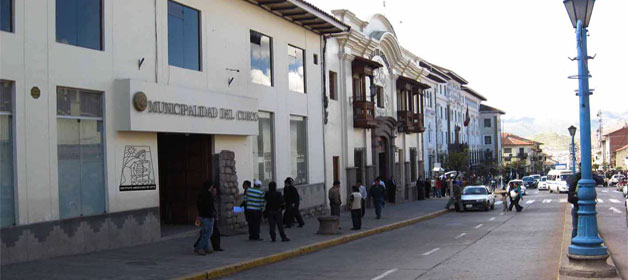
The Municipal Museum of Contemporary Art operates in the facilities of the Municipal Palace of Cusco, located in Plaza Regocijo, in the heart of the Historic Center. Its collection includes paintings, sculptures, textiles, ceramics, and other artistic expressions linked to contemporary art from Cusco, Peru, and abroad.
The museum has permanent exhibition rooms and spaces for temporary individual and collective exhibitions. It also includes areas linked to the Chapel of San Bernardo and the main courtyard of the Municipality, where handicraft exhibitions and works by contemporary artists are displayed.

The Municipal Museum of Contemporary Art is located at an altitude of 3,400 meters above sea level. From this point, visitors can enjoy a setting where Cusco’s historic past blends with modern city life.
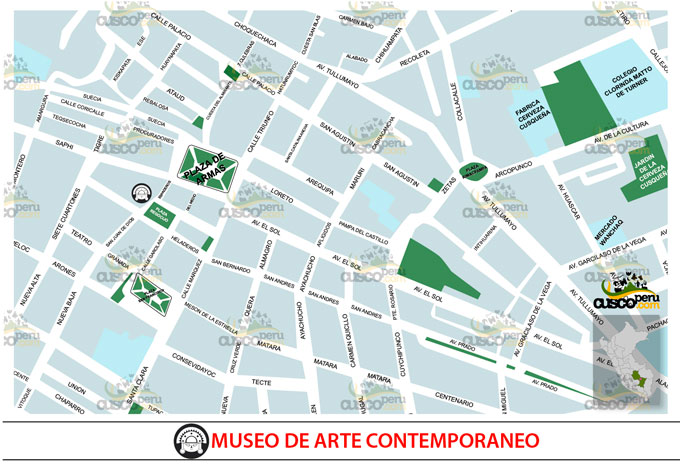
The museum has rooms dedicated to temporary and permanent exhibitions. These spaces display works by local, national, and foreign artists, with a special presence of painting, sculpture, textiles, and other contemporary visual arts.
Room 1: located on the first floor, this room is usually dedicated to temporary exhibitions by national and foreign artists.
Room 2: also located on the first floor, this room presents individual and collective exhibitions of contemporary art.
Room 3: brings together works by classic and contemporary artists. Among the most representative pieces is “Río Vilcanota” by Remigia Mendoza. Works by Cusco artists such as Edilberto Mérida, Antonio Olave, and Hilario Mendívil also stand out.
The museum is open Monday to Saturday, from 9:00 a.m. to 6:30 p.m.
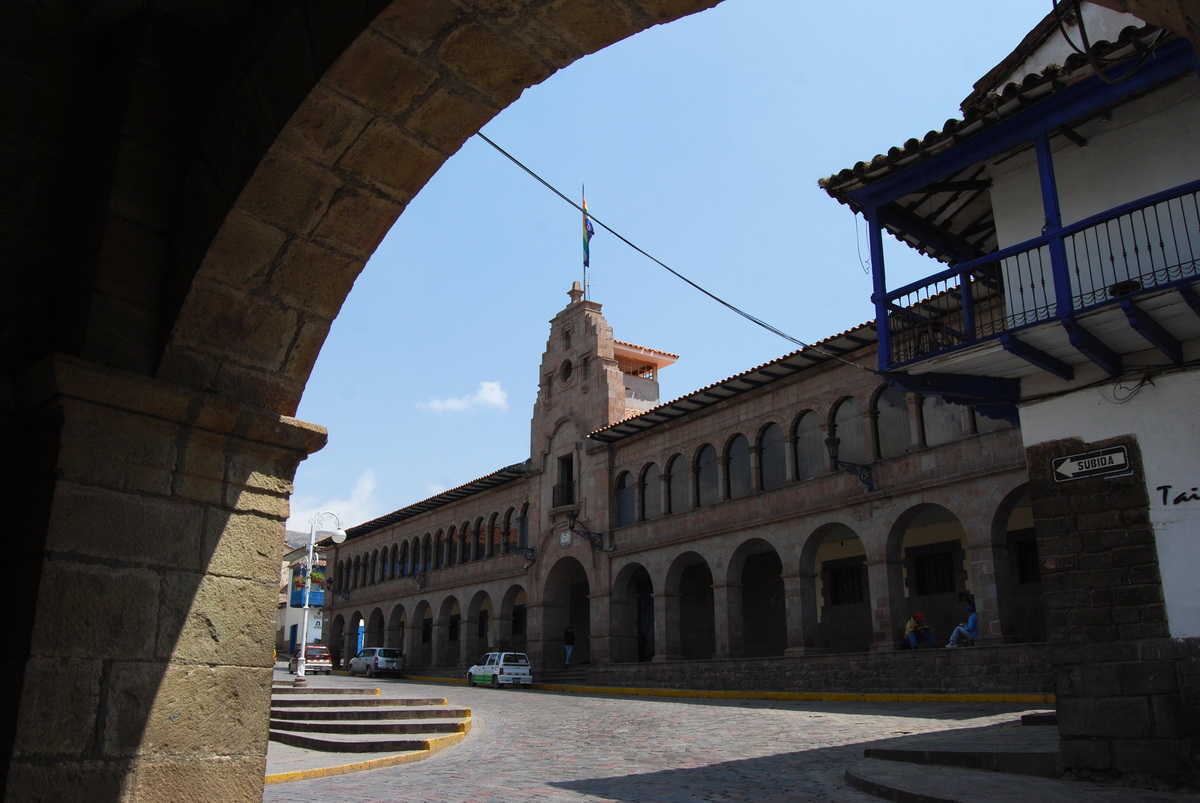
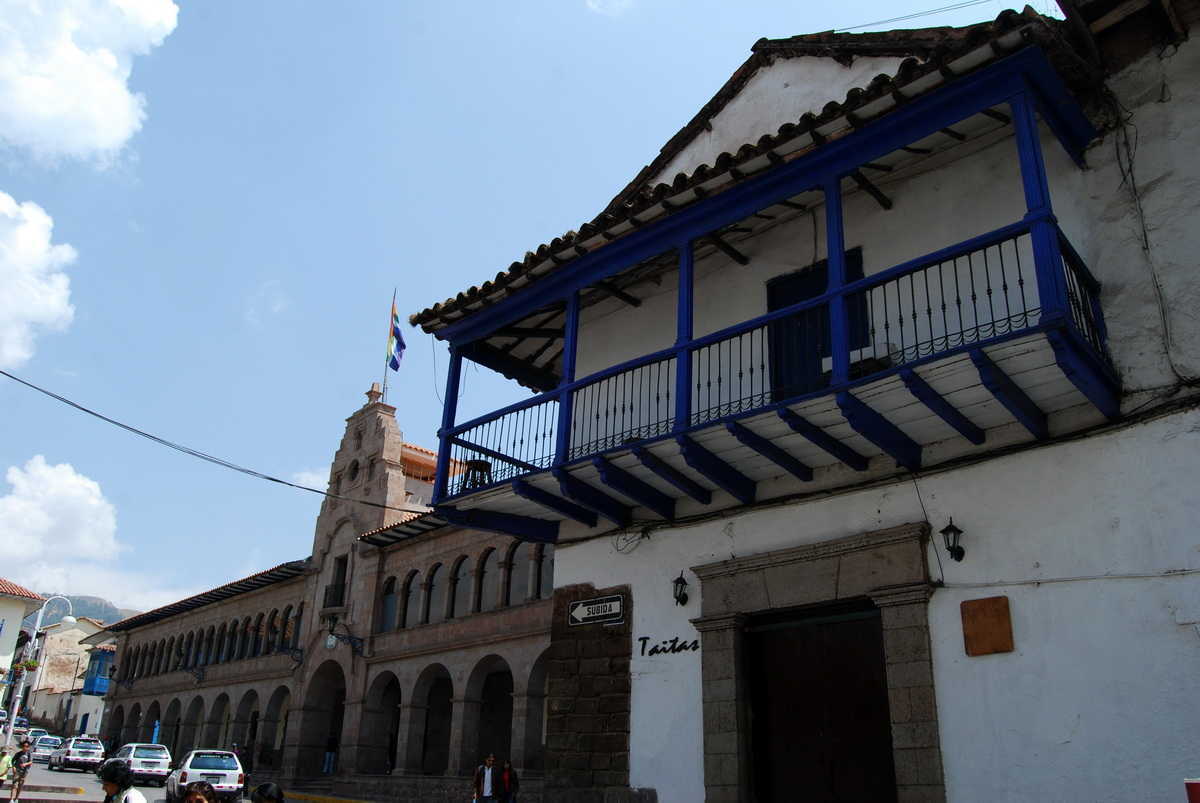
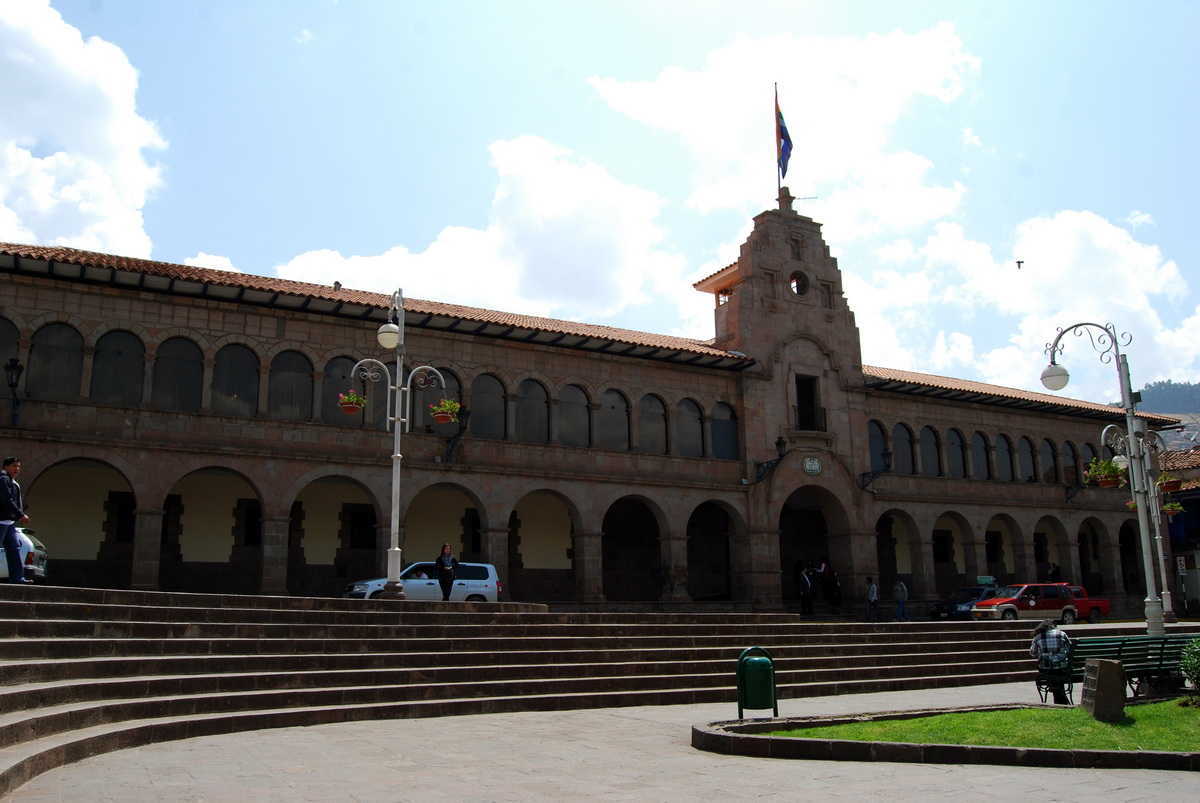
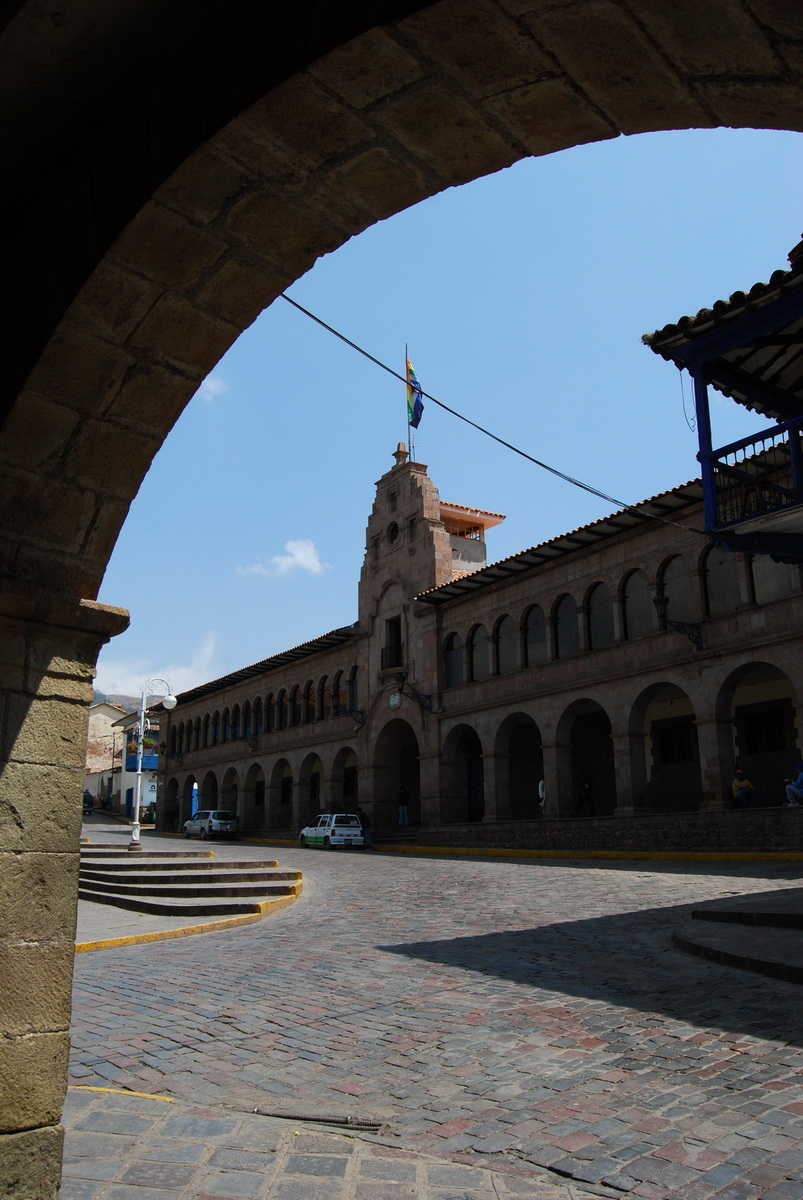
Located in the colonial mansion of the illustrious Cusquenian writer and chronicler Garcilaso de la Vega Chimpuocllo, the building dates from the late sixteenth century and early seventeenth century and was inhabited by Garcilaso until 1560, when he left for Spain. It was built on the Inca terraces that formed the Cusipata Plaza. Regarding the building, the typology shows an influence of Andalusian civil building, developing from a central courtyard, a gallery of semicircular arches, stone balconies in the east bay and wood in the rest of the bays of the second level. It was intervened with restoration processes after the earthquakes of 1650, 1950 and 1986.
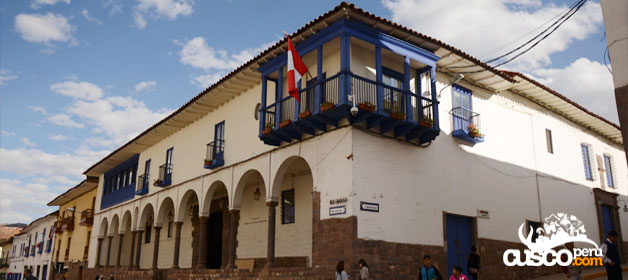
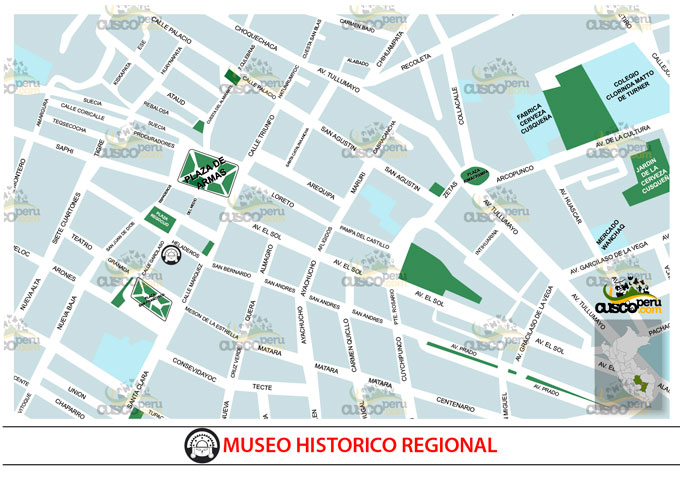
It offers visitors a beautiful collection of archaeological objects from pre-Inca and Inca cultures, as well as a select collection of colonial paintings that show us the success achieved by Cusquenian artists. The collections of pre-Hispanic archaeological cultural goods show the Andean cultural development, covering all the periods of the Andean civilization: Pre-ceramic, Formative Period or Early Horizon (Marcavalle and Chanapata), Middle Horizon (Wari), Late Intermediate (Killke and Lucre) and Late Horizon (Inca).
As for the Viceroyalty, Republican and contemporary collections, there are works of painting and sculpture of the so-called Cusco School, including those of Diego Quispe Tito, Pablo Chillitupa and El Maestro de Almudena. There are also remarkable sculptural works, among them five reliefs of the Italian Jesuit layman Bernardo Demócrito Bitti and the sculpture of a "Crucified Christ", which was present in the sentence and dismemberment of Tupaq Amaru II in the main square of Cusco.
Opening hours: Monday to Sunday from 08:00 to 18:00 hrs (no calendar holidays).
Cost: Entrance included in the Tourist Ticket.
This beautiful place is notable for its picturesque balconies, was the residence of José de Santiago de Concha, a notable aristocrat during the early days of the conquest. One of his descendants, Martín Pío Concha, was the last governor of Spanish Cusco in the 19th century. It currently belongs to the San Antonio Abad University of Cusco and houses the archaeological pieces found by Hiram Bingham in Machu Picchu, recently brought from the United States.
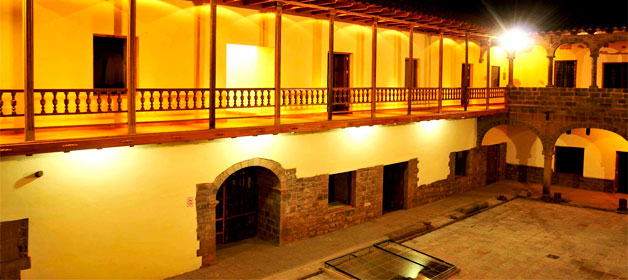
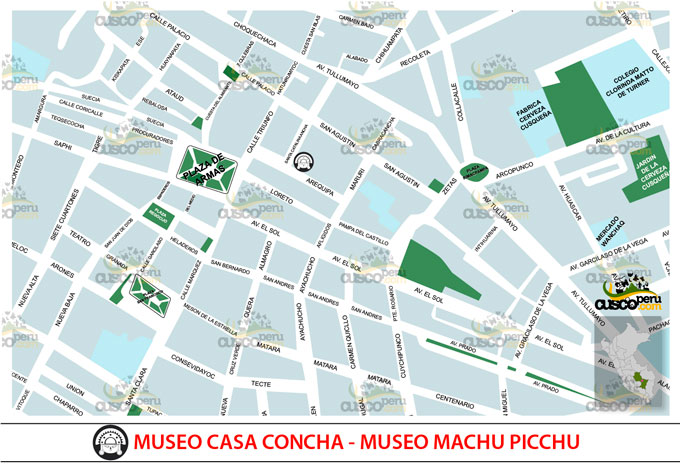
There are 360 pieces of Machu Picchu returned by Yale University, which can be appreciated by locals and tourists. They also show, in pedestals and showcases in two rooms on the second level, the ceramic, lithic, metallic and bone remains found in the excavations made in the Casa Concha and some of the goods of the Inca museum.
Hours of operation: Monday to Saturday from 9:00 am to 5:00 pm.
Tickets:
Foreigners: S/ 20.00
Nationals: S/ 10.00
Foreign students: S/ 10.00
National Students: S/ 5.00

Happy passengers