
The Cathedral of Cusco is one of the most important colonial temples in the historic center and one of the main landmarks of Cusco’s religious art. It combines Indigenous traditions with Spanish influences, and its colonial architecture is one of the most photographed by visitors arriving at the Main Square.
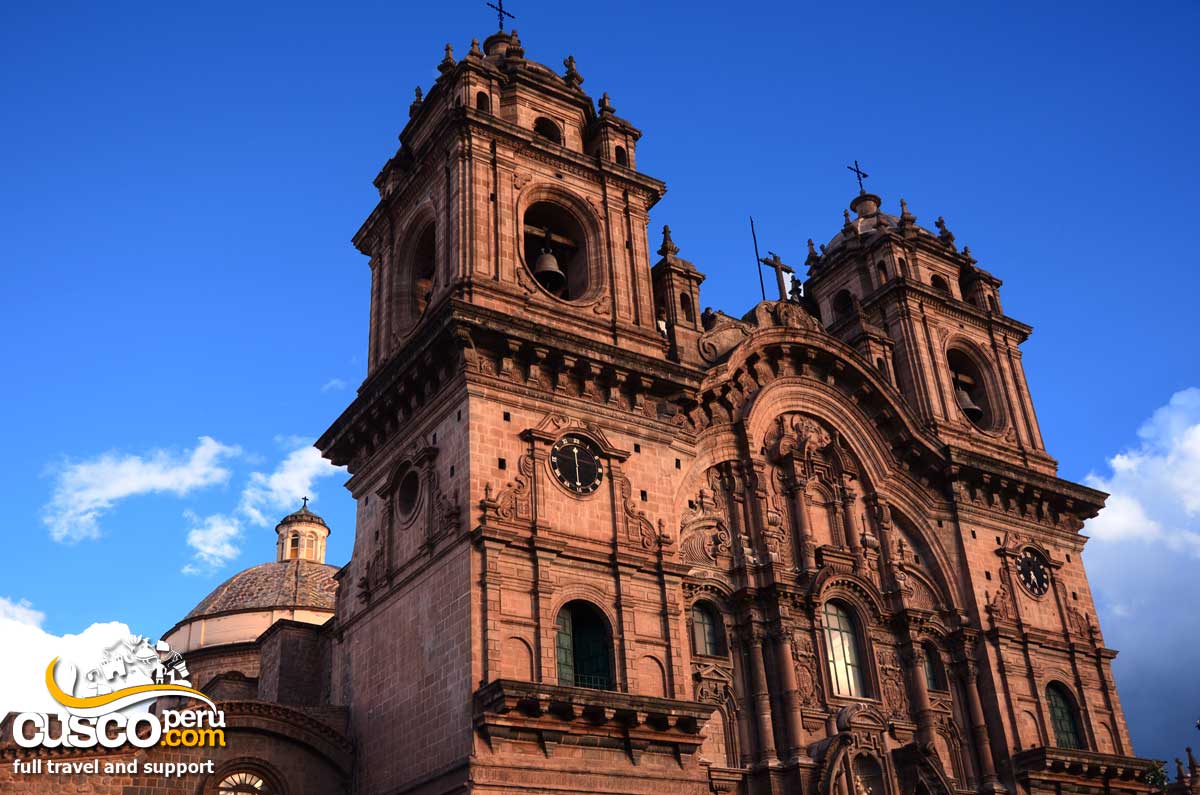
The Basilica Cathedral of Cusco is the city’s main Catholic temple and the site of important religious celebrations. It brings together Gothic, Mannerist Renaissance, and Baroque features. Flanked by two solid towers, its side portals are Mannerist, while the central portal is subtly Baroque.
The construction of the Cathedral of Cusco formally began in 1560, after the contract signed in 1559 with Juan Miguel de Veramendi. Throughout the process, different master builders and architects took part.
The earthquake of 1650 caused limited damage, although it affected the ribbed vault in the upper part of the façade. As a result, the third section of the towers was removed to give the building a more solid and lower appearance.
Finally, the work was completed under the direction of Miguel Gutiérrez Sencio in 1654. On September 13, 1723, construction began on the Church of the Holy Family, part of the cathedral complex, under the direction of Gabriel de Arregui. Due to the sudden death of the architect in charge, construction restarted ten years later, in 1733, and was finally delivered on September 3, 1735.
It was recognized as a minor basilica of the Catholic Church on February 8, 1928. Since 1972, it has formed part of the Monumental Zone of Cusco, declared a Historic Monument of Peru. In 1978, Juan Carlos I of Spain delivered part of the ashes of Inca Garcilaso de la Vega, which were placed in the Church of the Triumph.
In 1983, UNESCO declared the city of Cusco a World Cultural Heritage Site, a recognition that includes its historic center and monuments such as the Cathedral.
The Cathedral of Cusco is located in the Main Square, in the city’s historic center. Thanks to its central location, most visitors can reach it on foot from hotels in the historic center. If you are staying in a more distant area, you can take a taxi.
The Cathedral’s choir is carved in cedar wood and combines Baroque and Neoclassical features. The main altar stands out for its embossed silver work and the richness of its colonial ornamentation.
Inside, the Cathedral has naves, chapels, altars, and a valuable collection of religious art. Many of its ornaments feature gilded details, and its walls are decorated with religious paintings and sculptures. Among the images most venerated by the people of Cusco is the Lord of the Earthquakes.
The temple houses around 300 paintings created by Indigenous, mestizo, and European artists. In the Silver Room, the baldachin stands out, made in 1733 and donated by Francisco Guyzueta Maldonado.
Its collection of canvases from the Cusco School also stands out, with works by Diego Quispe Tito, Basilio Santa Cruz Pumacallo, Basilio Pacheco, and Marcos Zapata, author of a singular version of “The Last Supper,” where the main dish is roasted guinea pig. The sacristy is decorated with portraits of the bishops who led the Archbishopric of Cusco.
The most venerated image is the Lord of the Earthquakes, the patron saint of Cusco, famous for having “stopped” the devastating earthquake of 1650. Also notable is the Chapel of the Virgin of the Assumption, known for its painting of the Virgin surrounded by angels.
Visiting hours: Monday to Sunday, from 10:30 a.m. to 5:00 p.m.
Mass schedule: Monday to Sunday, from 7:00 a.m. to 10:00 a.m.
Admission fee:
Foreign adult: S/ 40.00
Foreign students: S/ 20.00
When visiting the Cathedral of Cusco, it is important to keep the following tips in mind:
The main construction of the Cathedral began in 1560 and was completed in 1654, after almost a century of work interrupted by the earthquake of 1650.
You can buy the ticket directly at the Cathedral ticket office. There is also the Cusco Religious Circuit Ticket, which includes the Cathedral and other religious sites such as the Archbishop’s Museum, the Temple of San Blas, and the Temple of San Cristóbal. The purchase is usually made in person.
Yes. One way to enter the church for free is to attend during Mass hours, which are held on Saturdays and Sundays at 7:00 a.m. and 7:00 p.m.
At the entrance, there are people offering official tour guide services for an additional cost. Another option is to book a Cusco City Tour that includes a visit to the Cathedral and the service of a tour guide.
Corpus Christi is one of the most important religious festivities in Cusco. The city’s 15 main sculptures of saints and virgins are carried in procession to the Cathedral. It is celebrated every year on the Thursday following Trinity Sunday, usually in June.
Yes, the Cathedral may be included in some City Tours, along with Coricancha, Sacsayhuamán, Q’enqo, Puka Pukara, and Tambomachay. Some services include transportation and a guide; entrance tickets may be included or paid separately, depending on the operator.
The city of Cusco has dozens of temples. In addition to the Cathedral, tourists can visit the Church and Convent of Santo Domingo, the Church and Convent of La Merced, the Church and Convent of San Francisco, among others. Entrance tickets can be purchased at the door of each church.
Yes, many Cusco City Tours do not include a visit to the Cathedral due to the additional cost of the entrance ticket. In that case, the route usually includes Coricancha, Sacsayhuamán, Q’enqo, Puka Pukara, and Tambomachay.
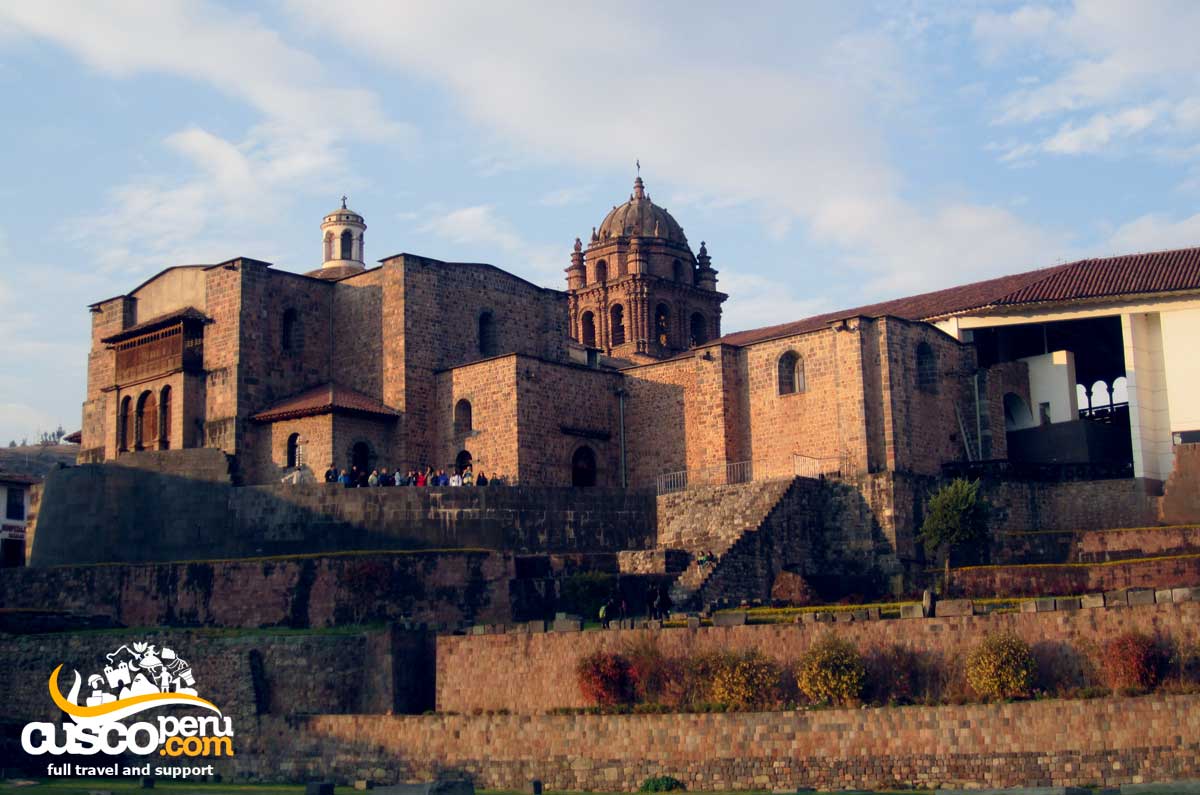
The Convent of Santo Domingo in Cusco was established on the site of the ancient Coricancha or Intikancha, the main religious sanctuary of Inca Cusco and one of the most important ceremonial spaces of the Tawantinsuyo. The Spanish occupation of the site began in the early years of the conquest, and the formal transfer of the former sanctuary to the Order of Preachers is recorded in 1538.
The Coricancha was a sacred precinct dedicated to the Sun god, Inti. Its finely worked and perfectly fitted stone walls remain one of the finest examples of Inca architecture. During the conquest, much of the precious metal that decorated its enclosures was removed, and the Dominican complex was later built over its structures.
After the earthquakes of 1650 and 1950, the temple and convent of Santo Domingo suffered significant damage; however, the Inca walls of the Coricancha resisted remarkably well, reinforcing their architectural and historical value.
The Church and Convent of Santo Domingo form a colonial complex built on the foundations of the ancient Coricancha. Its architecture combines colonial Baroque elements with finely worked Inca stone walls, creating one of the most representative examples of architectural superposition in Cusco.
Inside, the main altar, the collection of canvases from the Cusco School of Painting, and the convent spaces integrated into the ancient Inca walls stand out. The complex also preserves cloisters, patios, arches, fountains, balconies, windows, and passageways where artistic and religious pieces are displayed.
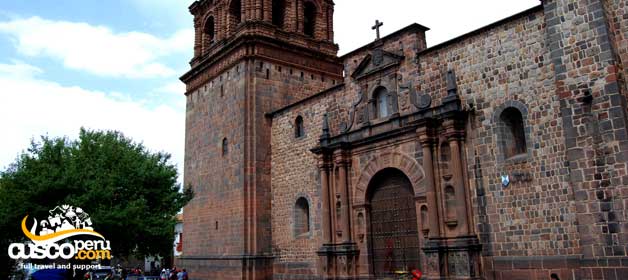
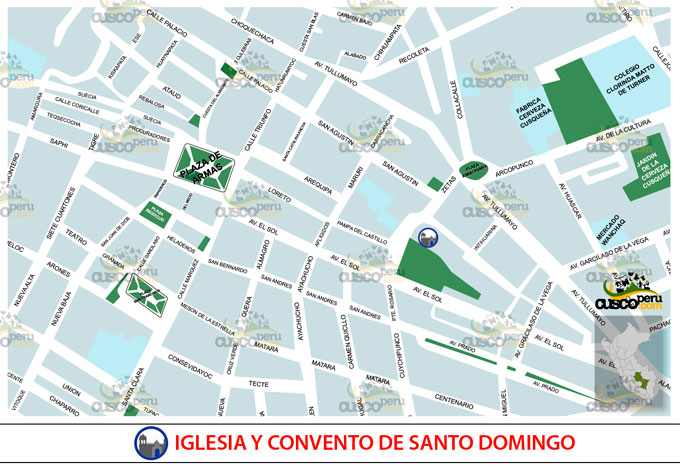
The Church and Convent of Santo Domingo are located a few blocks from Cusco’s Main Square, next to the Coricancha archaeological complex. Tourist access is through the Ahuacpinta sector.
Architecture: the church and convent are integrated into the Inca structure of the Coricancha. The church features a colonial Baroque style, three naves, a façade with Plateresque features, and a bell tower of great ornamental value.
Main altar and colonial painting: the main altar is one of the temple’s most outstanding elements. Its decoration features religious images such as Saint Dominic of Guzmán, Saint Albert the Great, Saint Thomas Aquinas, and Our Lady of the Rosary. The naves preserve canvases belonging to the Cusco School of Painting.
Convent and Inca walls: many of the walls and structures of the Coricancha were reused to build the cloisters, patios, and passageways of the convent. Outside, the Coricancha garden stands out, where visitors can appreciate terraces, Inca walls, and views of the architectural complex.
Reference opening hours: Monday to Saturday, from 8:30 a.m. to 5:30 p.m.; Sundays and holidays, from 2:00 p.m. to 5:00 p.m.
Reference rate: general admission between S/ 15.00 and S/ 20.00; students from S/ 10.00, according to current conditions.
Opening hours and rates may vary, so it is recommended to verify the current information before your visit.
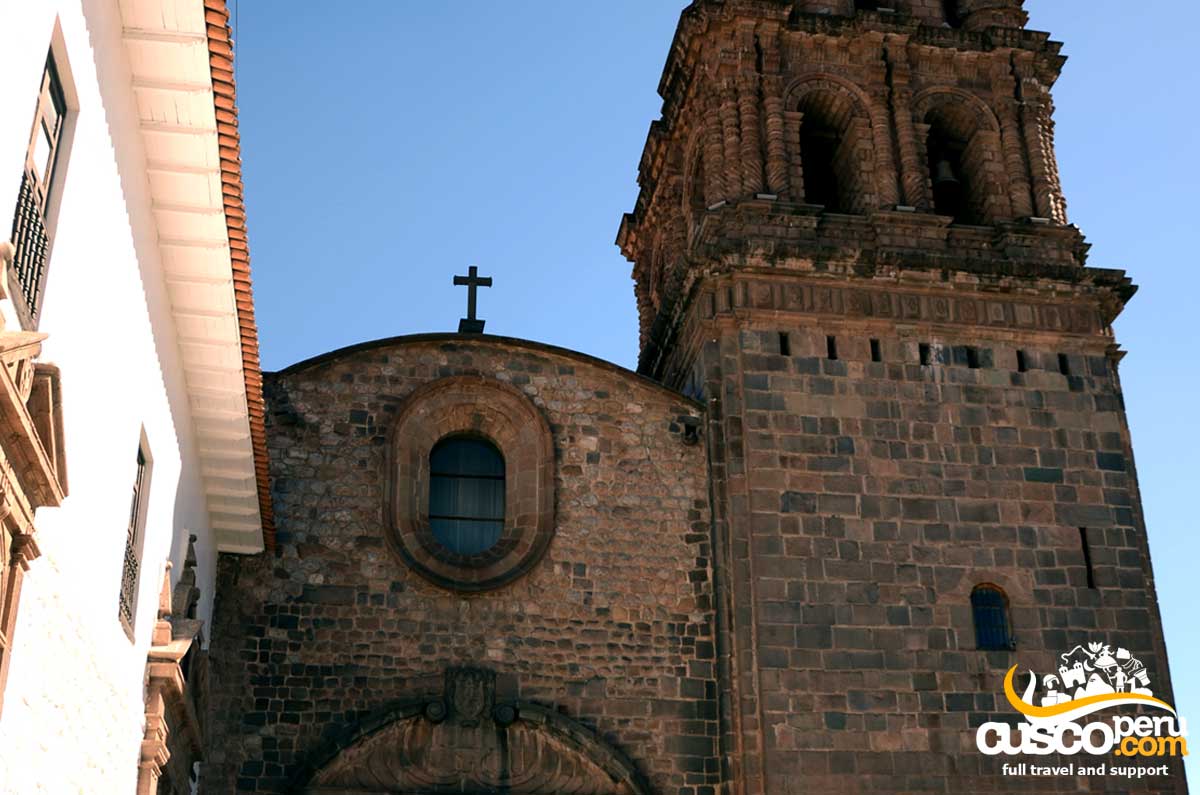
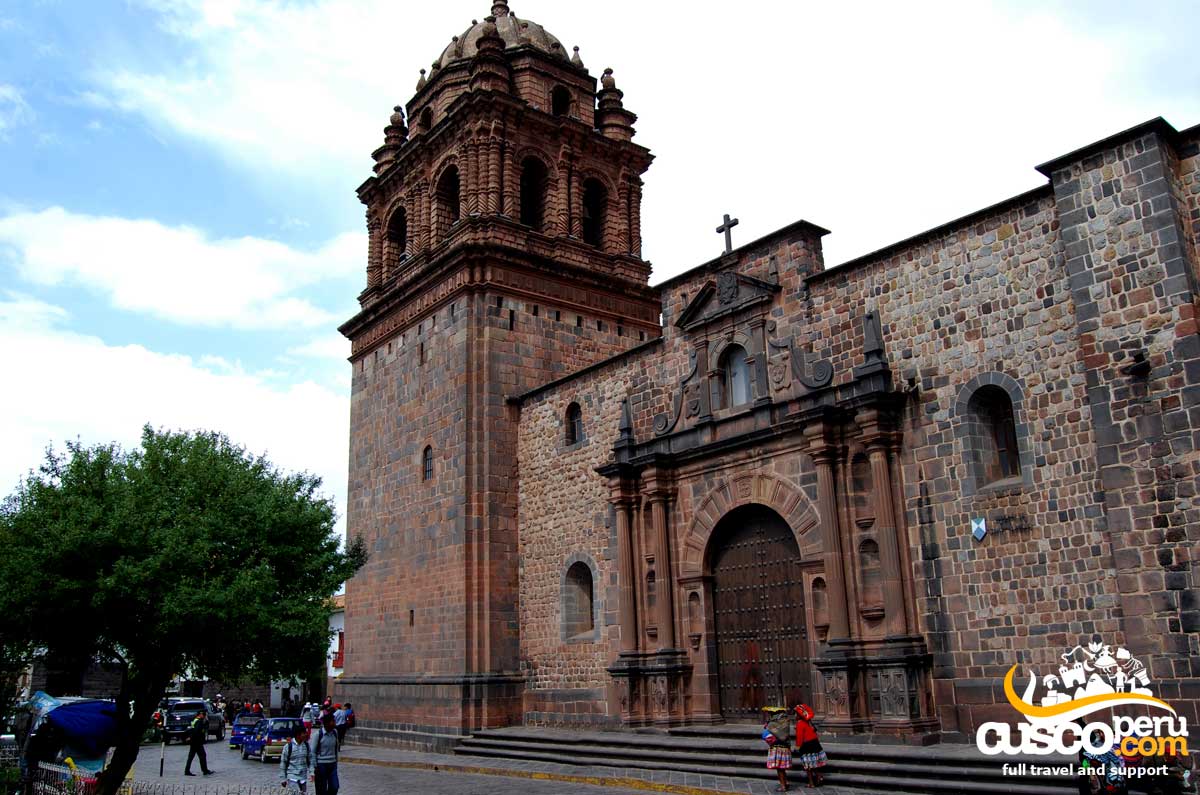
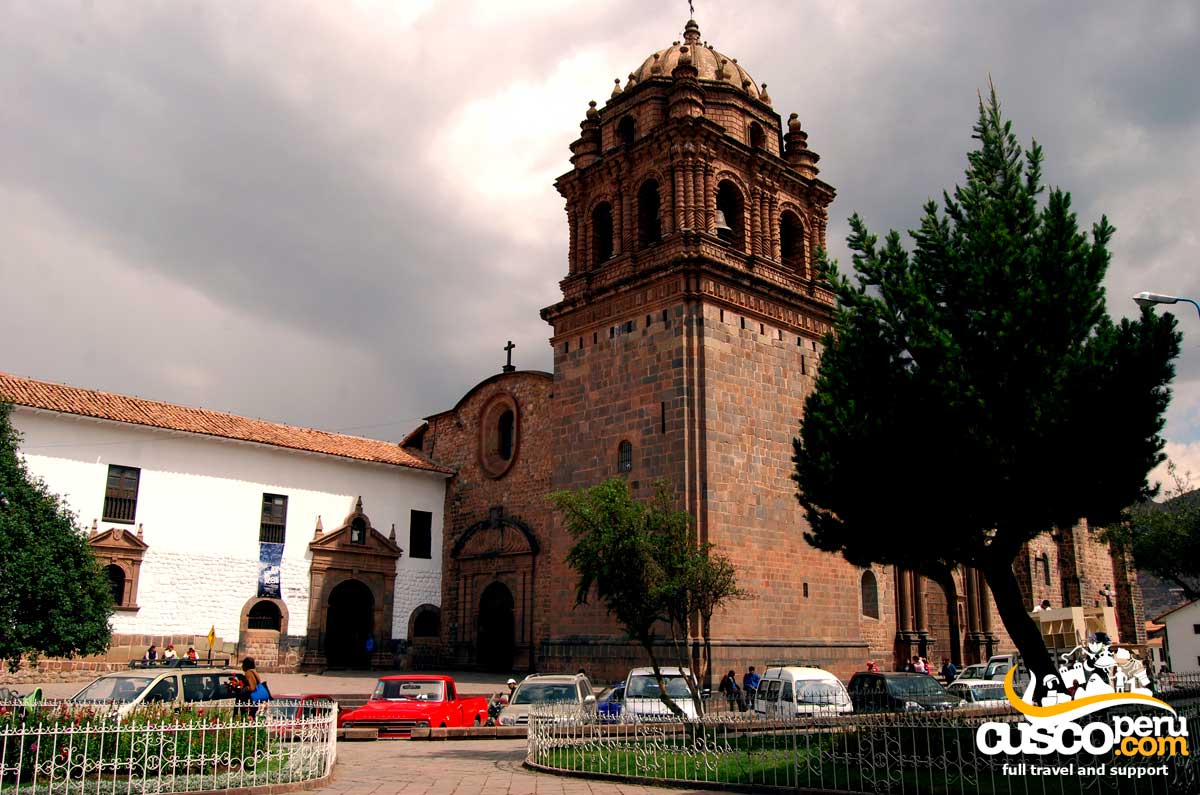
In 1601, the land was donated to the Dominican nuns and, under the initiative of Doña Lucía Isabel Rivera de Padilla, the Monastery of Santa Catalina was founded. A few years later, the church was built.
The religious complex was consolidated during the early years of the 17th century. The church preserves Baroque altars and a remarkable pulpit. The altars are attributed to the masters Pedro de Oquendo and Diego Martínez de Oviedo, both linked to the 17th century. Its oil paintings are signed by Juan Espinoza de los Monteros and Lorenzo Sánchez de Medina, artists associated with the Cusco School of Painting.
After the earthquake of 1650, the church and monastery had to be rebuilt. The works were completed around 1669, preserving the solidity and sobriety that characterize the complex. Today, the monastery continues to function as a convent of Dominican nuns, and part of its spaces operates as a museum of monastic life.
The Church and Convent of Santa Catalina is located just a few meters from Cusco’s Main Square. The complex was built mainly of adobe and stone, over the remains of the ancient Acllahuasi, or House of the Chosen Women, a ritual space during the Inca period.
Its Baroque architecture stands out for its high vault, crossing arches, and solid walls. The museum preserves relics, canvases, colonial furniture, embroidery, altarpieces, liturgical objects, and pieces related to monastic life.
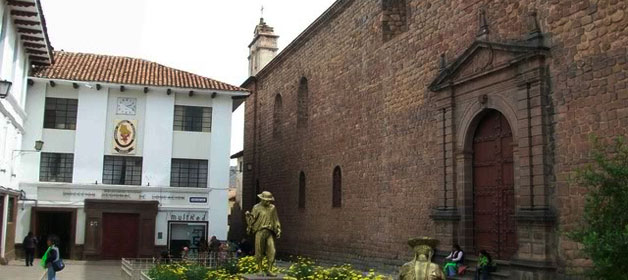
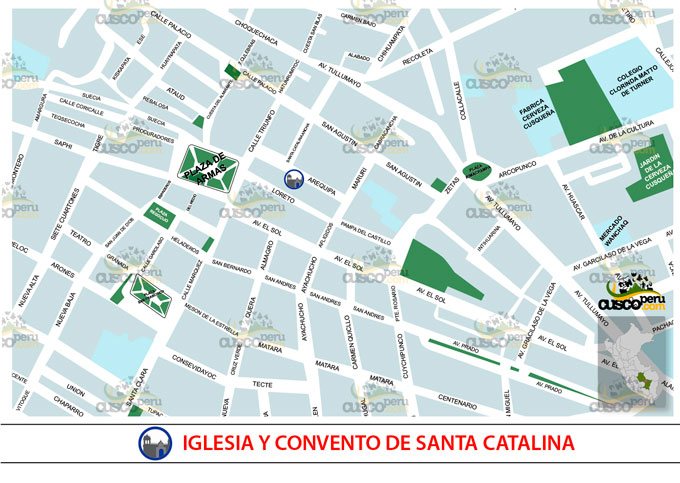
The Church and Convent of Santa Catalina is located 100 meters from Cusco’s Main Square. Its exact address is Santa Catalina Angosta Street, with no street number.
The main altar, carved in gilded cedar, stands out for its Baroque style. In the central section, visitors can see the sculptural image of the Sacred Heart of Jesus and, in other sections, the images of Saint Catherine and Saint Dominic. The temple also preserves a cedar-carved pulpit and smaller gilded altarpieces.
The museum displays various canvases related to the Lord of the Earthquakes, the life and miracles of Saint Rose of Lima, the life of Saint Dominic of Guzmán, and the life of Saint Catherine. It also preserves chasubles embroidered with metallic threads, carvings, gold and silver objects, an organ, and liturgical pieces.
On the second level, a Nativity altarpiece stands out; when folded, it takes the shape of a chest. Visitors can also appreciate the choir, accompanied by an organ and canvases linked to the religious history of the convent.

Reference opening hours: Monday to Saturday, from 8:30 a.m. to 5:30 p.m.
Reference admission fee:
Adults: S/ 8.00
Students: S/ 4.00
Opening hours and rates may vary, so it is recommended to verify the current information before your visit.
Photography is not allowed inside the Church and Convent of Santa Catalina. Visitors are also not allowed to touch the canvases, relics, or exhibited pieces. At the entrance, it is usually possible to hire a guide for an additional cost.
The devastating earthquake of 1650 destroyed the first building. Between 1688 and 1699 the construction of the current temple was carried out by the architect Juan Tomás Tuyru Túpac Inca. It was financed by the bishopric, the clergy and the town council.
The church has a single nave and was built entirely of stone. It has a baroque and gilded main altar that has a frontal, tabernacle and silver racks. Of an architecture of perfect baroque correction and plant of great solemnity, all the dark stone is linked with white mortar. The facade is of traditional Cusquenian type and is inspired by the nearby cathedral molds, but the towers have arrow slits and vents, each topped by four lanterns and a capital.
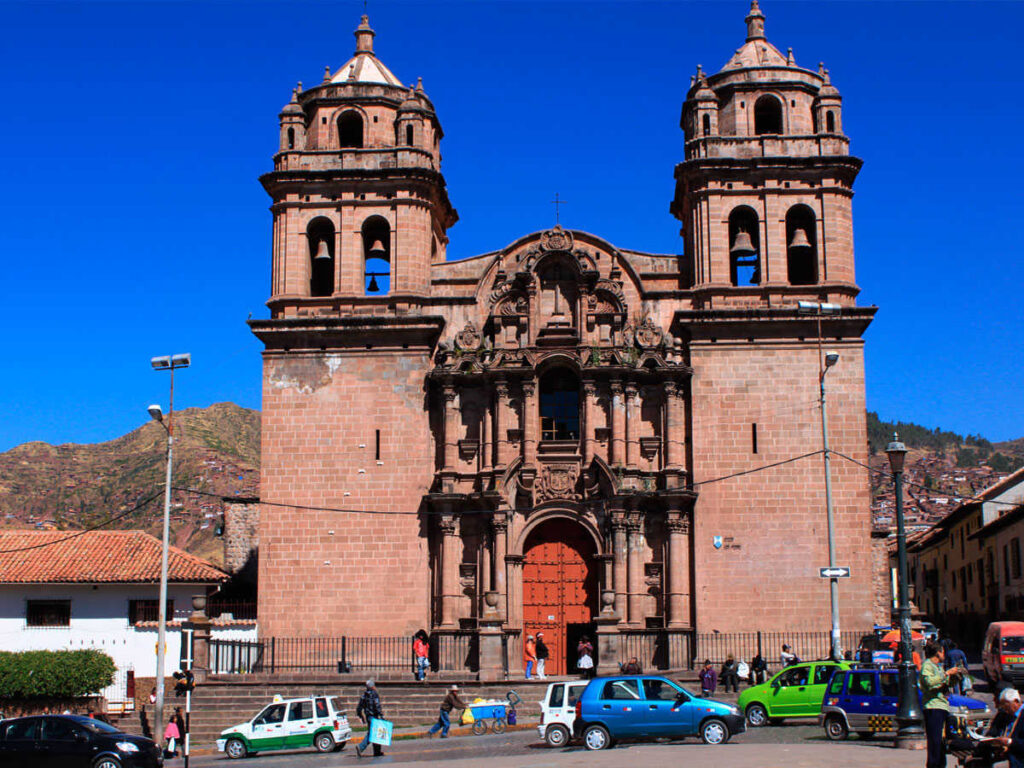
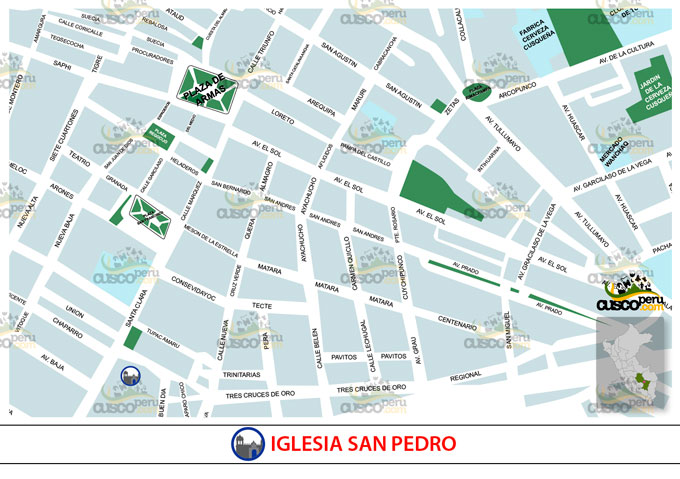
The San Pedro Church is located on Cascaparo Street, in the historic center of the city. Just in front of the San Pedro market and the square of the same name.
The Church of San Pedro, as part of its interior design, has a baroque and gilded main altar that has a silver frontal, tabernacle, and silver grilles. Its altarpiece is remarkable, of four bodies and three streets, with eighteen Solomonic columns, having for coronation of its tabernacle, made of silver, a Paschal Lamb on the Book of the Seven Seals.
In addition to the main altarpiece, it has ten lateral altarpieces that are finely carved in wood and covered in gold leaf.
Among the most famous paintings of San Pedro are the portraits of the founders of the temple. The first canvas depicts Bishop Mollinedo at an advanced age, and the upper part shows his coat of arms. On the other hand, among the images, the Candelaria or Purified Virgin stands out. Also, the image of the Dolorosa, San Pedro, San Pedro Nolasco, San Juan and the Señor del Santo Sepulcro (Lord of the Holy Sepulcher) stand out. Visits during hours of worship.
During mass hours, from Monday to Sunday: at 7:00 am and in the evenings at 6:00 pm.
It was built by order of Viceroy Francisco de Toledo in 1572 as the Franciscan order. It has a simple architecture, with a single bell tower. Likewise, it has a Latin cross plan and three naves. This construction of stone, lime, and stone had problems in the closing of its arches and vaults. The convent is a very visited attraction, four cloisters conform it. The most striking painting is "The Genealogy of the Franciscan Order", one of the largest paintings in South America.
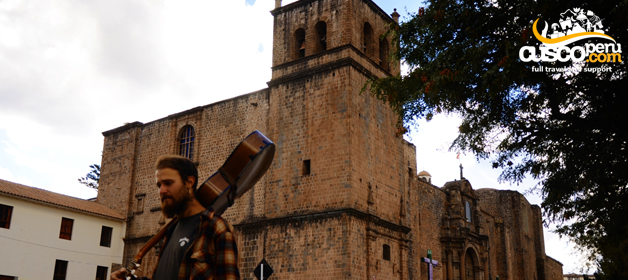
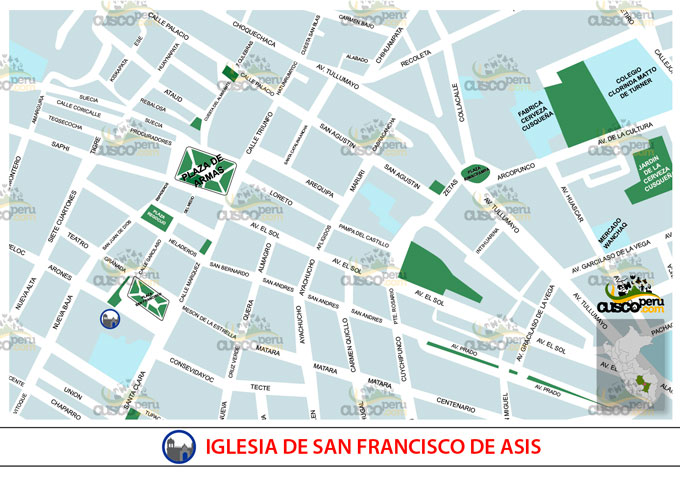
The church and convent of San Francisco is located in front of the plaza of the same name. About eight minutes walking from the Plaza de Armas.
The convent has a Renaissance style with various influences. It has an impressive ceiling decorated with panels. The church and the cloister, in general, are decorated with canvases of different periods, of authors such as Basilio Santa Cruz, and other anonymous authors of mannerist and tenebrist style belonging to the Cuzco School.
The museum is distributed in three exhibition rooms with paintings of the School Cuzqueña allusive to the life of San Francisco, sculptures in wood, and liturgical ornaments. Another attraction is the Catacombs, with human remains of bones and skulls. Another attraction is its library with works of great historical value, such as a polyglot bible in five languages.
Museum opening hours:
Monday to Friday: 9:00 to 12:00 hrs. and 15:00 to 17:00 hrs. Saturdays: 9:00 a.m. to 12:00 noon.
Cost for the museum:
General rate: S/ 5.00 – National Students: S/ 3.00.
Church opening hours:
Monday to Saturday: 6:30 to 8:00 hrs and 17:30 to 19:30 hrs Sundays: 6:30 to 12:00 hrs and 17:00 to 20:00 hrs.
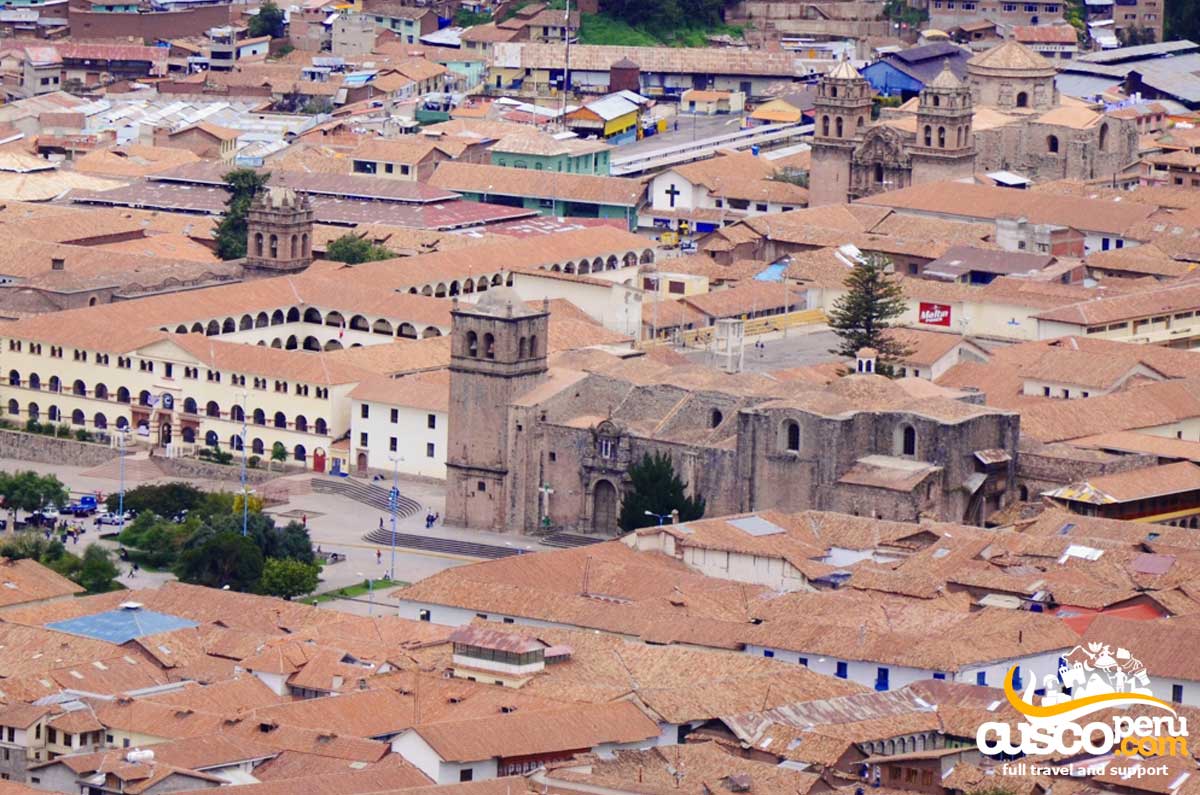
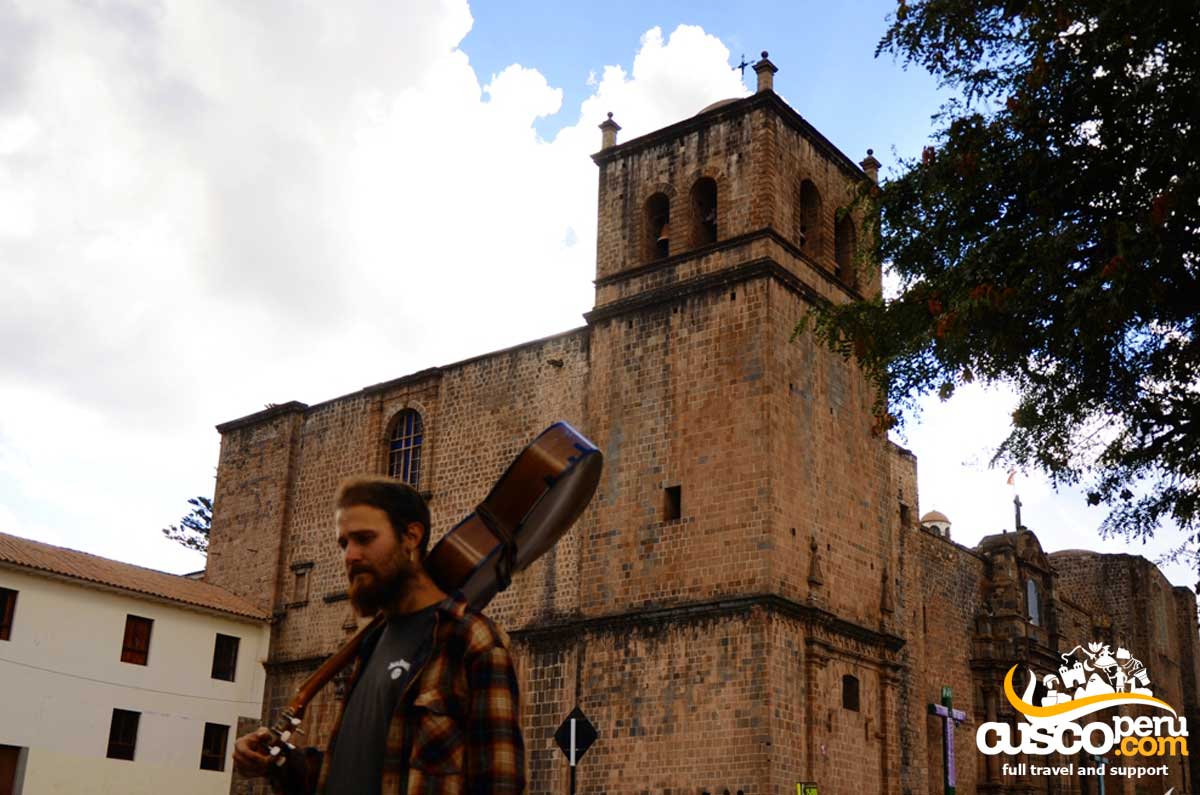
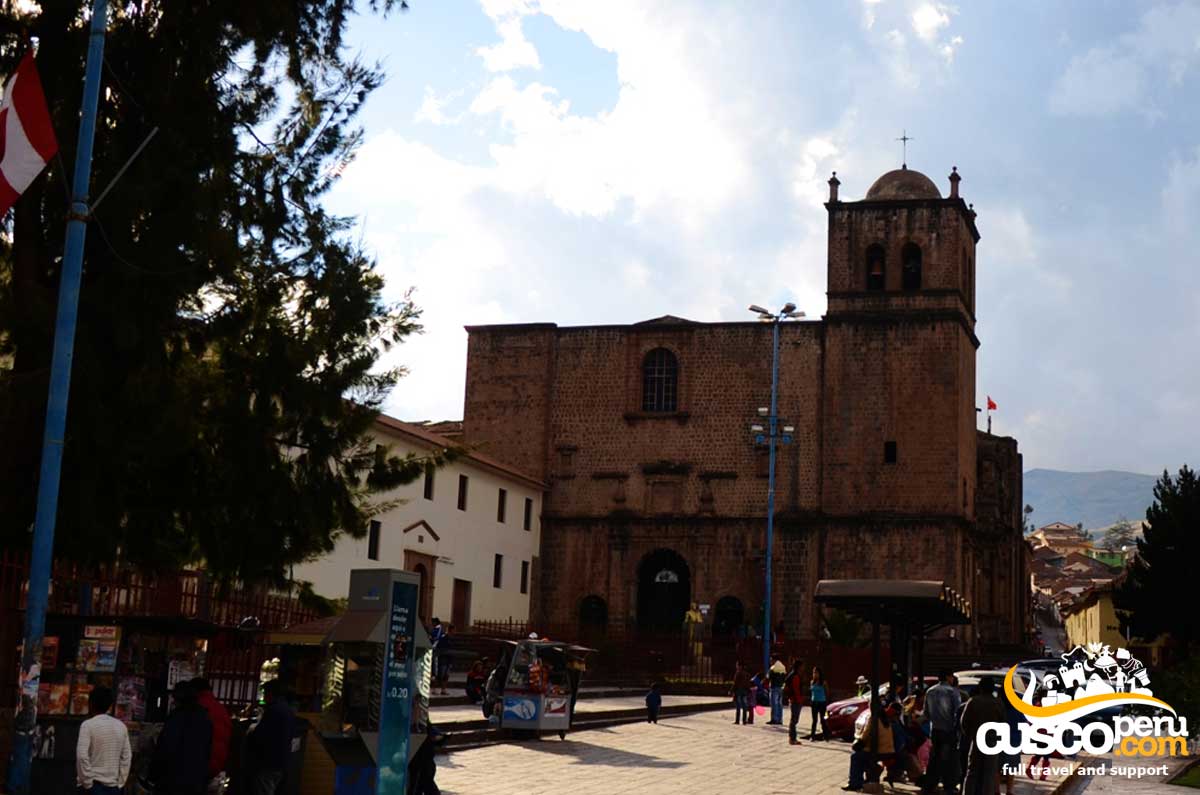
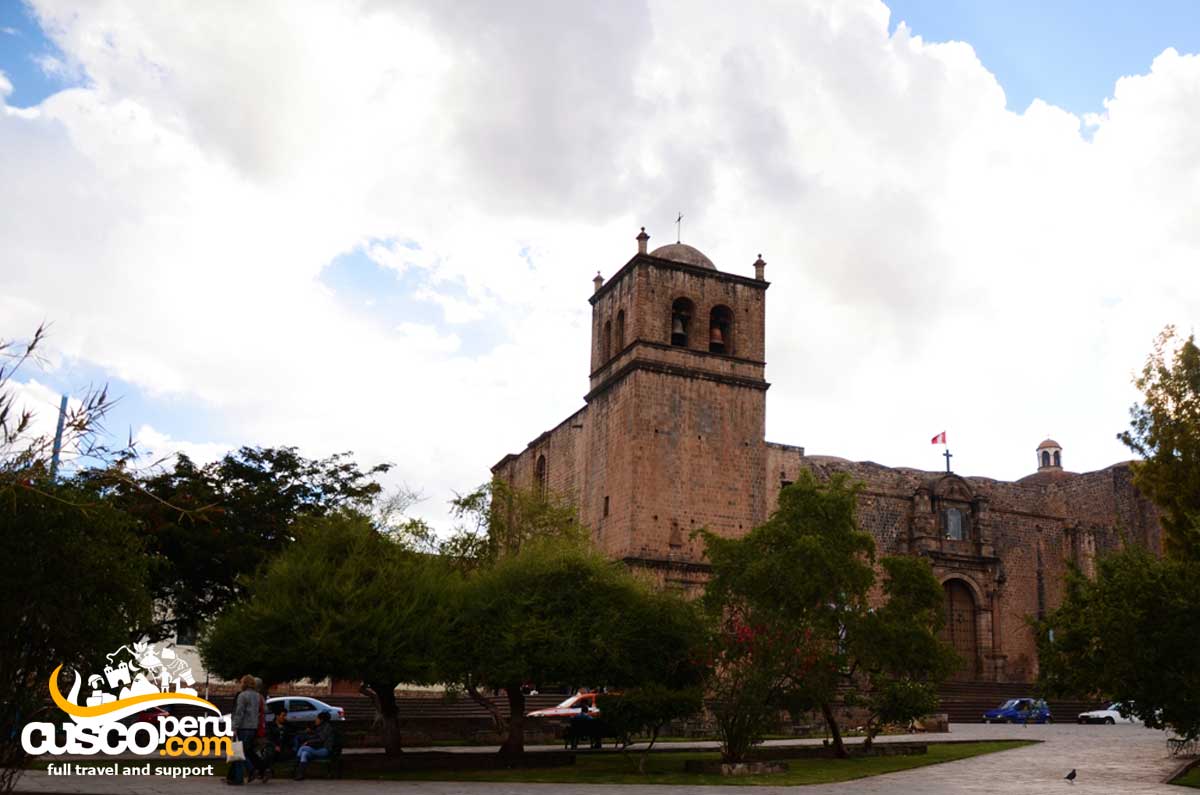
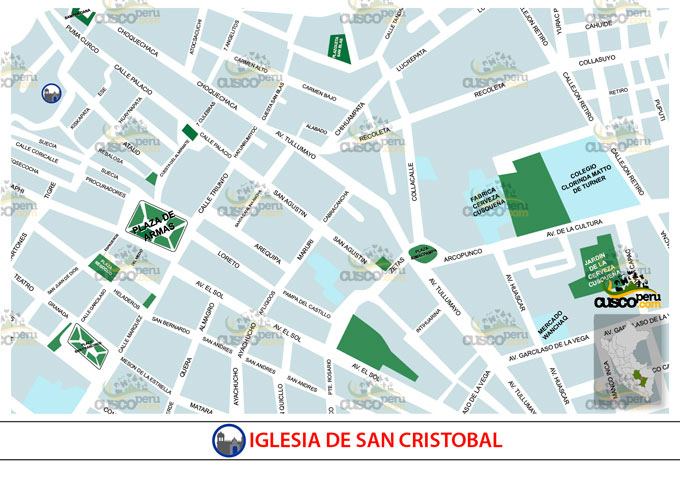
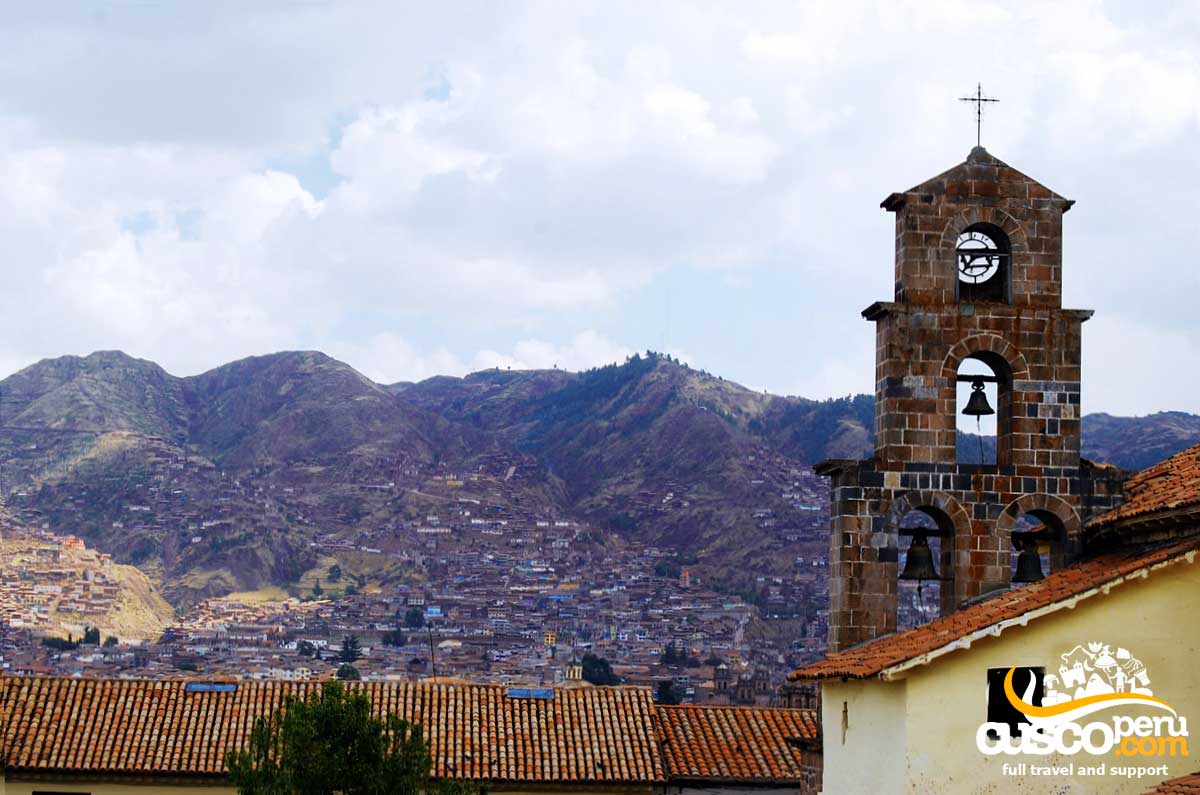
The Church of San Cristóbal is a colonial temple located in the square of the same name, in the upper part of Cusco’s historic center. Thanks to its location in the Qolqampata sector, it offers one of the widest views of the city and forms part of Cusco’s historical heritage.
The church was built in the early years of the colonial period at the initiative of Cristóbal Paullu Inca, an Inca prince converted to Christianity and lord of Qolqampata. According to tradition, Paullu Inca took the name Cristóbal in honor of Saint Christopher and in connection with Cristóbal Vaca de Castro, a Spanish authority of the time.
During the Inca period, this area formed part of Hanan Qosqo, or Upper Cusco, and was linked to the Qolqampata sector. In this setting, remains of Inca architecture are preserved, traditionally associated with the palace of Manco Cápac and the ancient ceremonial landscape of the city.
After the earthquake of 1650, the original chapel was destroyed and the current temple was built. The reconstruction is attributed to the architect Marcos Uscamayta and was promoted during the ecclesiastical government of Bishop Manuel de Mollinedo y Angulo.
Since 1972, the building has formed part of the Monumental Zone of Cusco, declared a Historic Monument of Peru. In addition, as it is located within Cusco’s historic center, it is part of the area recognized by UNESCO as a Cultural Heritage of Humanity site in 1983.
The church has a Latin cross floor plan and a single nave. Its main doorway faces Colcampata Square, and its bell tower rises at the southern end. Inside, it preserves a collar-beam roof structure, a choir at the foot of the nave, and a two-section main altarpiece, where paintings, religious images, and the effigy of Saint Christopher stand out.

It is located in San Cristóbal Square, in the Qolqampata sector, about a 30-minute walk from Cusco’s Main Square. By taxi, the trip may take around 10 minutes, depending on traffic.
Canvases: the interior of the Church of San Cristóbal contains canvases by artists of the so-called Cusco School, which developed during the colonial period. Some works are adaptations of famous paintings, into which elements of Andean culture, such as gastronomy and traditions, were introduced.
San Cristóbal Viewpoint: located right in the square, this stone-built space also features a stone cross. From here, visitors can enjoy panoramic views of the city of Cusco. On clear days, it is also possible to appreciate the imposing Ausangate snow-capped mountain, both during the day and at night.
Patron Saint of San Cristóbal: this is the sanctuary of Saint Christopher, the patron saint of the place, whose image is taken out every year during the Corpus Christi festivity. The image has a silver halo, a beautiful face, natural long hair, and an imposing figure: with one hand it holds onto a tree branch, while with the other it carries the Child Jesus.
Palace of Manco Cápac
The site preserves walls with cellular masonry, a honeycomb-like structure made of small polygonal limestone blocks. According to tradition, this place was used for ritual purposes and formed part of the Qolqampata palace, associated with Manco Cápac, the founder of Inca civilization.
Reference opening hours: Monday to Sunday, from 10:00 a.m. to 6:00 p.m.
Reference rate: adults S/. 26.00; students S/. 13.00.
It may also be included in the Religious Circuit Ticket. Opening hours, included sites, and rates may vary, so it is recommended to verify the current information before your visit.
The church is a central point in Cusco’s religious and cultural life, as it reflects the encounter between colonial architecture, Cusco’s artisan tradition, and the ancient indigenous setting of the T’oqokachi neighborhood. Visiting it is a unique experience for those who wish to learn about the history and artistic legacy of the Cusco School.
Between 2020 and 2023, the temple underwent a comprehensive restoration that included its structures, altarpieces, mural painting, sculptures, religious furniture, and the famous pulpit of San Blas.
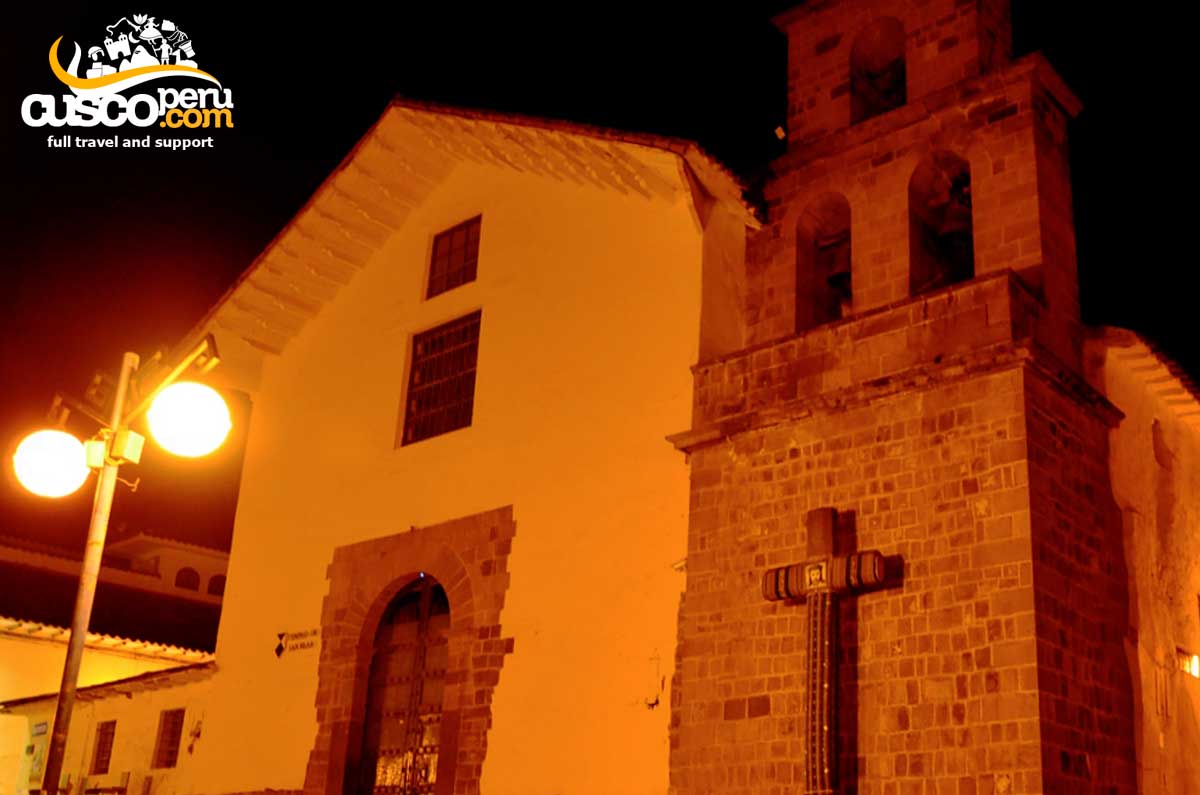
It was one of the first parishes in Cusco. Its origin is related to the 1559 ordinance issued by Viceroy Andrés Hurtado de Mendoza, Marquis of Cañete, and to the foundation or construction carried out around 1562 by Juan Polo de Ondegardo. The current church has a Latin cross floor plan and a simple façade with Plateresque characteristics.
The richness of this church lies in its important collection of paintings, its splendid main altar, and, most especially, its famous Baroque-style pulpit, carved from cedar wood and considered one of the finest examples of wood carving made in colonial America. This work dates from the last third of the 17th century and is attributed to Juan Tomás Tuyro Túpac.
The current temple was built after the earthquake of 1650, although it preserves the typical appearance of the indigenous parishes founded during the time of Viceroy Toledo.

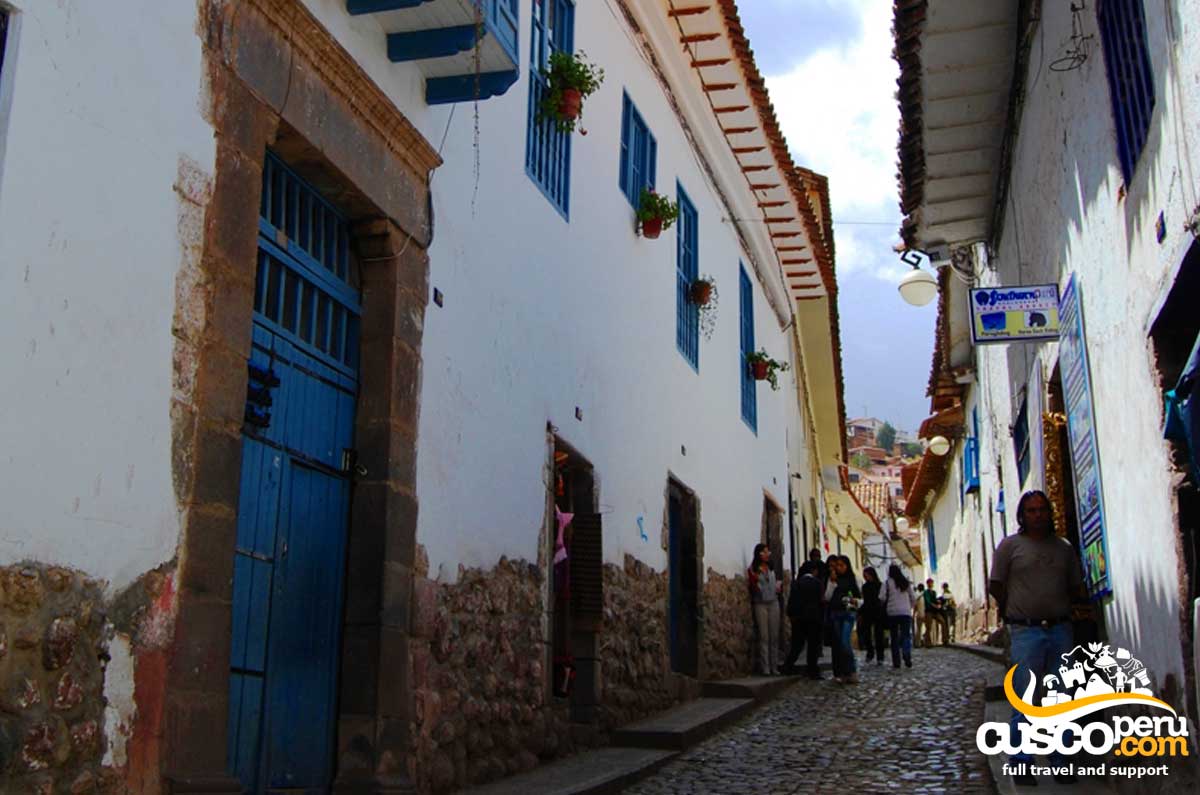
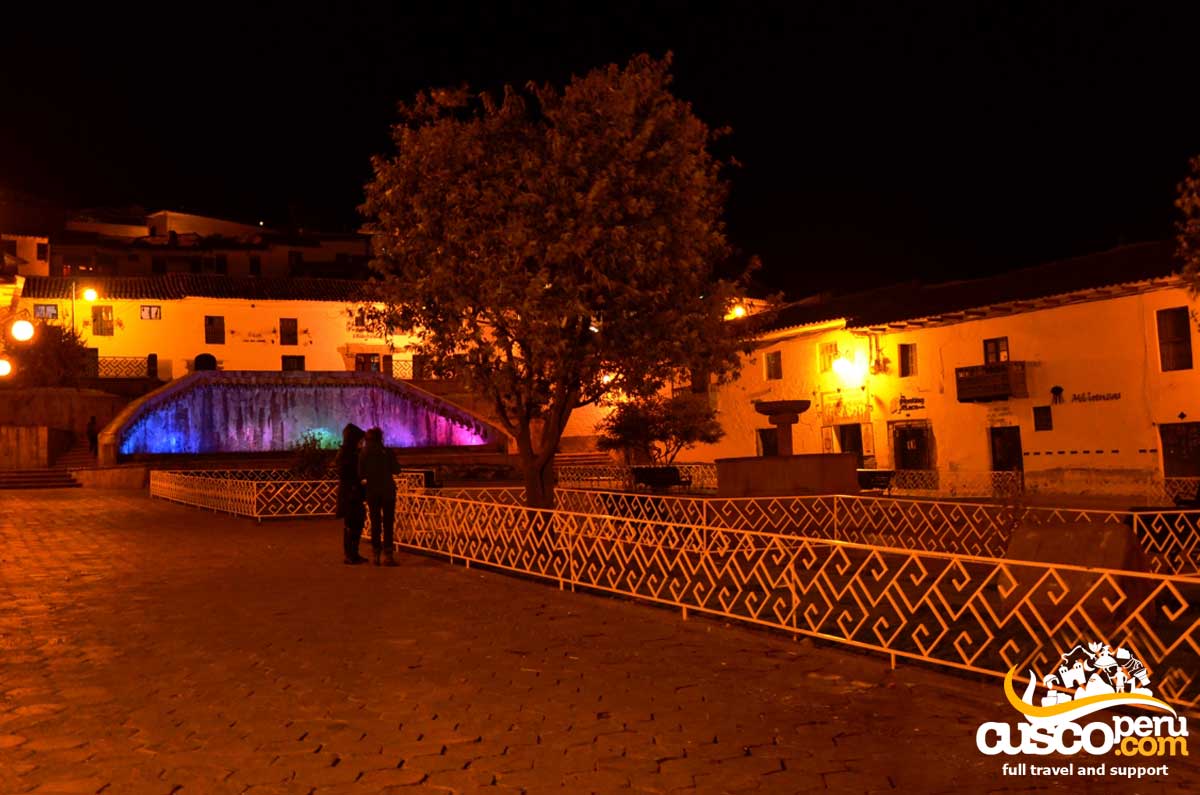
It is located in San Blas Square, in the traditional neighborhood of the same name, about a 10-minute walk from Cusco’s Main Square.
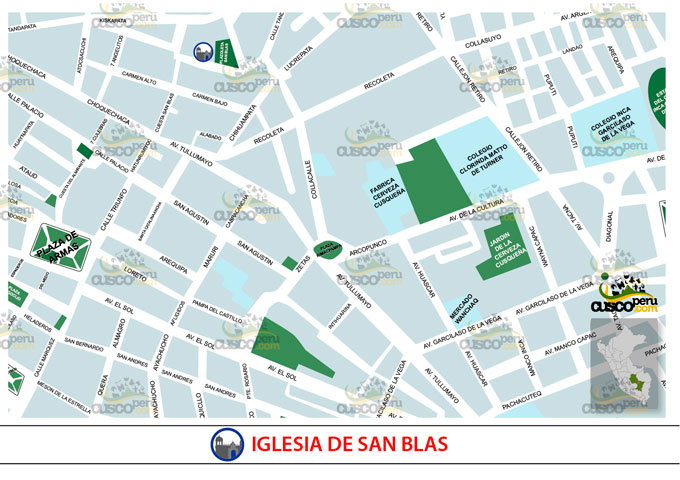
Its architecture is sober on the outside, yet contrasts with the ornamental richness of its interior, where Spanish influences blend with local native elements. The church is located in the traditional San Blas neighborhood, just a short distance from Cusco’s Main Square.
Structure: its design is simple, as is the case with several early parishes in Cusco. Among the materials used, stone and adobe stand out, both typical materials of the region that reflect the local architectural tradition.
Façade: the exterior façade is sober and modest, maintaining features of Andean Baroque style. One of its most distinctive elements is the balcony that served as an open chapel, from where ceremonies were held for those who could not enter the temple.
Interior: the main altar stands out as a masterpiece of colonial Cusco carpentry. It is carved in cedar and covered with gold leaf, featuring a highly elaborate Baroque style full of details and ornaments. In terms of ornamentation and art, the Church of San Blas has a valuable collection of paintings from the Cusco School, an artistic style that blends European Catholic iconography with indigenous influences.
Andean Baroque design: like many colonial churches in Cusco, the church’s design and decorative elements show indigenous influence, especially in the patterns and symbols used in the ornamentation.
Wood-carved pulpit
Its main attraction is the famous pulpit of San Blas, carved in cedar wood and attributed to Juan Tomás Tuyro Túpac. The work belongs to the second half of the 17th century and is considered one of the most remarkable pieces of colonial Cusco artistic carpentry.
At the top of the pulpit, visitors can appreciate the figure of Christ. The skill of the carver can be seen in the details of the human figures, especially in the facial expressions and the folds of the clothing.
Reference opening hours: Monday to Saturday, from 8:00 a.m. to 6:00 p.m.
Adult: S/ 15.00
Student: S/ 7.50
Note: Rates and opening hours may vary due to Masses, restorations, festivities, or internal regulations. It is recommended to verify the information before your visit.
Admission: tickets can be purchased individually or as part of the Religious Circuit Ticket, which includes religious sites such as the Cathedral, the Temple of the Triumph, the Temple of the Holy Family, the Temple of San Blas, the Temple of San Cristóbal, and the Archbishop’s Museum.
The church and convent of La Merced were founded between 1535 and 1536 by Father Sebastián de Trujillo Castañeda. Around 1538, Francisco Pizarro donated the Limpipata estate to the Mercedarians, adjacent to the ancient Cusipata Square.
During the 16th century, the Mercedarian complex continued to grow until it became one of the most important religious spaces in colonial Cusco.
After the earthquake of 1650, the first temple was severely damaged and a period of reconstruction began. The current complex largely corresponds to the works carried out during the second half of the 17th century.
The convent originally had four cloisters; today, two convent cloisters remain, and one of them has become the current La Merced school. The church has a basilica floor plan with three naves, covered by brick vaults, and a dome over the transept.
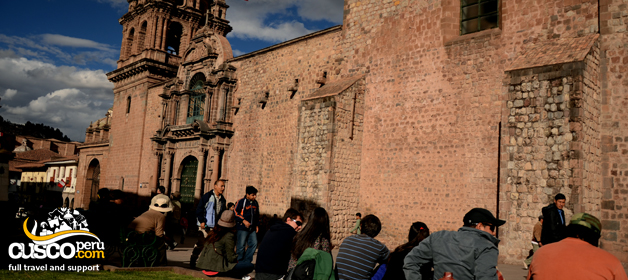
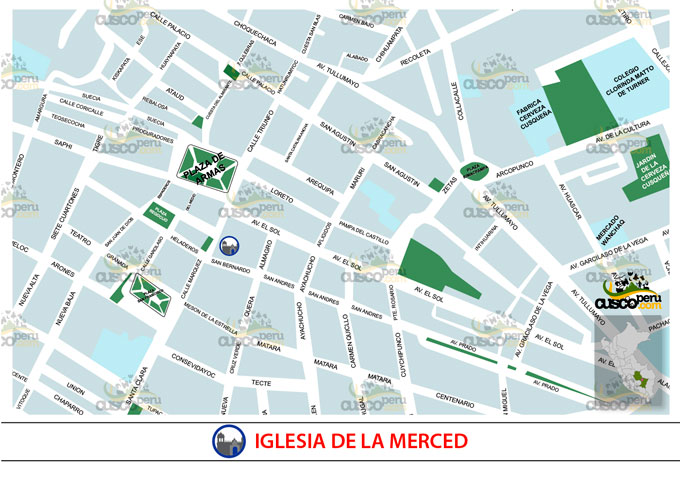
It is located in front of Espinar Square, one block from Cusco’s Main Square.
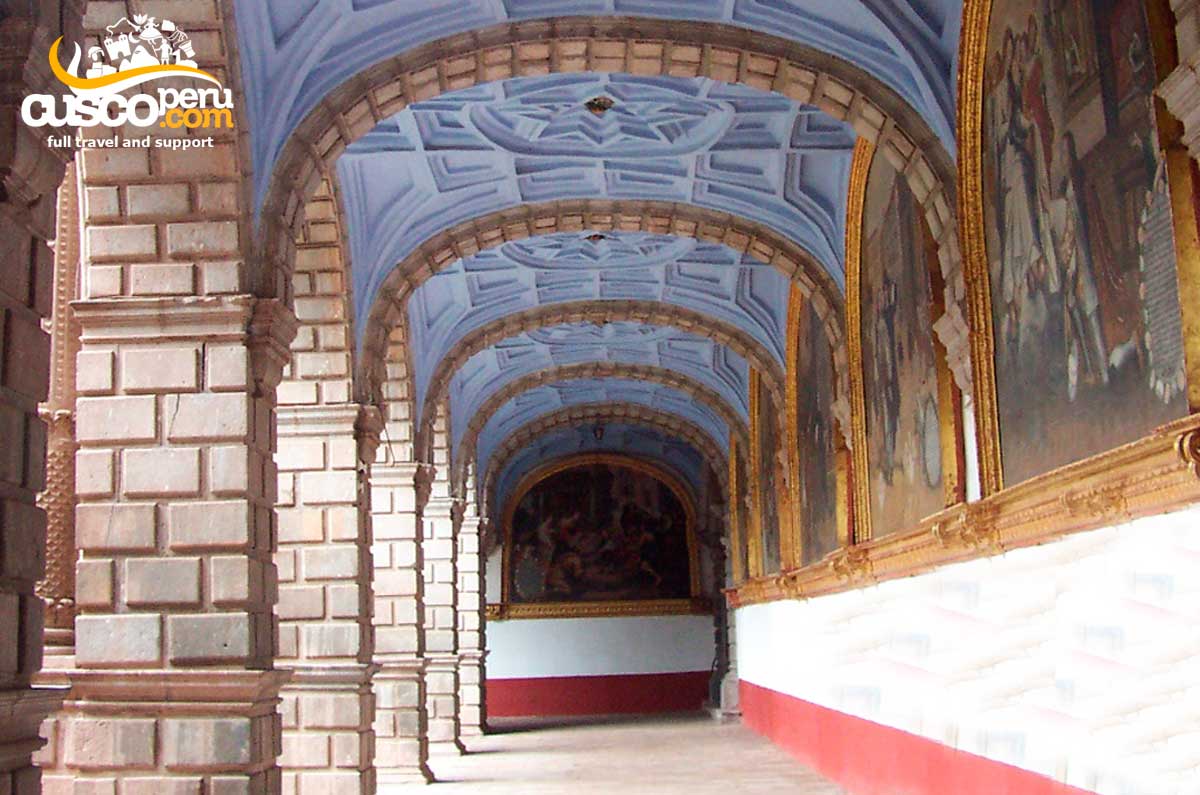
Inside the cloister, visitors can find a wide variety of paintings and mural fragments from the original church of La Merced. These works represent the life of Saint Peter Nolasco, founder of the Order of Mercy, and were painted by master Ignacio Chacón. Also noteworthy are relics of the Cusco School, colonial furniture, a tabernacle, a candlestick, and a silver shrine. One of the convent’s greatest treasures is the Mercedarian monstrance, a work of colonial metalwork weighing approximately 22 kilos and standing over one meter high, adorned with gold, diamonds, pearls, rubies, and emeralds.
The basilica stands out for its choir stalls, colonial paintings, polychrome carvings, and beautiful Baroque cloister. The patroness of the church is the Virgin Mary of Mercy.

Museum opening hours:
Morning shift: 8:00 a.m. to 12:30 p.m. - Afternoon shift: 2:00 p.m. to 5:30 p.m.
Museum admission fee: S/. 6.00
Church opening hours:
Monday to Saturday: from 7:00 a.m. to 7:30 p.m. and from 5:00 p.m. to 8:00 p.m.
Sundays: from 6:00 a.m. to 1:00 p.m. and from 6:00 p.m. to 8:00 p.m.
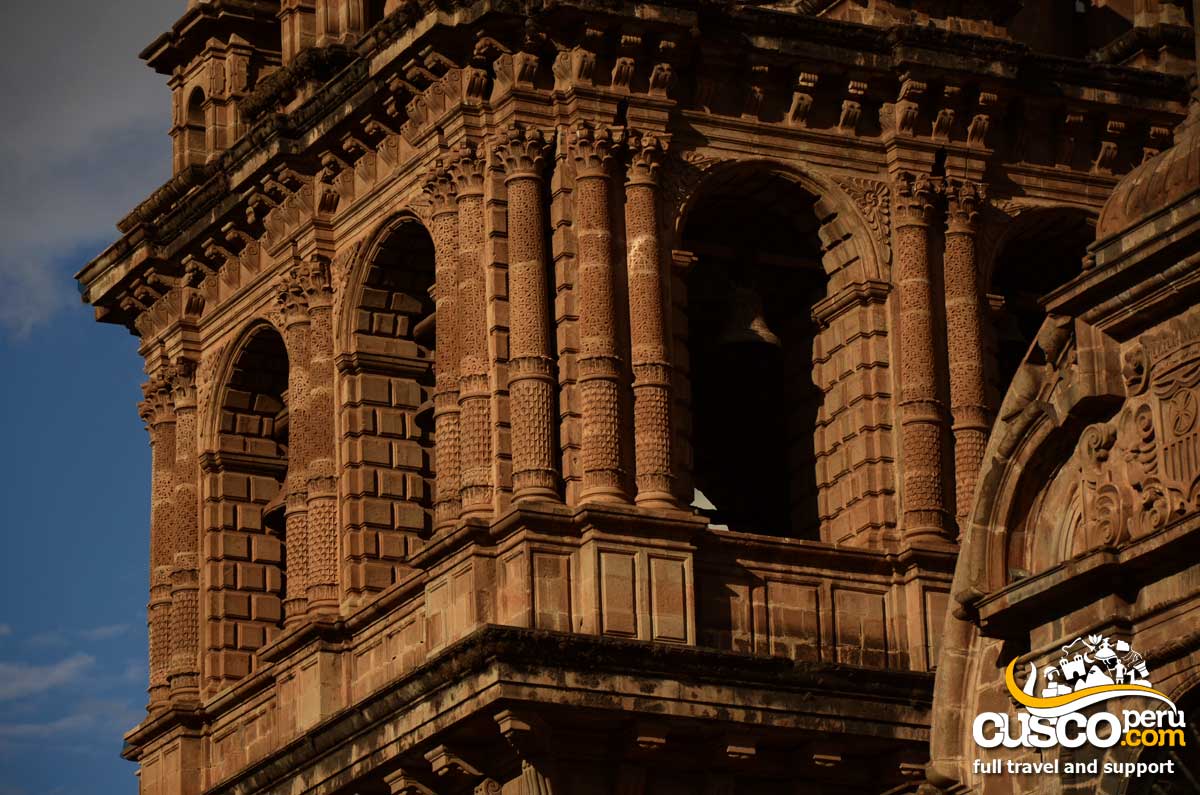
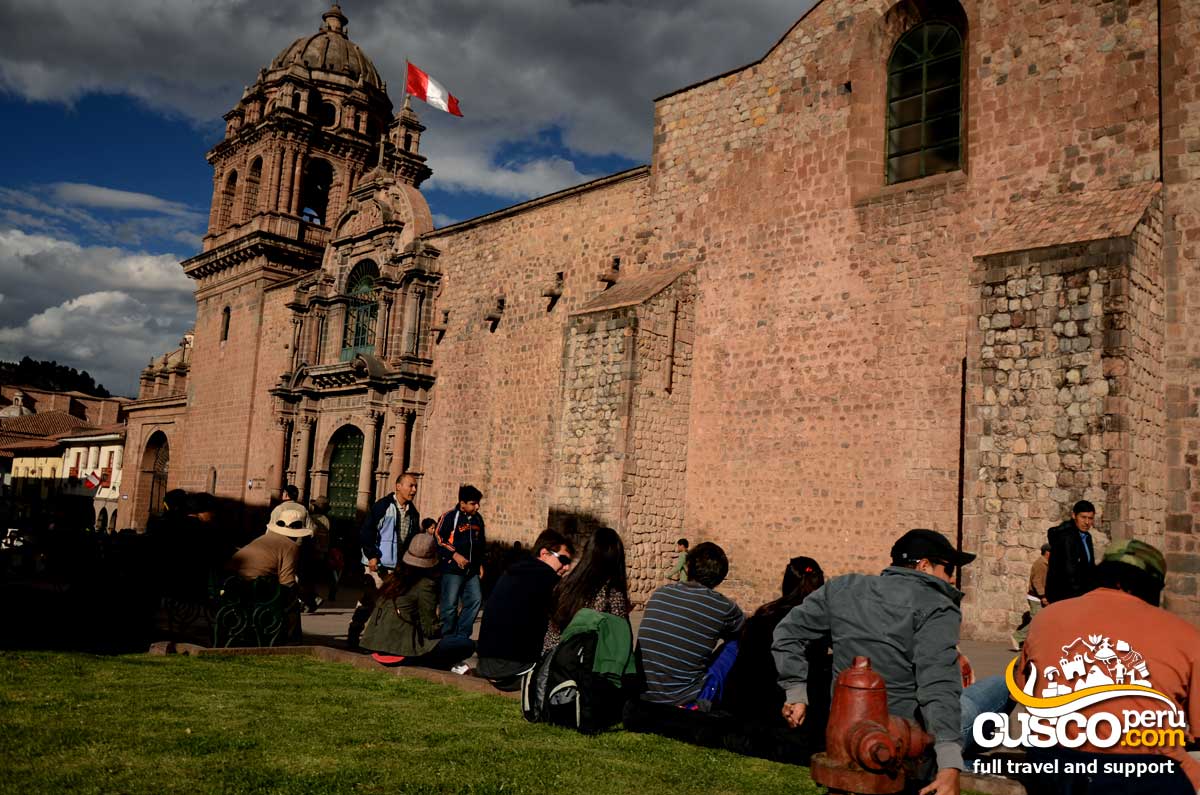
The Society of Jesus is a religious order founded in 1540 by Saint Ignatius of Loyola, whose main purpose was evangelization and education. In Cusco, the Jesuits played an important role in evangelization, education, and cultural life during the colonial period.
The first foundation of the church took place on July 17, 1571, by order of Viceroy Francisco de Toledo and at the initiative of Father Jerónimo Ruiz de Portillo. Construction began that same year, according to plans attributed to the religious architect Francisco Becerra.
In 1651, construction began on the Chapel of Our Lady of Loreto, also known as the Chapel of the Indigenous People, attached to the Church of the Society of Jesus. The work was completed three years later.
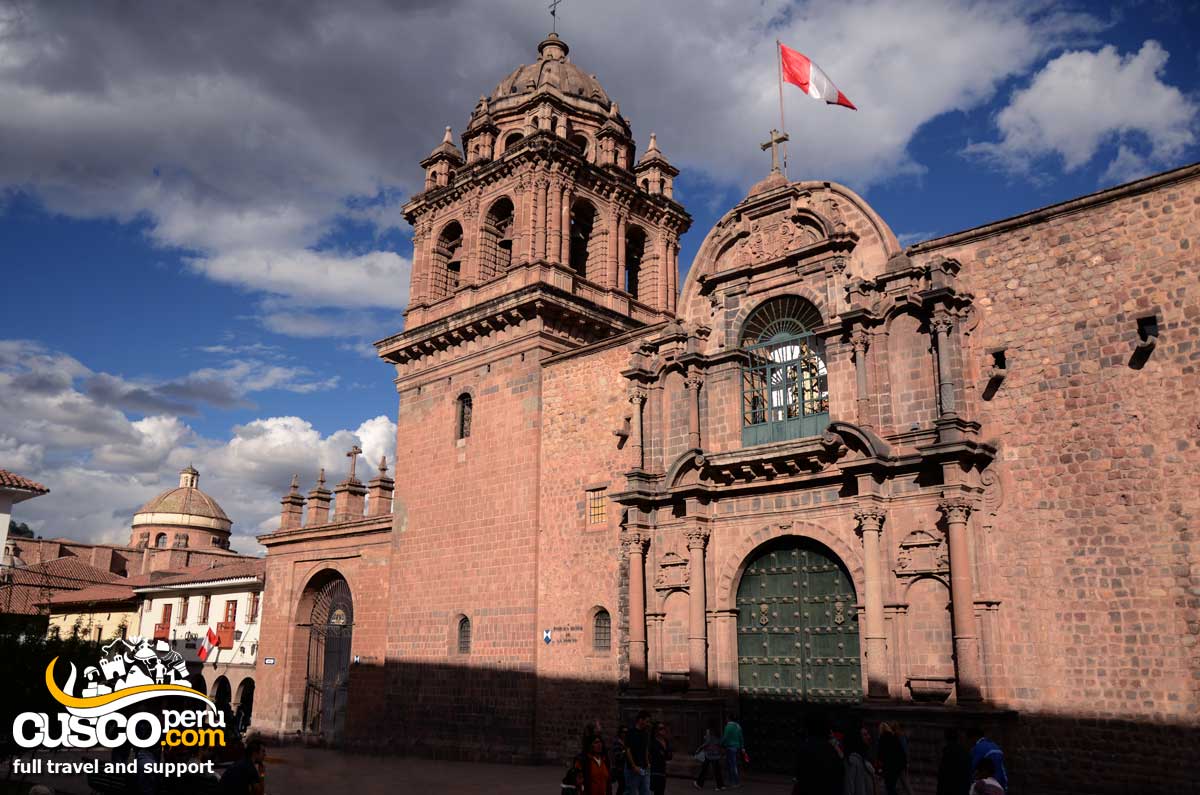
The church began to be built in the 16th century, but the temple that can be seen today mainly corresponds to the reconstruction carried out after the earthquake of 1650 and completed in 1668. Its architecture stands out for the symmetry of its façade, the ornamental richness of colonial Baroque style, and the integration of elements typical of viceregal Cusco.

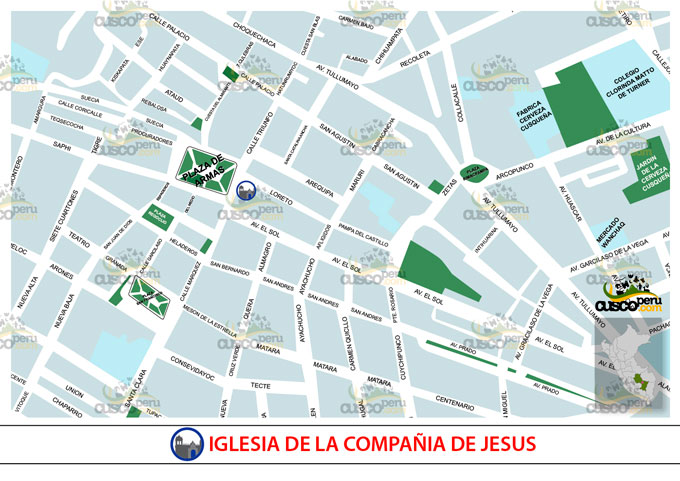
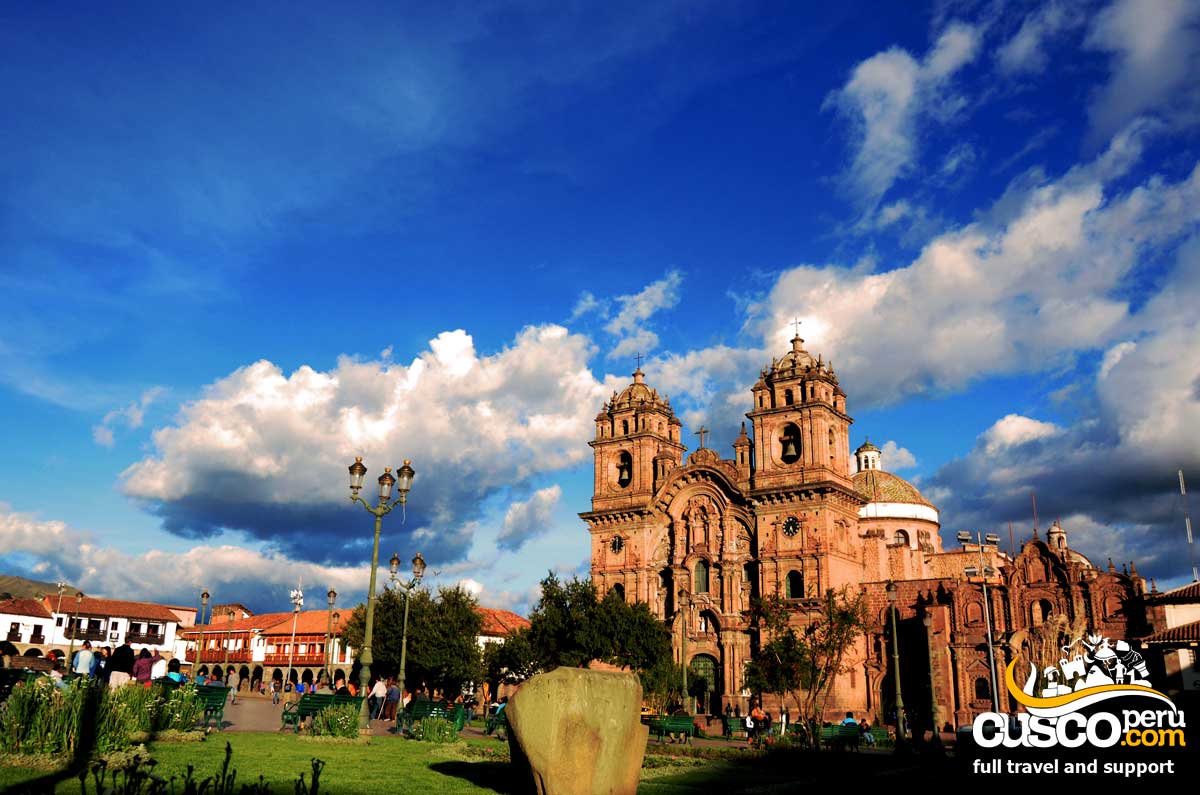
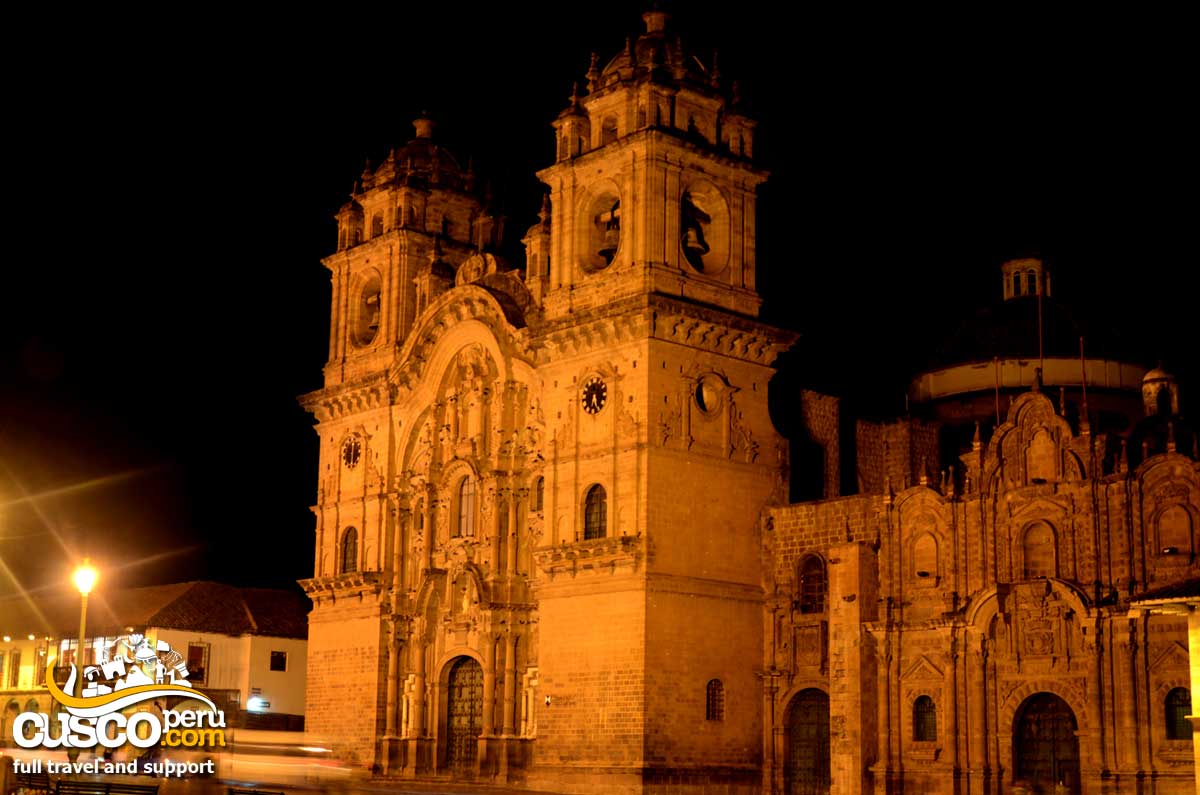
It is located in Cusco’s Main Square. Upon arriving at the square, it stands out next to the Cathedral for its imposing Baroque façade.
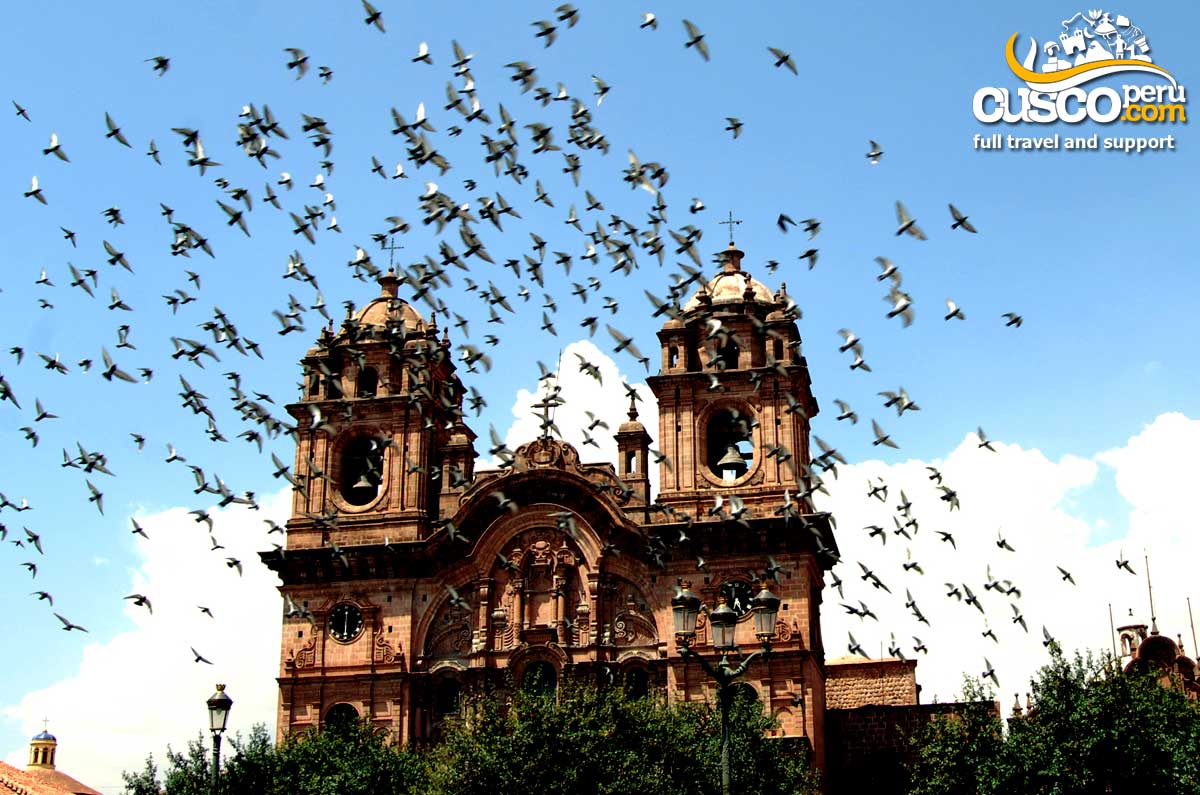
The temple is made up of two side chapels and two bell towers. It has a single nave supported by columns. The entire building is made of andesite stone and pink basalt. The façade, composed of windows, a balcony, openings, and niches, is a fine example of colonial Baroque art. On both sides of the church are two side chapels: the Chapel of the Indigenous People, also known as the Chapel of the Virgin of Loreto, and the Chapel of Saint Ignatius. Its solid yet richly decorated structure has made it one of the most beautiful temples in the city of Cusco.
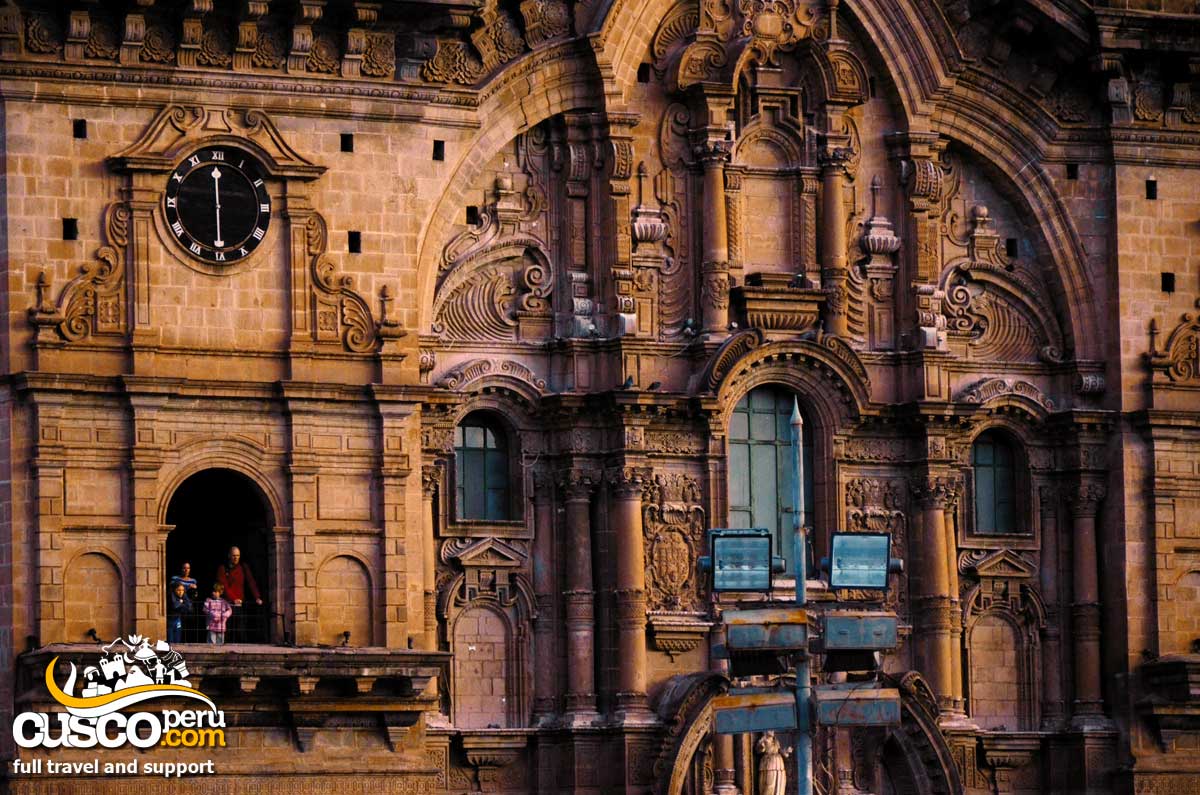
The façade is considered one of the finest examples of colonial Baroque architecture in Cusco. It consists of two cubic towers that support the bell towers. In the center is a main façade with decoration similar to that found in other churches in the city. The upper section features cornices and central windows above a balcony without a railing. The niches, openings, and pilasters stand out and give the façade visual strength. The side towers have clocks. At the top and center, a cross stands out as a symbol of Christianity.
Painting is represented by canvases created by artists of the famous Cusco School, mainly during the 17th century. The church contains canvases and sculptures by artists such as Cristo de Burgos, Marcos Zapata, and Diego de la Puente. One of the most notable works is the painting of the marriage of Martín de Loyola and Beatriz Ñusta, a piece linked to Inca lineage and the early colonial history of Cusco.
The main altar is made of cedar and covered with fine sheets of gold. It is divided into three sections, where the set of Solomonic columns stands out. Carved in wood and gilded, it corresponds to the interior works completed around 1670, with the participation of artists such as Cristóbal Clemente.
In the upper central section, the sculptural figure of the Immaculate Conception stands out. Several ornaments are also notable, including canvases and decorations with precious stones.
It is also worth mentioning the canvases that depict the life of the founder of the order, Saint Ignatius of Loyola, painted by Marcos Zapata and his assistant Cipriano Gutiérrez.
Monday to Friday: from 8:00 a.m. to 11:00 a.m. and from 1:00 p.m. to 5:00 p.m.
Sundays: from 9:00 a.m. to 10:30 a.m. and from 1:00 p.m. to 5:00 p.m.
Opening hours may vary due to Masses, festivities, or internal regulations. It is recommended to verify the current information before your visit.
Cost: admission is included with the Religious Circuit Ticket, or you may enter only this monument with the following rates:
Partial adult ticket: S/ 10.00 - Partial student ticket: S/ 5.00
In this church is found the Virgin of Belén, better known as the patroness of Cusco. According to tradition, the image of the Virgin of Belén was found by fishermen in Callao and sent to Cusco, where it came to occupy a central place in the former parish of Los Reyes. It is one of the richest religious images in jewels, as its processional platform contains an abundant amount of silver and is considered one of the most beautiful and refined works of colonial metalwork.
The church has beautiful altarpieces that have been admirably restored and preserved. The temple stands out for the care of its interiors, the preservation of its altarpieces, and the ornamental richness of its main altar. Its interior preserves a solemn atmosphere, with altarpieces, canvases, and decorative elements of great religious and artistic value.
During the Viceroyalty of Peru, in 1559, the parish of indigenous people known as “Los Reyes” was founded, the oldest of its kind in the city. Shortly afterward, according to tradition, two fishermen from the port of Callao, in Lima, found a box floating in the sea, inside which was the image of the Virgin of Belén, accompanied by a note indicating that it should be taken to the city of Cusco. From then on, the image occupied the main place in the parish, which became known as the “Church of Belén.”
After the earthquake of 1650, the temple was rebuilt following the plan prepared by Juan Tomás Tuyro Túpac. The work was almost completed by around 1696, and the tower and altar were finished in 1715, preserving the form that can still be seen today. Today, this church is one of the most beautiful in the city of Cusco. The Virgin of Belén participates every year in the Corpus Christi festivity.
The temple forms part of Cusco’s religious heritage and was declared Cultural Heritage of the Nation in 1972. As it is located within the city’s historic area, it also forms part of the heritage setting recognized by UNESCO in 1983.
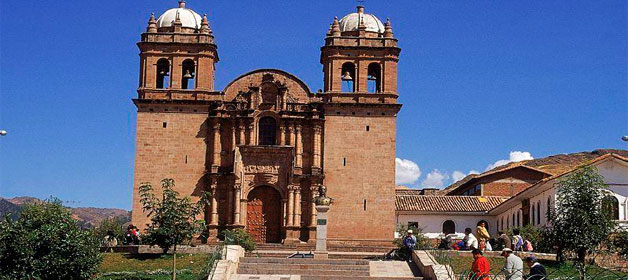
The temple of Belén was founded in 1559 as a “parish of indigenous people.” After the earthquake of 1650, it was rebuilt as a two-towered church with a façade of marked Plateresque style. It has a tall and wide entrance door, crowned by a semicircular arch, with doors typically studded with bronze nails, as seen in many churches and colonial mansions of the city. Above the main entrance, there is a large opening for light, also crowned by a semicircular arch.
Its interior features Baroque decoration, with altarpieces, sculptures, and canvases of religious themes. The main altar, covered with sheets of silver, stands out as the place where the image of the Virgin of Belén is venerated, popularly known as the “Mamacha Belén.” Its main effigy has a crown adorned with precious stones and gold. Some of the canvases that decorate its walls include “The Nativity,” “The Flight into Egypt,” and “The Child among the Doctors.”
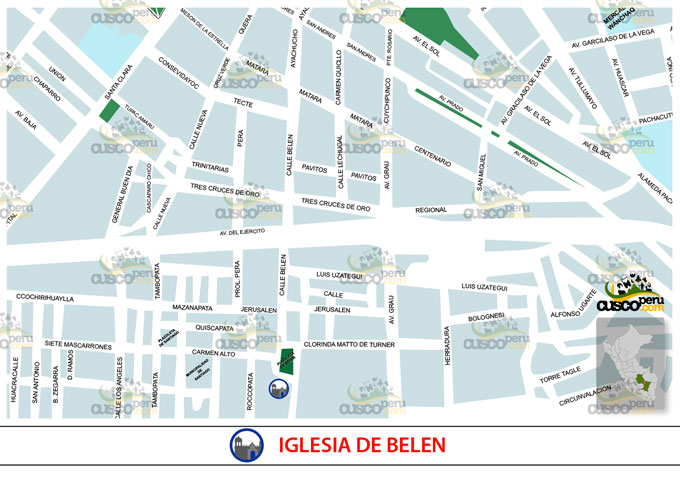
The Church of Belén is located in Belén Square, in the district of Santiago, within the monumental area of Cusco. From the Main Square, the taxi ride takes approximately 15 minutes. It can also be reached on foot from Ayacucho Street, in the historic center; the walk takes around 15 minutes.
The Church of Belén has a Latin cross floor plan and a single nave. Its façade, in mestizo Baroque style, is divided into three sections and flanked by two bell towers. The doorway stands out for its relief decoration, columns, niches, and figures of cherubs. Its door, crowned by a semicircular arch, is wide and tall.
The Church of Belén has Baroque decoration filled with sculptures, altarpieces, and canvases with Christian motifs. Its main altar, covered with silver sheets, is especially notable. The main effigy is the Virgin of Belén, known by her devotees as the “Mamacha Belén.” Her crown is adorned with precious stones and gold details.
The side niches feature canvases such as “The Archangel Gabriel” and “The Guardian Angel.” The church also has altarpieces dedicated to saints and virgins of Christianity, such as the “Virgin of the Milk,” “Saint Anthony of Padua,” “Saint Joseph,” and the “Adoration of the Three Wise Men.” Like many colonial churches, the temple preserves colonial canvases created by artists of the so-called Cusco School of Painting.

Admission is usually allowed during Mass hours. From Monday to Friday, Mass is held in the morning at 7:00 a.m. and in the afternoon at 6:00 p.m. Schedules may vary during Cusco festivities, so it is recommended to check the official updates from the Archdiocese of Cusco.
Tourist visits are usually allowed during Mass hours.

Happy passengers