This celebration takes place every year between July 15 and 18 in the province of Paucartambo, located in the department of Cusco. The festivity begins on the afternoon of July 15 with the traditional dance rehearsal or entrance of dances, and continues at night with a fireworks display. July 16 is the main day of the celebration, which starts very early with the “dawn mass,” followed by the “festive mass,” where the traditional chants of dancers such as the Qhapaq Qolla and Qhapaq Negro stand out.
Its origin dates back to the colonial period, when evangelizers brought devotion to the Virgin of Carmen to the region. Over time, local people incorporated elements of their own worldview, which is why the festival combines Mass, procession, music, masks, comparsas, and dances that represent characters from the Andean, colonial, and popular world.
According to tradition, the miraculous image was found by farmers on a bridge in the town, and since then it became the most venerated symbol of the area. Today, the devotion in Paucartambo is practiced as an expression of gratitude and protection toward the Virgin of Carmen, considered in local tradition as the patroness of mestizos and protector of travelers.
Over the years, the festivity has transcended its local setting, becoming one of the most representative religious and folkloric celebrations of the southern Peruvian Andes. In 2006, this festivity was declared Cultural Heritage of the Nation for its religious, festive, and cultural value.
The meaning of “Mamacha” is an Andean expression of affection and respect that in Spanish means “dear little mother.” For this reason, the Virgin of Carmen of Paucartambo is affectionately known as “Mamacha Carmen” and is considered the patroness and lifelong mayor of the province.
The celebrations begin on the afternoon of July 15 with the traditional dance rehearsal and a fireworks display at night.
July 16 is the main day of the festivity. The celebrations begin very early with the “dawn mass.” Then, around 10:00 a.m., the “festive mass” takes place, accompanied by songs from the Qollas and the Qhapaq Negros. Around midday, and after the dance parade, the traditional “once” is shared among the founders, dancers, and musicians of all the comparsas. The day ends with the procession of the Virgin.
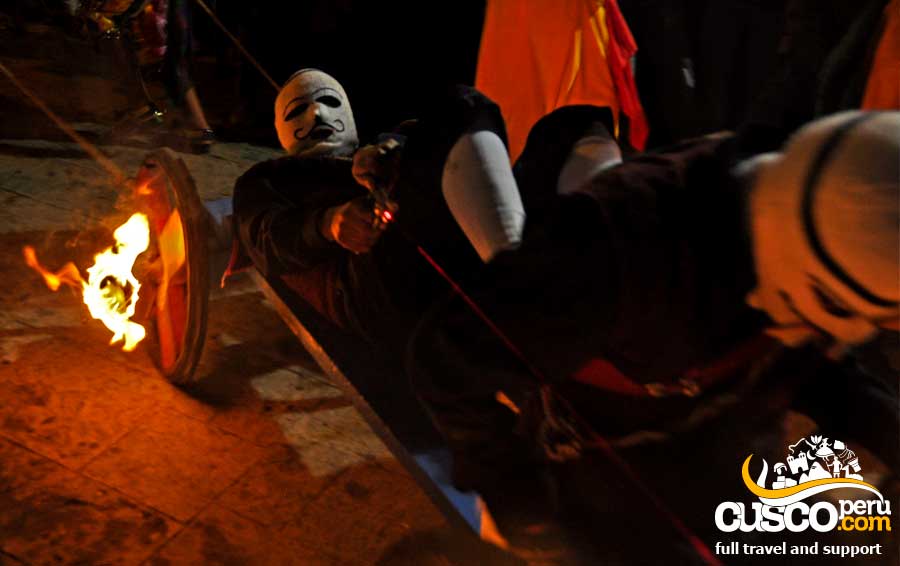
July 17 is known as the day of the “Blessing” and the “Guerrilla.” After Mass, the dancers and representatives of nearby communities go to the town cemetery to visit deceased dancers. In the afternoon, after the procession, the guerrilla between the “Qollas” and the “Antis” takes place, followed finally by the “Qhaswa,” or general celebration.
July 18 is the farewell day, with a celebration known as the “Kacharpari.” A ceremony is also held to change the Virgin’s clothing, and the festivity ends with the priest’s final blessing for everyone present.
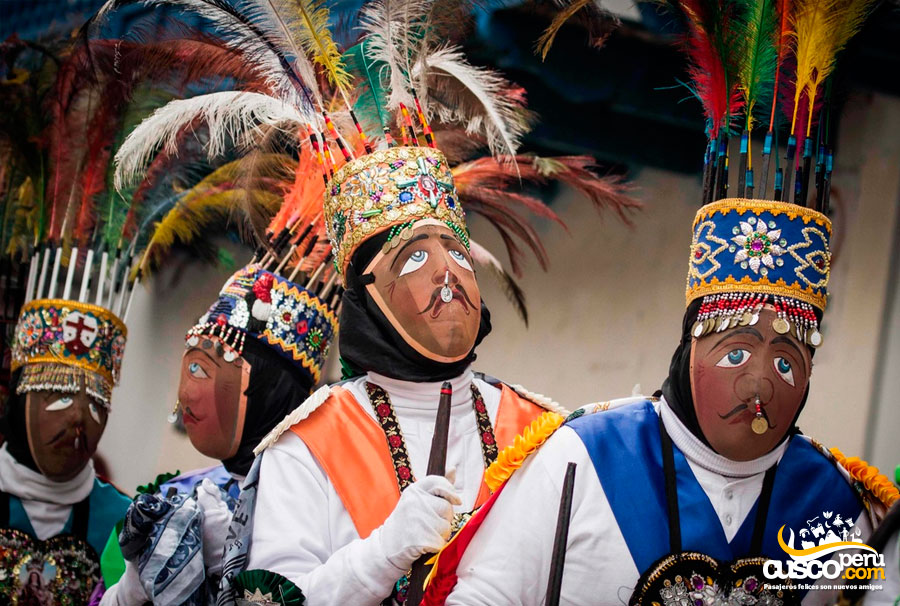
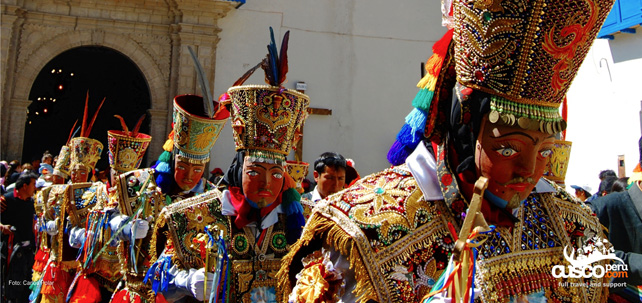
“Danzaq” or “Tusuq” is a dance whose characters are known within the festive representation as seductive, conquering, and mischievous figures. They are one of the best-dressed groups in the festivity because of their colorful costumes and elegant dancing. They cover their heads with chucos, wear short ponchos embroidered with ornaments, and blue pants divided into stripes with the colors of the rainbow. Without a doubt, it is one of the most representative dances of the province of Paucartambo.
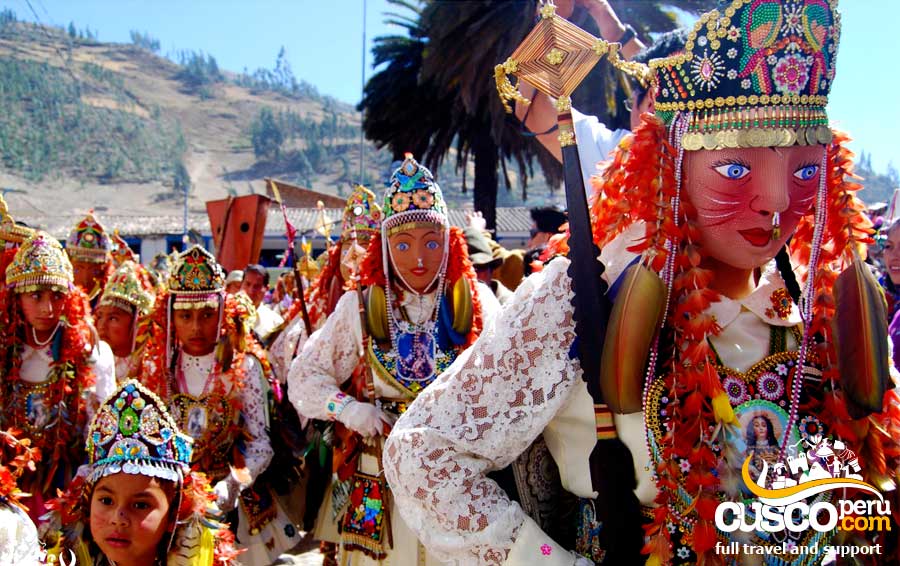
This dance represents the women of the jungle area of Kosñipata, but it has a clear mestizo influence through its clothing and music. Their costume includes an Amazonian-style crown with long hair, a chest ornament representing the Virgin, two “ch’uspas” used to carry wayruros, an appropriate dress, a chonta, and the sinehon.
This dance, whose name in Spanish means “rich Black man,” recalls the period of servitude and slavery of the Black population, which is why the dancers wear chains as a sign of submission. Today, the Black dancers of Paucartambo consider themselves servants of the Virgin of Carmen, to whom they offer their dance and traditional chants.
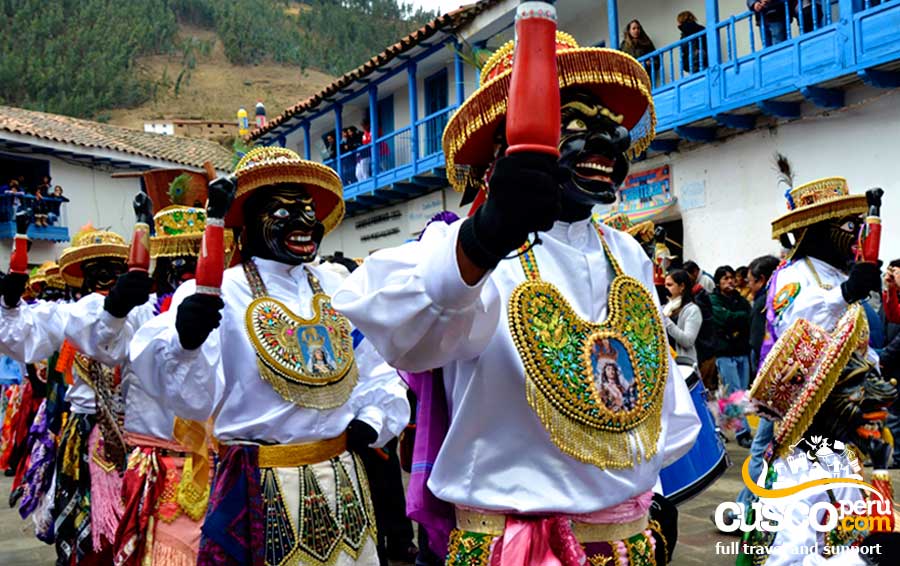
This is a representative dance of the inhabitants of Qollasuyu, the southern region of the ancient Tahuantinsuyo. Its origin dates back to colonial times, when Qollavino merchants, meaning Qolla or highland traders, arrived in Paucartambo. The dance is rooted in faith toward “Mamacha Carmen,” to whom, during the festival, they sing, dance, and accompany in the guerrilla. The dancers wear beautiful, decorated monteras; the waq’ollo and lliclla are made with vicuña wool, and the q’epi usually carries symbolic elements linked to trade and the highland world.
Paucartambo is located at an altitude of 3,017 meters above sea level and at a distance of between 109 and 110 km from Cusco. There are two ways to get to Paucartambo. The first is by bus or shared van departing from the city of Cusco. Under normal conditions, the trip to Paucartambo takes approximately 2 hours and 30 minutes by road; however, during July 15 and 16, the main dates of the Virgin of Carmen festivity, the trip may take between 4 and 5 hours due to the large number of people traveling to the district.
The second option is through a travel agency, with the tour you would like to take. At CuscoPeru.com, we can help you organize your visit to Paucartambo with our travel agents, who will be happy to assist you.
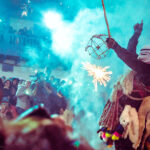
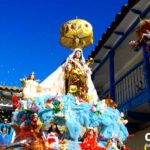
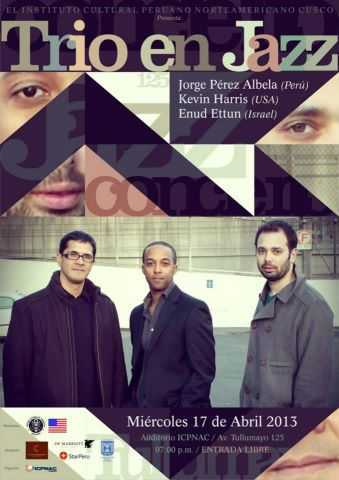
On April 17, 2013, the presentation of "TRIO IN JAZZ" took place in the auditorium of the Instituto Cultural Peruano Norte Americano Cusco, thanks to the sponsorship of the Embassy of the United States of America and the sponsorship of the Embassy of Israel in Peru, with the support of the JW Marriot Hotel, Star Peru airlines and Cusco Restaurants. The trio, composed of Kevin Harris, American musician on the piano, Enud Ettun, Israeli double bass player, and our compatriot Jorge Perez Albela, drummer, captivated a large audience with eighty minutes of pure, limpid and transparent music, transporting the audience to a higher and sublime state through the soft chords of their melodies.
The famous phrase that "where the words end, the music begins" became tangible in this presentation, especially because the TRÍO EN JAZZ interpreted the pieces with a sensitivity and style that evidenced the commitment and passion of the musicians with their art.
The performance was not limited only to the music, since after some magnificent interventions with the Peruvian cajón, Jorge Pérez Albela involved the audience with a beautiful melody of his authorship, entitled "Esperanza".
In addition to this, the trio also delighted the audience with a beautiful Cusquenian melody and a blues dedicated to Aldo Arteaga. To culminate the presentation, they performed "Las Américas", a song composed by Kevin Harris.
The trio's wonderful performance was rewarded with a prolonged and enthusiastic ovation from the audience, who witnessed the magnificent interpretation and generosity of the musicians throughout the event.
The project called "Recovery of the Viceroyalty Monument of the San Juan Bautista de Huayllabamba Religious Complex" includes structural improvements to the monument and architectural elements, as well as the recovery and conservation of works of art.
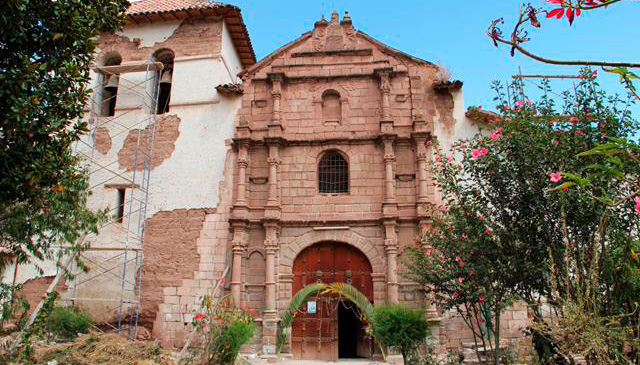
According to Alberto Delgado, representative of the Cusco's Culture Office, the funds for this project come from the economic resources obtained from the entrance fees to archeological sites such as Machu Picchu.
It is estimated that the project will require an investment of 3 million 677 thousand 657 new soles, of which more than one million soles will be allocated this year.
Santurantikuy, one of Cusco's most traditional and beloved fairs, is a true visual and cultural feast that marks the Christmas season in the city. Held every December 24 in the Plaza de Armas, this colorful fair is a magical encounter where crafts, culture and traditions come together to create a unique experience.
The origins of Santurantikuy date back to colonial times, when local people would come to the city center to purchase nativity scene figurines and Christmas decorations. Today, the fair has evolved into an event that goes beyond buying and selling items. It is an opportunity for local artisans to showcase their talent and creativity, exhibiting a wide variety of handmade products, from nativity figurines to textiles, ceramics and jewelry.
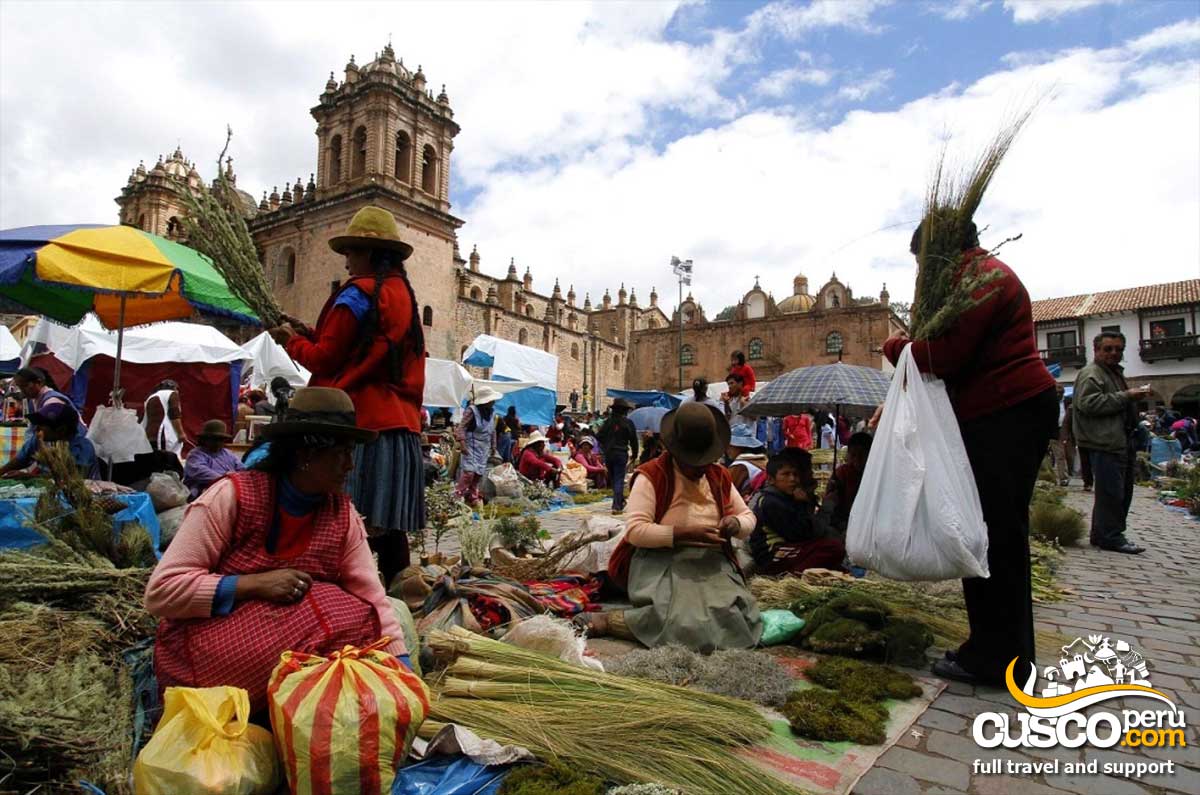
The festive atmosphere is completed with musical performances and traditional dances that fill the square with joy and energy. Visitors can enjoy the music and color while exploring the stalls and immersing themselves in Cusco's unique Christmas atmosphere.
Santurantikuy is much more than a craft fair. It is a celebration of Cusco's cultural identity and a reminder of the importance of keeping traditions alive. It is an event that brings the community together and attracts tourists from all over, giving them the opportunity to learn about and appreciate the rich cultural heritage of the region.
If you are lucky enough to be in Cusco during the Christmas season, don't miss the opportunity to visit Santurantikuy. Immerse yourself in the magic of this enchanting fair, where tradition and creativity come together in a feast for the senses and the spirit.
Do not forget your documents, as they are essential for your trip, such as your passport, and check whether you need a visa depending on your country of origin. We also recommend carrying a copy of your important documents and travel insurance.
The Inca Trail to Machu Picchu is a demanding route, but most travelers, nature lovers, and adventure seekers truly enjoy it. It is not an easy hike, especially for those who are not used to regular exercise or physical effort. In some sections, the Inca Trail exceeds 4,000 meters above sea level, so certain precautions should be taken.
The essential documents for your trip are your passport, identity document, and especially the document used to make the tour reservation.
The luggage you bring will depend on how long you stay in Cusco. In addition to this luggage, it is recommended to carry a small bag or backpack so you can bring your belongings with you each day.
In your daypack, you can carry the basic items you will need during the day, such as your identity documents, cash in Peruvian soles, personal hygiene items if necessary, water, and other essentials.
The size of the backpack may vary, but ideally it should be between 20 and 30 L, small and lightweight, to make your excursions more comfortable.
The porter bag is the bag where each traveler’s belongings are carried, including everything needed for the 4-day Inca Trail. This bag must weigh a maximum of 7 kg. These bags are carried by the porters throughout the entire route.
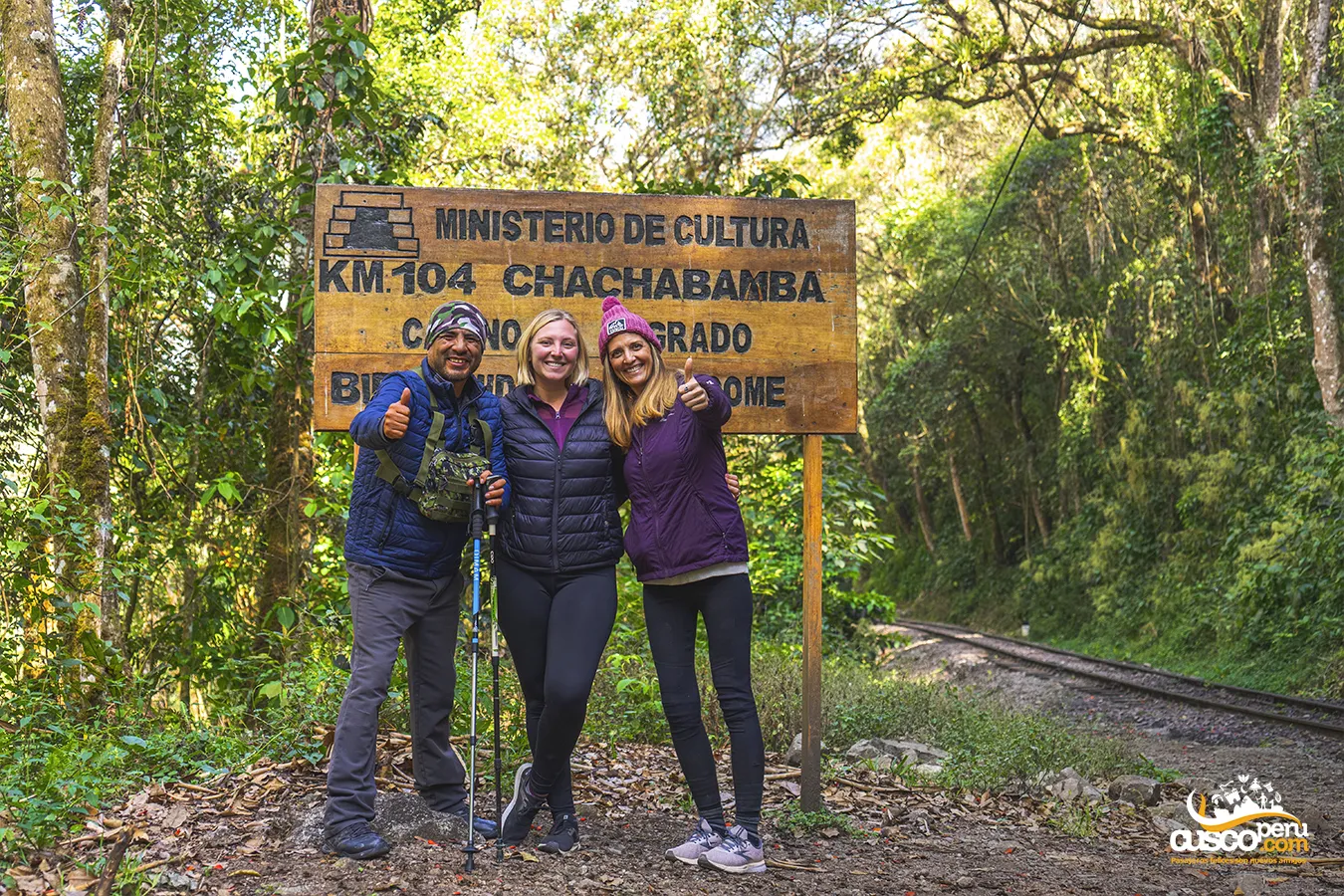
Choosing the right clothing to visit Machu Picchu is key to enjoying the experience without discomfort. The weather can change in just a few minutes, which is why it is recommended to bring lightweight, waterproof, and quick-drying clothing, as well as comfortable footwear with good grip. Dressing in layers will allow you to easily adapt to the altitude, the sun, and the Andean wind.
No matter how many days you will be hiking, the truth is that you will move from one altitude to another, which means the weather will change as you advance along the route. For this reason, the most convenient option is to bring comfortable clothing in small quantities.
For the first layer, it is recommended to wear leggings or pants, a T-shirt, and thermal or trekking socks to stay warm.
For the second layer, it is recommended to bring a warm jacket, preferably lightweight trekking pants, and waterproof clothing. There may be drizzle along the trail, and since this is very common, walking while wet will be uncomfortable and may cause respiratory discomfort.
Wide-brimmed hats are important because, at higher altitudes, solar radiation is more intense and UV rays are stronger. Pair this hat with good sunscreen.
Make sure to wear suitable clothing to visit Machu Picchu, as the weather may vary because the Inca citadel is located in the high jungle, which makes the climate warm and humid.
The footwear needed for this hike is trekking shoes with good grip that have already been broken in.
Some necessary accessories include a sleeping bag and a small but warm blanket for the nights, as they can be very cold.
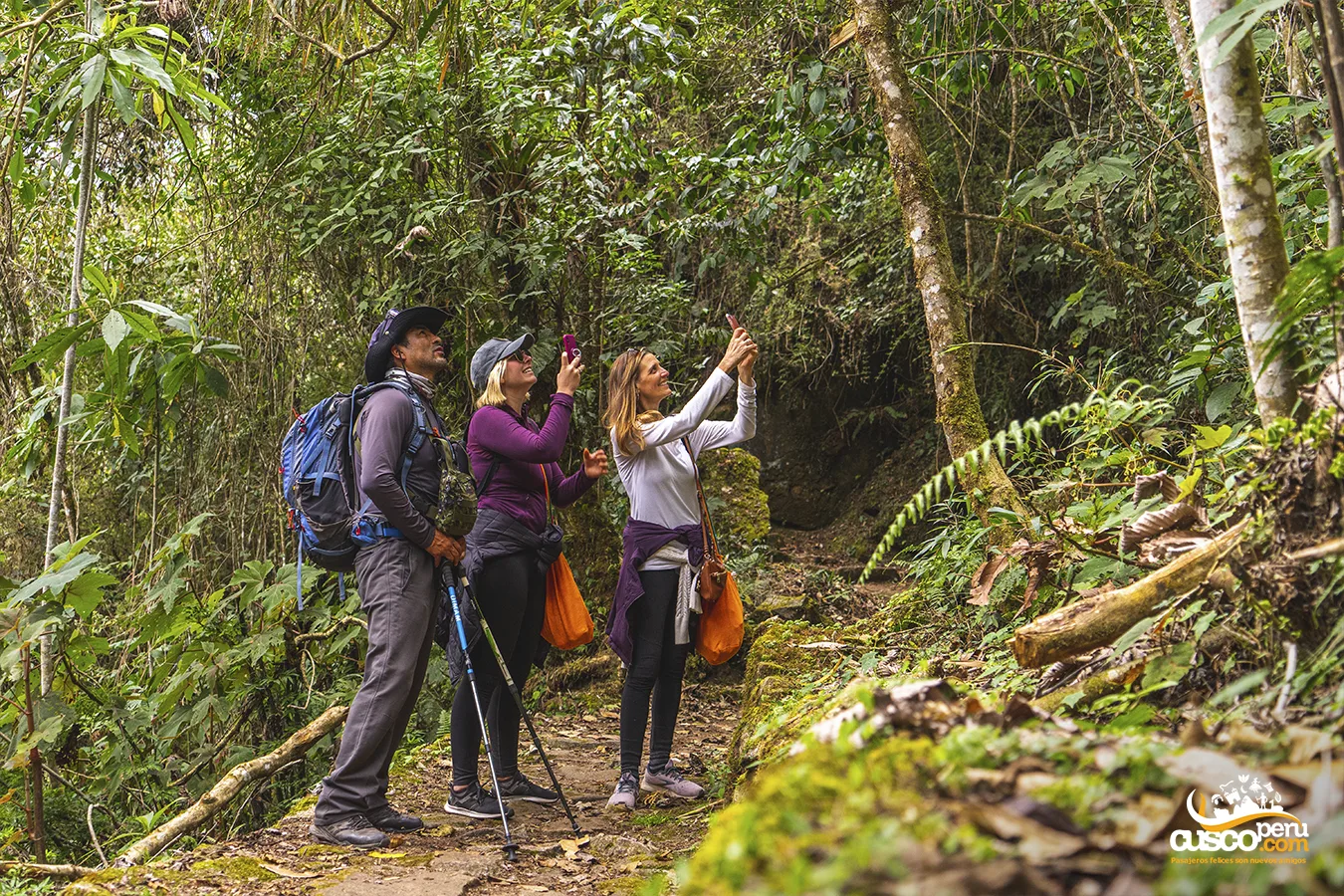
Camping equipment is usually provided by the agency with which you book the tour. There will be strategic stops for resting, and you will also have a tent for two people at each campsite. If you prefer to have a tent just for yourself, this may have an additional cost.
In the case of the sleeping bag, each passenger is responsible for bringing their own. In other words, each traveler must bring a sleeping bag for this 4-day route.
This mat is made of foam or inflatable material and is placed between the sleeping bag and the ground inside the tent. Many campsites are located at high altitude, and the ground is usually cold, hard, and damp, even during the dry season. The mat protects against moisture and improves sleep quality.
Sun protection is necessary for this trek because UV rays are stronger at higher altitudes. For this reason, bringing sunscreen and a hat is essential. Insect repellent is also necessary, especially in Machu Picchu and the jungle areas where mosquitoes are more concentrated.
Considering that you will be away from home for 4 days, the necessary items for this trek include:
As you already know, during the Inca Trail you will go above 4,000 meters above sea level. If you come from a country that is almost at sea level, you should take the following precautions:
Technology is especially necessary for these excursions, where there is no electricity.
On this journey, you will see plenty of nature and unique landscapes, ideal for photographing scenery, sunrises, and archaeological sites.
A camera. With a camera, you can capture the unique landscapes of the Inca Trail, unforgettable sunrises, and its history in high quality.

There are not many expenses along the trail, but it is always necessary to carry cash in Peruvian soles and U.S. dollars. Regarding tips, there is usually a moment set aside to thank the support team on the second-to-last day of the hike, when a tip is given. The amount may vary depending on the agency, the group, and the duration of the route.
Some extras that travelers are recommended to bring include water and snacks such as fresh fruit, candies, and chocolate, which are good for recovering energy.
Cusco is mainly characterized by two seasons: the dry season and the rainy season. Some differences between these seasons are the following:
| Dry season (April–October) | Rainy season (November–March) |
| Considered the best time to travel to Cusco and Machu Picchu, especially for hikes and outdoor activities. The weather is stable and dry, with mostly clear skies. Nights are cold, especially in June and July. It is necessary to book several months in advance. | An attractive option for those looking for fewer tourists, green landscapes, and lower prices. Rain is frequent, especially between January and February, although the Inca Trail route usually closes in February. However, hotels and some tours may offer lower prices. The landscapes are greener and more vibrant, ideal for nature lovers. |
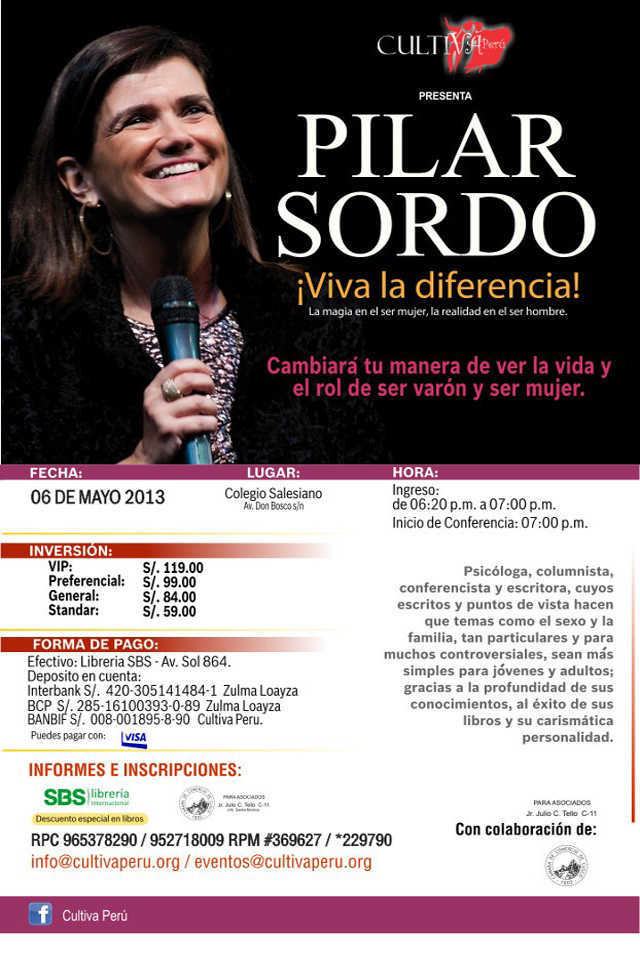
Psychologist, columnist, lecturer and writer. This conference will change your way of seeing life and the role of being a man and being a woman.
PILAR SORDO IS ALREADY IN PERU!!! what are you waiting for, you can't miss this opportunity, tickets on sale at SBS bookstore.
VIP: S./ 119.00
General: S./ 84.00
Standar: S./ 59.00
This content is updated every year with new events and specific date changes.
Welcoming the New Year in Cusco is a truly unique experience. This city offers celebrations for every taste, from massive street parties in the Plaza de Armas to Andean rituals high up in the mountains. The navel of the world also offers: camping under the stars, cultural tours, special dinners, and experiences that mark the beginning of a new cycle with intention and joy.
For travelers seeking a destination full of history, flavor, energy, and adventure, Cusco becomes the perfect place to start the year. Whether you are traveling with family, friends, or on your own, here you will find exciting, spiritual, festive, and nature-based alternatives to close the old year and welcome the new one with the right foot and good vibes.
On the night of December 31st, Cusco comes alive like few cities in the world. In the heart of the Historic Center, the Plaza de Armas fills with music, lights, and thousands of people ready to celebrate. As midnight approaches, tradition calls for at least one clockwise walk around the square, while the sky lights up with fireworks launched from different points across the city. It is one of the most unforgettable postcards for those who choose to spend the last night of the year here.
It is also worth noting that, over the years, the use of fireworks in the city has been increasingly regulated, especially to avoid disturbing people with autism, sensory hypersensitivity, or mental health conditions, as well as pets that can be affected by loud noises. This growing collective awareness aims to protect everyone’s well-being, promoting more inclusive and harmonious celebrations.
For those who prefer a more exclusive celebration, there are private parties on rooftops, in hotels, and nightclubs. Venues such as the halls of Palacio del Inca or Casa Andina Premium, as well as clubs like Chango Club, or Inkateam, offer themed parties with DJ, live shows, open bars, gourmet dinners, and privileged views of the illuminated city.
If your style leans more toward the alternative, you will also find spiritual or underground celebrations in creative spaces throughout the Sacred Valley or even within Cusco itself. These include retreats with temazcals, sound circles, despacho rituals, and more intimate celebrations connected to the earth and silence. Some events are announced on social media, while others spread by word of mouth among the traveler and local communities.
A magical and original way to say goodbye to the year is camping under the Andean sky. Near Cusco, there are several ideal spots for those seeking a peaceful night, a breathtaking sunrise, or a celebration more closely connected to nature.
One of the most popular spots is Sacsayhuamán, which offers privileged views over the entire city. Although it is only a 15-minute drive or a short hike from the center, its altitude of 12,139 feet above sea level makes it a perfect natural viewpoint. Bring warm clothing, as nighttime temperatures can drop to 37°F (3 °C).
Other nearby options include Tambomachay, Qenqo, and Puca Pucará, ideal for travelers who want to combine short hikes with tranquility. More adventurous visitors choose to camp in the Sacred Valley, in places like Pisac, Lamay, or Urubamba, where nature completely surrounds you.
Welcoming the New Year surrounded by living beings with soul and spiritual power, such as the Apus (protective spirits of sacred mountains), is undoubtedly a deeply immersive experience. The choice lies in truly feeling which type of experience you want to embrace to begin the new cycle.
For all these locations, it is recommended to bring: a cold-resistant tent, thermal sleeping bag, flashlight, water, snacks, warm clothing, and always respect the environment—do not leave trash behind, avoid unauthorized campfires, and respect the tranquility of sacred spaces.
Taking advantage of the first days of the year to go on a tour in Cusco can be the best way to start 2026 with adventure. If you are already excited about living a great experience, remember that at CuscoPeru.com we have created the New Year’s Tour 2026, with everything you need to recharge your energy and fully embrace the year ahead.
Among the most popular tours are:
If you prefer to explore on your own, there are also self-guided routes you can choose, such as the popular viewpoints in Cusco (San Cristóbal, Cristo Blanco, San Blas Viewpoint). You can also enjoy short walks through traditional neighborhoods or even take a local bus excursion to the South Valley (Tipón, Pikillaqta, Andahuaylillas) at an excellent price.
For all of the above—and everything you can imagine—remember that CuscoPeru.com is your greatest ally. We will be happy to design the ideal, tailor-made package for you. Happy travelers are our motto, because if you welcome the New Year with joy, we also start the year with the best vibes.
In Cusco, this month isn't only felt on December 31st, but also in the atmosphere that builds during the weeks leading up to it. One of the most emblematic Christmas events is Santurantikuy, a traditional fair held every December 24th in the Plaza de Armas. There, artisans from across the region display nativity scenes, saint images, carvings, ceramics, candles, incense, and traditional Andean products that are also used in New Year rituals.
In many churches—especially the Cusco Cathedral and San Blas—special end-of-year and thanksgiving masses are held. There are also celebrations that blend the religious with the ancestral, such as flowering baths guided by Andean healers, energetic cleansings with plants like rue, muña, or eucalyptus, and collective incense rituals on hills and plazas.
At home, people often follow traditions such as:
Celebrating New Year’s in Cusco is also an opportunity to enjoy its exquisite cuisine. During special dinners or lunches on January 1st, dishes such as oven-roasted pork with Cusco-style tamales and chicken or lamb broth are commonly served. The latter is especially popular in the early hours of January 1st, as it revives anyone or to start the year fully satisfied.
These delicious dishes are best accompanied by hot herbal infusions such as muña, or coca leaf tea, or stronger drinks like a good pisco sour, sparkling wine, or a traditional ancestral herbal beverage.
The largest gastronomic fair in Latin America, Mistura, is approaching. This fair that exposes the gastronomic richness generated by the crossbreeding of Peruvian culture and supported by the great biodiversity of the country, will be held on the Costa Verde of Magdalena del Mar from September 6 to 15.
Mistura is the fair to exhibit and pay tribute to the main values of Peruvian gastronomy, such as small farmers, cooks, bakers, waiters, restaurants, cart drivers, cooking institutes, diners and of course the great biodiversity of Peru.

It is worth mentioning that this year the chef and gastronomic entrepreneur Alain Ducasse - the first to obtain three Michelin stars in three of his restaurants in the same year - will be present.
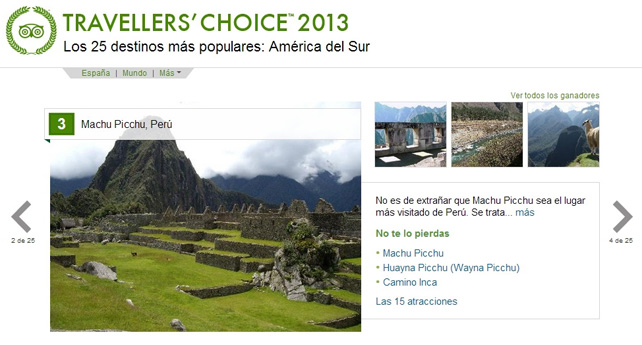
Machu Picchu, Cusco, Urubamba, Arequipa and Lima among the best destinations in South America according to the opinion of millions of authentic travelers. TripAdvisor Travellers' Choice Awards.
It has been 40 years since UNESCO recognized Machu Picchu as a World Heritage site. Let us remember the virtues of the most important gem of the Inca Empire that today delights the whole world and thousands of tourists who are amazed daily during their visit to one of the modern world wonders.
Machu Picchu, the breathtaking Inca construction situated on the slopes of the Andes and hidden from the Spanish by fate's fortune, remained a secret for centuries until its discovery in 1911. Since then, it has captivated the entire world, receiving multiple international recognitions and awards. One of the most distinguished is its designation as a World Heritage Site approximately 40 years ago.
On December 9, 1983, Machu Picchu was declared a "World Heritage Site" by UNESCO, a recognition given to places of outstanding natural or cultural significance to the common heritage of humanity. The protected area includes 32,592 hectares, which not only encompass the archaeological site but also the flora, fauna, and landscapes, highlighting the abundant presence of orchids.
In the history of Machu Picchu as a World Heritage Site, we must consider an event that contributed to the organization of tourism exercised in this Historic Sanctuary, since in 2015, members of UNESCO met to discuss placing Machu Picchu on the list of World Heritage Sites in Danger, due to the excessive influx of visitors to the Inca citadel at that time.
It was not until 2017, the year in which the two years granted by UNESCO to the Peruvian Government to take necessary measures to better manage tourist visits to Machu Picchu expired, preventing it from being categorized as an endangered heritage site.
Among the measures that the Peruvian State considered was the implementation of the sustainable tourism use plan for Machu Picchu, which establishes important points for tourist entry such as setting entry and exit shifts, the maximum daily capacity of tourists, and some restrictions regarding permitted or prohibited actions in the Inca Llaqta.

This architectural marvel is strategically located between the Andes and the Cusco Amazon and houses a wide diversity of wildlife and flora, where the landscape is systematically associated with archaeological remains that demonstrate the high level of knowledge the Incas had in engineering and science.
Among the flora species, large forests of native trees such as q'euña, alder, intimpa, cedar, pisonay, and especially more than 423 species of orchids stand out, which have sparked great interest among botany enthusiasts.
Machu Picchu also features the presence of microclimates, allowing the formation of fragile ecosystems where small species such as insects, birds, and mammals thrive, including the Andean bear or spectacled bear, Rupicola peruviana or commonly known as the cock-of-the-rock, Peru's national bird; river otter, sword-billed hummingbird, mountain turkey, dwarf deer, Andean fox, condor, and the torrent duck as the most representative, some of which are threatened with extinction.
Do not miss the opportunity to visit this world wonder, undoubtedly a must-see for every traveler.


Happy passengers