This festival is held every year in the city of Puno, which is located in southeastern Peru at an altitude of 3820 meters above sea level.
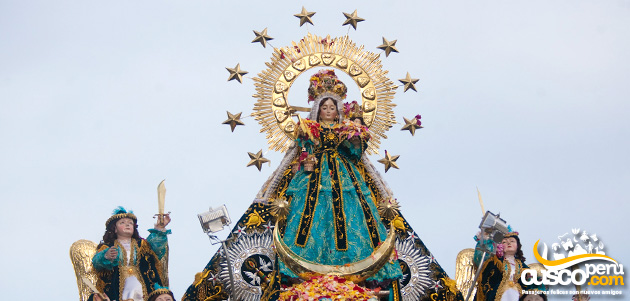
Considered as the Folkloric Capital of Peru and America; Puno is famous for its varied and impressive cultural manifestation, whose maximum expression is the feast of the Virgin of Candelaria, also called "Mamacha Candelaria", because she is the patron saint of the city, associated with the cult of the earth or "Pachamama" that symbolizes purity and fertility.
Two months before the main day, all the devotees prepare to live this profound experience of faith; the Sanctuary of the Virgin, streets and squares are filled with locals and strangers to contemplate the beauty of their dances and customs.
There are several important dates in this festivity, you can observe for example between January 24 and 31 the novenas or liturgical ceremonies in the sanctuary of the Virgin, mainly on February 1, the day of the eve, in which the entrance of candles and the entrance of "K'apos" (firewood that later is burned in the lectern of the sanctuary) gives place to the beginning of this great festivity.
The masses, processions and dances occupy the whole day of the central day which is February 2, seven days later begins the octave that ends with the Great Parade, holy mass, costumes of lights contest and the famous Cacharpari for the farewell of the Virgin of Candelaria.
Finally, after the octave follows the apotheosis or tribute festival on February 12, in which hundreds of groups show their respect to the Virgin with dances in a long procession through the city, accompanied by typical Andean music.
The following are the best-known stories about the origins of this religious holiday.
It is related that in times of the struggles between the patriot army against the viceroyalty, the city of Puno was besieged by a large group of rebels led by the Aymara leader Túpac Catari and Pedro Vilcapaza de Azángaro, who continued with the revolution started by Túpac Amaru II.
In the first months of 1781, the rebels tried to take the city, the reduced number of settlers defended themselves with a lot of courage, but their numerical inferiority did not give a fight before such a ferocious attack.
Desperate the settlers opted to take the virgin in procession, after imploring her protection during the whole night, the settlers observed astonished as the enraged besiegers abandoned the place.
The Virgin appeared to a native of the area who was taking care of his master's farm, which was located on the banks of a stream on the slopes of Huajsapata Hill.
She had the appearance of an elegant lady with a serene face, with a child in her arms. The virgin asked for permission to wash her son's clothes in the stream in exchange for taking care of the property until her return.
When the native returned with his master, who did not believe this story, they found the bust of the Virgin, dressed in white, with her clothes still wet.
Festivity that takes place every year between January 24 and February 13 in the city of Puno, located in southeastern Peru at 3820 meters above sea level; the central day of veneration is February 2.
When the calendar marks the end of a cycle, all of Peru transforms. From the Andes to the Amazon, from the Pacific coast to the most remote towns, every corner pulses with a unique mix of tradition, spirituality, celebration, and a deep connection to what truly matters. Ringing in the New Year in Peru means stepping into a celebration where everyone has a chance to reset with purpose, dive into ancient rituals, and let the elements—earth, water, and fire—guide the opening of new paths.
All over the country, certain customs repeat with almost ritualistic force. Wearing yellow clothing or underwear is perhaps the most visible one—yellow symbolizes energy, light, and abundance for the new cycle. Red is worn to attract love, and green to call in health and hope. It’s also common to eat twelve grapes at midnight, making a wish with each one, in sync with the chimes that welcome the new year.
Another widespread tradition involves placing lentils, coins, or bills in your wallet or pockets to symbolize financial prosperity. Many also carry bay leaves (for success and good fortune), or dried berries and rue branches to ward off negativity. And on the family table, the must-have dish is roasted pork. In local belief, pigs “push forward,” while chickens or turkeys scratch backward—symbolically, pork is chosen to keep moving ahead.
Peru’s coastline welcomes the new year with crashing waves, fireworks lighting up the sky, and an atmosphere full of joy. In Lima, especially in districts like Miraflores, Barranco, or the southern beach zones, celebrations blend traditional dinners with rooftop parties and lively club nights—simple but powerful gatherings.
Many locals and tourists follow the custom of jumping seven waves at midnight, making a wish with each leap. Others toss flowers into the ocean or burn incense on the sand to let go of the old and call in good energy. For those looking for a New Year filled with sun, dancing, and adventure, the Peruvian coast is the place to be.
Further north, destinations like Máncora, Zorritos, and Trujillo become epicenters of vibrant celebration, with beaches packed with people, music festivals, and summer energy everywhere. Other notable coastal spots include Las Pocitas (Piura), Pimentel (Chiclayo), Huanchaco (Trujillo), Cerro Azul and Asia (Cañete), Santa María, Punta Hermosa, San Bartolo (Lima), Mollendo (Arequipa), and Las Lomas (Tacna)—each with its own unique style, traditions, and parties.
In the Peruvian Highlands, New Year’s is experienced with deep spiritual intensity. Andean celebrations are more than festive events—they’re powerful symbolic acts of cleansing, gratitude, and energetic renewal. When we talk about New Year in the Andes—a moment of transition, of symbolic sowing and renewal—we also speak of Andean principles like Sumaq Kawsay (Good Living) and the law of correspondence and cyclical energy, deeply tied to Tinkuy (the meeting of opposites) and Tarpuy (the act of planting).
One of the most popular rituals is the florecimiento or flower bath, using herbs like rue, flowers, sea salt, and aromatic waters like agua florida. This ceremony aims to cleanse your aura, release negativity, and attract health, love, and abundance.
In cities like Cusco, Puno, Ayacucho, Huancavelica, Cajamarca, Huaraz, Huánuco, Abancay, Cerro de Pasco, and Andahuaylas, midnight on December 31 is filled with incense smoke, joyful dances in the plazas, and bustling street markets selling everything from affordable clothes to colorful candles.
Regions with mixed climates like Arequipa and Moquegua also blend highland traditions with coastal customs. In many homes, people set up ritual tables with coca leaves, bay leaves, corn, lentils, and candles in different colors. These sacred elements connect with Pachamama and represent both material and spiritual abundance.
And of course, in the main squares of these cities, the celebration comes to life with live music, traditional dances, local spirits, and the symbolic midnight lap around the plaza—a gesture of movement, transformation, travel, and new beginnings.
If your soul seeks connection with raw nature and the ancestral wisdom of the Amazon, the Peruvian jungle offers a different kind of New Year—intimate, powerful, and deeply transformative.
In cities like Iquitos, Tarapoto, Pucallpa, Moyobamba, Tingo María, Puerto Maldonado, and Satipo, many people participate in spiritual retreats that include cleansing baths with medicinal plants, ancestral chanting, and ceremonies with ayahuasca or master plants, led by wise healers or indigenous shamans.
There are also colorful, music-filled street parties in towns and villages where dancing and joy take center stage. Some communities offer immersive tourism experiences where you can learn firsthand how Amazonian peoples celebrate and give thanks as the year ends.
Rivers, lagoons, and the jungle itself become sacred temples where many travelers immerse themselves—symbolically and literally—to cleanse their spirit and begin the new cycle with a light heart.
Peru, a blessed land and home to all bloods and cultures, is full of places where energy flows strongly. For those who want to start the year with a clear intention and an open heart, the country offers endless destinations for spiritual and energetic tourism.
Traveling to Peru for New Year’s can be the perfect chance to reflect, close cycles, heal, and plant the seeds of new dreams. At CuscoPeru.com, we love creating personalized travel packages that match your vibe. There are limitless options for discovering new places while counting down to the new year.
Across Peru, central plazas—known as plazas de armas—come alive to bid farewell to the old year. In cities like Arequipa, Trujillo, Piura, Cajamarca, and Chiclayo, thousands gather to dance, eat, laugh, and watch the night sky light up with fireworks.
The tradition of running around the plaza at midnight is still going strong in many regions, symbolizing travel and movement in the coming year. You’ll also find artisan markets, free concerts, food stalls, and traditional dance groups adding bursts of color to the festivities.
While each region has its own flavor, one thing unites everyone: the desire to share, to celebrate, and to give thanks—together—in spaces where tradition and modernity blend beautifully.
Planning to celebrate the New Year in Peru? Here are a few handy tips:
In Conclusion:
Celebrating New Year’s in Peru is a journey—a truly transformative experience. It’s about recharging your spirit at the foot of a sacred mountain, toasting with new friends by the sea, giving thanks to Pachamama for all that was, and opening yourself—joyfully—to all that’s yet to come. Because when you choose to begin the year in a place with soul, the new truly begins to bloom.

Happy passengers