

Tipón is home to an archaeological center known as the Temple of Water, famous for its interesting hydraulic systems, including agricultural terraces and water channels. In addition to these attractions, Tipón offers delicious local cuisine and has a small zoo with a variety of rescued animals.
According to historical references, the area where the Tipón archaeological complex is located was formerly occupied by the Incas. Wiracocha, after conquering the area, built the well-known archaeological center. Despite the passage of time, this place remains in good condition, especially its water conduits that are still functioning.
The district of Tipón is located about 24km southeast of the city of Cusco. The archaeological site is about 3km further, in the district of Oropesa, specifically in the Choquepata community. It is situated at an altitude of 3,560 meters.
Tipón offers a variety of attractions that you can visit, among the most notable are:
This archaeological park known as the "Temple of Water" is a major sanctuary where the Incas worshiped water, a sacred element for them, with the care and respect they attributed to it.
Due to the methodology used to transport water, it is considered a model of Inca hydraulic engineering.
In addition to the Temple of Water, there are other main sectors within the park to visit.
This is one of the most important constructions on the circuit. This house was ordered by Wiracocha for his father Yahuar Huaca and features rooms and gardens built with large stone blocks.
This complex has fountains and channels that still pour water today, which flows from underground channels.
It is built on a mountainous elevation from which almost all of Tipón can be observed, inside a room adorned with exquisite trapezoidal niches.
The minor enclosures are located 1km from the Intiwatana, these rooms show a lower quality compared to the royal enclosures, being initially built with stone and finished with adobe, indicating they were inhabited by people of lower rank.
The wall was possibly built for protection due to constant attacks from neighboring towns. This structure helped maintain the security of the archaeological complex and protect the sacred areas.
Also known as "Cruz moqo" meaning "summit where there is a cross" or "Qosqo qhawarina" meaning "viewpoint of Cusco," it is named so because from that point you can observe the city of Cusco.
It was a heavily populated area during the Inca era, home to personalities with extensive political and economic powers.
When visiting Tipón, you will find various countryside restaurants where you can enjoy delicious local cuisine. Among the standout dishes are roasted guinea pig, stuffed rocoto, and pork chicharrón, among other specialties.
This zoo is a refuge located in the same community as the archaeological park, so you will find it on the way to the archaeological site.
It houses a variety of Andean animals such as pumas, hawks, condors, snakes, alpacas, vicuñas, and deer, as well as jungle animals like spectacled bears, macaws, parrots, turtles, and others.
To get to Tipón, you can go on your own by taking a taxi or a public colectivo called "Los leones" from the city of Cusco, which will take you to the Tipón stop. From there, you can find other transport to take you to the archaeological center.
You can also choose to book our tour to the southern valley of Cusco for a more organized and enriching experience.
Monday to Sunday: 07:00 to 18:00 hours.
Entrance to the Tipón archaeological site is included in the Tourist Ticket.
Tipón has a temperate cold climate. To make the most of your visit, it is recommended to visit during the months from April to October, which correspond to the dry season, as this will allow you to enjoy its wonderful attractions.
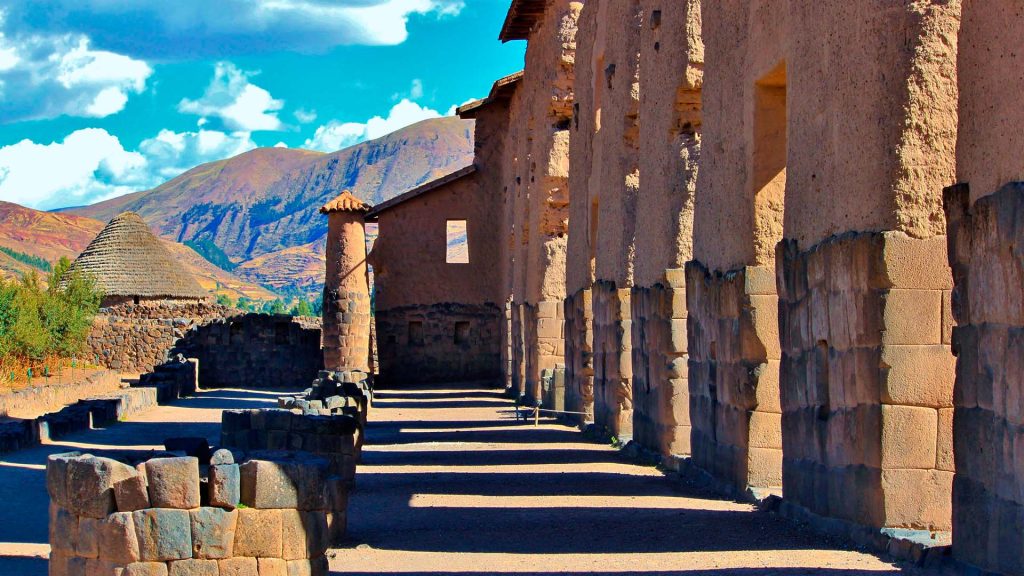
The Raqchi archaeological park is one of the largest attractions and is known for its remarkable Temple of Wiracocha. During your visit, you can explore various structures such as the impressive Inca temple, qolqas, the Inca bath, among others.
You will learn about the fascinating history of Raqchi, an important ceremonial center of the Inca era. Additionally, you can enjoy various cultural activities and taste delicious local cuisine, making your visit an unforgettable experience.
The complex was built in different stages. Part of it was constructed during the reign of Inca Wiracocha, as mentioned by the chronicler Inca Garcilaso de la Vega. Later, between 1439 and 1471, Pachacútec expanded the construction, and finally, Inca Túpac Yupanqui completed the building between 1471 and 1493, according to Cieza de León.
According to the latest research, the mentioned archaeological park covers an approximate area of one thousand hectares. Outside the giant Inca wall that protects the park, there are also constructions such as aqueducts, underground tombs, and pre-Inca enclosures.
It is located in the district of San Pedro, in the Province of Canchis, 119 km from the city of Cusco.
It is one of the most notable architectures in the park. You will observe its large adobe walls with a stone base, reaching 12 meters in height. This temple was dedicated to the God Wiracocha, one of the most important deities of the Inca culture.
Another sector that stands out for the quality of its architecture is the enclosures or quarters. It comprises a total of twenty-two houses dedicated to the inhabitants.
These constructions are next to the enclosures and have a circular shape. They were used to store food such as corn, potatoes, quinoa, among other products.
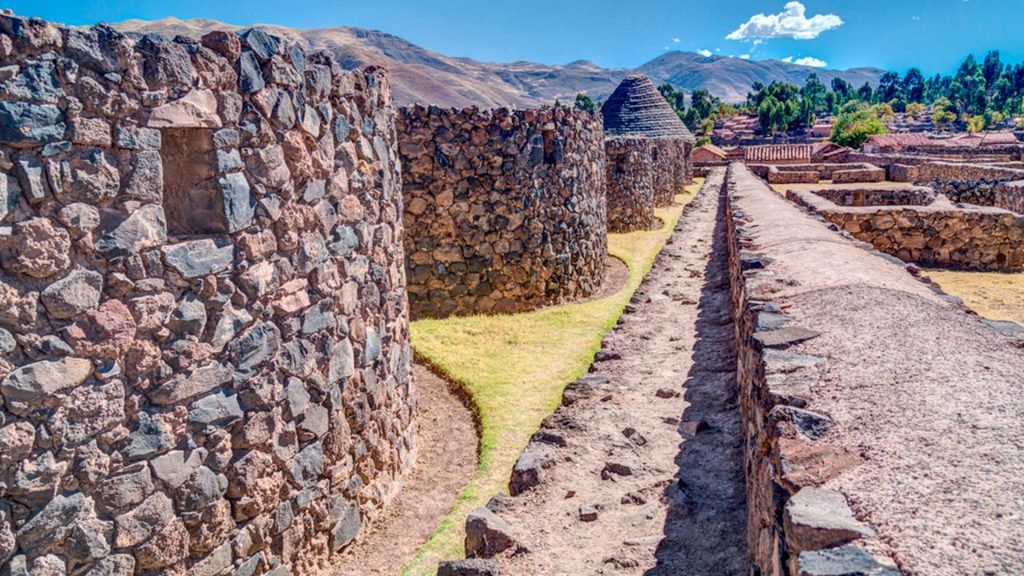
The design of these fountains shows the Incas' skill in building stone water channels and reflects the importance of water in their culture. The most finely finished and important fountain is called the Inca Bath.
Do not miss the opportunity to visit the Raqchi viewpoint, from where you can enjoy a great panorama and take photos with the view of the archaeological park.
If you visit the archaeological park in June, do not miss the opportunity to attend one of the most prominent events, the folkloric festival, which takes place every third Sunday in June. Raqchi is filled with music, traditional dances, and delicious gastronomy, providing a great opportunity to enjoy this wonderful experience.
Do not forget to try the delicious local cuisine during your visit. Raqchi offers a variety of traditional dishes such as baked guinea pig, olluco with meat, quinoa soup, among other dishes that you will enjoy during your visit.
Monday to Sunday: From 7 a.m. to 6 p.m.
The entrance to the Raqchi archaeological site can be purchased on-site for a price of 15 soles.
The climate in Raqchi is temperate-cold. You can visit throughout the year, but the best season to visit is from May to October, during the dry season.
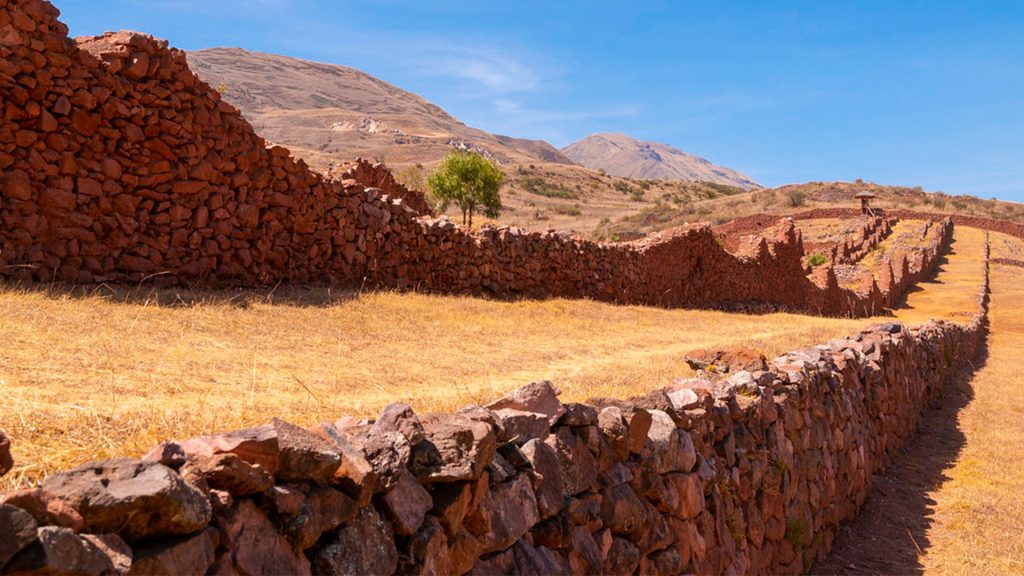
It was one of the most important administrative centers of the Huari (or Wari) culture, from the 6th to the 9th century AD, and represents the epitome of Huari urban planning. Some specialists argue that it remained active until the Inca period, although no evidence has been found to support this presence.
The archaeological park, known in Spanish as Piquillacta and in Quechua as Pikillaqta, which means “City of the Fleas” or “Small City”, was built approximately in the 7th century during the expansion of the Wari culture in a large part of southern Peru.
Pikillaqta served as an administrative, ceremonial, and residential center during the peak of the Wari culture. After the decline of the Wari culture, Pikillaqta was abandoned and later occupied by the Incas, who adapted its structures for administrative and ceremonial uses.
Today, it has become an important archaeological research site and a prominent tourist destination in the southern valley of Cusco.
The archaeological park of Pikillaqta is located 33 km southeast of the city of Cusco, in the territories of the districts of Oropesa, Lucre, and Andahuaylillas. It is situated at an altitude of 3,250 meters.
Pikillaqta shows that it was a well-planned city, with a harmonious and almost perfect geometric design. Square and rectangular shapes predominate in the buildings, courtyards, and plazas, demonstrating its organization.
Its structure is mainly made of adobe and stones, and includes about 700 buildings, 200 courts, 508 colcas (others consider it as houses) and other constructions. Many of these buildings were two and three stories.
Pikillaqta served not only as an administrative and residential center but also had an important ceremonial role. We can find different constructions such as:
This is an impressive structure that served as the main entrance to the Pikillaqta complex, consisting of large rectangular stone blocks with steps. At the top, there is a water channel that was probably used to supply water to the city.
Choqepucjio is a significant area within Pikillaqta, known for its ceremonial and residential structures. This sector, possibly inhabited by the elite of Wari society, contains buildings that show remarkable sophistication in design and construction.
Meaning "place of birds," it is named because it is located on a rocky prominence where birds perch. It is notable for the fineness of its finish and is located near the Huacarpay lagoon.
Amarupata is a Quechua term meaning "place of snakes." This set of stone and mud platforms has water channels that are still used by local residents.
These are the remains of an Inca bridge that crosses the Vilcanota River, located outside Pikillaqta.
Known as "The Rock of the Condors," it is a set of rocks, one of which was shaped into an Andean condor, considered a sacred animal by the Incas.
Monday to Sunday from 7 a.m. to 6 p.m.
Entry to the Pikillaqta archaeological site is included in the Tourist Ticket.
It is advisable to visit Pikillaqta during the dry season, which spans from April to October, as it offers the best weather conditions. However, with proper preparation, this place can be visited year-round.

Happy passengers