
Pachacamac, whose name means "soul of the earth, the one who animates the world," is one of the most important archaeological sites in Peru. Located about 40 kilometers southeast of Lima, this ceremonial and religious sanctuary covers 465 hectares and has a history that spans three millennia. It was inhabited by various pre-Inca cultures before becoming part of the powerful Inca Empire around the 15th century.
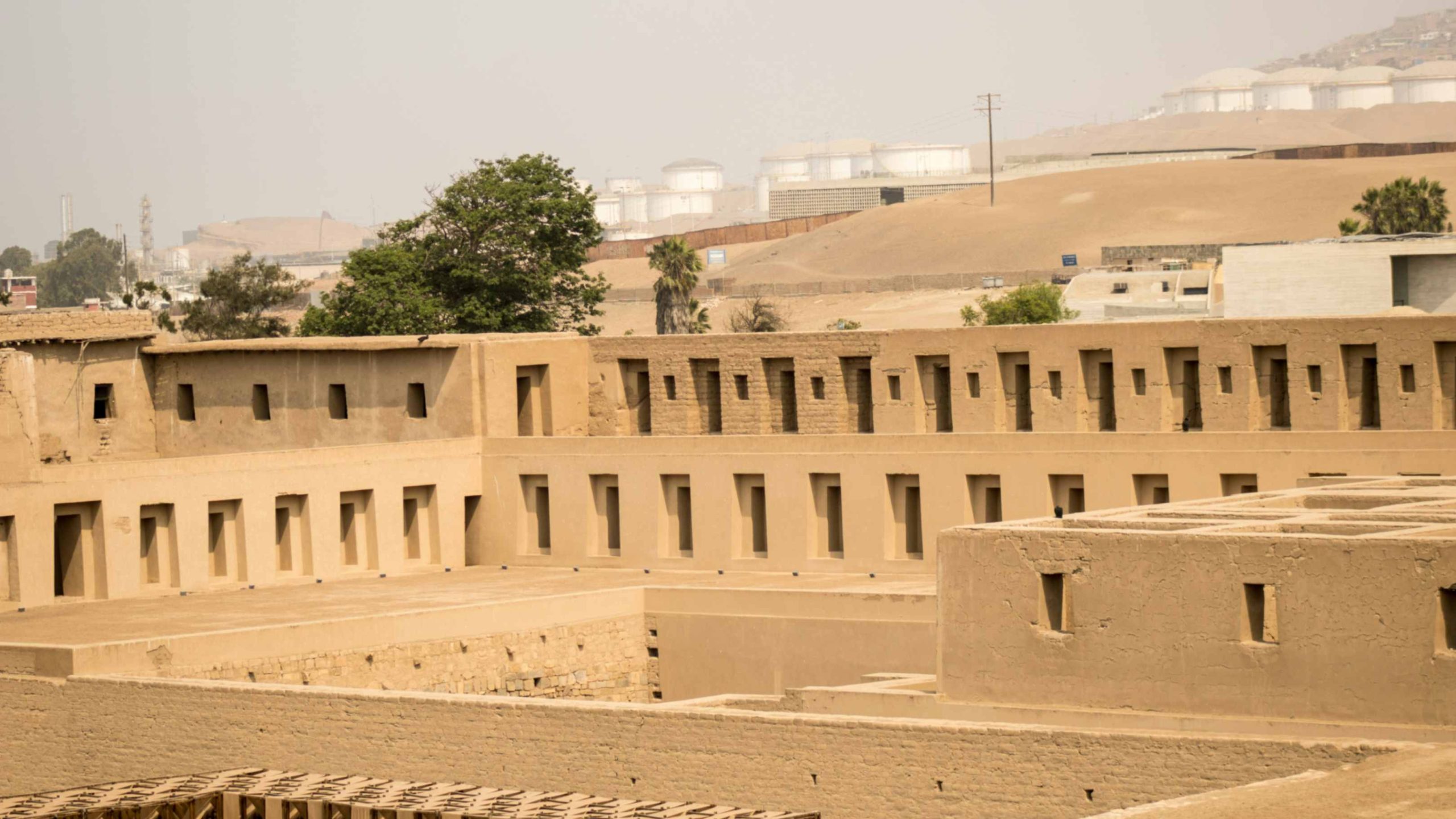
Among the main attractions of Pachacamac is the impressive Temple of the Sun, a structure built by the Incas that stands out for its five pyramids with stone bases and the rest made of adobe. There is also the Temple of the Moon, an Acllahuasi that housed virgin women dedicated to the worship of the sun god, and the Taurichumpi Building, which was the residence of the Inca governor in Pachacamac. Additionally, the Pachacamac Site Museum, located at the entrance of the archaeological site, is one of the most modern and well-designed museums in Peru, showcasing the importance and main archaeological findings of the sanctuary.
Tuesday to Saturday from 9:00 AM to 5:00 PM.
Sunday from 9:00 AM to 4:00 PM.
Ticket Prices:
General: S/. 15.00
Children aged 3 to 7: S/. 1.00
Higher Education Students (with ID): S/. 5.00
People aged 60 and over: 50% discount on the general price.
Puruchuco is an archaeological complex in Peru that was an administrative center of the Inca period (1440-1532). The construction of this architectural complex comes from the Inca culture. Puruchuco is located in the sector of Huaquerones, a terrain of pyramids with a ramp that contains one of the largest cemeteries of the Inca culture. There are also complex areas such as San Juan de Pariachi and Huaycán. Of these, Puruchuco is the smallest. Therefore, although this monument was the palace of a curaca (ruler) where he lived and administered, it must have been subordinated to other curacas with greater responsibility and power. It was excavated and restored by Arturo Jiménez Borja between 1959 and 1961.
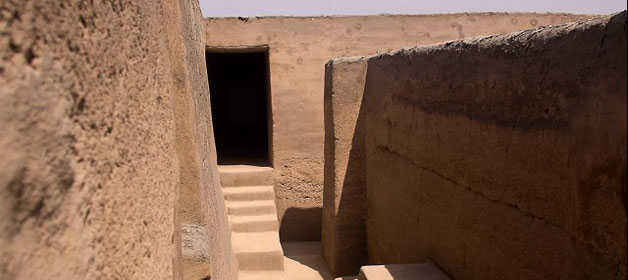
Located in the district of Ate Vitarte in Lima.
The attractions are:
Puruchuco was the palace or residence of a Curaca (ruler), the highest local authority linked to the Inca occupation in the Lima valley, where he and his family lived. As a public building, it served as a center for the collection of products, processing and redistribution of these goods. And as at that time, everything that happened was framed in a ceremonial calendar, a part of this building was dedicated to religious activities. For this reason, the architects who designed Puruchuco divided it into 4 sectors: A, B, C and D, according to the use that each of them had.
Seen from the architectural point of view, Puruchuco gathers the constructive tradition of the Ichsmas (culture that developed during the Late Intermediate period -900 to 1450 A.D.- in the Rimac and Lurin valleys) and of the Incas, who came later. From them they took the materials and construction techniques as well as some of their designs, such as the Pyramids with Ramp, explained above.
Very close to the "Palace" of Puruchuco there are a series of mausoleums built with stone and located on the slope of the same hill where this monument was built. In June 1956, one of these mausoleums was found by chance with its contents intact. The archaeologist E. Tabío, at the express request of Jiménez Borja, participated in its excavation and reported on it in his book published in 1965.
Around 1450, Pachacutec defeated the Chancas, his main rivals, in a war and became the ninth ruler of Cusco. This triumph strengthens the Incas and makes it possible for Pachacutec to organize an imperial state. A few years later they reach the central coast of Peru (formed by the valleys of Lurin, Rimac and Chillon), annexing it to the Tawantinsuyu.
Tuesday to Sunday from 9:00 am to 4:00 pm
Entrance fee
General: S/5.00 soles / Reduced: S/2.00 soles
The Huaca Pucllana was an Administrative and Ceremonial Center of the Lima Culture, during the years from 200 to 700 after our era (in the Early Intermediate period).
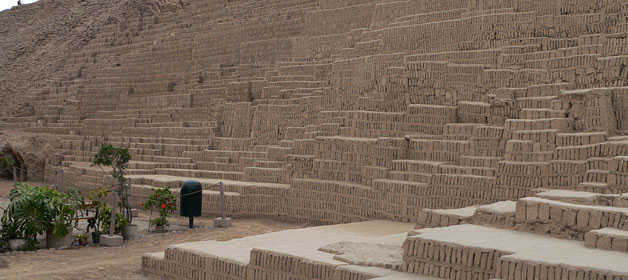
Gral. Borgoño - Cuadra. 8 s/n, Miraflores.
The attractions are:
The third part of the pyramid and the lower part are conditioned with a tourist circuit that allows to know closely the diverse spaces used when the site was a ceremonial center. in some enclosures and patios have been enabled recreations to natural size of settlers of the Lima culture carrying out diverse activities (manufacture of adobes, ceremonies, etc.) as well as of tombs of the Wari culture, accompanied by photographs of the excavation process; this allows a clearer understanding of the past of the site. Likewise, visitors have the opportunity to observe the archaeologists at work because the excavated areas are not hidden from the public. The aim is not only to show the site's past, but also how it is recovered through the patient work of the archaeologists and curators.
The site has a small exhibition hall, inaugurated in 1984, which displays part of the findings made at the site. Most of the objects correspond to the Lima culture, highlighting the ceremonial jars, miniature mortuary offerings, ceramic sculptures of sharks and implements used in sacrifices. A sample of well-preserved polychrome textiles from the Waricom culture complements the exhibition of some of the offerings found in the tombs. All this is complemented with infographics, recreations and photographs accompanied by short texts in a clear and simple language.
It is considered an important objective to show that aspects of the ancient cultures that inhabited Pucllana remain today, this is achieved by showing how the plants and animals that were cultivated and raised at that time are still an important part of the life of a Limeño or Peruvian today. Various plants such as corn, pacay, guava, tuna, tara, guarango, etc. are exhibited along with South American camelids, Creole ducks or "jokes" in muchik (Mochica) language, guinea pigs and Peruvian hairless dogs. These canids are now Cultural Patrimony of the Nation, but in Huaca Pucllana they have been bred since before this, constituting a pioneering site in the conservation and revaluation of this native species.
The site has an exhibition and sales room for handicrafts made from various materials such as vegetable fiber, gourds, ceramics, wood and metals, as well as products made from native foods. Every weekend there are craft exhibitions and demonstrations where you can interact with the artisans. The products are decorated with motifs that appear in the objects found in the excavations.
Wednesday to Monday 9:00 am. - 5:00 pm.
Caral is considered by "UNESCO" as Cultural Patrimony of Humanity. Being builders of colossal pyramid-shaped buildings, distinguishes the people of Caral from other peoples of the Andes.
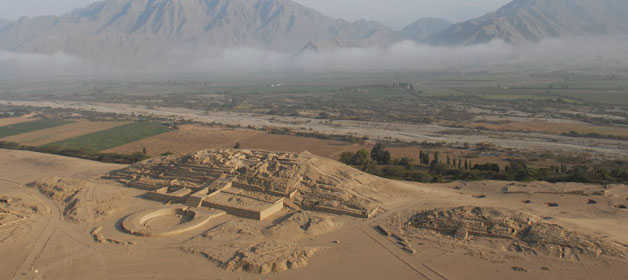
Located on the left bank of the Supe River on a large terrace that is 350 meters above sea level.
The attractions are:
Architectural complex with two components: sunken circular plaza and pyramid with stepped platforms. Located in a dominant position, it controls the activities carried out both in the city and in the middle part of the valley. The most imposing public building, center of political, administrative and religious power.
Building built on a rocky settlement used as a quarry. For the construction of the pyramid a filler was placed in order to level the ground. Its function was mainly ceremonial with some administrative functions.
It is the smallest building of the pyramidal part of the city, in this building administrative and ceremonial activities were practiced.
It is the third structure in terms of dimensions, after the Great Temple and the Ancient Pyramid, to the south of the pyramid of the Gallery is a set of enclosures associated with the pyramid. Its characteristics demonstrate a use for ceremonial and socio-political activities, associated with the high status of its officials.
Named for the orientation of the central staircase in relation to the monolith, it had ceremonial and administrative activities.
Housing complex located on the southern esplanade of the upper half of the city; the dwellings are arranged in subsets with the facades facing the central plaza, it is believed that officials of lower rank were housed here.
Large esplanade towards which the facades of the pyramids and the residences of Caral were oriented. The traces of different posts show the periodic installation of stores for the exchange of products. In the ancient period, a set of interconnected enclosures was formed in the esplanade. Its function changed through time.
Ceremonial construction located in the interior complex of the Temple of the Amphitheater. Of eminently ritual character, its use was restricted.
It is associated with the settlement of Chupacigarro. It represents a head oriented towards the east. It was built through careful planning and knowledge of perspective and proportion in relation to astronomical observations. Its function was to predict the weather and natural phenomena in relation to their activities.
Monday to Sunday from 9:00h to 17:00h.
General admission: S/.11.20 nuevos soles
Reduced rate: students and teachers: 3.60 nuevos soles
schoolchildren and retirees: S/. 1.00 nuevos soles
Guided tour for groups: S/. 20.00 nuevos soles.
Cajamarquilla, the immense mud city. At first glance it looks like a labyrinth of earthen walls, but it is formed by several pyramids and walled enclosures.
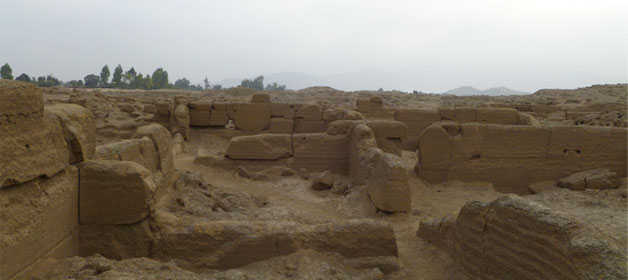
Located on the banks of the Huaycoloro Creek, in the district of San Juan de Lurigancho, province of Lima.
Cajamarquilla served as an important commercial center during the so-called Lima culture and later during the Ichsma culture. It began to be built towards the end of the Early Intermediate period and was vacated at the end of the Late Intermediate, although it seems to have been unoccupied during the Middle Horizon; the cause of climatic changes and natural disasters (earthquakes, among others) led to its abandonment several hundred years before the Spanish conquest.
Cajamarquilla is a large city with buildings of both rectangular and pyramidal shape built with adobe; it is possible to observe the remains of temples, wide streets, ceremonial squares, terraces, cemeteries, subway grain silos, canals and numerous enclosures and buildings whose use is not known and that are quite deteriorated by earthquakes. Ceramic remains have been found that correspond to phases 7, 8 and 9 of the Late Lima period. Most of them are pots, plates and pitchers for food preparation and storage.
The city was founded between 600 and 730 A.D., during the Late Lima phase.
During the Middle Horizon, Cajamarquilla is abandoned, but the Tello pyramid is used in part as a cemetery. Sestieri found seven bodies stretched on reed bunks and one in the form of a burial bundle, and Mogrovejo found more, accompanied by offerings.
After a period of abandonment, there was a reoccupation with the Ichsma culture, possibly from 1000 AD2 until before 1450 AD. Most of the buildings that remain standing are from this period.1 Large walled enclosures with pyramids were built: an entrance leads to a square where there is a dais and from which one reaches different terraces and enclosures. The most representative is the "Labyrinth". In these enclosures the inhabitants lived and there were pottery and textile workshops.
Tuesday to Sunday from 9:00 a.m. to 5:00 p.m.
Admission: Free.

Happy passengers