Aug 31 2010

The Quipus [English]

luis

The quipu (Quechua: khipu, ‘knot’) was a mnemonic system using wool or cotton ropes and knots of one or more colors developed in the Andes. Although it is known that it was used as an accounting system by officials of the Inca Empire, could have been used as a form of writing, a hypothesis that says the engineer William Burns Glynn.

Were used by the quipu kamayoc (khipu kamayuq), sages of the Inca empire.
The quipus formed a mnemonic system by which record the necessary information. It could be news census, amounts of products and keeps stored in state warehouses.
Quipus instruments are still used as mnemonics in the Indian villages where they serve to register the products of crops and animal communities.
The Inca emperor, had 30 people in big cities take charge of the accounts, then bring them to the emperor’s messengers who had specialized staff in the interpretation of the quipu.
It is believed that the position of the knots in the cord could be interpreted as a decimal system of mathematics. For example, counting from the tip, find the knot is equivalent to 10,000, then 1,000, 100, and ultimately drives.
  • Share/Bookmark

Aug 25 2010

Señor de Huanca [English]

yuri

The holiday is celebrated every September 14, characterized by a massive pilgrimage of devotees.

Every year, on September 14, thousands of devotees from Cusco, Peru and even from different places like Bolivia, Paraguay, Argentina and Chile, are directed to the sanctuary of Huanca to receive blessings. From Cusco, take 4-6 hour hike to get to “Señor de Huanca”.

Huanca is a beautiful site located at the foothills Pachatusan (who holds the world), almost on the banks of the river Vilcanota.

Señor de Huanca

Continue reading

  • Share/Bookmark

Aug 21 2010

Cusco Painting [English]

luis

The famous colonial Cusco School of Painting, is characterized by its originality and high artistic value, which can be seen as a result of the confluence of two powerful currents: the Western artistic tradition on the one hand, and the desire Indians and mestizos painters to express their reality and their world view, on the other.
The Spanish contribution, and in general European Cuzco School painting, is given from very early times, when it starts building the great cathedral of Cusco. Is the arrival of the Italian painter Bernardo Bitti in 1583. Continue reading

  • Share/Bookmark

Aug 21 2010

La Pintura Cusqueña [Español]

luis

La célebre escuela de pintura cuzqueña o pintura colonial cusqueña, se caracteriza por su originalidad y su gran valor artístico, los que pueden ser vistos como resultado de la confluencia de dos corrientes poderosas: la tradición artística occidental, por un lado, y el afán de los pintores indios y mestizos de expresar su realidad y su visión del mundo, por el otro.
El aporte español y, en general europeo, a la Escuela cuzqueña de pintura, se da desde época muy temprana, cuando se inicia la construcción de la gran catedral de Cusco. Es la llegada del pintor italiano Bernardo Bitti en 1583.

Continue reading

  • Share/Bookmark

Aug 20 2010

DIRCETUR Cusco lanza convocatoria a premio Q’ENTE 2010 a la actividad turística [Español]

yuri

Se ha organizado el concurso para la premiación a las mejores empresas de la actividad turística de nuestra región a la cual se ha denominado “PREMIO Q’ENTE 2010 “. Este concurso es organizado por el Gobierno Regional, La Dirección Regional de Comercio Exterior y Turismo(DIRCETUR) y el Proyecto de Mejoramiento de Servicios Turísticos de DIRCETUR.

Este Premio es el máximo reconocimiento a nivel regional que se entrega anualmente a empresas, personas y organizaciones del sector turismo que destacan en la prestación de servicios turísticos de la calidad así como la responsabilidad social y ambiental.

Continue reading

  • Share/Bookmark

Aug 20 2010

Dircetur Cusco release a convocation to the Q’ente Award 2010 for tourist activity [English]

yuri

It has organized the competition for the awards to the best companies in the tourism industry in our region which has been called “Q’ente AWARD 2010.” This contest is organized by the Regional Government, Regional Directorate of Foreign Trade and Tourism (DIRCETUR) and the Project to Improve Tourism Services DIRCETUR.

This Award is the highest recognition at the regional level is given annually to businesses, individuals and organizations that highlight the tourism sector in the provision of quality tourist services and the social and environmental responsibility.

Continue reading

  • Share/Bookmark

Aug 17 2010

Potatoes: Food of the Incas[English]

luis

The potato is a nutritive plant (tuber) which comes from the Pre-Inca cultures and Incas. The Peruvian territory is as much potato species known worldwide.
Here the diversity of native potatoes come from Cajamarca, Ayacucho and Huancayo Cusco course.
There are about 5,000 varieties of potatoes worldwide, in Latin America there are over 4000 varieties, and what fills us with pride and joy is that Peru has 3,000 varieties of native potatoes.

History
The man in antiquity, having been skilled hunter and fisherman, became sedentary having to collect the fruits of the earth. The weather made this new custom result in agriculture, which began the process of domestication of many plants, among which, the potatoe.

Continue reading

  • Share/Bookmark

Aug 13 2010

Seis Monumentos arqueológicos del Cusco son declarados Patrimonio cultural [Español]

yuri

Los Seis Monumentos arqueológicos ubicados en la provincia de Espinar  han sido declarados Patrimonio Cultural de la Nación por el Instituto Nacional de Cultura (INC)

En la resolución Directoral Nacional Nº1644/IN, publicada el 11 de agosto del 2010 en el boletín de Normas Legales del Diario Oficial El Peruano, donde se señala los monumentos arqueológicos que fueron declarados Patrimonio Cultural de la Nación:

Continue reading

  • Share/Bookmark

Aug 13 2010

Six archaeological monuments of Cusco are declared Cultural Heritage [English]

yuri

The Six archaeological monuments located in the province of Espinar have been declared Cultural Patrimony of the Nation by the National Institute of Culture (INC)

The National Directorial Resolution No. 1644/IN, published on August 11, 2010 in the journal Legal Standards of Official Journal El Peruano, which states the archaeological monuments that were declared National Cultural Heritage:

Continue reading

  • Share/Bookmark

Aug 13 2010

URUBAMBA RIVER [English]

luis

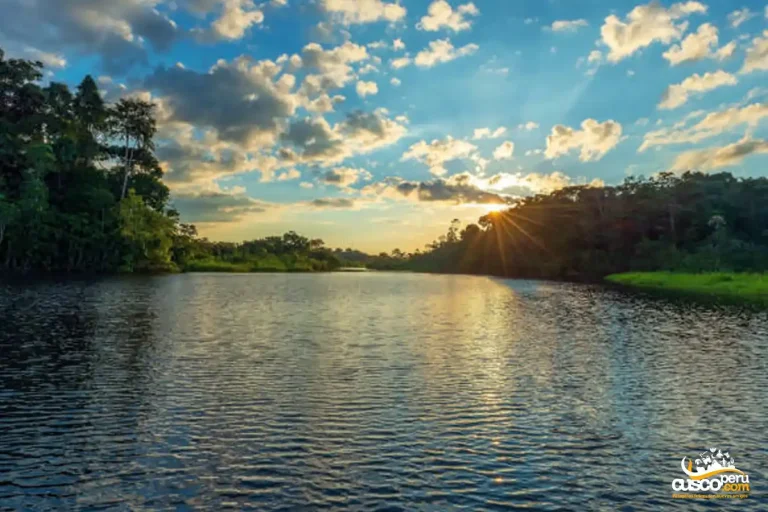
As a tributary of the Ucayali river, the Urubamba River runs through much of the Cusco Region with the name of Vilcanota river, but while passing through the town of Urubamba is named, and before reaching the Amazon, through the last mountains forming the Pongo of Mainique.

Continue reading

  • Share/Bookmark