


Table of Contents
El birdwatching es una actividad al aire libre que consiste en observar y estudiar las aves en su habitad natural. Esta afición es desarrollada como ocio y está enfocada en reconocer en las distintas especies de aves su plumaje, canto, colores y comportamientos.
La observación de ave o birdwatching, si bien es una actividad de ocio, esta ayuda a identificar posibles cambios en el entorno natural de las especies observadas. Siendo posible detectar problemas como la destrucción o contaminación del hábitat.
Si recién estás comenzando con el avistamiento de aves, es importante tener equipamiento básico para hacer del birdwatching en Machu Picchu una actividad enriquecedora.
La ubicación de Machu Picchu hace posible encontrar gran variedad de aves, en las 37 mil hectáreas del Santuario histórico de Machu Picchu se han registrado a la actualidad casi 420 especies diferentes de aves. Sin embargo, es probable que con solo la visita a la ciudad inca de Machu Picchu no se pueda observar algún ave, por este motivo es recomendable realizar la visita por alguna ruta de senderismo como es el Camino Inca, para poder observar las aves con más facilidad.
El águila negra y castaña (Spizaetus isidori) es considerada una de las aves más imponentes y majestuosas que habitan el Santuario de Machu Picchu. Esta ave de caza tiene un plumaje oscuro con manchas castañas en el pecho.
En su hábitat se la puede encontrar en lo más alto de los árboles en busca de una presa. Su aguda visión le permite detectar presas desde grandes alturas, mientras que su agilidad en el vuelo le brinda una ventaja indiscutible.
La población de esta ave se vio afectada debido a la caza indiscriminada, sin embargo, todavía es posible encontrarlas en la reserva natural de Machu Picchu, además de, en algunas ocasiones, poder observarla volar sobre la ciudadela inca.
El aguilucho andino (Geranoaetus polyosoma) es fácil de encontrar en el Santuario Histórico de Machu Picchu en temporada de invierno debido a que migra a este lugar. Se puede identificar por su plumaje moteado en tonos marrones.
Esta ave de caza encuentra en Machu Picchu el lugar perfecto para la búsqueda de alimento, su visión aguda le permiten ubicar con facilidad roedores y presas pequeñas, aun a través de la espesa neblina de la reserva natural. Es posible verlos sobrevolando la ciudadela de Machu Picchu, sin embargo, no es muy común, porque prefieren cazar muy dentro de la selva.
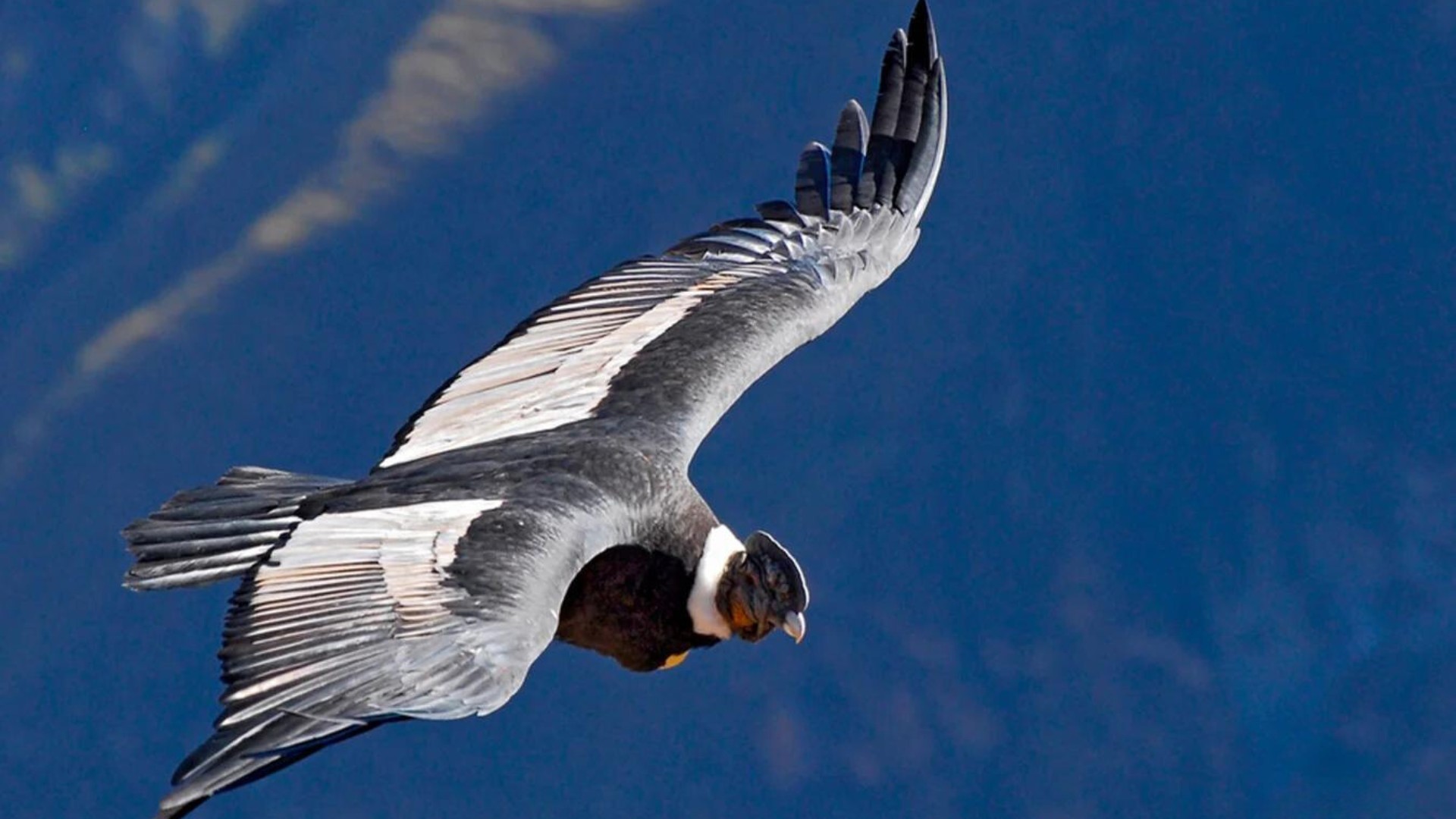
El cóndor andino (Vultur gryphus) es un ave representativa del Perú, considerado el dueño de los Andes, debido a su gran tamaño y presencia imponente. Su plumaje oscuro y vuelo increíble lo hizo símbolo nacional del Perú, además de tener un rol importante en la mitología de historia andina.
Estas aves habitan sitios montañosos y con grandes corrientes de viento que le permite mantener el vuelo. A veces, solo si se tiene suficiente suerte, es posible observar volar al cóndor andino alrededor de la ciudadela inca, pero es incluso más probable verlo volar en los puntos más altos de Camino inca.
El Frutero Enmascarado (Pipreola pulchra) es un ave endémica de los Andes, que tiene su habitad en la cordillera Vilcabamba, cordillera que también alberga al Santuario Histórico de Machu Picchu.
Es un ave verde, pequeña y regordeta, los machos suelen tener un pico anaranjado y un collar amarillo naranja, en cambio, las hembras, suelen ser completamente verde con un pico naranja opaco. Se ubica con facilidad en la parte media del bosque húmedo, donde abundan los árboles frutales, que son su principal fuente de alimento.
El Gallito de las Rocas (Rupicola peruviana) fue denominado el ave nacional del Perú, además de ser considerada una de las aves más hermosas del mundo. Su cuerpo está cubierto de plumas negras, sus alas tienen un tono grisáceo y destaca por el plumaje de su cabes, que en el caso de los machos es de un naranja brillante y en el caso de las hembras de un naranja opaco que tiende más a marrón.
Son considerados diseminadores de semillas de árboles frutales, que es su principal alimento, lo que los hace parte fundamental del ecosistema del Santuario de Machu Picchu. Actualmente, se cree que existen solo 3 mil ejemplares, por lo que su conservación de vital importancia.
El trogon enmascarado (Trogon personatus) es un ave que habita el bosque nuboso de Machu Picchu, teniendo una función de dispersador de semillas, ya que se alimenta de los frutos que aún se encuentran en los árboles. Es posible ver al trogon enmascarado cerca de Aguas Calientes, el pueblo más cercano a Machu Picchu.
Esta ave tiene plumaje negro, con el pecho rojo y una cola negra con la punta de las plumas blancas. En el caso de los machos, poseen el plumaje de la cabeza de verde iridiscente y una máscara negra al rededor de los ojos, en cambio, las hembras poseen un color marrón en la cabeza, la máscara negra y al rededor de los ojos un anillo blanco muy notable.

El motmot andino (Momotus aequatorialis) habita lugares boscosos que se encuentran al borde de la zona subtropical, como lo es el Santuario de Machu Picchu. Suele estar en parejas, aunque también es posible verlo solo, además de que es posible verlos en lugares concurridos.
Esta ave es del tipo omnívora, lo que quiere que se alimenta de pequeños vertebrados como ranas o lagartos, además de frutas. El motmot andino se caracteriza por su canto, ya que pueden llegar a cantar duetos entre ellos, en los que combinan su canto en una serie de notas rápidas.
La pava andina (Penelope montagnii) es un ave muy parecida a una gallina doméstica, sin embargo, esta solo se encuentra en la selva de los Andes. Tanto las hembras como los machos poseen el mismo plumaje marrón oscuro con matices blancos, además de anillos al rededor de los ojos de un color gris azulado.
Esta ave habita lugares con selvas nubladas y húmedas, además que pasan mayor parte del tiempo en pequeños grupos entre los árboles desde donde pueden alimentarse de hormigas, frutos y bayas silvestres. Su población se vio ligeramente afectada por la deforestación y la caza.
El Colibrí blaquiverde (Elliotomyia viridicauda) es un ave endémica de los Andes peruanos, en las regiones tropicales, húmedas y boscosas. En el Perú se encuentran desde Huánuco hasta Cusco, específicamente en el sector del Santuario de Machu Picchu. Estas aves son sedentarias y su alimentación consistes en el néctar de flores y arbustos, además de consumir pequeños insectos.
El colibrí inca (Coeligena torquata) se puede encontrar en lugares como Bolivia, Colombia, Ecuador, Perú y Venezuela. Suelen habitar bosques templados y nubosos como lo es el Santuario de Machu Picchu. Su alimentación consisten en el néctar de las flores, además de algunos pequeños insectos.
Estas aves pasan por un proceso de muda de plumas que significa su paso a la adultez, los machos son de color negro o negro verdoso, además destaca una coronilla de plumas azules en su cabeza y su pecho blanco, en el caso de las hembras, la cabeza posee tonos dorados, y no posee coronilla.

La tangara azul y amarilla (Thraupis bonariensis) es una especie que se puede observar en el Santuario Histórico de Machu Picchu. Posee un plumaje que se diferencia entre machos y hembras, los machos exhiben un azul brillante en la cabeza y el dorso, mientras que el vientre es de un llamativo amarillo. Las hembras presentan los mismos colores solo que más apagados.
Su alimentación se basa en frutas, insectos y semillas, lo que ayuda en la dispersión de semillas y el control de plagas en su hábitat natural, contribuyendo a mantener el equilibrio de las poblaciones de insectos y la regeneración de la vegetación. Se avistan comúnmente en áreas de densa vegetación.
La tangara manchada (Tangara varia) es una de las aves más coloridas y fascinantes que se pueden encontrar en los alrededores de Machu Picchu, Perú. Su plumaje es un verdadero espectáculo de colores, con tonos que van del verde brillante al azul, salpicados con manchas negras, lo que la hace fácilmente identificable y muy atractiva para los observadores de aves.
En cuanto a su alimentación, la tangara manchada se nutre de una dieta variada que incluye frutas, néctar y pequeños insectos, contribuyendo así al control de plagas y la polinización de diversas plantas. Esta dieta diversa es crucial para mantener la biodiversidad del ecosistema andino.
El Hemispingus de Parodi (Kleinothraupis parodii) es un ave endémica de los bosques andinos del Perú, incluyendo los alrededores de Machu Picchu. Su plumaje es discreto pero elegante, con tonos de gris y verde oliva, y una distintiva banda negra alrededor de los ojos que le da un aire enmascarado.
La alimentación del Hemispingus de Parodi se compone principalmente de insectos y pequeñas frutas, lo que lo convierte en un aliado crucial en el control de plagas y la dispersión de semillas. Esta dieta variada es esencial para mantener la biodiversidad y la salud de los ecosistemas de la montaña.
La tangara de montaña de vientre escarlata (Anisognathus igniventris) es una joya aviar que se puede encontrar en los alrededores de Machu Picchu. Su plumaje es impresionante, con un dorso azul brillante y un vientre de un escarlata vibrante, que crea un contraste llamativo y hace de esta ave un espectáculo visual inconfundible.
La dieta de esta tangara incluye principalmente frutas, insectos y néctar, lo que la convierte en un importante dispersor de semillas y polinizador en su hábitat montañoso. Al consumir una variedad de alimentos, ayuda a mantener el equilibrio ecológico y la salud de los bosques andinos.
La tangara de collar dorado (Iridosornis jelskii) es una de las aves más llamativas que habita en los alrededores de Machu Picchu, Perú. Su plumaje es un espectáculo de colores, con un dorso azul brillante y un distintivo collar amarillo que resalta en su garganta, combinándose con su pecho grisáceo y detalles en verde oliva.
Esta tangara se alimenta principalmente de frutas, insectos y néctar, desempeñando un papel crucial en la dispersión de semillas y la polinización de diversas plantas.

Dentro del Santuario Histórico de Machu Picchu existen lugares clave en los que se puede realizar birdwatching, estos no solo te ofrecen mayor oportunidad al momento de observar las aves, sino también te permite obtener mejores fotos de las aves.
La puerta del sol es uno de los principales lugares para que puedas observar aves, este punto no solo te ofrece una vista panorámica de la ciudadela inca de Machu Picchu sino también de su al rededor. Sin embargo, el ingreso al Intipunku está disponible solo en temporada alta (junio-octubre), por lo que las entradas se tienen que reservar con al menos 3 meses de anticipación.
La montaña Huayna Picchu, que es la popular montaña que aparece en la clásica foto postal de Machu Picchu, es otro de los lugares favoritos para los amantes de la observación de aves. En todo el recorrido a la cima de la montaña estarás rodeado de vegetación, además de que la entrada está reservada para un número pequeño de visitantes, lo que permite que te tomes tu tiempo para poder observar las aves.
La montaña Machu Picchu es mucho más grande que la montaña Huayna Picchu, esto permite una mayor presencia de aves en todo el recorrido, sin embargo, es necesario recordar que al ser el camino de subida más ancho es menos probable el avistamiento de aves. Se recomienda realizar el recorrido de subida lo más temprano posible para tener mayor oportunidad de ver las aves.
El camino inca es por mucho el mejor lugar para observar aves, en todo el trayecto se encuentra una diversidad de altitudes, climas y por ende vegetación, esto hace posible el hábitat de muchas especies. De las 400 especies de aves que se encuentran en el santuario histórico de Machu Picchu, un total de 200 se pueden observar solo en el trayecto del camino inca.
Al momento de fotografiar aves en Machu Picchu es importante tener en cuenta algunos consejos básicos, aquí te los presentamos:
Sin duda alguna el mejor momento para observar y fotografiar aves en Machu Picchu es al amanecer de la temporada seca. Al ser temporada seca, las lluvias son menos frecuentes, los que permite que las aves salgan de sus refugios más temprano.
Es ideal que conozcas bien el equipo con el que piensas tomar las fotografías, debes de estar al tanto de todas sus propiedades y sus limitaciones, para así explotar todo el potencial y no pierdas una foto increíble por no saber como utilizar la cámara.
No, está prohibido llevar trípode de cualquier tipo a la ciudad inca de Machu Picchu.
Claro que sí, estos te ayudaran a ubicar las aves y prepárate para una foto increíble, aunque puede ser un poco tedioso tener que cargar con todo, puede ser de mucha utilidad.

Pasajeros felices